
Showing results by narrator "Macat" in All Categories
-

-
A Macat Analysis of Abraham H. Maslow's A Theory of Human Motivation
- By: Stoyan Stoyanov
- Narrated by: Macat.com
- Length: 1 hr and 45 mins
- Unabridged
-
Overall3
-
Performance3
-
Story3
US psychologist Abraham Maslow's 1943 essay "A Theory of Human Motivation" established his idea of humanistic psychology as a "third force" in the field. He outlined a new approach to understanding the mind, saying humans are motivated by their need to satisfy a series of hierarchical needs, starting with the most essential first. He thought it important for the advancement of psychology to identify, group, and rank them in terms of priority.
-
-
First year uni read
- By Natalia Hazell on 11-01-2018
Preview -
A Macat Analysis of Abraham H. Maslow's A Theory of Human Motivation
- Narrated by: Macat.com
- Length: 1 hr and 45 mins
- Release date: 26-07-2016
- Language: English
Failed to add items
Sorry, we are unable to add the item because your shopping cart is already at capacity.Add to basket failed.
Please try again laterAdd to Wish List failed.
Please try again laterRemove from Wish List failed.
Please try again laterFollow podcast failed
Unfollow podcast failed
$9.99 or free with 30-day trial
-
-

-
Analysis: A Macat Analysis of Mahmood Mamdani's Citizen and Subject
- By: Meike de Goede
- Narrated by: Macat.com
- Length: 1 hr and 58 mins
- Unabridged
-
Overall0
-
Performance0
-
Story0
In Citizen and Subject, Ugandan academic and author Mahmood Mamdani challenges dominant views about the crisis of postcolonial Africa. Many studies emphasize that the problems the continent faces are homegrown - the consequence of poor government, widespread corruption, and other local factors. Citizen and Subject challenged these ideas. It argues that the current crisis has come about because of the institutional legacy of colonialism.
Preview -
Analysis: A Macat Analysis of Mahmood Mamdani's Citizen and Subject
- Narrated by: Macat.com
- Length: 1 hr and 58 mins
- Release date: 06-06-2016
- Language: English
Failed to add items
Sorry, we are unable to add the item because your shopping cart is already at capacity.Add to basket failed.
Please try again laterAdd to Wish List failed.
Please try again laterRemove from Wish List failed.
Please try again laterFollow podcast failed
Unfollow podcast failed
$12.10 or free with 30-day trial
-
-
-
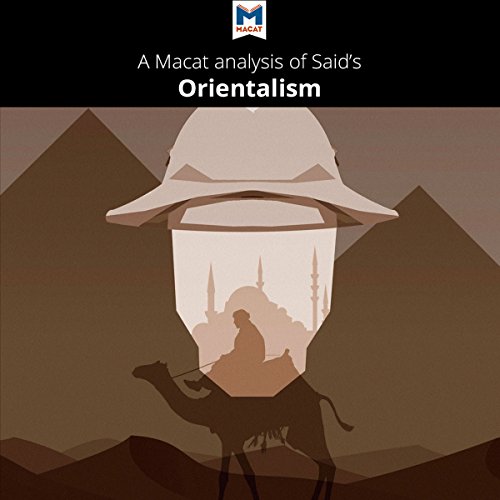
Analysis: A Macat Analysis of Edward Said's Orientalism
- By: Riley Quinn
- Narrated by: Macat.com
- Length: 2 hrs and 3 mins
- Unabridged
-
Overall2
-
Performance2
-
Story2
Western thinking about the Middle and Far East has been distorted by stereotype and inaccuracy. This argument lies at the center of Palestinian-American literary theorist Edward Said's groundbreaking book, Orientalism. Originally published in 1978, it cemented Said's reputation as the father of postcolonial studies.
Preview -
Analysis: A Macat Analysis of Edward Said's Orientalism
- Narrated by: Macat.com
- Length: 2 hrs and 3 mins
- Release date: 09-06-2016
- Language: English
Failed to add items
Sorry, we are unable to add the item because your shopping cart is already at capacity.Add to basket failed.
Please try again laterAdd to Wish List failed.
Please try again laterRemove from Wish List failed.
Please try again laterFollow podcast failed
Unfollow podcast failed
$14.36 or free with 30-day trial
-
-

-
A Macat Analysis of Dikotter's Mao's Great Famine
- By: Dr. John Wagner Givens
- Narrated by: Macat.com
- Length: 1 hr and 40 mins
- Unabridged
-
Overall0
-
Performance0
-
Story0
Note: This is a summary and analysis of Mao's Great Famine and not the original book. Historian Frank Dikötter used a brief window of political openness before the 2008 Beijing Olympics in China to get inside official archives and gather evidence of the terrible toll the Great Chinese Famine took on ordinary people. He also discovered how Communist leaders caused, and then covered up, the catastrophe. Dikötter shows the disaster was much worse than previously thought, with a death toll of at least 45 million.
Preview -
A Macat Analysis of Dikotter's Mao's Great Famine
- Narrated by: Macat.com
- Length: 1 hr and 40 mins
- Release date: 27-06-2016
- Language: English
Failed to add items
Sorry, we are unable to add the item because your shopping cart is already at capacity.Add to basket failed.
Please try again laterAdd to Wish List failed.
Please try again laterRemove from Wish List failed.
Please try again laterFollow podcast failed
Unfollow podcast failed
$12.10 or free with 30-day trial
-
-

-
A Macat Analysis of Nassim Nicholas Taleb's The Black Swan: The Impact of the Highly Improbable
- By: Eric Lybeck
- Narrated by: Macat.com
- Length: 1 hr and 50 mins
- Unabridged
-
Overall1
-
Performance1
-
Story1
In his 2007 book The Black Swan, Nassim Nicholas Taleb says the Black Swans of his title can appear at any time, in the form of financial crises, wars, and other unexpected events that have profound, irreversible consequences. Taleb draws on philosophy, mathematics, economics, and other disciplines to explain in plain English why we seldom prepare for these events adequately. The way our brains process knowledge lull us into believing the future will resemble the past.
Preview -
A Macat Analysis of Nassim Nicholas Taleb's The Black Swan: The Impact of the Highly Improbable
- Narrated by: Macat.com
- Length: 1 hr and 50 mins
- Release date: 20-07-2016
- Language: English
Failed to add items
Sorry, we are unable to add the item because your shopping cart is already at capacity.Add to basket failed.
Please try again laterAdd to Wish List failed.
Please try again laterRemove from Wish List failed.
Please try again laterFollow podcast failed
Unfollow podcast failed
$9.99 or free with 30-day trial
-
-

-
A Macat Analysis of Friedrich Hayek's The Road to Serfdom
- By: David Linden, Nick Broten
- Narrated by: Macat.com
- Length: 1 hr and 39 mins
- Unabridged
-
Overall6
-
Performance6
-
Story6
Austrian-born economist Friedrich Hayek's 1944 work, The Road to Serfdom, analyzes the ways in which excessive government planning can erode democracy. Published while World War II still raged, the work draws influential parallels between the totalitarianism of both socialism and Nazism and increasing control exerted by Western democracies.
Preview -
A Macat Analysis of Friedrich Hayek's The Road to Serfdom
- Narrated by: Macat.com
- Length: 1 hr and 39 mins
- Release date: 06-06-2016
- Language: English
Failed to add items
Sorry, we are unable to add the item because your shopping cart is already at capacity.Add to basket failed.
Please try again laterAdd to Wish List failed.
Please try again laterRemove from Wish List failed.
Please try again laterFollow podcast failed
Unfollow podcast failed
$9.99 or free with 30-day trial
-
-

-
Analysis: A Macat Analysis of C. S. Lewis's The Abolition of Man
- By: Ruth Jackson, Brittany Pheiffer Noble
- Narrated by: Macat.com
- Length: 1 hr and 37 mins
- Unabridged
-
Overall1
-
Performance1
-
Story1
Northern Irish academic, novelist, and broadcaster C. S. Lewis' 1943 philosophical work The Abolition of Man is subtitled Reflections on Education with Special Reference to the Teaching of English in the Upper Forms of Schools. It is about the power of education to shape the minds of individuals and improve society (or harm it, if badly done), and encompasses everything from the scientific worldview at the time to philosophical arguments about right and wrong.
-
-
Disappointing and repetitive.
- By Anonymous on 28-08-2023
Preview -
Analysis: A Macat Analysis of C. S. Lewis's The Abolition of Man
- Narrated by: Macat.com
- Length: 1 hr and 37 mins
- Release date: 29-07-2016
- Language: English
Failed to add items
Sorry, we are unable to add the item because your shopping cart is already at capacity.Add to basket failed.
Please try again laterAdd to Wish List failed.
Please try again laterRemove from Wish List failed.
Please try again laterFollow podcast failed
Unfollow podcast failed
$9.99 or free with 30-day trial
-
-

-
Analysis: A Macat Analysis of Eric Hoffer's The True Believer: Thoughts on the Nature of Mass Movements
- By: Jonah S. Rubin
- Narrated by: Macat.com
- Length: 1 hr and 40 mins
- Unabridged
-
Overall3
-
Performance2
-
Story2
A self-educated man, Eric Hoffer was most likely born in 1898. He wrote in his spare time after doing shifts on the San Francisco docks, where he continued to work, even after becoming a successful author. Hoffer began writing The True Believer in the 1940s, as Nazism and fascism spread across Europe. Most analysts who were trying to work out how these movements became so powerful focused on their leaders and the ideas they trumpeted.
Preview -
Analysis: A Macat Analysis of Eric Hoffer's The True Believer: Thoughts on the Nature of Mass Movements
- Narrated by: Macat.com
- Length: 1 hr and 40 mins
- Release date: 27-07-2016
- Language: English
Failed to add items
Sorry, we are unable to add the item because your shopping cart is already at capacity.Add to basket failed.
Please try again laterAdd to Wish List failed.
Please try again laterRemove from Wish List failed.
Please try again laterFollow podcast failed
Unfollow podcast failed
$12.10 or free with 30-day trial
-
-

-
A Macat Analysis of David Graeber's Debt: The First 5,000 Years
- By: Sulaiman Hakemy
- Narrated by: Macat.com
- Length: 1 hr and 33 mins
- Unabridged
-
Overall1
-
Performance0
-
Story0
David Graeber's 2011 book, Debt: The First 5,000 Years, seeks to overturn hundreds of years of economic theory, specifically the idea that people have a natural inclination to trade with each other and that the concept of money developed spontaneously to overcome the inefficiencies of a bartering system. The US-born social activist uses his training as an anthropologist to trace the histories of money and of debt and reaches the conclusion that money was in fact created by the state as a means of exploiting the poor.
Preview -
A Macat Analysis of David Graeber's Debt: The First 5,000 Years
- Narrated by: Macat.com
- Length: 1 hr and 33 mins
- Release date: 27-07-2016
- Language: English
Failed to add items
Sorry, we are unable to add the item because your shopping cart is already at capacity.Add to basket failed.
Please try again laterAdd to Wish List failed.
Please try again laterRemove from Wish List failed.
Please try again laterFollow podcast failed
Unfollow podcast failed
$12.10 or free with 30-day trial
-
-

-
Analysis: A Macat Analysis of Edmund Burke's Reflections on the Revolution in France
- By: Riley Quinn
- Narrated by: Macat.com
- Length: 1 hr and 51 mins
- Unabridged
-
Overall3
-
Performance3
-
Story3
Reflections on the Revolution in France may read like an exercise in political theory. But when it was first published in 1790, Edmund Burke was fighting a real political battle. Burke saw that the Enlightenment ideas that had inspired radical political change in France the year before were beginning to take root in England. He wanted to discredit these dangerous thoughts before they sparked a revolution in his own country.
Preview -
Analysis: A Macat Analysis of Edmund Burke's Reflections on the Revolution in France
- Narrated by: Macat.com
- Length: 1 hr and 51 mins
- Release date: 09-05-2016
- Language: English
Failed to add items
Sorry, we are unable to add the item because your shopping cart is already at capacity.Add to basket failed.
Please try again laterAdd to Wish List failed.
Please try again laterRemove from Wish List failed.
Please try again laterFollow podcast failed
Unfollow podcast failed
$9.99 or free with 30-day trial
-
-

-
Analysis: A Macat Analysis of Albert Bandura's Aggression: A Social Learning Analysis
- By: Jacqueline Allan
- Narrated by: Macat.com
- Length: 1 hr and 45 mins
- Unabridged
-
Overall0
-
Performance0
-
Story0
First published in 1973, Albert Bandura's Aggression: A Social Learning Analysis is a groundbreaking work that helped lay the foundations of the discipline of social psychology. Much of what we now know about the influences of the early childhood environment on delinquency and anti-social behavior can be traced back to Bandura's work. In the book, he uses the subject of aggression to demonstrate and explore the usefulness of what is called social learning theory.
Preview -
Analysis: A Macat Analysis of Albert Bandura's Aggression: A Social Learning Analysis
- Narrated by: Macat.com
- Length: 1 hr and 45 mins
- Release date: 28-07-2016
- Language: English
Failed to add items
Sorry, we are unable to add the item because your shopping cart is already at capacity.Add to basket failed.
Please try again laterAdd to Wish List failed.
Please try again laterRemove from Wish List failed.
Please try again laterFollow podcast failed
Unfollow podcast failed
$9.99 or free with 30-day trial
-
-

-
A Macat Analysis of Jonathan Riley-Smith's The First Crusade and the Idea of Crusading
- By: Damien Peters
- Narrated by: Macat.com
- Length: 1 hr and 49 mins
- Unabridged
-
Overall0
-
Performance0
-
Story0
In the 1960s, British historian Jonathan Riley-Smith first began studying the knightly orders of the Middle Ages that formed after the First Crusade. By the late 1970s, he had begun writing books from a "revisionist" point of view, challenging the common belief that the Crusades were motivated by fanaticism, and were designed to plunder the Holy Lands. To an extent, Riley-Smith's 1986 book The First Crusade and the Idea of Crusading overturned this previously held view.
Preview -
A Macat Analysis of Jonathan Riley-Smith's The First Crusade and the Idea of Crusading
- Narrated by: Macat.com
- Length: 1 hr and 49 mins
- Release date: 20-07-2016
- Language: English
Failed to add items
Sorry, we are unable to add the item because your shopping cart is already at capacity.Add to basket failed.
Please try again laterAdd to Wish List failed.
Please try again laterRemove from Wish List failed.
Please try again laterFollow podcast failed
Unfollow podcast failed
$9.99 or free with 30-day trial
-
-

-
Analysis: A Macat Analysis of Edmund Gettier's Is Justified True Belief Knowledge?
- By: Jason Schukraft
- Narrated by: Macat.com
- Length: 1 hr and 33 mins
- Unabridged
-
Overall0
-
Performance0
-
Story0
How do we know what knowledge is? In his 1963 article, "Is Justified True Belief Knowledge?", American philosopher Edmund Gettier radically challenged the accepted definition of knowledge itself. Greek philosopher Plato, discussing knowledge well over 2,000 years ago, defined it as "justified true belief". But in two ingenious cases, Gettier demonstrates that somebody's justified belief can be true because of nothing more than luck.
Preview -
Analysis: A Macat Analysis of Edmund Gettier's Is Justified True Belief Knowledge?
- Narrated by: Macat.com
- Length: 1 hr and 33 mins
- Release date: 06-06-2016
- Language: English
Failed to add items
Sorry, we are unable to add the item because your shopping cart is already at capacity.Add to basket failed.
Please try again laterAdd to Wish List failed.
Please try again laterRemove from Wish List failed.
Please try again laterFollow podcast failed
Unfollow podcast failed
$12.10 or free with 30-day trial
-
-

-
Analysis: A Macat Analysis of Mary Wollstonecraft's A Vindication of the Rights of Woman
- By: Ruth Scobie
- Narrated by: Macat.com
- Length: 1 hr and 47 mins
- Unabridged
-
Overall1
-
Performance1
-
Story1
Philosopher Mary Wollstonecraft's 1792 work A Vindication of the Rights of Woman is a key text in the development of what we now know as feminism. Written in the atmosphere created by the French Revolution, which made radical change seem possible, Wollstonecraft's work challenges the idea that society's oppression of women is entirely natural. While her male contemporaries happily argued for the fundamental freedoms of all men, few were interested in extending these revolutionary rights to women.
-
-
Thank you
- By LapsangLover on 22-10-2023
Preview -
Analysis: A Macat Analysis of Mary Wollstonecraft's A Vindication of the Rights of Woman
- Narrated by: Macat.com
- Length: 1 hr and 47 mins
- Release date: 19-07-2016
- Language: English
Failed to add items
Sorry, we are unable to add the item because your shopping cart is already at capacity.Add to basket failed.
Please try again laterAdd to Wish List failed.
Please try again laterRemove from Wish List failed.
Please try again laterFollow podcast failed
Unfollow podcast failed
$12.10 or free with 30-day trial
-
-

-
Analysis: A Macat Analysis of Francis Fukuyama's The End of History and the Last Man
- By: Macat Int
- Narrated by: Macat Int
- Length: 1 hr and 47 mins
- Unabridged
-
Overall3
-
Performance3
-
Story3
When American political scientist Francis Fukuyama published The End of History and the Last Man in 1992, Western liberal democracies seemed to have won the Cold War between the United States and the Soviet Union. Fukuyama believed liberal democracy had triumphed for a reason. Any political system containing "fundamental contradictions," he thought, would eventually be replaced by something else. For Fukuyama, communism was such a system.
-
-
another excellent time saver!
- By Mars on 23-02-2023
Preview -
Analysis: A Macat Analysis of Francis Fukuyama's The End of History and the Last Man
- Narrated by: Macat Int
- Length: 1 hr and 47 mins
- Release date: 11-05-2016
- Language: English
Failed to add items
Sorry, we are unable to add the item because your shopping cart is already at capacity.Add to basket failed.
Please try again laterAdd to Wish List failed.
Please try again laterRemove from Wish List failed.
Please try again laterFollow podcast failed
Unfollow podcast failed
$12.10 or free with 30-day trial
-
-

-
Analysis: A Macat Analysis of Frantz Fanon's The Wretched of the Earth
- By: Riley Quinn
- Narrated by: Macat.com
- Length: 1 hr and 42 mins
- Unabridged
-
Overall4
-
Performance3
-
Story4
Published in 1961, the year of Frantz Fanon's death, The Wretched of the Earth is both a powerful analysis of the psychological effects of colonization and a rallying cry for violent uprising and independence. The book rejects colonial assumptions that the people of colonized countries need to be guided by their European colonizers because they are somehow less evolved or civilized. Fanon argues that violence is justified to purge colonialism not just from the countries themselves, but from the very souls of their inhabitants.
-
-
A Macat Analysis of Frantz Fanon's
- By Inpakumar Benjamin on 22-04-2023
Preview -
Analysis: A Macat Analysis of Frantz Fanon's The Wretched of the Earth
- Narrated by: Macat.com
- Length: 1 hr and 42 mins
- Release date: 19-07-2016
- Language: English
Failed to add items
Sorry, we are unable to add the item because your shopping cart is already at capacity.Add to basket failed.
Please try again laterAdd to Wish List failed.
Please try again laterRemove from Wish List failed.
Please try again laterFollow podcast failed
Unfollow podcast failed
$9.99 or free with 30-day trial
-
-

-
Analysis: A Macat Analysis of Roland Barthes's Mythologies
- By: John M. Gómez
- Narrated by: Macat.com
- Length: 1 hr and 54 mins
- Unabridged
-
Overall2
-
Performance2
-
Story2
Advertisements for soap. The image of a film star. The sight of a car as beautiful as a goddess. We accept all these common objects and experiences as normal parts of our lives and as timeless and universal as myth. But they are also carrying hidden messages that none of us even suspect, as Barthes demonstrates with a unique analysis of the signs that generate meanings and assumptions we all take for granted. These things have been "taken out of history" so that their hidden cultural meanings can be accepted without question.
-
-
Helpful for an overall understanding of Barthes
- By Anonymous on 27-10-2020
Preview -
Analysis: A Macat Analysis of Roland Barthes's Mythologies
- Narrated by: Macat.com
- Length: 1 hr and 54 mins
- Release date: 06-06-2016
- Language: English
Failed to add items
Sorry, we are unable to add the item because your shopping cart is already at capacity.Add to basket failed.
Please try again laterAdd to Wish List failed.
Please try again laterRemove from Wish List failed.
Please try again laterFollow podcast failed
Unfollow podcast failed
$9.99 or free with 30-day trial
-
-

-
Analysis: A Macat Analysis of Daniel Jonah Goldhagen's Hitler's Willing Executioners
- By: Simon Taylor, Tom Stammers
- Narrated by: Macat.com
- Length: 1 hr and 42 mins
- Unabridged
-
Overall0
-
Performance0
-
Story0
American author Daniel Jonah Goldhagen's 1996 work, Hitler's Willing Executioners, is one of the most controversial history books of modern times. While most historians have sought to explain the horror of the Holocaust by focusing on Nazi leaders and their ideologies, Goldhagen set out to investigate whether ordinary Germans enthusiastically embraced their goals. His conclusion: "eliminationist anti-Semitism" - a genocidal hatred of Jews unique to Germany - caused the Holocaust.
Preview -
Analysis: A Macat Analysis of Daniel Jonah Goldhagen's Hitler's Willing Executioners
- Narrated by: Macat.com
- Length: 1 hr and 42 mins
- Release date: 06-06-2016
- Language: English
Failed to add items
Sorry, we are unable to add the item because your shopping cart is already at capacity.Add to basket failed.
Please try again laterAdd to Wish List failed.
Please try again laterRemove from Wish List failed.
Please try again laterFollow podcast failed
Unfollow podcast failed
$9.99 or free with 30-day trial
-
-

-
A Macat Analysis of Rachel Carson's Silent Spring
- By: Nikki Springer
- Narrated by: Macat.com
- Length: 1 hr and 43 mins
- Unabridged
-
Overall0
-
Performance0
-
Story0
Rachel Carson worked at the US Bureau of Fisheries for 15 years while developing a writing career at the same time. Her first book, 1941's Under the Sea Wind, became a best seller. But it was eclipsed by 1962's Silent Spring, one of the first books ever to highlight environmentalist issues. Carson focuses on the negative, widespread, and long-lasting effects of human activity on the environment, and illustrates this through one case study - the use of chemical pesticides in agriculture.
Preview -
A Macat Analysis of Rachel Carson's Silent Spring
- Narrated by: Macat.com
- Length: 1 hr and 43 mins
- Release date: 27-06-2016
- Language: English
Failed to add items
Sorry, we are unable to add the item because your shopping cart is already at capacity.Add to basket failed.
Please try again laterAdd to Wish List failed.
Please try again laterRemove from Wish List failed.
Please try again laterFollow podcast failed
Unfollow podcast failed
$12.10 or free with 30-day trial
-
-

-
A Macat Analysis of Milgram's Obedience to Authority
- By: Dr. Mark Gridley, Dr. William Jenkins
- Narrated by: Macat.com
- Length: 1 hr and 42 mins
- Unabridged
-
Overall0
-
Performance0
-
Story0
Stanley Milgram was a young researcher at Yale in the 1960s when he recruited volunteers to help in a psychology experiment. These volunteers were asked to give electric shocks to "learners" whenever they got an answer to a question wrong. The "learners" were in on the deception, and were not actually receiving shocks, but the volunteers were unaware of this. To widespread surprise, Milgram reported that 40 to 65 percent of his volunteers did what the researcher told them, and gave the maximum shock to the "learners" even when they screamed in pain.
Preview -
A Macat Analysis of Milgram's Obedience to Authority
- Narrated by: Macat.com
- Length: 1 hr and 42 mins
- Release date: 28-07-2016
- Language: English
Failed to add items
Sorry, we are unable to add the item because your shopping cart is already at capacity.Add to basket failed.
Please try again laterAdd to Wish List failed.
Please try again laterRemove from Wish List failed.
Please try again laterFollow podcast failed
Unfollow podcast failed
$12.10 or free with 30-day trial
-