This post was originally published on Audible.com.
Note: Text has been lightly edited for clarity and does not match audio exactly.
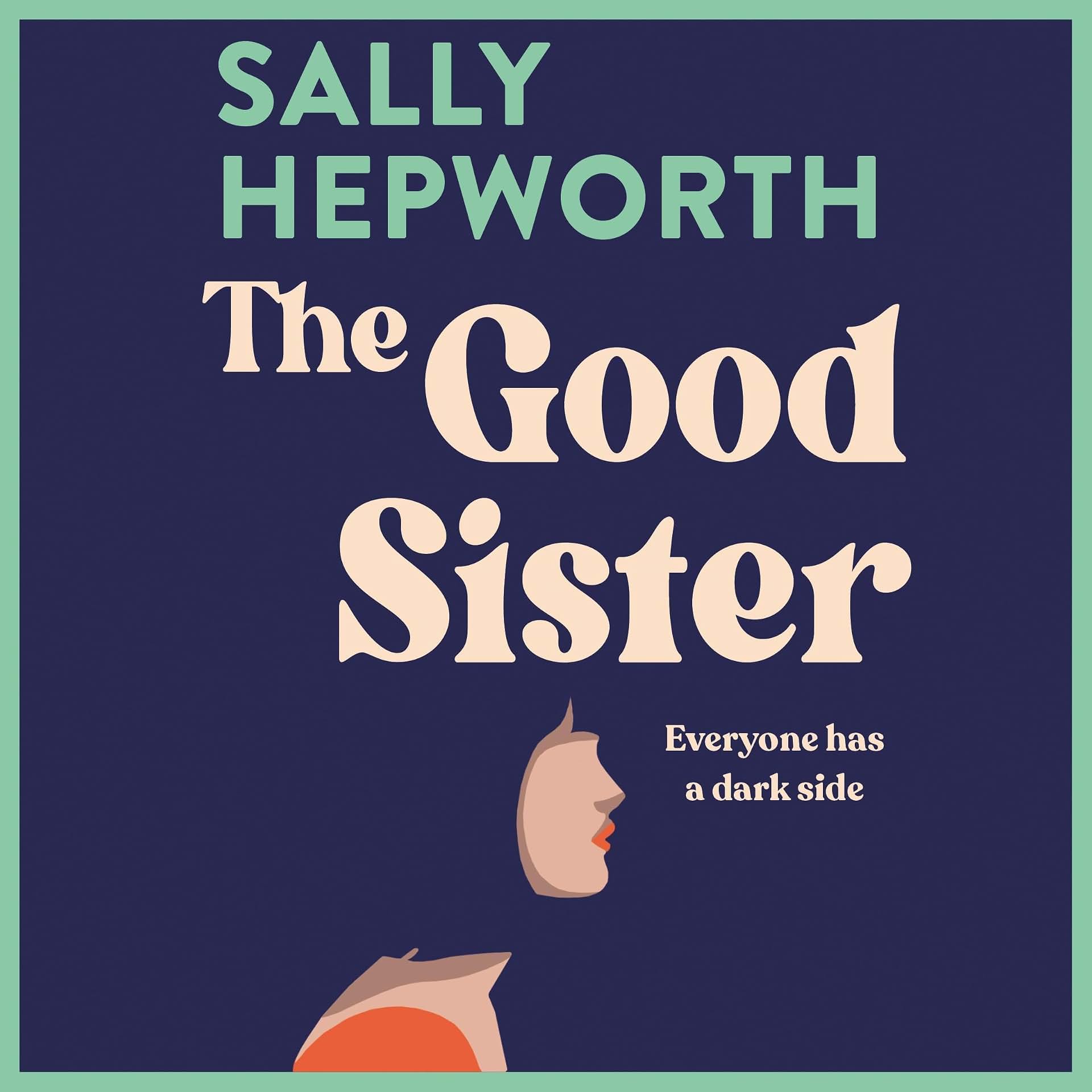
Kat Johnson: Hi, this is Audible Editor Kat Johnson, and today I have the thrill of speaking with Sally Hepworth, bestselling author of unpauseable, character-driven thrillers including Darling Girls, The Soulmate, The Good Sister, The Family Next Door, The Mother-in-Law, and so many more. Her new novel, Mad Mabel, is a funny and heartwarming mystery unlike any she's written before, and I'm so excited to talk to her about it. Welcome, Sally.
Sally Hepworth: Thank you. It's so lovely to be talking to you.
Thank you so much for being here, and congratulations on your new novel. As always, you write exceptional characters, but I think Mabel is one for the ages. I love this character so much, I thought we might let her speak for herself a moment in this clip from the audiobook:
“It's interesting to note that there are two groups of people who are rarely, if ever, suspected of murder. These groups are elderly women and little girls. On the whole, when it comes to murder, the stats very much favor the men. The odd woman is thrown into the mix every now and again, but she's inevitably perimenopausal. And having been through the change myself, I certainly understand why. But an elderly woman or little girl committing murder? It's one in a million. I've always liked to think I was special.”
I love that so much. That was narrator Jenny Seedsman, who does an incredible job as the elderly Mabel, who is 81 when we meet her in the book. Mabel Waller was infamous for being Australia's youngest convicted murderer at age 15, and now that she's long since served her time, she is living a quiet life as Elsie Fitzpatrick, using her middle name and mother's maiden name. When her neighbor dies and people get wind of Elsie's true identity, she's suddenly the prime suspect. And as Mad Mabel becomes a media sensation all over again, we dive back into her past in a compulsive dual timeline. This is such a great premise, Sally, and such a great character that you set up. So, I wanted to know, first of all, how did this story and character come about for you?
Yeah, I love hearing from her directly. I think the narrator did such a good job. The idea feels like it was given to me, because I was looking for an idea at the time. I had just written my previous book and was promoting it, Darling Girls. I was at a book event, and a woman came up to me, an elderly woman, and she was right at the end of the signing line. She'd waited quite a long time, and she got to the end of the line and she sat down, and I thought, “Oh, she's got some things to say to me.” And she said, “I have been thinking of murdering my next-door neighbor” [laughs].
I'd been talking about murder during my talk, and I said, “Wow, okay, how are you going to do it?” She said, “Well, I don't know how I'm going to do it, but I know that I'm going to get away with it.” I said, “Okay, well, how do you know?” And she said, "Well, because there's two groups of people who no one ever suspects of committing murder, and those groups are elderly women and little girls.” I knew as soon as she said that, that I had been handed a gift and that was what my next book was going to be about.
Oh my gosh, I love that. I have to wonder, do people confess these things to you because you're a writer of mysteries and thrillers? Does that happen to you often?
They do. I get that a lot. I think probably only one in a hundred would be those moments. Often, ideas seem like they're really great until you actually say them out loud, and then you think either, "I don't know if that'd work" or "That's been done before." And this just felt like such a fresh, original idea that I could really sink my teeth into. From there, Mabel just revealed herself. She was one of those joyous characters to write where, as soon as I started putting my fingers to the keyboard, it was as though she was fully formed. That doesn't always happen with a character, but she just spoke to me and told me the story, which was a real gift.
That's incredible. I love this character, as I keep saying. I love that story, too. The way that I first encountered this book, actually, because this came out in Australia first, and I had seen the cover in Australia with that little girl on it, my brain went in this sort of Bad Seed direction with it, which I also loved. But once I actually started listening and I got to know Mabel and Elsie—Elsie she's called in the book—she totally revealed herself in this other way. In the clip that we heard, she's funny. You even hear a little touch of her feminism and her hard-won pride in how unique she is.
I love that we get to meet Mabel in her younger years, wonderfully performed by Hannah Frederickson. She doesn't have an easy life at all. You gave her a lot to deal with. She's poorly treated by her parents, especially her father, and she's ostracized by her classmates, who give her that nickname of “Mad Mabel” when she's very young. So, you threw a lot at her, but you also gave her some really great inner resources to draw on. I wondered, where do you think her inner strength comes from and how did you balance that against all the obstacles that you threw her way?
Well, I think the real exploration for me of any character is about the why. I knew at the start of the book that she had been a convicted murderer at a very young age. I knew her, as we all do, at 81, looking back on it. So, to go back into her past was a way for me to understand her, and it was a way for the tragedy, or the things that happened to her, that becomes a clue as we unfold the mystery of it. But it also just becomes another layer to her personality and explains why could a child commit murder.
When you look around, there are not a lot, but there are a few children who have committed murder who are girls; there are few children, and then even fewer who are girls. Their stories are in every case incredibly tragic, and so there was no way that I could write this story without going into a difficult childhood. There isn't a story that exists where there's been a happy childhood and then murder. So, that was that piece.
“Mabel just revealed herself. She was one of those joyous characters to write where, as soon as I started putting my fingers to the keyboard, it was as though she was fully formed.”
The resilience is about the human spirit. You just have to look around at any real-life story to see that people want to live. Despite the things that they go through, overwhelmingly people want to live. So, they have to create resources for themselves, and they might be a kind of imaginary world that they go into, or they might be, in a book I read recently, a child who developed multiple personalities in order to be able to deal with some of the tragedy that she went through. Or they develop strong friendships, or maybe they have one adult that they connect with. But whatever resources they have, people have, they'll use. I was kind of looking around as I created Mabel, or Elsie, what were the resources she had and how does she use them to be able to get to the age of 81 and to be living the life that she is? And that's where I landed.
I felt like for as much as Mabel didn't deserve so many of the things that happened to her, you were also very generous. I loved that she had Anne of Green Gables to lean on. That was so relatable to me. I loved Cess and Ness, which was her aunt and her aunt's girlfriend. And I loved, especially, her friend Daphne. That was an incredible character that will always stay with me. We're going to stay away from spoilers in this conversation, but I wondered, what did you want to explore about friendship in this book? Because I felt like their friendship was so important.
Well, friendship is important to all children, and it is all that they have. I mean, that's not true, of course, we hope that children are going to have loving families and things, but there is a period in a child's life, especially when they're a teenager, where friends and peers become their primary relationships and they're kind of stepping away from family into the world, and it becomes incredibly, incredibly important to have those relationships.
I wanted to explore—you mentioned books, which was one of the things that Mabel was relying on a lot—but, really, friendship and an actual person. The book also kind of goes into community and the importance of that. It can't be replaced. To go to me personally, I've been lucky enough to have incredibly close female friends since I was a really young age, and they have been the ones when I have been through anything difficult, they've been the constants in my life and the people that I've been able to turn to. So, with Mabel, I needed her to have a relationship like that. I thought that was going to be really important to helping her survive her life and the terrible things that happened. And so that was formed through Daphne.
I mentioned this novel came out last year in Australia, and I noticed how many Audible listeners in Australia were commenting on not just how much they love the story and the performances, but how Australian the novel is. I just want to read you a couple quotes. One listener said, “Loved the Australianisms, took me right back to my childhood days.” Another said it was like listening to her Aussie grandmother, and one said, “Mad Mabel is one of those rare Australian novels that sneaks up on you, quietly at first, then suddenly you realize you've been pulled into a world that feels as vivid, strange, and familiar as the bush itself.” Sadly not being Australian myself, I wondered if you could tell me what about it feels Australian to you and what does it mean to hear those comments?
Gosh, it's a hard one, isn't it? Because my childhood, obviously, was Australian, and I just think of it as being a childhood. I think it would probably jump out almost more to someone from somewhere else. I think that when I think of childhood and being outside and having the sprinkler running and riding bikes and all that kind of thing, I just assumed that those things [are in any] childhood, but then when you bring in a certain kind of ice cream or something, you realize that that is specific to Australia. So, I don't know, I hadn't noticed those comments. I imagine they would come more from people from somewhere else.
I know that one beautiful compliment that I got when I was at an event in Australia was from an 81-year-old woman, and of course, Elsie in the book is 81. She was in the front row and she put up her hand and she said, “I was shocked to find that you were as young as you were.” I'm 45, but to her I was young. And she said, “Because it felt like I was reading about my actual childhood.” That this story of this girl and now a woman exactly her age, and she felt like it was represented very well. So, that, to me, because I did do a lot of research to make sure that things were correct and that certain songs and certain things that happened would have happened at those times. I always like to get it right, but I think that with those quintessential Australianisms, to some extent, we all bring our own childhood anyway. I imagine that someone who’s American or from somewhere else would almost superimpose their own childhood into it because, in that way, I think there's a lot of universality to the story as well.
Yeah, it speaks to the more specific you get, the more universal people can find it. I think you getting these details so right, people are seeing themselves in it. I just loved to see those reviews, and so I was curious what you thought. So, as a recovering true crime addict, I have been noticing that a lot of recent novels have incorporated true crime podcasts and documentaries within them, which I love because while I love the genre of true crime, it's very fascinating, it can sometimes be a little problematic. So, I love to see it explored in a fictional way. I loved this storyline where you have the investigative journalists making a YouTube documentary about Mabel. I was wondering if you're a true crime fan yourself or what it meant for you to incorporate that storyline?
Oh, of course I am. And every kind of true crime. In fact, my children will often come downstairs and they'll see me watching something and they'll say, "Mummy's watching one of her nasty shows,” and I say, "Go away,” because I don't know if they should be watching it. Yes, of course, and you can see that in the books that I write, that I have such an interest in it. The YouTubers who end up capturing Mabel's story, they appeared in an early draft before I really knew where the book was going or what I was going to do with them. A little bit like with Elsie, they really came to life, and I thought they had these great personalities, and they were also very young.
I really enjoyed in this book, in a lot of the relationships, exploring community. We obviously have got 81-year-old Elsie, we have seven-year-old Persephone, who we can talk about later. There's a whole lot of different ages of people in the street, and then you bring in these two YouTubers in their 20s. I think that there is so much that we can bring to each other if we do come together as a community, because you could see the way these 25-year-olds adored Elsie/Mabel—we can use those names interchangeably. And how much she got out of her relationship with them, just watching them. There's one point where she looks at Adnan and she says, “I wonder...” He's not an attractive man, right? But she said, “I wonder if he knows how beautiful he is, and I suppose all young people are.”
“The resilience is about the human spirit. You just have to look around at any real-life story to see that people want to live. Despite the things that they go through, overwhelmingly, people want to live.”
I think that they end up having these really quite funny relationships. He's recently married and it's a fun relationship, but also we get to see through her eyes the younger people and this new technology of YouTubing. As you say, podcasting, it's a great device for a story to be told. But more importantly, it allows these new relationships to form within the book, and it allows that window into what that must be like for Elsie to see, having not had a lot of relationships. Now there's two people in her life, they want to tell her story, there's this new YouTube thing that she doesn't totally understand, and the way that kind of wakes her up and allows her to tell her story, not through anyone else's lens, not through a documentary, but she actually gets to tell her story herself. I think that this book couldn't have worked any other way. She's had enough people telling her story her whole life, because she's infamous, she's Mad Mabel, and it needed to be in her own words, and that's why this worked really well.
Yeah, absolutely. Tell me about Persephone, because you brought her up and I thought that character was so charming. Like you mentioned, the community—we're really living in Mabel's apartment complex with all the characters that are there. Persephone's mom is a single mom raising her and she's got her own issues, and Persephone's kind of a little bit loose and has decided to glom onto Mabel and is constantly coming over, much to Mabel's consternation at first, but then they really start to hit it off, almost in spite of herself. So, how did that come about? Did you bring your own kids into that character? She was such a fun character to learn about.
Yeah, it's funny that you mentioned the little girl on the Australian cover. She looks very much like my daughter Clementine, who was seven at the time when I wrote this book; she's now eight. But, yes, of course, as a writer you lean on the people around you, but I've always been so interested in the relationship between children and the elderly. My Great-Auntie Gwen, who passed away a couple of years ago, she and I were incredibly close. And in her last few years, when she was in a nursing home, I used to go and visit her with my daughter Clementine, who was about three, towards the end.
Every day, we would go in and Clementine would just go off and play. There were a lot of elderly people who loved having a little girl there, of course, but Clementine would always go for the people who were nonverbal, really weren't interacting all that much. She would go over and talk to them and play and do a dance. She was off in her own imaginary world a lot of the time. But after we'd been going for a few months, the nurses started to say to me, “We can tell when Clementine has been, even with the nonverbal residents, because we can tell in the way that it lifts their mood and the way that they might be having a good day, the way that they might have a recollection that they hadn't had for a long time.”
That really stuck with me and made me think, “Wow, what are we seeing when these relationships happen, and what are we losing when they're not?” Here in Australia, I'm not sure if you have it over there, there was a TV program, a reality TV program, about the merging of nursing homes and children's preschool. That is something that's being done in a lot of communities, but there was a reality show that followed it, and so it's got a lot of publicity and media over here, and the statistics are overwhelming that this is fantastic for both the children and for the elderly people.
So, essentially, given the fact that we started this book with, “There are two groups of people who are never suspected of murder, elderly people and little girls,” I knew that we were going to have to bring those two groups together and look at what the gifts of that relationship were going to be. Without spoiling it for anyone who's reading it, I think that the gifts of that relationship are immense, even when, as you say, they both can be difficult to like at times. Both Persephone and Elsie don't make it easy on each other, but it was a fun relationship to create and it's a great one to watch.
Yeah, absolutely. I love that. So, the audio performances in Mad Mabel are such a standout, as always. Your books are so audio-forward and we appreciate that so much. How did you know that Jenny and Hannah were the ones to play Mabel/Elsie?
Do you know, I think of all of my books, I've had the most feedback about the narrators on this book. Everyone just loves them. So many people have said it made the book for them, and I agree. Usually, the way that it works is that we've used the same narrators a few times and they've always been fantastic. I haven't got all that involved in it because the audio people do a great job. This time, I listened to Hannah's voice and I thought, “She's fantastic, but I feel like we need two. I feel like we need another narrator to do old Mabel.” And as soon as I heard Jenny, I knew this is it, and I was right. I mean, everyone thought that, and she just did such an amazing job. The two of them do. It's the making of that audiobook. I think in some ways the audio, it's better than the reading. I'm an audiobook reader fanatic. I'm mad about audiobooks. I always have one on the go, and I think that they really just do a stunning job.
Yes, I do know that about you. Actually, my fellow Audible Editor Katie interviewed you about your novel The Younger Wife when that came out, and she asked you about your listening habits and you talked about how your whole family listens. You mentioned—I loved this, I wrote this down—you mentioned how books teach empathy and, quote, “inspire us to be bigger, braver, kinder, and better than we are,” which I love. It makes me think about Mabel's dad, and I wish he had done more reading and listening to books himself.
Yes!
Because things might've turned out very differently, if so. But I'm wondering if you have any listening recommendations for families who might be new to the format, or like myself whose kids might need more help in getting interested?
Yes, we have always listened to audiobooks. We had them going in the car when my kids were younger. They're kind of spaced out in age—I've got a 16-year-old, a 13-year-old, and an eight-year-old. So, now they're much more likely to be on their own devices, all listening to books still. But we started off on long drives listening to Roald Dahl, because all of them could listen to The Witches, and I quite liked it, too. We would listen to books like Wonder. Often, we would tune in when one of them had a school book that they had to read. Two of my kids have got learning disabilities that make reading, eyes on the page, difficult, and so we will always listen.
I'm so passionate about children's literacy and the fact that some people say that “I read”—and for those listening, I'm doing inverted commas with my fingers—when they say that they listened, and I say, “It's not cheating! It's not pretending to read. You're reading.” The tiniest percentage of reading is actually eyeballing the words on the page. There is a period where you're learning to read where you actually need to see the words, but everything else about reading is the same if you're listening. You're still getting to experience the characters, you're getting to step into their worlds, you're getting to learn whatever's being taught in that book, if it's in a different country, or different languages, or different kinds of food. All of that, you're getting while listening in the same way that you would get it while eyeballing the page.
So, for my kids, I'm very out and proud about the fact that they will listen to their books, because they find that an easier way to consume words. They can read, I just think that is such a gift to everyone, of all abilities, to be able to have books. Even as someone who doesn't have a disability myself, I’ve always got a book in my ears. So, the more ways that we can give people to experience books, the better, I think.
I mean, you're speaking our language. I feel exactly the same, and that is dear to our hearts here at Audible, for sure. I really appreciate that as a parent and someone who also is passionate about literacy. I have to ask, have you succeeded in getting any of your kids into Anne of Green Gables? Because I failed at doing that somehow as a parent.
I haven't. I have tried.
Okay, I'm not the only one.
No, it's funny because I picked it up, my all-time favorite book, and I picked it up again as I was writing the book. I did realize that it's very wordy, and that's a beautiful thing, but looking at my nine-year-old, who loved the show Anne with an E, and also the original one with Megan Follows—
Oh, so good.
—So good. It is a little bit tricky in the day and age of YouTube and things. As we describe the blossoms of Avonlea, I was like, “I don't think I'm going to be able to get this one across.” But they love character and story in the same way that I do, but they haven't been able to get to the wordiness, unfortunately, of Anne of Green Gables. It's their loss, I think.
Well, we do have an Audible Original that came out in 2023, starring the dearly departed Catherine O'Hara as well as an incredible full cast in a wonderful dramatized version of Lucy Maud Montgomery's novel, and it's also directed by Megan Follows, who starred in the original TV miniseries. So, I'm going to try that one with my kids. Maybe that'll work for you. But I haven't even gotten them to watch the adaptations, so I'm a little behind.
They'll like it. You'll get there.
Yeah, I'll get there. So, your novel The Family Next Door was recently adapted into a TV series of the same name, and quite a few of your other works have also been optioned for adaptations. I was reading online, The Soulmate, Darling Girls, and I believe your novella Uncharted Waters have all been optioned.
Yeah.
I'm just wondering, what's it been like having your work adapted and optioned, and do you have any updates for fans that you can share with us?
Yes. Look, it's been such an exciting process to see it go through. Of course, when a book is optioned, it is very exciting. In many cases, it can go on and get made, which is what happened with The Family Next Door. In a lot of cases, it takes a really long time, and when it can look like it's going to happen, it can then sometimes not go ahead. So, for The Family Next Door to actually make it to the screen was so exciting and it was such an amazing experience to be able to sit in the writers’ room and to go on set, to be included in the casting and things like that.
“I’ve always got a book in my ears. So, the more ways that we can give people to experience books, the better, I think.”
So, now The Soulmate and also Darling Girls are in production. I've read scripts for both of them. I've got one in my inbox now that I have to read for The Soulmate. And look, you never know until the filming actually starts, but it does look like there will be a couple more coming to the small screen. It's incredible. I think the craziest bit about it, in fact, last year, when I was on set at The Family Next Door, I was looking around at all these people that were walking around and being called character names that I had made up, and performing stories that I had written down just because it came into my brain. And then there it was on set, looking the way that I thought it would look and the characters saying the words that I wrote. It's like having a kind of fever dream or something.
In a good way, hopefully.
Yeah, really good fever dream, that you kind of can't believe that it's happening. And when it's done really well, which it was done with The Family Next Door, it does feel a little bit like, “Is this real? How did this go from being inside my head to now these characters are walking around?” I hope that it happens with more of my books. I know it's a great way to get more readers to come and read or to listen to them. For me, the great love has always been the books, both as a reader and as a writer, and so I love any way that will bring my stories to more people. But for me, the success of the stories as books is always my number one.
That makes sense. But I hope that Mad Mabel becomes a series, because I love the TV adaptations. You get a little more time. I think this is so rich. I would love to see Mabel/Elsie brought to life. I love the true crime element, and I love the historical element. There's so much there, so I don't know. I can dream.
I think there could be a really interesting show there, and there've definitely been discussions about that. So, I'll update you when there's updates to be had.
Oh, yes, please do. And speaking of updates, you are such a powerhouse author. I believe you write about a book a year, all bestsellers, and we will listen to as many as you can write. Do you have any details you can share about what you're working on now or next?
Yes. I'm in my final editing period for my next book, which is, well, the titles always change, but this one is about a hotel where newly divorced people go and stay and kind of heal from the end of their relationships and help to end those relationships. And of course, like with any Sally Hepworth book, there's a few dead bodies here and there.
In a heartwarming sort of way, perhaps [laughs].
But there'll be more on that as I kind of finally pull it together. There'll be more information to come, but that's what it's going to be about.
That sounds fascinating. Well, Sally, thank you so much. It's been such a pleasure to speak with you today.
Thank you.
Thank you. And listeners, you can listen to Mad Mabel on Audible now.
Produced by Melissa Bendixen and Alanna McAuliffe, edited by Phoebe Neidl.