Episodes

  • Book of Deuteronomy.
    May 11 2026
    Book of Deuteronomy.
    The Book of Deuteronomy records a series of addresses delivered by Moses to the Israelites encamped in the plains of Moab, east of the Jordan River, in the 40th year after the Exodus from Egypt, just before their conquest of Canaan under Joshua's leadership. Spanning 34 chapters, it functions as a covenantal treaty renewal, recapitulating Israel's wilderness experiences, reaffirming the Sinai legislation from Exodus, Leviticus, and Numbers, and adapting laws for settled life in the land. The narrative frame positions these speeches as occurring in the month of the 11th year of Moses' leadership, following the defeat of Sihon and Og, with the text concluding Moses' life and ministry.
    Structurally, Deuteronomy divides into Moses' three primary discourses. The first (chapters 1–4) surveys Israel's history from Sinai (Horeb) onward, highlighting divine guidance, the spies' rebellion leading to the 40-year wandering, and victories over Transjordanian kings, while urging fidelity to God's statutes. The second discourse (chapters 5–11) restates the Decalogue, emphasizes loving Yahweh with all one's heart as the basis for obedience, prohibits intermarriage with Canaanites to avoid idolatry, and promises land blessings contingent on covenant keeping. The third and longest section (chapters 12–28) forms a detailed legal code, mandating centralized worship at the site Yahweh chooses (interpreted traditionally as Jerusalem), regulations for tithes, Sabbatical years, debt remission, festivals, judicial appointments, warfare ethics (including exemptions for newlyweds and fearful soldiers), levirate marriage, and protections for widows, orphans, and resident aliens, all framed by blessings for compliance (28:1–14) and curses for violation (28:15–68).
    Subsequent chapters (29–34) enact covenant ratification through oaths, with chapter 30 offering repentance as a path to restoration after exile. Moses commissions Joshua (31:1–8), deposits the law in the ark, and recites the Song of Moses (32:1–52), a poetic indictment of Israel's future apostasy, divine judgment via foreign invaders, and ultimate vindication through Yahweh's compassion. Chapter 33 delivers tribal blessings akin to Jacob's in Genesis 49, praising Yahweh as Israel's eternal king from Sinai. The book closes with Moses viewing Canaan from Mount Nebo and his death at age 120, buried by God in an unknown Moabite location, succeeded by Joshua as a prophet of comparable stature (34:1–12).
    Central themes underscore Yahweh's uniqueness as the covenant deity who delivered Israel from Egypt, demanding exclusive allegiance and prohibiting images or syncretism with local deities. Obedience yields prosperity, fertility, and military success, while disobedience invites famine, defeat, and dispersal, reflecting a reciprocal covenant dynamic modeled on ancient Near Eastern suzerain-vassal treaties but rooted in Israel's election. The text stresses parental instruction in the law (e.g., binding it as frontlets), annual covenant readings, and prophetic warnings against kings accumulating wealth or horses, promoting a theocratic ethos over monarchy. These elements position Deuteronomy as a foundational exhortation for Israel's national identity, influencing subsequent biblical historiography and law.


    This episode includes AI-generated content.
    Show More Show Less
    4 mins
  • Book of Numbers.
    May 11 2026
    Book of Numbers.
    The Book of Numbers, designated in Hebrew as Bəmidbar, meaning "In the Wilderness," constitutes the fourth book of the Torah and details the Israelites' encampment and migrations in the Sinai wilderness after departing Mount Sinai, extending from the second month of the second year post-Exodus to the fortieth year. The English title originates from the two comprehensive censuses of the Israelite population recorded within it, emphasizing organizational and military preparations for entering Canaan. Comprising 36 chapters and 1,288 verses in the Masoretic Text, the book interweaves narrative accounts of divine instructions, communal organization, rebellions, and itinerary summaries with legislative material on ritual purity, inheritance, and warfare.
    The opening section (chapters 1–10) focuses on structuring the Israelite camp around the Tabernacle. A census in chapter 1 enumerates 603,550 males aged twenty and older capable of bearing arms, distributed across the tribes excluding Levi, with Judah leading at 74,600 and Manasseh lowest at 32,200; the Levites, numbering 22,000 males from one month old, are separately appointed for Tabernacle service to substitute for the firstborn. Chapters 5–8 address purity laws, including quarantine for skin diseases and suspicious jealousies resolved by ordeal, the Nazirite vow for temporary consecration, and the consecration of Levites via substitutionary offerings. Levitical duties are delineated by clan: Gershonites for fabrics (4,500 counted), Kohathites for holy vessels (8,600), and Merarites for structural components (6,200). Preparations culminate in chapter 10 with the fabrication of silver trumpets for signaling and the camp's departure from Sinai, marked by cloud-guided movements and the Ark's vanguard role.
    Subsequent narrative (chapters 11–21) chronicles recurrent discontent and divine responses during wanderings. In chapters 11–12, complaints over manna prompt quail provision followed by plague, while Miriam and Aaron challenge Moses' authority, resulting in Miriam's temporary leprosy and humbled rebuke. The pivotal spy mission in chapters 13–14 sees twelve tribal representatives scout Canaan for forty days, returning with fortified city reports and giant inhabitants; ten spies incite fear, leading to a rebellion quelled by Moses and Joshua's advocacy, but divine decree imposes forty years of wilderness wandering until that generation perishes, sparing Caleb and Joshua. Korah's rebellion in chapters 16–17, involving 250 princes disputing priestly hierarchy, ends in earthquake-swallowed insurgents and fire-consumed offerings, affirmed by Aaron's staff budding almonds. Chapter 19 legislates the red heifer ritual for corpse impurity purification. Later events include water miracles at Kadesh (chapter 20), Aaron's death on Mount Hor, and victories over Arad, Sihon, and Og amid bronze serpent remedy for snakebites (chapter 21).
    Chapters 22–36 shift to preparations for conquest. Balak, Moab's king, hires Balaam to curse Israel, but Balaam thrice blesses them under divine compulsion via angelic intervention and donkey speech, prophesying Israel's triumph and messianic star. Immorality at Baal Peor (chapter 25) incurs plague halted by Phinehas' zealotry. A second census (chapter 26) yields 601,730 fighting men, with Levites at 23,000, reflecting minimal net loss despite judgments. Legislative interpolations cover inheritance for daughters (chapter 27, Zelophehad's case), daily offerings (chapter 28), festivals, vows (chapters 29–30), and Midianite war (chapter 31), where 12,000 Israelites slay foes, sparing virgin women but executing males and non-virgins per divine order, yielding spoils divided with Levites. Reuben, Gad, and half-Manasseh request Transjordan settlement (chapters 32), granted after livestock and conquest pledges. Concluding chapters (33–36) list forty-two wilderness stations, allocate Canaanite borders, designate Levitical cities (48 total, including 6 refuge cities for unintentional killers), and regulate inheritance and homicide laws to prevent blood feuds.
    Thematically, Numbers underscores covenant fidelity amid testing, portraying wilderness trials as formative discipline rather than mere punishment, with persistent divine provision despite infidelity; censuses frame the narrative, bracketing losses with generational renewal to affirm enduring election. Traditional Jewish exegesis views these events as historical, instructive for obedience, while noting numerical consistency between censuses as evidence of targeted judgments on rebels rather than mass attrition.


    This episode includes AI-generated content.
    Show More Show Less
    6 mins
  • Book of Leviticus.
    May 11 2026
    Book of Leviticus.
    The Book of Leviticus comprises divine instructions relayed through Moses to the Israelites at Mount Sinai, focusing on rituals for atonement, priestly duties, and codes of conduct to maintain holiness in the community. It spans 27 chapters and underscores the necessity of separating the sacred from the profane to enable God's dwelling among His people, with repeated imperatives such as "You shall be holy, for I the Lord your God am holy." The text integrates narrative elements, like the ordination of priests and incidents of divine judgment, with prescriptive laws, forming a cohesive framework for covenantal worship post-Exodus tabernacle construction.
    Chapters 1–7 detail the sacrificial system, outlining five primary offerings: the burnt offering (olah), symbolizing total devotion; the grain offering (minchah), for dedication without blood; the peace offering (shelamim), expressing fellowship; the sin offering (chatat), addressing unintentional sins; and the guilt offering (asham), for restitution of specific offenses. These rituals specify procedures, including animal selection (e.g., unblemished bulls, sheep, or doves based on affluence), slaughter, blood application on the altar, and priestly portions, emphasizing blood's role in expiation as "the life of the flesh is in the blood." Instructions alternate between general rules and priestly perspectives, ensuring orderly temple service.
    Chapters 8–10 narrate the consecration of Aaron and his sons as priests, involving seven-day rituals with anointing oil, sacrificial blood, and holy garments, followed by the inaugural offerings and divine fire acceptance. This section culminates in the deaths of Aaron's sons Nadab and Abihu for offering "unauthorized fire," reinforcing strict adherence to divine commands and Aaron's subsequent mourning restrictions. Priestly qualifications exclude physical defects, mandating moral integrity to mediate between God and Israel.
    Purity laws in chapters 11–15 classify clean and unclean animals (e.g., permitting ruminants with split hooves that chew cud, prohibiting swine and shellfish), addressing dietary restrictions, and extend to skin diseases (traditionally termed "leprosy"), mold in dwellings, and bodily emissions, requiring isolation, inspection by priests, and purification rites like washing or offerings upon cleansing. These statutes aim to symbolize moral and spiritual cleanliness, preventing communal defilement of the sanctuary.
    Chapter 16 prescribes the annual Day of Atonement (Yom Kippur), where the high priest, after personal atonement, performs rituals for national purification: sacrificing a bull for himself, selecting two goats—one slain for sins, the other (scapegoat) bearing Israel's iniquities into the wilderness—and sprinkling blood in the Holy of Holies. This central rite, observed on the tenth day of the seventh month, underscores collective forgiveness through blood sacrifice and expulsion of impurity.
    Chapters 17–26, known as the Holiness Code, expand to ethical imperatives, prohibiting idolatry, blood consumption, and incestuous relations (e.g., barring unions with close kin or same-sex acts), while mandating love for neighbors, honest weights, and observance of festivals like Passover, Weeks, and Tabernacles. Agricultural laws include sabbatical years (every seventh year leaving land fallow) and the Jubilee (every 50th year, restoring property and freeing slaves), promoting social equity rooted in God's ownership of the land. The section concludes with blessings for obedience (e.g., rain, fertility) and curses for disobedience (e.g., disease, exile), framing covenant fidelity.
    Chapter 27 addresses vows and tithes, regulating redemptions (e.g., valuing persons by age and gender for dedication equivalents) and dedicating firstborn animals or produce to God, ensuring voluntary commitments align with sanctuary support without coercion. Overall, Leviticus integrates ritual and moral spheres, positing holiness as both cultic practice and ethical living to sustain Israel's distinct identity amid divine presence.


    This episode includes AI-generated content.
    Show More Show Less
    5 mins
  • Book of Exodus.
    May 11 2026
    Book of Exodus.
    The Book of Exodus, titled Shemot, "Names" in Hebrew, constitutes the second book of the Torah and recounts the transformation of the Israelites from a family into a nation through divine intervention, commencing with their oppression in Egypt and culminating in the receipt of divine law and instructions for worship at Mount Sinai. It spans 40 chapters, bridging the patriarchal narratives of Genesis with the wilderness wanderings in subsequent books, emphasizing themes of redemption, covenant, and revelation.
    Chapters 1–15 detail the Israelites' multiplication in Egypt to approximately 600,000 adult males, followed by enslavement under a new pharaoh who feared their numbers and ordered the killing of Hebrew male infants. Moses, born during this decree, is hidden by his mother, adopted by Pharaoh's daughter, raised in the court, and later flees to Midian after slaying an Egyptian taskmaster, where he marries Zipporah and encounters God at the burning bush, receiving the commission to liberate the Israelites. Returning to Egypt with his brother Aaron, Moses demands their release; Pharaoh refuses, hardening his heart, leading to ten plagues—blood, frogs, lice, flies, livestock pestilence, boils, hail, locusts, darkness, and the death of firstborn sons—that culminate in the Passover institution and the hasty departure from Egypt, pursued by Pharaoh's army.
    The narrative shifts in chapters 15:22–18 to the wilderness journey, where God parts the Red Sea for the Israelites' escape while drowning the Egyptian pursuers, followed by provision of bitter water sweetened at Marah, manna and quail in the desert, water from a rock at Rephidim, and victory over Amalekites through Joshua's battle under Moses' raised hands. Jethro, Moses' father-in-law, advises establishing judges to delegate authority amid growing disputes.
    Chapters 19–40 center on the theophany at Sinai, where God descends in thunder, smoke, and earthquakes, delivering the Ten Commandments (Exodus 20) and the Book of the Covenant (chapters 21–23), outlining civil, moral, and sacrificial laws. The people affirm the covenant, but while Moses ascends for further tablets, they construct a golden calf idol, prompting divine wrath and Moses' intercession; subsequent chapters provide detailed blueprints for the Tabernacle, priesthood, and altar, which the Israelites construct precisely as commanded, culminating in God's glory filling the sanctuary. These elements underscore the book's portrayal of liberation as a foundation for structured communal life under divine sovereignty.


    This episode includes AI-generated content.
    Show More Show Less
    3 mins
  • Book of Genesis.
    May 11 2026
    Book of Genesis.
    The Book of Genesis, titled Bereshit, "In the beginning", forms the opening segment of the Torah, spanning 50 chapters that recount the creation of the cosmos, the early development of human society, and the foundational lineage of the Israelites through the patriarchs. It establishes core theological motifs, including divine sovereignty over creation, the entry of sin into the world, recurring patterns of human failure met with God's covenantal interventions, and the election of a specific family line amid broader ancient Near Eastern contexts. The narrative employs genealogies (toledot) to segment history, tracing descent from Adam through Seth to Noah, and subsequently to Abraham, structuring the text as a unified account of origins rather than isolated myths.
    Genesis divides into primeval history (chapters 1–11), which addresses universal origins and humanity's primal estrangement from God, and patriarchal history (chapters 12–50), which narrows to the promises extended to Abraham's descendants. Chapters 1–2 depict God forming the universe in six sequential acts—light, sky, land and seas, vegetation, celestial bodies, sea creatures and birds, land animals and humans—pronouncing each "good" and instituting the seventh day as rest, countering ancient cosmogonies like the Babylonian Enuma Elish by emphasizing orderly speech-act creation without conflict among deities. Subsequent accounts detail Adam and Eve's disobedience in Eden, introducing mortality and toil (Genesis 3); Cain's murder of Abel and the spread of violence (Genesis 4); escalating corruption prompting the Flood, where Noah preserves life via ark amid global deluge (Genesis 6–9, with precise ark dimensions of 300x50x30 cubits and provisions for paired animals); and the Babel dispersion due to unified rebellion against divine limits (Genesis 11). These episodes culminate in the Noahic covenant, prohibiting blood consumption and murder while promising no future total flood, evidenced by the rainbow sign.
    The patriarchal section shifts to God's unilateral call of Abram from Ur (Genesis 12:1–3), initiating covenants promising progeny as numerous as stars, land possession, and global blessing, reiterated amid trials like famine in Egypt, Hagar's son Ishmael, and Sodom's destruction (Genesis 15–19). Isaac's birth to aged Sarah fulfills barrenness reversal (Genesis 21), followed by his near-sacrifice test (Genesis 22) and marriage to Rebekah (Genesis 24). Jacob supplants Esau via deception, flees, wrestles God for renaming as Israel, and sires twelve sons through Leah, Rachel, and concubines, including Joseph's dreams precipitating fraternal betrayal (Genesis 25–37). The finale details Joseph's enslavement, false accusation, and ascent to Egyptian vizier under Pharaoh, interpreting dreams of seven abundant then lean years, enabling grain storage that sustains his family during famine and relocates them to Goshen (Genesis 39–50). Joseph's orchestration averts starvation for Jacob's household of 70 souls, setting preconditions for later exodus events, with his dying charge to bury bones in Canaan underscoring enduring ties to promised land.
    While primeval accounts lack direct extrabiblical corroboration and align more with theological etiology than verifiable annals, patriarchal narratives intersect with archaeological contexts like Middle Bronze Age nomadic patterns and Egyptian administrative practices, though specific figures like Abraham remain unattested in nonbiblical records. The text's internal coherence, such as consistent covenant motifs and genealogical spans totaling approximately 2,000 years from Adam to Joseph, supports its composition as intentional ancient historiography rather than late redaction, prioritizing causal sequences of promise, failure, and preservation.
    Bereshit establishes the theological and historical framework upon which the rest of the Torah builds.


    This episode includes AI-generated content.
    Show More Show Less
    5 mins
  • Canonical Contents.
    May 11 2026
    Canonical Contents.
    Overview of the Pentateuch.
    The Pentateuch, derived from the Greek term meaning "five scrolls" or "five books," constitutes the foundational core of the Torah, encompassing Genesis, Exodus, Leviticus, Numbers, and Deuteronomy as the initial five books of the Hebrew Bible.
    In Jewish tradition, these texts are collectively termed the Torah, from the Hebrew root yarah implying "instruction" or "teaching," rather than strictly "law," emphasizing their role in guiding ethical, ritual, and communal life. The Pentateuch forms a unified narrative arc, progressing from cosmic origins to the formation of Israel as a covenant nation poised for inheritance of the land of Canaan, with an emphasis on divine election, revelation, and covenantal obligations.
    Genesis (Bereshit in Hebrew, "In the Beginning") opens with the account of creation in six days, the fall of humanity, the flood, and the dispersion of nations, followed by the patriarchal narratives detailing God's promises to Abraham (covenant of land, seed, and blessing in Genesis 12:1-3), the lives of Isaac, Jacob (renamed Israel), and Joseph, whose story leads to the family's migration to Egypt amid famine. Exodus (Shemot, "Names") shifts to the oppression of the Israelites in Egypt (spanning approximately 430 years per Exodus 12:40), Moses' call at the burning bush, the ten plagues culminating in the Passover, the Red Sea crossing, and the theophany at Mount Sinai where the Decalogue and tabernacle instructions are given.
    Leviticus (Vayikra, "And He Called") centers on sacrificial systems, purity regulations, the Day of Atonement rites (Leviticus 16), and the Holiness Code (Leviticus 17-26), prescribing priestly (kohanim) duties and ethical imperatives for holiness among the people. Numbers (Bamidbar, "In the Wilderness") documents two censuses (totaling over 600,000 adult males in Numbers 1 and 26), episodes of rebellion such as the spies' report and Korah's revolt, and forty years of desert sojourns marked by divine provision (e.g., manna and water from the rock). Deuteronomy (Devarim, "Words") comprises Moses' recapitulation of the law, covenant renewal, blessings and curses, and his death at age 120, without entering the land (Deuteronomy 34).
    Spanning roughly 2,300 verses of narrative intertwined with over 600 commandments, the Pentateuch establishes the theological framework of monotheism, human responsibility, and Israel's unique vocation, with internal claims attributing much content to direct divine speech to Moses.


    This episode includes AI-generated content.
    Show More Show Less
    3 mins
  • Terminology and Names.
    May 11 2026
    Terminology and Names.
    Etymologies and Designations.
    The Hebrew term Torah derives from the root (y-r-h or yara), a verb connoting "to instruct," "to teach," or "to guide," with metaphorical extensions from "to throw" or "to shoot" as in directing an arrow toward a target. This root emphasizes purposeful direction, aligning with the text's role as divine instruction for ethical and ritual conduct.
    In Jewish tradition, the Torah designates the Pentateuch—the five books of Genesis, Exodus, Leviticus, Numbers, and Deuteronomy—also called the Chumash, from the Hebrew/Aramaic for "five," referring to its division into five scrolls or volumes. These books bear Hebrew names drawn from their opening words: Bereshit, "In the beginning", Genesis, Shemot, "Names", Exodus, Vayikra, "And He called", Leviticus, Bamidbar, "In the wilderness", Numbers, and Devarim, "Words", Deuteronomy.
    The Greek designation Pentateuch (pentateukhos), meaning "five scrolls" or "five cases," emerged in the Hellenistic era, with its earliest attested use in a Greek epistle from the mid-second century CE, reflecting the physical format of separate scrolls in ancient Jewish and early Christian libraries. English translations often render it as the "Five Books of Moses," attributing authorship to Moses per traditional Jewish and biblical accounts, though this ascription pertains more to composition than nomenclature.
    In non-Jewish contexts, particularly Christian and academic usage, "Torah" sometimes broadly denotes the entire Hebrew Bible or Jewish law (halakha), but this extension deviates from its primary Jewish sense limited to the written Pentateuch, distinct from the Oral Torah or later rabbinic interpretations. The Latin-derived "Law" (from Greek nomos) has historically emphasized legal aspects, occasionally leading to misinterpretations of the text's narrative and covenantal dimensions.

    Scope in Jewish and Broader Contexts.
    In Jewish tradition, the term Torah primarily denotes the Written Torah (Torah she-bi-khtav), comprising the five books attributed to Moses—Genesis, Exodus, Leviticus, Numbers, and Deuteronomy—which outline creation, patriarchal histories, the Exodus, wilderness wanderings, and core legal stipulations including the 613 commandments (mitzvot). the Torah, totaling approximately 79,000 Hebrew words, form the unadorned scriptural foundation, with ambiguities intentionally left unresolved to necessitate interpretive guidance.
    The concept expands in Judaism to encompass the Oral Torah (Torah she-be-al peh), a parallel tradition of rabbinic exegesis, ethical teachings, and halakhic (legal) elaborations believed to have been revealed to Moses at Sinai alongside the Written Torah but transmitted verbally to prevent idolatry of the text and allow adaptive application. Codified post-70 CE destruction of the Second Temple, it includes the Mishnah (c. 200 CE), Gemara forming the Talmud (c. 500 CE for Babylonian, 400 CE for Jerusalem), and subsequent commentaries like Maimonides' Mishneh Torah (12th century), comprising interpretive layers that detail observance of the mitzvot—such as precise rituals for Sabbath or dietary laws—rendering the Oral Torah volumetrically far larger and distinctive to Judaism by excluding it from claims by other faiths on the Written Torah alone.
    In Christianity, the Torah's scope aligns with the Pentateuch as the initial segment of the Old Testament, providing covenantal history and moral precepts preparatory to the New Testament, though its ritual laws are deemed typological or abrogated post-Christ, emphasizing ethical continuity over strict adherence. In Islam, the Tawrat signifies the original revelation to Moses for Israelite guidance, equated to the Pentateuch's content but regarded as partially corrupted (tahrif) through human alteration, with the Quran (revealed 610–632 CE) affirming its monotheistic essence while superseding it as the uncorrupted final scripture. Beyond Abrahamic religions, secular scholarship delimits the Torah to the Written Pentateuch as an ancient Semitic corpus, analyzed for its composite authorship, Bronze/Iron Age contexts, and influences on ethics and law, independent of revelatory claims.


    This episode includes AI-generated content.
    Show More Show Less
    5 mins
  • The Torah.
    May 11 2026
    Torah.
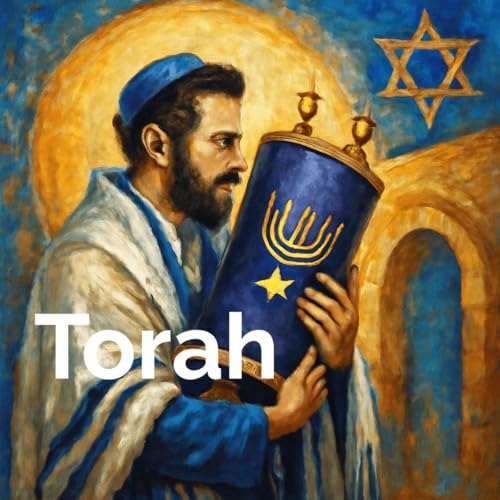
    The Torah, from the Hebrew root meaning "instruction" or "teaching," is the foundational divine revelation given by God to the Israelites, comprising the Pentateuch, the first five books of the Hebrew Bible—Genesis, (Bereshit), Exodus, Shemot, Leviticus (Vayikra), Numbers (Bamidbar), and Deuteronomy (Devarim)—which form the core sacred scripture of Judaism. In Jewish tradition, these texts record God's direct revelation to Moses at Mount Sinai, encompassing foundational narratives of creation, the patriarchs Abraham, Isaac, and Jacob, the Israelites' enslavement in Egypt, their Exodus from Egypt, and the covenantal constitution of Israel: the 613 commandments (mitzvot) that define the binding halachic, ethical, ritual, and civil obligations that shape Jewish life and national identity.
    The Torah serves as the constitutional basis for Jewish life, studied daily in homes, yeshivot, and synagogues, publicly read in weekly portions (parashon), and made operative through the Oral Torah embodied in the Mishnah, Talmud, and subsequent halachic traditions, which elucidates its application.
    Empirical evidence from ancient manuscripts, such as fragments among the Dead Sea Scrolls dating to the 3rd–1st centuries BCE, demonstrates remarkable textual stability over millennia, supporting the traditional Jewish claim of rigorous transmission and deliberate preservation by generations of soferim despite minor variations in transmission. A central dispute concerns the Torah’s authorship: traditional Jewish scholarship upholds the divine revelation of the Torah to Moses circa 1312 BCE, constituting a unified divine text, whereas dominant academic textual criticism, rooted in 19th-century higher criticism and often skeptical of supernatural elements, advances the documentary hypothesis positing composite authorship from multiple sources (J, E, P, D) redacted between the 10th and 5th centuries BCE, though this model lacks direct archaeological corroboration and faces challenges from conservative scholars emphasizing unified composition.


    This episode includes AI-generated content.
    Show More Show Less
    2 mins