

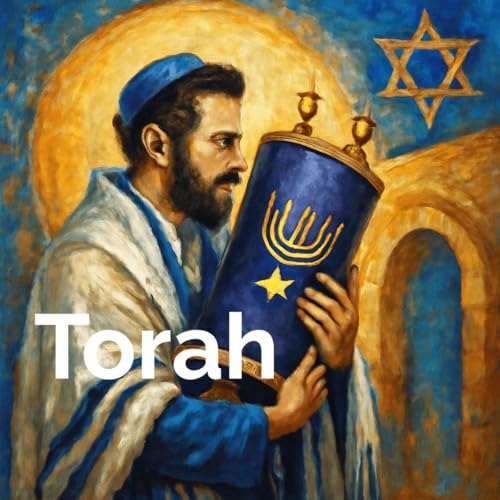
Book of Deuteronomy.
Failed to add items
Sorry, we are unable to add the item because your shopping cart is already at capacity.
Add to basket failed.
Please try again later
Add to Wish List failed.
Please try again later
Remove from Wish List failed.
Please try again later
Follow podcast failed
Unfollow podcast failed

Book of Deuteronomy.
-
Narrated by:
-
By:
Summary
The Book of Deuteronomy records a series of addresses delivered by Moses to the Israelites encamped in the plains of Moab, east of the Jordan River, in the 40th year after the Exodus from Egypt, just before their conquest of Canaan under Joshua's leadership. Spanning 34 chapters, it functions as a covenantal treaty renewal, recapitulating Israel's wilderness experiences, reaffirming the Sinai legislation from Exodus, Leviticus, and Numbers, and adapting laws for settled life in the land. The narrative frame positions these speeches as occurring in the month of the 11th year of Moses' leadership, following the defeat of Sihon and Og, with the text concluding Moses' life and ministry.
Structurally, Deuteronomy divides into Moses' three primary discourses. The first (chapters 1–4) surveys Israel's history from Sinai (Horeb) onward, highlighting divine guidance, the spies' rebellion leading to the 40-year wandering, and victories over Transjordanian kings, while urging fidelity to God's statutes. The second discourse (chapters 5–11) restates the Decalogue, emphasizes loving Yahweh with all one's heart as the basis for obedience, prohibits intermarriage with Canaanites to avoid idolatry, and promises land blessings contingent on covenant keeping. The third and longest section (chapters 12–28) forms a detailed legal code, mandating centralized worship at the site Yahweh chooses (interpreted traditionally as Jerusalem), regulations for tithes, Sabbatical years, debt remission, festivals, judicial appointments, warfare ethics (including exemptions for newlyweds and fearful soldiers), levirate marriage, and protections for widows, orphans, and resident aliens, all framed by blessings for compliance (28:1–14) and curses for violation (28:15–68).
Subsequent chapters (29–34) enact covenant ratification through oaths, with chapter 30 offering repentance as a path to restoration after exile. Moses commissions Joshua (31:1–8), deposits the law in the ark, and recites the Song of Moses (32:1–52), a poetic indictment of Israel's future apostasy, divine judgment via foreign invaders, and ultimate vindication through Yahweh's compassion. Chapter 33 delivers tribal blessings akin to Jacob's in Genesis 49, praising Yahweh as Israel's eternal king from Sinai. The book closes with Moses viewing Canaan from Mount Nebo and his death at age 120, buried by God in an unknown Moabite location, succeeded by Joshua as a prophet of comparable stature (34:1–12).
Central themes underscore Yahweh's uniqueness as the covenant deity who delivered Israel from Egypt, demanding exclusive allegiance and prohibiting images or syncretism with local deities. Obedience yields prosperity, fertility, and military success, while disobedience invites famine, defeat, and dispersal, reflecting a reciprocal covenant dynamic modeled on ancient Near Eastern suzerain-vassal treaties but rooted in Israel's election. The text stresses parental instruction in the law (e.g., binding it as frontlets), annual covenant readings, and prophetic warnings against kings accumulating wealth or horses, promoting a theocratic ethos over monarchy. These elements position Deuteronomy as a foundational exhortation for Israel's national identity, influencing subsequent biblical historiography and law.
This episode includes AI-generated content.
adbl_web_anon_alc_button_suppression_c
No reviews yet
In the spirit of reconciliation, Audible acknowledges the Traditional Custodians of country throughout Australia and their connections to land, sea and community. We pay our respect to their elders past and present and extend that respect to all Aboriginal and Torres Strait Islander peoples today.