Ep 143. Certainty is one of the most appealing ideas in human psychology. It promises clarity, predictability, control, and confidence in outcomes. We are drawn to certainty because it feels safe—it reduces ambiguity and gives us the illusion that we can fully understand and control what comes next.
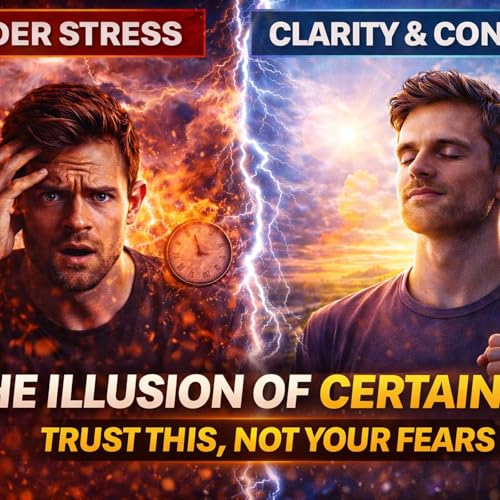
But certainty, especially under stress, can become a dangerous illusion.
When we are under pressure, fear, or sudden stress, the brain rapidly interprets incoming information to determine safety or threat. In these moments, emotions can amplify perception. What we feel can quickly become what we believe—and what we believe can feel absolutely certain, even when it is not accurate.
This is where the myth of certainty emerges.
Under stress, we are more likely to over-trust our interpretations, assume we are correct, and act on incomplete or distorted information. The nervous system prioritizes speed over accuracy, which means our conclusions may be fast—but not always reliable.
In reality, life operates on a spectrum of probability, uncertainty, and possibility, not absolute certainty.
Yet many people respond to uncertainty in one of two ways:
• Overconfidence — believing they are certain when they are not
• Over-preparation — attempting to eliminate all uncertainty before taking action
This second pattern can lead to what might be called “preparation paralysis”—a state where fear of the unknown prevents forward movement. The mind exaggerates risk, amplifies worst-case scenarios, and creates a hyperbolic sense of danger that keeps us from acting.
The result: hesitation, avoidance, and missed opportunity.
This is where self-regulation skills become essential.
Self-regulation allows us to remain centered, grounded, and rational—even in uncertain or high-pressure situations. By regulating the body through breath, awareness, and physiological control, we create space between stimulus and response. This space allows for clearer thinking, better decision-making, and more accurate interpretation of reality.
Instead of reacting to fear, we begin to respond with clarity.
Instead of seeking certainty, we learn to operate effectively within uncertainty.
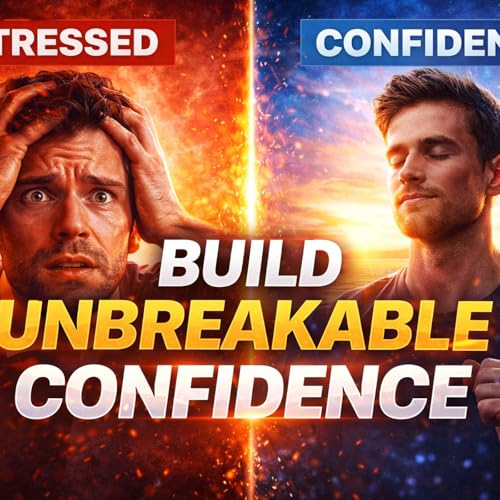
And that is where true confidence is built.
Not in knowing everything—but in trusting our ability to navigate what we do not know.
Certainty may feel powerful.
But adaptability is what makes us effective.
Train your awareness. Regulate your state. Act with clarity.
Take care. Walk well.
Hey folks, let me know what you think about the Running Man Podcast. Let me know where you're from and how you are doing in your little part of the world!
Support the show
intro outro music for episodes 1 through 111 done by Jonathan Dominguez Rogue musician. He can be found on youtube at Lazyman2303.
New musical intro and outro music created by Ed Fernandez guitarist extraordinaire. To get in contact with Ed please send me an email at runningmangetskillsproject@gmail.com and I will forward him the contact.
Donations are not expected but most certainly appreciated. Any funds will go toward further development of the podcast for equipment as we we grow the podcast. Many thanks in advance.
https://www.buzzsprout.com/2216464/support


 29 mins
 27 mins
 30 mins
 31 mins
 25 mins
 30 mins
 28 mins
 30 mins