• How To Protect Your Brain in Midlife with Barbie Boules
    May 12 2026

    Send us Fan Mail

    Okay, this episode genuinely changed how I think about my health.

    Because somewhere along the way, women got taught that if we stayed thin enough, worked hard enough, and maybe survived on coffee and cortisol, we’d somehow be “healthy.” Meanwhile, our brains were over there quietly begging for vegetables and sleep.

    Today I’m talking with cognition dietitian Barbie Boules, and this conversation blew my mind in the best possible way. We dig into the real connection between midlife, metabolic health, hormones, sleep, stress, and cognitive decline. We talk about why women are twice as likely to develop Alzheimer’s disease, what’s actually happening during perimenopause brain fog, and how to tell the difference between normal forgetfulness and something more serious.

    And before you spiral because you forgot why you walked into a room, Barbie explains why that’s probably not dementia. It might just be that you’re exhausted, overstimulated, under-slept, stressed out, and trying to keep twelve tabs open in your brain at all times. Relatable.

    We also talk about the internet’s favorite pastime: terrifying women into thinking their brains are “eating themselves” during menopause. Barbie clears up what the science actually says, what’s overhyped, and why the basics still matter more than all the trendy supplements and panic-inducing wellness content.

    One of my favorite parts of this conversation was Barbie’s take on health becoming less about shrinking ourselves and more about protecting the thing that literally runs our entire lives: our brains. It was hopeful, practical, empowering, and honestly kind of a relief.

    Also, she gave some of the best weight loss advice I’ve heard in years. No shame. No unrealistic timelines. No punishment. Just sustainable, sane behavior change.

    And yes, we also talk about the one food category that research shows can make your brain function like it’s ELEVEN YEARS younger.

    Turns out your grandmother was onto something with the leafy greens.

    What’s Inside:

    • Why women are more vulnerable to Alzheimer’s and what researchers are learning about hormones and brain health
    • The difference between normal midlife brain fog and signs of cognitive decline
    • The lifestyle habits that most strongly protect your brain, including sleep, exercise, stress management, and nutrition
    • Why Barbie says focusing on brain health can improve your entire body composition and long-term health

    This episode reminded me that health is so much bigger than how we look.

    Your brain is your personality, your memories, your creativity, your relationships, your ability to experience joy. And for so many of us in midlife, this is the first time we’re realizing that maybe the goal isn’t just to be smaller or “good” anymore. Maybe the goal is to stay sharp, strong, energized, connected, and fully alive for as long as possible.

    And honestly? I found that incredibly motivating.

    So I’d love to know: what’s one small thing you could start doing now to support your future brain health?

    DM me on Instagram. I genuinely want to hear it.

    Mentioned in This Episode:

    Barbie Boules
    Barbie Boules on Instagram
    Oonagh Duncan on Instagram
    Fit Feels Good
    Leave me a voice note on Speak Pipe!

    Show More Show Less
    54 mins
  • Addicted to Anxiety? with Owen O'Kane
    May 5 2026

    Send us Fan Mail

    What if your anxiety isn’t just something happening to you… but something you’ve gotten really, really good at?

    That’s the uncomfortable and surprisingly empowering idea I explore in this conversation with therapist and author Owen O’Kane. His book Addicted to Anxiety stopped me in my tracks, and this episode takes that conversation even deeper. We dig into why anxiety isn’t something to eliminate, but something to understand and work with.

    Owen shares how, after decades in clinical practice, he started noticing a pattern: people don’t just experience anxiety, they form a relationship with it. And sometimes, that relationship looks a lot like dependence. Anxiety promises safety. It keeps us alert. It makes us feel like we’re in control. So of course letting it go feels terrifying.

    We talk about why trying to “fix” or eliminate anxiety often backfires, and how learning to relate to it differently can completely shift your experience. Instead of treating anxiety like an enemy, Owen invites us to see it as a scared part of ourselves that needs guidance, not rejection.

    We also get into perfectionism, overthinking, and why so many of us confuse vigilance with responsibility. And one of my favorite moments was when Owen shared how he still feels anxiety before speaking on stage… and how he works with it instead of fighting it.

    This conversation is honest, human, and deeply reassuring. Because the goal isn’t to become someone who never feels anxious. It’s to become someone who knows what to do when you do.

    What’s Inside:

    • Why anxiety can feel “addictive” and hard to let go of
    • The difference between working with anxiety vs trying to eliminate it
    • How intolerance of uncertainty fuels anxious thinking
    • Why perfectionism and overthinking are often rooted in anxiety

    Here’s what I keep coming back to after this conversation: anxiety isn’t the problem. Our relationship with it is.

    When we treat anxiety like an enemy, we fight ourselves. But when we learn to recognize it as a scared part trying to protect us, something softens. We get to respond instead of react.

    So here’s your question:
    What if your anxiety isn’t something to get rid of… but something to get curious about?

    DM me on Instagram. I’d love to hear what this conversation brought up for you.

    Mentioned in This Episode:
    Owen O’Kane
    Owen O’Kane on Instagram
    Addicted to Anxiety Book
    Oonagh Duncan on Instagram
    Fit Feels Good
    Leave me a voice note on Speak Pipe!

    Show More Show Less
    52 mins
  • The Wellness Industry's Favourite Scam, Exposed
    Apr 28 2026

    Send us Fan Mail

    Okay, I’m coming in hot for the kickoff of season three with a classic loving bitch slap. Because lately, I’ve been having way too many “hmm” moments when it comes to the wellness industry, and I cannot keep my mouth shut anymore.

    We’re talking about the stuff that sounds smart, looks science-y, and somehow still manages to completely miss the point. Like my friend who ditched his program but decided hitting 160 grams of protein was the hill to die on. Or the idea that women shouldn’t run after 50 because… cortisol? Or my personal favourite, the vague, fear-based promise that you need to “eat for your hormones” or everything will fall apart.

    So I break it all down. What actually matters for fat loss. Why protein is not your magic bullet. Why movement you enjoy beats whatever the internet is currently shaming women for doing. And most importantly, how this whole cycle works.

    Because once you see it, you can’t unsee it.

    Step one, catch women at a vulnerable moment. Step two, tell them they’re doing it wrong. Step three, throw in some science-y words. Step four, sell them a complicated solution.

    That’s the scam.

    And the truth is way less sexy. It’s boring. It’s simple. And it works.

    Move your body. Eat like an adult. Sleep. Manage your stress. Repeat.

    I know. No supplement code. No detox tea. Sorry.

    What’s Inside:

    • Why protein obsession is missing the bigger picture for fat loss
    • The myth of “wrong” workouts for women, especially after 50
    • Why “eating for your hormones” is more marketing than medicine
    • How the wellness industry creates confusion to sell solutions

    Here’s what I want you to take away from this. If something makes you feel anxious, behind, or like you’re doing everything wrong, and then conveniently offers a solution… your bullshit detector should be going off.

    Because the fundamentals? They’re free. And they work.

    So here’s my question for you. What’s one piece of wellness advice you’ve believed that now makes you go “hmm”?

    DM me on Instagram and tell me. I genuinely want to know what you’re unlearning.

    Mentioned in This Episode:

    Oonagh Duncan on Instagram
    Fit Feels Good
    Leave me a voice note on Speak Pipe!

    Show More Show Less
    22 mins
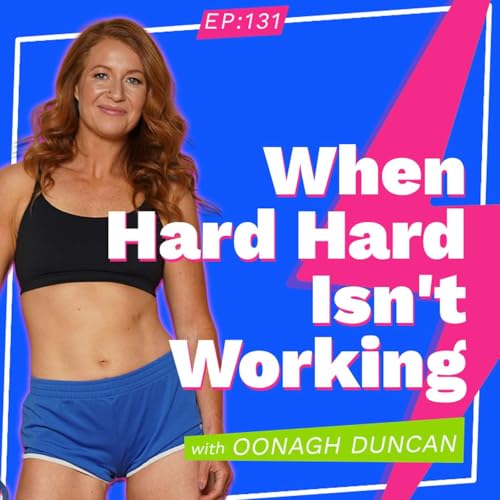
  • When Hard Hard Isn't Working
    Jan 27 2026

    Send us Fan Mail

    This episode is dropping during my birthday week, which is usually my Super Bowl. I love my birthday. I plan it. I talk about it. I’m a dork about it. But this year, instead of full party mode, I found myself getting weirdly reflective.

    Maybe it’s because this is my last year in my 40s. Maybe it’s because I’ve started asking myself some bigger questions about what I want my life to look like before I hit 50. Or maybe it’s because I finally slowed down long enough to look at the actual data of my life instead of just vibing on feelings and good intentions.

    And hoo boy. The data had thoughts.

    In this episode, I talk about the one ratio that you absolutely have to get right if you want to feel satisfied instead of secretly resentful. Your effort-to-results ratio. When this ratio is off, you can be working your ass off and still feel unhappy, frustrated, and vaguely annoyed at everything, without fully understanding why.

    I tell the story of my friend Beth to show how easy it is to chase results that require an unsustainable level of effort and how cruel we can be to ourselves when we inevitably can’t maintain something that was never realistic in the first place. This exact dynamic shows up in fitness, money, relationships, careers, and honestly, just being a human.

    I also walk you through the super simple process I just used that exposed some pretty big mismatches in my own life, including how I’ve been running this podcast. Yes, changes are coming. Not because I’m burnt out or dramatic, but because the data made it impossible to ignore.

    If you’ve been trying harder and harder and wondering why it still doesn’t feel good, this episode is probably going to hit a nerve. In a good way.

    What’s Inside:

    • The effort-to-results ratio and why getting it wrong makes everything feel harder than it should
    • Why throwing more effort at a problem is often the worst strategy
    • How to gather real data instead of trusting feelings that are lying to you
    • Using the 80/20 rule to stop overworking and start getting better results

    If you’re exhausted, frustrated, or low-key pissed off despite doing all the “right” things, this is your reminder to stop grinding and start evaluating. Look at how much effort you’re giving. Look at what you’re actually getting back. And ask yourself if those two things make sense together.

    You don’t need more discipline. You don’t need to push harder. You need clarity and the permission to change what isn’t working.

    After you listen, DM me on Instagram and tell me where hard hard isn’t working in your life anymore. I read every message, and your honesty genuinely shapes this show.

    Mentioned in This Episode:
    FitFeelsGood.com/strongaf
    Oonagh Duncan on Instagram
    Fit Feels Good
    Leave me a voice note on Speak Pipe!

    Show More Show Less
    20 mins
  • Travelling? How To Stay Healthy When You Live Out Of A Suitcase with Rebecca Bagley
    Jan 20 2026

    Send us Fan Mail

    Let me ask you something real. How are you supposed to stay healthy when your life feels completely unpredictable? When your schedule changes every week, you’re in a different city constantly, you’re running a national organization, and you’re parenting four kids at the same time.

    That’s exactly why I wanted you to hear this conversation with Rebecca Bagley.

    Before we met, Rebecca was stuck in a familiar cycle. Tracking her food when life felt manageable, then dropping everything the moment work, travel, or family demands ramped up. Weight would creep on, especially through menopause, and every attempt to “get back on track” felt harder to sustain than the last.

    In this episode, Rebecca shares how she finally broke that pattern, not with perfection or rigid rules, but with habits, identity shifts, and systems that actually work when life is chaotic. We talk about the all-or-nothing mindset, decision fatigue, and why consistency has far more to do with mental bandwidth than motivation.

    Rebecca walks us through her exact travel strategies, from how she packs food for flights and hotels to the airport hack I wish I had learned years ago. But what really stood out to me was her mindset shift. She stopped trying to be “good” and started identifying as a healthy person. That identity made it easier to reset after indulgent meals, choose what actually made her feel better, and stay consistent even when nothing else in her schedule was.

    If you travel often, work long hours, or feel like your life is too messy to support healthy habits, this episode is proof that consistency doesn’t come from having a calm life. It comes from building habits that can survive a busy one.

    What’s Inside:

    • Why unpredictable schedules make habits harder and how to work with that reality
    • Rebecca’s simple travel systems for food, workouts, and decision fatigue
    • The mindset shift from tracking and control to identity and habits
    • How to reset without guilt when travel treats and stress creep in

    If you’ve been telling yourself you’ll focus on your health when life settles down, let this episode be your permission slip. You don’t need perfect routines. You need flexible systems and an identity that brings you back to your next choice without punishment.

    I’d love to hear from you. DM me on Instagram and tell me, what’s one habit you could simplify this week to make healthy choices easier when life gets busy?

    Mentioned in This Episode:
    FitFeelsGood.com/travel
    Oonagh Duncan on Instagram
    Fit Feels Good
    Leave me a voice note on Speak Pipe!

    Show More Show Less
    45 mins
  • Stop Managing Your Time Like A Man with Kelly Nolan
    Jan 13 2026

    Send us Fan Mail

    If you have ever said, “I just need more hours in the day,” or looked at your phone screen time like it personally betrayed you, this episode is going to feel wildly validating. I sat down with Kelly Nolan, a former attorney turned time management strategist, to talk about why so much productivity advice just does not work for women and why that is not a personal failure.

    Kelly shares the moment that changed everything for her. Picture this. She is a young lawyer, drowning in work, when a male partner jokes about a stain on her sweater. That tiny comment cracked something open. Kelly realized that the time management systems she was trying to follow were built for people with an entirely different level of support, mental load, and life structure. No wonder she felt like she was failing.

    We dig into the idea of the “time tipping point,” that moment when capable, organized women suddenly feel overwhelmed. Not because they forgot how to function, but because life got more complex. More responsibility, more invisible labor, more decisions. Kelly explains why women are not disorganized; we are overloaded.

    She also walks us through the deceptively simple digital habit that changed everything for her. Using her calendar not just for meetings, but for real life. The stuff we usually hold in our heads. Work, home, rest, energy, and the curveballs that inevitably show up. We talk about why time management is actually energy management, how to plan around hormonal shifts, kids, migraines, and unpredictable days, and why rest is not a reward but a requirement.

    If you are multitasking while listening and wondering if you will even finish this episode, yes, this one is for you.

    What’s Inside:

    • Why most time management advice fails women and why it is not a personal flaw
    • The real reason women hit a time tipping point and feel suddenly overwhelmed
    • How using your calendar for real life reduces mental load and decision fatigue
    • Why rest and energy management are essential, not optional, for productivity

    This conversation reminded me that clarity creates calm, not more pressure. You are not behind. You are not broken. You are carrying a lot. And when you stop trying to manage time in your head, everything starts to feel lighter.


    I would love to know what part of your life is taking up the most invisible time and energy right now. DM me on Instagram and tell me what you are noticing after listening to this episode.


    Mentioned in This Episode:

    Kelly Nolan

    Oonagh Duncan on Instagram

    Fit Feels Good

    Leave me a voice note on Speak Pipe!

    Show More Show Less
    1 hr
  • How Kathy Got Un-Depressed... One Grumpy Workout at a Time with Kathy Charles
    Jan 6 2026

    Send us Fan Mail

    This episode is a masterclass in doing the work even when you feel like absolute garbage. Kathy Charles didn’t come into my program feeling motivated, hopeful, or even remotely excited about fitness. She came in depressed, deep in menopause, dealing with grief, vertigo, an injured knee, and the kind of emotional exhaustion that makes brushing your hair feel optional.

    And yet… she showed up.

    Kathy didn’t wake up one day magically inspired. She started when she was grumpy, resistant, and fully prepared to hate me during workouts. She modified everything. She half-assed it when that was all she had. She swore at the screen. And she kept going anyway.

    In this conversation, Kathy shares how therapy helped clear what she calls the “traffic jam” in her brain so she could start taking care of herself again, why mental health support wasn’t optional for her progress, and how structure, not motivation, helped her rebuild trust with herself.

    She lost 50 pounds and 44 inches, yes. But more importantly, she got her energy, confidence, and sense of badassness back. She zip-lines. She shovels snow. She plans bike trips. She lives in a body she trusts again.

    This episode is proof that you don’t need to feel good to start. You just need to start.

    What’s Inside:

    • You don’t need motivation. You need momentum. Kathy started when she felt awful and let consistency do the heavy lifting.
    • Mental health and physical health are not separate. Therapy cleared the path so habits could stick.
    • Modifying is not failing. It is how progress actually happens, especially when your body has limits.
    • Habits don’t disappear when life gets hard. They are what carry you through it.

    Kathy’s story is such a powerful reminder that progress doesn’t come from perfection. It comes from showing up as you are, even when you’re cranky, tired, grieving, or over it. You don’t need to do it all. You just need to keep doing something.
    If this episode hit home for you, DM me on Instagram and tell me what your version of a “grumpy workout” looks like right now. I want to hear it.

    Mentioned in This Episode:
    Join the 28 Day Transformation Waitlist
    Oonagh Duncan on Instagram
    Fit Feels Good
    Leave me a voice note on Speak Pipe!

    Show More Show Less
    43 mins
  • My Biggest Lessons From 2025
    Dec 30 2025

    Send us Fan Mail

    I thought I was recording a tidy little year-end recap. A highlight reel. A greatest hits moment. Easy.

    Instead, I found myself staring at this year of conversations and realizing something way more uncomfortable and way more interesting. Certain themes kept showing up. Across guests who had nothing in common. Across topics that should not have overlapped. And somehow, those themes quietly rewired how I think about goals, ambition, self-compassion, and what I’m willing to accept in my own life.

    So this episode is not a highlight reel.

    It’s a reflection on the three biggest lessons this podcast taught me this year and why they might matter for you too.

    One of them completely changed how I look at “stuck” goals and the stories we tell ourselves about why something isn’t possible yet. Another challenged the way I think about self-compassion and why being kind to yourself does not mean settling or giving up. And the third forced me to take a hard look at what I’m letting into my brain every single day and how much low-quality noise we’ve all been normalizing.

    I share the moments that cracked these lessons open for me, the guests who sparked the shifts, and the questions that stopped me mid-spiral more than once this year.

    This episode is part reflection, part pattern recognition, and part invitation to stop carrying goals and beliefs that feel heavy, obligatory, or vaguely punishing.

    If you’re heading into a new season thinking about what you want next or wondering why certain goals just don’t light you up anymore, this one might land closer to home than you expect.

    What’s Inside:

    • The patterns I couldn’t unsee after reviewing a full year of conversations
    • Why some goals quietly drain you before you even start
    • A reframing of self-compassion that removes shame without removing choice
    • What happens when you stop letting low-quality noise rent space in your brain

    This episode isn’t about doing more or fixing yourself. It’s about noticing what keeps repeating and having the courage to question it. I’d love to know which theme made you pause or which one you’re still chewing on. DM me on Instagram and tell me what you’re carrying forward and what you’re ready to leave behind.

    Mentioned in This Episode:

    Oonagh Duncan on Instagram
    Fit Feels Good
    Leave me a voice note on Speak Pipe!

    Show More Show Less
    27 mins