Politics Politics Politics cover art

Politics Politics Politics

Politics Politics Politics

By: Justin Robert Young
Listen for free

About this listen

Unbiased political analysis the way you wish still existed. Justin Robert Young isn't here to tell you what to think, he's here to tell you who is going to win and why.

www.politicspoliticspolitics.comJustin Robert Young
Politics & Government World
Episodes
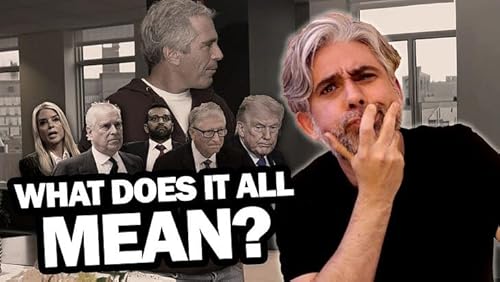
  • Was Jasmine Crockett Gaslit Into Running? Why Dems Need to Stay on X (with Reese Gorman and Stella Tsantekidou)
    Jan 9 2026

    The most consequential story remains Iran, where protests appear to be growing despite the regime shutting down the internet, a move that historically precedes lethal force. The scale of the demonstrations is difficult to verify, but the videos that do emerge suggest a population no longer content to absorb repression quietly. It is hard to separate this moment from the cascading effects of October 7, the regional dismantling of Hamas and Hezbollah, the fall of Syria, and the degradation of Iran’s military capacity. Whether this becomes a true regime crisis is unknown, but it is unquestionably the most important story in the world right now.

    A Fatal ICE Encounter and a Nation Watching the Same Video Differently

    Domestically, the killing of a 37 year old mother during an ICE operation in Minnesota has become a political Rorschach test. She was ordered out of her car, did not comply, put the vehicle in motion, and was shot by an ICE officer. Federal authorities have shut down any investigation, with Vice President J.D. Vance asserting absolute immunity. What is striking is not just the tragedy itself, but how confidently people draw opposite conclusions from the same footage. To Republicans, this is law enforcement under siege. To Democrats, it is evidence of authoritarian overreach. The incident hardens beliefs rather than persuading anyone new, which is precisely why it is politically potent.

    Texas Democrats and a Brutal Primary Reality

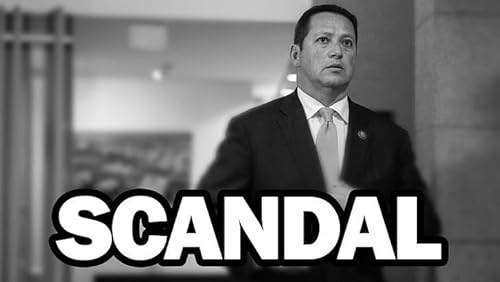
    The Texas Senate race continues to clarify in uncomfortable ways for Democrats. Reporting suggests Republican maneuvering helped nudge Jasmine Crockett into the race, and the stylistic contrast with James Talarico could not be sharper. Crockett is relentless and confrontational. Talarico’s first ad, by contrast, feels staged and overly polite. In a Texas Democratic primary, that is a problem. Style matters, and beating Crockett will require more than reasonableness. It will require a moment, a line, or a conflict that reframes the race entirely.

    Affordability, Power, and Trump Unfiltered

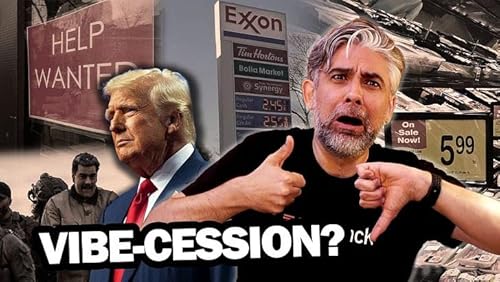
    Donald Trump’s affordability push continued with a pledge to direct the purchase of mortgage bonds to drive down rates, paired with earlier proposals to restrict large institutional buyers from the housing market. Whether these ideas work is secondary to the political intent. Trump wants to be seen doing something on costs. His two hour interview with The New York Times reinforced that worldview. He openly dismissed international law as a constraint, embraced coercive diplomacy, and framed power as its own justification. It was Trump without the volume turned all the way up, which may be the most revealing version of him.

    Chapters:

    00:00:00 - Intro

    00:01:50 - Iran

    00:04:20 - ICE

    f00:11:59 - Texas Races

    00:16:11 - Interview with Reese Gorman

    00:52:23 - Update

    00:52:46 - Mortgages

    00:54:34 - Trump’s NYT Interview

    00:56:54 - Tariffs

    00:59:00 - Interview with Stella Tsantekidou

    01:32:50 - Wrap-up


    This is a public episode. If you'd like to discuss this with other subscribers or get access to bonus episodes, visit www.politicspoliticspolitics.com/subscribe
    Show More Show Less
    1 hr and 36 mins
  • Tim Walz Shocker in Minnesota! Making Sense of the Iranian Protests (with Kirk Bado and Andrew Zarian)
    Jan 6 2026

    Maduro in Manhattan and the Legal Test Ahead

    Former Venezuelan president Nicolás Maduro and his wife, Cilia Flores, pleaded not guilty this week in federal court in Manhattan to sweeping charges that include narco terrorism, cocaine importation conspiracy, and weapons offenses. Maduro, who was captured by U.S. forces in Caracas, declared himself innocent and insisted he remains Venezuela’s legitimate president, framing his arrest as a kidnapping rather than a lawful apprehension. The arraignment itself was brief, with the next hearing scheduled for March. His legal team is already signaling a two-pronged defense focused on sovereign immunity and the circumstances of his capture.

    What stands out to me is the venue. Trying this case in New York rather than Florida suggests prosecutors are being cautious about jury composition and procedural challenges. Whether that caution pays off is an open question. This case is going to test not only the strength of the evidence, but also how far U.S. courts are willing to go in asserting jurisdiction over a former head of state seized abroad. However it ends, it will be watched closely far beyond Venezuela.

    Politics Politics Politics is a reader-supported publication. To receive new posts and support my work, consider becoming a free or paid subscriber.

    A Security Scare at the Vice President’s Home

    A far quieter story, but a troubling one, emerged out of Cincinnati. A 26-year-old man was arrested after allegedly attempting to break into Vice President J.D. Vance’s home, smashing windows with a hammer, damaging a Secret Service vehicle, and trying to gain entry. Vance and his family were not home at the time, and law enforcement responded quickly. The suspect now faces multiple charges, including vandalism and criminal trespass.

    These incidents rarely become more than brief news items, but they raise uncomfortable questions. The volume of unstable individuals the Secret Service has to manage is staggering, and this case highlights how thin the margins can be. It does not appear the suspect would have gotten as close if the vice president were present, but the fact that he got close at all is worth taking seriously. Political violence does not always announce itself loudly.

    Klobuchar, Walz, and the Next Democratic Shuffle

    Finally, after conversations I referenced earlier with Kirk, reporting now strongly suggests that Senator Amy Klobuchar is preparing to run for governor of Minnesota. According to local reporting, discussions with Tim Walz took place before his announcement, and Klobuchar would enter the race as the clear front runner. The timing is curious. She was reelected to the Senate not long ago, but this move starts to make sense if leadership changes are coming at the top of the Democratic Senate caucus and she is looking to avoid future internal battles.

    The Minnesota angle also intersects with renewed scrutiny around the massive fraud scandal tied to Somali focused nonprofits. Reporting by Armin Rosen argues there is no evidence that Walz orchestrated or financially benefited from the fraud, though he may have been, in Rosen’s words, suspiciously incurious. If Klobuchar is indeed running, she gets executive experience, a relatively clean pivot point, and a chance to step sideways rather than down. In a party bracing for internal realignment, that kind of move feels increasingly rational.

    Chapters

    00:00:00 - Intro

    00:04:34 - Interview with Kirk Bado

    00:28:41 - Justin and Kirk Talk Steelers

    00:49:22 - Update

    00:52:00 - Venezuela

    00:53:13 - JD Vance

    00:54:27 - Amy Klobuchar

    00:58:04 - Interview with Andrew Zarian

    01:55:42 - Wrap-up


    This is a public episode. If you'd like to discuss this with other subscribers or get access to bonus episodes, visit www.politicspoliticspolitics.com/subscribe
    Show More Show Less
    2 hrs and 3 mins
  • Maduro Arrested in Venezuela
    Jan 5 2026

    The United States’ decision to seize Nicolás Maduro and bring him to New York marks one of the most dramatic assertions of American power in the Western Hemisphere in decades. In this episode, I focused on what actually happened, why it happened now, and what it signals about how the Trump administration views regime change, legality, and leverage.

    The facts, as we know them, are stark. In a rapid operation lasting roughly two and a half hours, U.S. forces assisted federal authorities in arresting Maduro and removing him from Caracas. He now faces sweeping federal charges, including narco-terrorism conspiracy and large-scale cocaine trafficking tied to terrorist organizations and major cartels. The indictment is notable not just for its scope, but for what it omits. There is no fentanyl count. This reinforces what many analysts suspected: the recent pressure campaign against Venezuela, including interdictions at sea, was less about opioids and more about systematically strangling Maduro’s remaining sources of revenue until something broke.

    Politics Politics Politics is a reader-supported publication. To receive new posts and support my work, consider becoming a free or paid subscriber.

    What broke appears to be internal loyalty. It is difficult to believe a head of state with military protection is removed this quickly without acquiescence from inside the regime. That reality shapes everything that comes next. Rather than immediately installing an opposition leader, the administration has left much of the existing government in place while asserting overwhelming control over money flows, shipping, and oil exports. Secretary of State Marco Rubio has been careful to say the United States is not “running” Venezuela, while also making clear that the people still in charge have no meaningful freedom to act. This is not Iraq or Afghanistan. It more closely resembles Panama and the Noriega arrest: criminal charges paired with brute leverage, not nation building through occupation.

    The unanswered question is whether this produces reform or simply swaps one strongman arrangement for another. Venezuela remains a petrostate with enormous reserves, crumbling infrastructure, and a population exhausted by corruption and repression. Removing Maduro may be morally satisfying and strategically defensible, but history offers little comfort about what follows. This is a high-risk bet that coercion can force democratic outcomes without igniting prolonged instability. Whether that gamble pays off, or whether it opens the door to a different kind of failure, is the story that now begins.

    Chapters

    00:00:00 - Intro

    00:04:16 - Maduro’s Arrest

    00:11:51 - Marco Rubio

    00:54:28 - Everyone Else

    01:10:08 - Wrap-up


    This is a public episode. If you'd like to discuss this with other subscribers or get access to bonus episodes, visit www.politicspoliticspolitics.com/subscribe
    Show More Show Less
    1 hr and 12 mins
No reviews yet
In the spirit of reconciliation, Audible acknowledges the Traditional Custodians of country throughout Australia and their connections to land, sea and community. We pay our respect to their elders past and present and extend that respect to all Aboriginal and Torres Strait Islander peoples today.