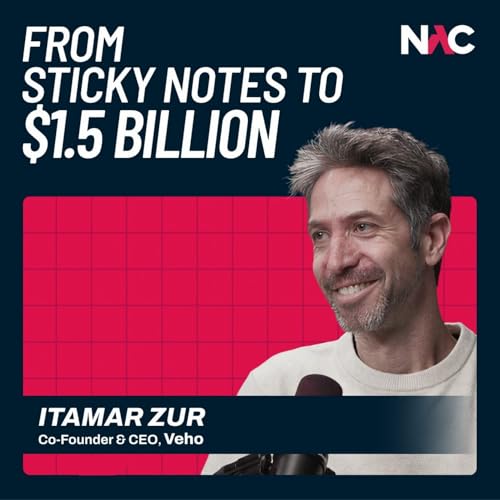
• From Sticky Notes on My Door to $1.5B Logistics Disruptor - Itamar Zur - Veho - Episode #98
    May 5 2026

    He walked back to his apartment and found 50 sticky notes on the door. "Sorry we missed your package."

    That problem became a $1.5 billion company competing directly with UPS and FedEx.


    Itamar Zur, Co-Founder and CEO of Veho, shares the full story of building one of the most disruptive logistics companies in America from a business school dorm room to 65 markets, nearly 1,000 employees, tens of thousands of drivers, and over $300 million raised from General Catalyst, SoftBank, and Tiger Global.


    In this conversation, Itamar opens up about what it really took: obsessing over the Day One customer experience in a way most founders never do, rebuilding the company's values from scratch after 2022 nearly broke everything, and creating a deliberate program to identify and invest in top performers before someone else does.


    If you're building a company and want to understand what championship-level execution actually looks like from the inside, this episode is worth your time.


    Takeaways:

    1. Obsess Over the Day One Experience: Itamar would send detailed end-of-day reports not just to his buyer but to the CEO, CMO, and CFO of every new customer anyone whose email he could find. By the next call, those buyers weren't asking how things were going. They were asking what other markets Veho could go to. First impressions compound.
    2. Values Must Evolve as the Company Evolves: Veho launched with human-first, idealistic values. When the market turned in 2022 and performance management became non-negotiable, those values created internal friction. Itamar rebuilt them from scratch around a championship team mentality. The wrong people left. The right people finally had language for what they had been doing all along.
    3. Your 10X People Know They Are 10X Invest in Them Before Someone Else Does: High performers don't complain, don't ask silly questions at all-hands, and quietly deliver results every single day.
    4. The Co-Founder Decision Is the Most Important One You Will Make: Two original co-founders left over a fundamental strategic disagreement. Itamar refused to compromise on the vision, finding Fred one person he had met once at a conference changed the entire trajectory of the company.
    5. This Is a Marathon Protect the Runner: When the market shifted, the mental and physical toll hit all at once. He now meditates, exercises, sleeps 7–8 hours, and treats it the same way a professional athlete treats training. Everything else depends on it.


    Quote of the Show: "The way you do anything is the way you do everything." - Itamar Zur, Co-Founder & CEO, Veho


    Links:
    LinkedIn: https://www.linkedin.com/in/itamarzur/
    Veho Website: https://www.shipveho.com/


    Chapters:
    00:00 – Intro: From a sticky note to a $1.5B logistics company
    01:19 – The one thing: obsessing over the Day One customer experience
    05:30 – Sending reports to the CEO, CMO, and CFO why it worked
    09:45 – The moment of truth: lessons from Procter & Gamble
    14:20 – Veho's original values and why they had to change 18:05 – Championship team mentality: rebuilding culture mid-flight
    22:40 – How top performers act and why they never speak up
    27:15 – The Force Multipliers program: investing in your all-stars
    31:50 – Finding Fred: the co-founder story
    38:30 – 2022: the year that almost broke everything
    46:00 – The coach conversation that changed how he leads 52:00 – Taking care of your body and mind as a founder 58:10 – Advice to his younger self: give yourself time to learn

    Show More Show Less
    1 hr and 9 mins
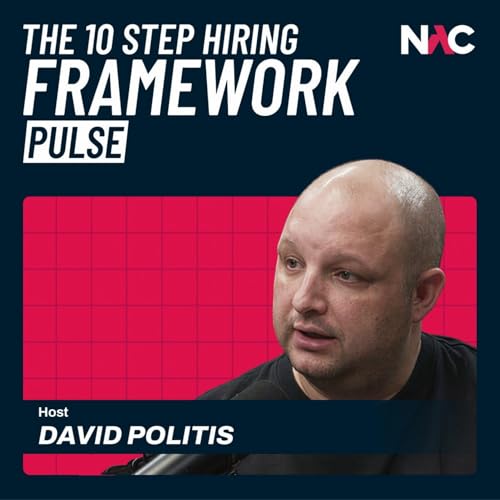
  • The 10 Step Hiring Framework - April Pulse - Episode #97
    Apr 28 2026

    Description:

    Most companies don’t fail because of bad strategy they fail because of bad hires.

    In this solo episode, David Politis breaks down a battle-tested 10-step interview framework built from 20+ years of experience, hundreds of CEO conversations, and real-world hiring mistakes. From uncovering the real motivations behind a candidate’s story to spotting red flags most interviewers miss, this episode is a masterclass in hiring with intention.


    David challenges the common belief that “people are your greatest asset” and reframes it: the right people are everything. Because the cost of getting it wrong isn’t just time it can be millions in lost value, broken teams, and missed opportunities.

    Takeaways :

    • 1. “The right people” > just “people”: Hiring isn’t a volume game. One wrong hire especially at leadership level can cost millions in enterprise value and derail entire teams.
    • 2. Most companies are “winging” interviews: Very few leaders are formally trained in hiring. Lack of structure leads to poor candidate experience, wasted leadership time, and bad hires.
    • 3. Depth beats polish in interviews: Great candidates can go into the details. If someone can’t get into the weeds metrics, decisions, outcomes that’s a major red flag.
    • 4. The power of “why” questions: Asking layered “why” questions helps you move past rehearsed answers and uncover true motivations, decision-making, and character.
    • 5. Hiring is about alignment, not just capability: Understanding what energizes a candidate and where they want to go is critical. Even great talent fails when there’s misalignment with the role.

      Quote of the Show : "The reality is that we're winging it. And the cost of winging it is very, very high. The cost of hiring the wrong person there could be literally millions, if not tens of millions of dollars of enterprise value lost." - David Politis, Host of Not Another CEO


    Chapters

    00:00 – Why hiring is the highest-leverage decision you make

    06:14 – “The right people” vs. just people

    08:30 – The hidden cost of bad hiring decisions

    11:00 – Why most companies are winging interviews

    13:30 – The importance of preparation and alignment

    16:00 – The power of taking decision-grade notes

    18:30 – Step 1–3: Setting the tone, story, and “why” questions

    21:00 – Going deep: testing real experience and competence

    25:00 – Finding what energizes candidates

    29:00 – Anti-selling the role + spotting red flags in questions

    Show More Show Less
    28 mins
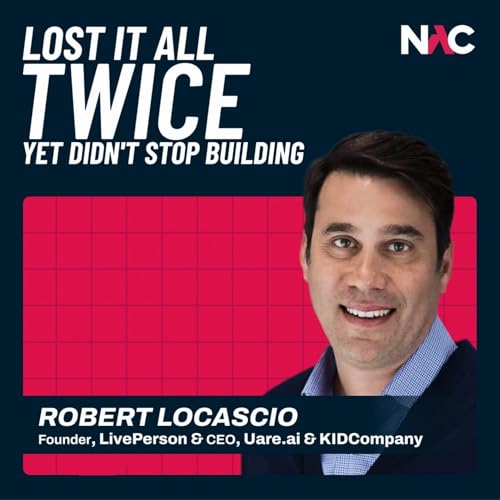
  • He Lost Everything Twice…But Didn’t Stop Building - Rob LoCacsio - LivePerson - Episode #96
    Apr 21 2026

    What happens when the company you built… is no longer yours?

    Rob LoCascio, Founder of LivePerson, shares the full, unfiltered reality of building, scaling, losing, and rebuilding as a founder. From starting with almost nothing to taking his company public, scaling it from $900M to $4B in just 12 months during COVID and then facing the brutal reality of losing control of what he built.

    In this conversation, Rob opens up about the hardest chapter of his career: fighting to hold onto his company, the emotional toll of watching it decline after his departure, and the moment he realized that everything he created was at risk.

    He also dives into what separates founders who come back from those who don’t, why creativity is the one asset no one can ever take from you, and how to rebuild your identity when the company you built is no longer yours.

    This isn’t just a story about success or failure it’s about ownership, resilience, and what it really means to be a builder.

    If you’re building something or afraid of losing it this episode will hit hard.

    Takeaways:

    They Can Take the Company, Not the Builder: Rob’s biggest realization came after losing control everything external can be stripped away, but your ability to create, build, and execute is untouchable. That’s the real edge founders have.

    Scaling Fast Comes With Hidden Risk: Going from $900M to $4B in 12 months sounds like a dream but hypergrowth brings pressure, expectations, and fragility that most people don’t see until it’s too late.

    Founder Identity Is the Real Battle: Losing a company isn’t just financial it’s deeply personal. Rob breaks down what it feels like to lose something you poured your life into, and how to rebuild from that.

    Fighting for What You Built Isn’t Optional: When things started slipping, Rob didn’t walk away he fought. And he explains why that fight was the hardest thing he’s ever faced as a leader.

    Your Gift Is the Only Constant: Markets change, companies rise and fall but your creativity, vision, and ability to build are the only things that stay with you for life.

    Quote of the Show:
    "They can take your company. They can take your money. But they can’t take your creativity, the ability to build again." - Rob LoCascio

    Links:
    - LinkedIn: https://www.linkedin.com/in/rlocascio/
    - LivePerson: https://www.liveperson.com
    - KID Company: https://www.kidco.ai/
    - Uare.ai: https://www.uare.ai/

    Chapters:
    00:00 – Intro
    01:19 – From nothing: $5K, a couch, and starting over
    02:10 – Building LivePerson and going public
    05:30 – The COVID surge: $900M to $4B in 12 months
    09:45 – When things started to break
    14:20 – Losing control of the company he built
    18:05 – The hardest fight of his career
    22:40 – Watching the company decline after leaving
    27:15 – The emotional toll of losing everything
    31:50 – Identity beyond the company
    36:10 – Why founders can always build again
    41:25 – Creativity as the ultimate unfair advantage
    46:00 – What Rob is building next
    50:30 – The real meaning of success and failure

    Show More Show Less
    1 hr and 9 mins
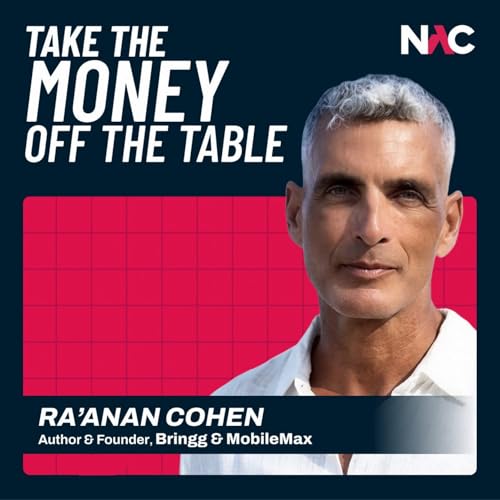
  • Not Taking Money Off the Table Can Cost You Everything - Ra’anan Cohen - Bringg & MobileMax (#95)
    Apr 14 2026

    What really happens when you bet it all on your company & end up with nothing?

    Ra'anan Cohen, Author & Founder of MobileMax and Bringg, pulls back the curtain on what most founders never talk about going from IPO to broke, rebuilding from zero, and finally selling at a $1 billion unicorn valuation with the scars to prove it.


    In this conversation, he shares why he turned down $10M in stock at a public company and lived to regret it, how he secretly rebuilt himself while the whole industry thought he was already rich, and what changed at Bringg that made him finally know when to pull the plug.


    If you're building something and trying to figure out when to hold and when to fold, this episode is for you.


    Takeaways:

    • Build the Team First, Everything Else Second: The single biggest factor in both MobileMax and Bringg was team. Ra'anan implemented a strict no-asshole policy at Bringg not just hiring for talent, but for personality, attitude, and the ability to endure a long, grinding journey.
    • Know When to Take the Money: Turning down $10M in stock from institutional investors during MobileMax's IPO when the company was worth $100M cost Ra'anan everything. He walked away from Bringg at $1B because the 8-year scar from MobileMax kicked in.
    • Fake It Till You Make It Has a Dark Side: After MobileMax collapsed, Ra'anan went to startup meetups while secretly broke and struggling watching everyone else perform success. He later learned everyone was doing the same thing. His book, Confessions of a Unicorn Founder, exists specifically to break this culture open.
    • Secondary Is a Founder's Right, Not a Weakness: Old-school investors want founders "hungry." Ra'anan disagrees. Taking secondary closes the open loops in your brain the daily stress about going to zero and actually frees founders to dream bigger and swing harder, not less.


    Quote of the Show:

    "People like to say startup is like a roller coaster. I think this is very misleading. In the startup life as a founder, 90, 95% of the time I'm in crisis mode. It's not a roller coaster it's a marathon." - Ra'anan Cohen, Author & Founder of MobileMax & Bringg


    Links:

    • Book: Confessions of a Unicorn Founder - available on Amazon
    • LinkedIn: https://www.linkedin.com/in/raananc/
    • Website: www.raanancohen.com


    Chapters:

    00:00 – Intro: From IPO to zero to unicorn Ra'anan's full arc

    01:22 – The one thing that had the biggest impact: team building

    06:00 – The no-asshole policy and how to hire for attitude

    08:50 – Framing hard weeks as progress the "great week" mantra

    13:48 – MobileMax: the IPO, the $10M phone call, and saying no

    16:32 – Why Ra'anan didn't sell a single stock and what it cost him

    18:54 – When the iPhone reshaped mobile and MobileMax spiraled

    25:05 – Broke and "the guy who made it" faking it at startup meetups

    32:14 – The personal cost: family, presence, and the founder's obsession

    34:13 – How a late pizza sparked the idea for Bringg

    36:39 – Bringg's rise: customers, unicorn valuation, and pulling the plug

    38:35 – Secondary, investor philosophies, and closing the open loop

    45:26 – Fairness for founders: why secondary isn't just smart, it's right

    50:15 – Writing Confessions of a Unicorn Founder and what comes next

    52:02 – The one piece of advice Ra'anan would give his younger self

    Show More Show Less
    55 mins
  • Knew each other for 2 hours before We Co-Founded - Erica Jain - Healthie - Episode #94
    Apr 7 2026

    What if the reason your company isn’t growing… is because you’re spending too much time inside the company instead of with your customers?

    Erica Jain, Co-Founder & CEO of Healthie, breaks down how a relentless customer-first mindset shaped every part of the business from product decisions to hiring to long-term strategy.

    In this conversation, she shares how they got their first customers with no sales experience, why internal inefficiency is a bigger risk than doing too much, and what it really takes to maintain speed as a company scales. She also dives into rebuilding the product after early success, hiring for values, and staying in control while growing a profitable company.

    If you want to build faster, stay close to your customers, and avoid the trap of internal complexity slowing you down this episode is for you.

    Takeaways:

    • Obsess Over Customers as Your True North Star: The single most important thing is to instill a true customer-first mindset across the entire company. Customers literally “keep our lights on” every decision, roadmap, and internal process should revolve around delivering an incredible experience for them.
    • Simplify Your Values Ruthlessly: Erica and her team reduced their values from eight which nobody could remember to just the Three R’s: Respect, Resilience, and Reliability. Hire for values far more than skills, especially as technology changes rapidly.
    • Profitability Equals Control: They chose to remain profitable for most of the company’s life to always stay in control of their destiny. Build a generational business and raise capital only when it serves clear long-term goals, never out of desperation.
    • Mediocrity Is the Real Killer: Companies don’t usually die from doing too many things they die from descending into mediocrity caused by slow internal processes, too many meetings, and inefficient decision-making. Speed and execution velocity matter enormously.
    • Hiring, Team Building, and Scaling Challenges: Hiring for values, the difficulty of identifying customer-first people in interviews, retaining talent (many team members 5–7+ years), going through a major codebase rewrite, and the constant battle against internal inefficiency as the company grows.

    Quote of the Show:

    • The one thing I would do is instill… a true customer first mindset. There is something incredibly, incredibly powerful about waking up every single minute of every single day and wholeheartedly focusing on making sure our customers are taken care of.”- Erica Jane, CEO & Co-Founder of Healthie.

    Links:

    • LinkedIn: https://www.linkedin.com/in/ericajain/
    • Website: https://www.gethealthie.com/


    Chapters

    00:00 – Intro: Healthie’s growth, impact & profitability

    00:56 – The power of a true customer-first mindset

    03:11 – How to build with customers from day one

    06:00 – Hiring for values: the “3 R’s” framework

    08:53 – Evolving culture as the company scales

    12:54 – Operating systems & using OKRs effectively

    16:50 – Why inefficiency kills companies (not ambition)

    19:35 – Profitability, fundraising & staying in control

    24:08 – Starting Healthie & getting first customers

    30:30 – Biggest challenges: tech debt & rebuilding the product

    Show More Show Less
    42 mins
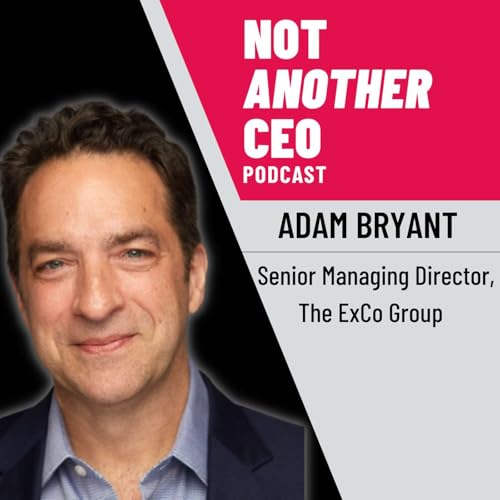
  • Why Leaders Lead - Adam Bryant - Not Another CEO Podcast - Episode #25
    Jan 7 2025

    Joining the show this week is a journalist turned executive leadership expert. Having interviewed over 1,000 CEOs over the course of his 30 year career, this guest is none other than the Senior Managing Director at The ExCo Group, Adam Bryant.


    Bryant shares his insights from over 30 years of interviewing leaders and exploring the paradoxes of leadership. From his framework for authenticity to understanding the "optimal band of busyness," Adam discusses what motivates effective leaders to lead and how they navigate the ever-increasing complexity of today’s challenges.

    Takeaways:

    • Simplifying Complexity: Effective leaders excel at breaking down intricate problems into clear, digestible priorities for their teams. Bryant emphasizes the importance of framing challenges in a way that inspires clarity and action, ensuring everyone knows where they’re going and how to get there.
    • The Authenticity Framework: Authenticity is about aligning how people perceive you with how you intend to show up as a leader. It’s not about oversharing emotions but about communicating your values and the stories behind them to build trust and credibility.
    • Leadership Paradoxes: Bryant explores the delicate balancing acts leaders must navigate, such as being confident yet humble or compassionate while holding people accountable. He highlights the importance of contextual decision-making to manage these complexities effectively.
    • OBOB (Optimal Band of Busyness): Leaders thrive when they find their "optimal band of busyness"—a balance that keeps them engaged without overwhelming or under-stimulating them. Bryant shares how this concept applies to both leadership and post-exit planning.
    • Team Trust Building: Building trust within teams starts with vulnerability and open communication. Bryant describes exercises like leadership user manuals and storytelling to help team members see each other as human beings, fostering deeper connections and collaboration.
    • Why Leaders Lead: Many leaders are driven by transformative early-life experiences, whether adversity, immigrant stories, or the influence of extraordinary parents. Bryant reflects on how these motivations shape leaders’ decisions and their approach to challenges.


    Quote of the Show:

    • “ I always think about leadership as a series of paradoxes or contradictions or balancing acts. It's never about one thing. And I think to be an effective leader, you have to be comfortable in those paradoxes.” - Adam Bryant


    Links:

    • LinkedIn: https://www.linkedin.com/in/adambryantleadership/
    • Twitter: https://x.com/adambbryant
    • Website: https://www.excoleadership.com/


    Ways to Tune In:

    • Spotify: https://open.spotify.com/show/1NQ9oAB2XKlgWeL8iEQXg0
    • Apple Podcasts: https://podcasts.apple.com/us/podcast/not-another-ceo-podcast/id1751581707
    • Amazon Music: https://music.amazon.com/podcasts/7c6328f0-9b42-41db-8fe2-d263b4fbb261
    • Transistor: https://podcast.notanotherceo.com/
    • YouTube: https://www.youtube.com/@NotAnotherCEOPodcast


    #NotAnotherCEO #BusinessSuccess #TheExCoGroup

    Show More Show Less
    1 hr and 5 mins
  • Broadening Product Offerings - Nick Patrick - Radar - Episode #61
    Sep 2 2025

    How does an aspiring product leader transition to the helm of a successful tech company? In this episode, Nick Patrick shares his unique perspective on leadership and growth in the tech industry.


    Nick discusses critical insights on how Radar's unique product strategy, company culture, and operational practices have driven their success.

    Takeaways:

    • Multi-Product Strategy Innovation: Nick emphasized Radar's growth through expanding their product offerings rather than focusing on a singular solution. By catering to diverse customer requests, Radar transitioned from a geo-fencing platform to a comprehensive location service provider.
    • Customer-Centric Approach: Nick underlined the importance of being customer-driven in product development. Radar has prioritized building what customers request, as long as it aligns with their overall vision.
    • Modernizing Company Culture: Radar has seen increased cohesion and morale by embracing a focused mission and maintaining a workplace culture that emphasizes teamwork over rigid organizational roles.
    • Leadership through Uncertainty: Leading through the pandemic, Radar faced significant challenges with clients from the travel and retail sectors. The company pivoted by redefining its strategy, focusing on delivering multiple product solutions, strengthening its market position.
    • The Shift from Remote Work Culture: While embracing remote work during the pandemic, Nick advocated for in-person collaboration as a competitive advantage. By returning to office-based work, Radar has fostered a more cohesive culture and quicker iteration of ideas.
    • Strategic Fundraising Tips: Nick shared valuable insights into securing investment, noting the importance of creating urgency during fundraising and finding investors who truly “get” the company's vision.


    Quote of the Show:

    • “Either people happen to Radar or Radar happens to them… you wanna hire people like they happen to Radar." - Nick Patrick


    Links:

    • LinkedIn: https://www.linkedin.com/in/nicholaspatrick/
    • Website: https://radar.com/


    Ways to Tune In:

    • Substack: https://notanotherceo.substack.com/
    • Spotify: https://open.spotify.com/show/1NQ9oAB2XKlgWeL8iEQXg0
    • Apple Podcasts: https://podcasts.apple.com/us/podcast/not-another-ceo-podcast/id1751581707
    • YouTube: https://www.youtube.com/@NotAnotherCEOPodcast
    • Transistor: https://podcast.notanotherceo.com/


    #NotAnotherCEO #BusinessSuccess #Radar


    Chapters:

    00:00 Intro

    01:12 The Impact of Multi-Product Strategy

    03:16 Challenges and Management of Multi-Product Approach

    07:43 Product Involvement and Team Structure

    12:30 Customer-Centric Engineering

    14:42 In-Person Collaboration and Office Culture

    19:52 Founding Radar and Early Challenges

    28:36 Fundraising Journey and Investor Relations

    34:55 Navigating Business Through Uncertain Times

    35:47 Adapting to Market Changes and Setting Expectations

    38:20 Cultural Shifts and Social Issues

    41:21 Future Vision for Radar

    43:24 Personal Journey and Entrepreneurial Spirit

    47:38 Balancing Work and Family Life

    51:03 Advice for Aspiring Entrepreneurs

    54:25 Outro


    Show More Show Less
    55 mins
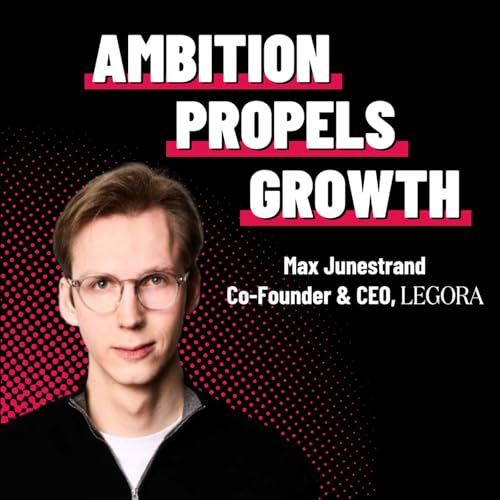
  • AI Driven Legal Evolution - Max Junestrand - Legora - Episode #64
    Sep 16 2025

    How do you scale a global company while transforming an industry as traditional as law?

    In this episode, Max Junestrand, Co-Founder and CEO of Legora, shares how he’s building the world’s first truly collaborative AI platform for legal services.


    Max reflects on his unconventional path from engineer to entrepreneur, what it took to win over law firms as an outsider, and why ambition and adaptability matter more than experience in fast-scaling environments. He also opens up about navigating hypergrowth, hiring with intention, and the cultural values that drive Legora’s mission to reshape how legal work gets done.

    Takeaways:

    • Pioneering Global Expansion: Max's approach to expansion defies conventional paths. Instead of focusing solely on local markets like many Swedish companies, Max boldly decided to expand globally.
    • The Power of Collaboration: Max stresses the importance of a shared mission between stakeholders and service providers, focusing on delivering unparalleled value and continuous improvement in legal services.
    • Hiring and Culture Building: Max places a strong emphasis on ambition and cultural fit when hiring, believing these attributes are crucial for scaling a company. He maintains personal involvement in the interview process to ensure new hires align with the company’s high standards and growth trajectory.
    • Learning and Growing from the YC Experience: Max’s experience with Y Combinator (YC) was transformative. Despite the complexities of maintaining operations during this period, the experience underscored the importance of mentorship and networking.
    • Pushing the Envelope: Max underscores the importance of maintaining a proactive stance in innovation. By consistently exploring new pathways and pushing boundaries, he ensures the company remains at the forefront of technological advancements.


    Quote of the Show:

    • “ There's a real value in actually being the second mover, and the value comes from two things... You get to see what is the right path and what is the wrong path." - Max Junestrand


    Links:

    • LinkedIn: https://www.linkedin.com/in/maxjunestrand/
    • Website: https://legora.com/


    Ways to Tune In:

    • Substack: https://notanotherceo.substack.com/
    • Spotify: https://open.spotify.com/show/1NQ9oAB2XKlgWeL8iEQXg0
    • Apple Podcasts: https://podcasts.apple.com/us/podcast/not-another-ceo-podcast/id1751581707
    • YouTube: https://www.youtube.com/@NotAnotherCEOPodcast
    • Transistor: https://podcast.notanotherceo.com/


    #NotAnotherCEO #BusinessSuccess #Legora


    Chapters:

    00:00 Intro

    01:41 Founding and Early Challenges

    02:42 Sales Strategy and Growth

    06:40 Building a Strong Team

    13:55 Global Expansion

    29:43 Expanding Beyond Local Markets

    31:13 Challenges of Going Global

    33:40 Product Development and Iteration

    37:08 Competing with Industry Giants

    42:43 YC Experience and Early Challenges

    49:52 Personal Background and Motivation

    1:00:48 Outro


    Show More Show Less
    1 hr and 2 mins