• Rahma Zein: Fearless Journalism & Reclaiming the Narrative | Sumud Podcast
    May 1 2026
    🎙️ In this episode of the Sumud Podcast, Egyptian journalist Rahma Zein discusses journalism, propaganda, resistance, and identity, with a focus on Palestine. She shares her upbringing, experiences covering revolutions and war zones, and insights on media bias and Western narratives. Rahma reflects on reporting from Rafah during Gaza, the viral moment that amplified her voice, and the emotional toll of witnessing injustice. The conversation highlights ethical storytelling, challenges dehumanizing narratives, and explores themes of solidarity, Arab identity, and resilience in a raw and deeply human exchange. 🌍 Rahma Zein is an Egyptian journalist with over a decade of experience in field reporting, media strategy, and public relations. She began her career as an investigative reporter for Egyptian TV and CBC, covering the Arab region during 2011 political changes in Egypt and Libya and interviewing key political figures. Currently Rahma works as a consultant for Tech for Palestine, an incubator for advocacy projects across the world. 🔑 In this conversation, we explore → Rahma’s upbringing in a family of journalists and political thinkers → The power of storytelling in shaping empathy and public understanding → Media propaganda, Western bias, and narratives around Palestine → Her experiences reporting during the Egyptian revolution and Arab Spring → The emotional toll of covering war, including at the Rafah border → The viral Clarissa Ward confrontation and its global impact → Identity, activism, and the role of solidarity in the fight for justice ⏱ Chapters 00:00 Opening message and introducing Rahma Zein 03:30 Growing up in a family of journalists 08:00 Spearfishing, freediving, risk, and life outside comfort zones 17:45 Why journalism must be learned in the field 29:00 Media, self-awareness, values, and the foundation of journalism 38:30 Rafah, bombing, fear, and the moment that changed everything 1:15:00 Tech for Palestine, ethical alternatives, and final message Sponsored by The Karate Attorney (@karateattorney) fighting for justice inside and outside the courtroom. Visit KarateAttorney.com 🎬 Full episode on https://sumudpod.com 📲 Follow @dredhasan | @sumudpod | @zein_rahma Learn more about your ad choices. Visit megaphone.fm/adchoices
    Show More Show Less
    1 hr and 19 mins
  • Rami Abushhab: Identity, Comedy, and the Fight to Be Seen | Sumud Podcast
    Apr 24 2026
    🎙️ In this episode of the Sumud Podcast, Palestinian-American comedian Rami Abushhab opens up about growing up in Chicago as one of the only Palestinians in his community and navigating Hollywood as an Arab actor. He shares personal stories about identity, representation, and the pressure to hide who he is, while reflecting on the emotional toll of witnessing the ongoing tragedy in Palestine. Rami explores how comedy serves as both a coping mechanism and a form of resistance, and speaks on generational trauma, privilege, and his mission to create space for future Palestinian creatives. The episode also features a moving letter to his future children, capturing grief, hope, and pride. 🌍 Rami Abushhab is an award-winning Palestinian-American actor and stand-up comedian. As an actor, he’s known for his work on TV shows like Law & Order and Chicago Fire, as well as his role in BJ’s Mobile Gift Shop, an official selection of the Sundance Film Festival. Beyond acting, Rami writes, directs, and produces his own short films, using storytelling to highlight Palestinian narratives and challenge stereotypes. As a comedian, he has toured internationally and been featured on platforms like WGN and Forbes. His style blends sharp storytelling with political satire, tackling difficult topics with humor, honesty, and purpose. Rami continues to tour and create, with a mission to represent his people authentically and open doors for the next generation of Palestinian artists. 🔑 In this conversation, we explore → Growing up Palestinian in Chicago and discovering identity → Realizing Palestine wasn’t on the map → Navigating Hollywood and pressure to hide his identity → Comedy as resistance and storytelling → The emotional toll of witnessing tragedy in Palestine → Representation, art, and humanizing Palestinians → A powerful letter to future children about being Palestinian ⏱ Chapters: 00:00 Opening reflection: privilege, dreams, and global reality 01:00 Introducing Rami: comedy, acting, and early career 05:00 Growing up in Chicago: identity and being Palestinian 09:00 Acting breakthrough: Maqluba and representation impact 16:30 Theater school & Meisner method: emotional transformation 21:00 Stand-up journey: bombing, crowd work, and finding confidence 32:00 Career struggles, identity, family, and future ambitions (to end) Sponsored by The Karate Attorney (@karateattorney) fighting for justice inside and outside the courtroom. Visit KarateAttorney.com 🎬 Full episode on https://sumudpod.com 📲 Follow @dredhasan | @sumudpod | @ramiabushhab Learn more about your ad choices. Visit megaphone.fm/adchoices
    Show More Show Less
    1 hr and 9 mins
  • Amani Al-Khatahtbeh: Muslim Women, Media & Speaking Out | Sumud Podcast
    Apr 17 2026
    🎙️ In this episode of the Sumud Podcast, we speak with Amani Al-Khatahtbeh, activist, author, and founder of MuslimGirl.com, about the personal and political realities shaping Muslim and Palestinian lives today. She reflects on grief, identity, and resilience amid the ongoing violence in Gaza, and discusses how media narratives, systemic oppression, and collective trauma intersect with her own experiences growing up Muslim in post-9/11 America. The conversation explores storytelling, community responsibility, and the importance of humanizing Palestinian voices, while highlighting how courage, solidarity, and truth-telling can challenge injustice from within and beyond our communities. 🌍 Amani Al-Khatahtbeh is a global media founder, political strategist, and leading voice at the intersection of digital rights, culture, and power. As the creator of Muslim Girl, she has spent the past decade reshaping the narrative of Muslim women in the West, transforming it from a point of marginalization into a cultural and political force. Her work sits at the forefront of critical global conversations on free expression, platform accountability, and the future of the digital public square. Named one of CNN’s “25 Most Influential American Muslims,” Amani became the first Muslim woman from New Jersey in American history to run for U.S. Congress. Her first book, Muslim Girl: A Coming of Age (Simon & Schuster), is a two-time Editors’ Pick on The New York Times Best Sellers list. Labeled by The Economist as a “generation prophet,” her writing and commentary have appeared in TIME, The Washington Post, Variety, and beyond. Amani’s influence spans media, policy, and culture. She has been recognized by Forbes 30 Under 30 and has collaborated with leading institutions, brands, and international organizations. She has shared stages with President Bill Clinton, Gloria Steinem, Shonda Rhimes, Hasan Minhaj, and other influential voices shaping global discourse. She is currently building Digital Assembly, a next-generation think tank focused on redefining participation, equity, and governance in the digital age. 🔑 In this conversation, we explore → The emotional and psychological impact of the ongoing tragedy in Palestine → How collective grief and personal loss intersect in times of war and crisis → Growing up Muslim in post-9/11 America and navigating identity under scrutiny → The role of media in shaping narratives about Muslims and Palestinians → Islamophobia, misogyny, and the unique challenges faced by Muslim women → Internal community struggles and the importance of solidarity and accountability → The intersection of feminism, faith, and cultural identity → Activism, moral courage, and making difficult ethical decisions in public life → The power of storytelling to humanize marginalized communities → Why protecting and uplifting vulnerable voices is essential for collective liberation ⏱ Chapters 00:00 Opening clip: Protecting women + liberation message 01:00 Introducing Amani + background and achievements 03:00 Ramadan, grief, and mental health in community 07:00 Identity, hijab journey, and finding roots in Jordan 13:00 Muslim Girl origin: blogging, bullying, and representation 20:00 Activism, backlash, and navigating public visibility 32:00 Community tensions, feminism, and protecting Muslim women Sponsored by The Karate Attorney (@karateattorney) fighting for justice inside and outside the courtroom. Visit KarateAttorney.com 🎬 Full episode on https://sumudpod.com 📲 Follow @dredhasan | @sumudpod | @amani | @amaniverified | @amaniuniverse | @watermelonplusco Learn more about your ad choices. Visit megaphone.fm/adchoices
    Show More Show Less
    1 hr and 28 mins
  • Jenin Younes: The Cost of Free Speech | Sumud Podcast
    Apr 10 2026
    🎙️ In this episode of the Sumud Podcast, First Amendment attorney Jenin Younes discusses the growing crackdown on speech about Palestine in the U.S., drawing on her experience as a Palestinian American and civil liberties advocate. She explores censorship, political pressure, and the risks of speaking out, especially after October 7th, while reflecting on her personal journey into public advocacy. From her legal challenges to anti-BDS laws to her work with the American Arab Anti-Discrimination Committee (ADC), Jenin highlights the broader threats to free expression and the urgent need to defend fundamental rights. 🌍 Jenin Younes is a free speech and civil liberties attorney and the National Legal Director of the American Arab Anti-Discrimination Committee (ADC). A former New York City public defender and First Amendment litigator, she has spent her career challenging government overreach and defending the rights of individuals to speak freely. Previously, Jenin led high-profile cases involving censorship and government pressure on social media platforms, including litigation that reached the U.S. Supreme Court. She has also worked extensively on issues related to public health policy, civil liberties, and constitutional law. As a Palestinian American, Jenin brings both personal and professional insight to her current work, where she focuses on defending Arab American communities and combating the growing suppression of pro-Palestinian speech. Her advocacy sits at the intersection of law, politics, and human rights, making her a leading voice in the fight for free expression and justice. 🔑 In this conversation, we explore: -Jenin Younes’ upbringing and connection to Palestine -The impact of October 7th and the risks of speaking out -The “Palestine exception” to free speech in the U.S. -Government involvement in censorship of pro-Palestinian voices -Her legal challenges to anti-BDS laws and civil liberties work with the ADC -Media narratives and professional backlash -Protecting free expression in an increasingly restrictive climate ⏱ Chapters 00:00 Opening clip: JD Vance exchange + use of power 01:00 Introducing Jenin Younes 06:30 Growing up Palestinian American + early identity 13:00 Legal philosophy: compelled to speak out 18:30 COVID era: speaking out, backlash, and career risk 30:30 October 7 shift: isolation, pressure, and turning point 40:30 Joining ADC + fighting censorship and legal battles Sponsored by The Karate Attorney (@karateattorney) fighting for justice inside and outside the courtroom. Visit KarateAttorney.com 🎬 Full episode on https://sumudpod.com 📲 Follow @dredhasan | @sumudpod | @jeninyounesesq Learn more about your ad choices. Visit megaphone.fm/adchoices
    Show More Show Less
    55 mins
  • Dr. Abdul El-Sayed: Healing Systems, Not Symptoms | Sumud Podcast w/ Dr. Ed Hasan
    Apr 3 2026
    🎙️ In this episode of the Sumud Podcast, we sit down with Dr. Abdul El-Sayed to explore identity, public service, and political courage in a time of crisis. He reflects on how his upbringing shaped his commitment to equity, healthcare, and human dignity, and unpacks how systemic inequality operates across both the United States and globally. The conversation also turns to Palestine, where he examines the human cost of war, the contradictions in U.S. policy, and the urgency of centering universal human rights. Throughout, he challenges divisive narratives and calls for a politics rooted in shared humanity, empathy, and meaningful change. 🌍 Dr. Abdul El-Sayed is a physician, epidemiologist, author, and public servant currently running for the U.S. Senate in Michigan. Born and raised in Southeast Michigan to an Egyptian immigrant father and an American mother, his life has been shaped by navigating multiple cultures and perspectives. At just 30 years old, Dr. El-Sayed became the youngest health official of a major American city, rebuilding Detroit’s Health Department after its collapse. He later served as Director of Wayne County’s Health, Human & Veterans Services Department, where he oversaw services for 1.8 million residents. His work has focused on expanding healthcare access, removing lead from schools, providing free glasses to children, combating the opioid crisis through Narcan distribution, and canceling hundreds of millions in medical debt. A Rhodes Scholar and graduate of the University of Michigan, he holds both an MD and a PhD in epidemiology. He is also the author of Healing Politics and host of the podcast America Dissected. A union member and advocate for working people, Dr. El-Sayed is running to build a government that prioritizes human dignity, equity, and the needs of everyday Americans over corporate interests 🔑 In this conversation, we explore: → Growing up between cultures and finding identity across worlds → The influence of family, especially his grandmother, on purpose and leadership → Why public health and politics are deeply interconnected → The realities of systemic inequality in the U.S. healthcare system → U.S. foreign policy and the human cost of war abroad → Navigating media narratives, misinformation, and public attacks → Why the issue of Palestine is rooted in universal human rights, not identity → Political courage and standing firm under pressure and criticism → The role of empathy, principle, and accountability in leadership @AbdulElSayed ⏱ Chapters 00:00 Opening clip: War, funding, and moral clarity 01:00 Introducing Abdul El-Sayed 05:00 His grandmother and sense of purpose 08:00 Growing up between worlds 14:00 Science, politics, and purpose 24:00 Responsibility, faith, and service 34:00 Palestine, justice, and moral clarity 49:00 Media, controversy, and political courage 56:00 Closing message: building something better Sponsored by The Karate Attorney (@karateattorney) fighting for justice inside and outside the courtroom. Visit KarateAttorney.com 🎬 Full episode on https://sumudpod.com 📲 Follow @dredhasan | @sumudpod | @AbdulElSayed Learn more about your ad choices. Visit megaphone.fm/adchoices
    Show More Show Less
    59 mins
  • Annemarie Jacir: Inside Palestine ’36 | Sumud Podcast
    Mar 27 2026
    🎙️ In this episode of the Sumud Podcast, Dr. Ed Hasan sits down with acclaimed Palestinian filmmaker Annemarie Jacir to discuss her film Palestine ’36 and the realities of creating under occupation. Jacir shares the challenges of filmmaking in Palestine, from restricted movement to rebuilding entire productions, and reflects on how the film became a testament to resilience and collective effort. The conversation explores identity, displacement, and the deeper themes of resistance and unity, revealing how storytelling becomes an act of memory and defiance. 🌍 Annemarie Jacir is a Palestinian filmmaker who has written, directed, and produced over sixteen films, with premieres at major festivals including Cannes, Berlin, Venice, and Toronto. Her work has broken ground, including her short film 'Like Twenty Impossibles' becoming the first Arab short selected at Cannes, and her debut feature 'Salt of This Sea' marking the first feature by a Palestinian female director. Her films, including 'When I Saw You and Wajib' have received numerous international awards, and all three of her feature films were selected as Palestine’s official Oscar entries. She is the founder of Philistine Films, supports independent cinema in the region, and directed her fourth feature film, 'Palestine ’36', which premiered at the Toronto International Film Festival and was selected as Palestine’s submission to the Academy Awards. 🔑 In this conversation, we explore → The making of Palestine ’36 and why this story matters now → The realities of filmmaking under occupation and restricted movement → Rebuilding sets, navigating loss, and creating under constant uncertainty → Identity, exile, and the emotional weight of displacement → The role of cinema in preserving memory and resisting erasure → Unity across religious and social lines in Palestinian history → Storytelling as an act of survival, resistance, and defiance ⏱ Chapters 00:00 Opening clip: Filmmaking under occupation 01:00 Introducing Annemarie Jacir 03:00 Why Palestine ’36 and why now 08:30 The challenges of filming in Palestine 18:00 Loss, rebuilding, and production obstacles 32:00 Identity, exile, and personal connection 48:00 Cinema as resistance and historical memory 01:02:00 Unity, storytelling, and closing reflections Sponsored by The Karate Attorney (@karateattorney) fighting for justice inside and outside the courtroom. Visit KarateAttorney.com 🎬 Full episode on https://sumudpod.com 📲 Follow @dredhasan | @sumudpod | @annamariajacir | @watermelonplusco | @watermelonpictures Learn more about your ad choices. Visit megaphone.fm/adchoices
    Show More Show Less
    1 hr and 18 mins
  • Dr. Ibram X. Kendi: The Rise of Great Replacement Theory | Sumud Podcast
    Mar 20 2026
    🎙️ In this episode of the Sumud Podcast, Dr. Ed Hasan sits down with renowned historian and antiracist scholar Dr. Ibram X. Kendi to discuss his latest book" Chain of Ideas: The Origins of Our Authoritarian Age" and the dangerous ideologies shaping politics and conflict around the world. Dr. Kendi breaks down how Great Replacement Theory has evolved into a powerful global narrative used to justify racism, authoritarianism, and violence. The conversation explores how these ideas connect movements across countries and how similar narratives have been used to frame conflicts, including the ongoing tragedy in Palestine, revealing the ways propaganda and fear-based politics can dehumanize entire populations and rationalize oppression. 🌍 Dr. Ibram X. Kendi is one of the world’s foremost historians of racism and a leading antiracist scholar. He is the Carter G. Woodson Endowed Chair at Howard University and the founding director of the Howard University Institute for Advanced Study, an interdisciplinary research enterprise examining global racism. Dr. Kendi is the author of numerous critically acclaimed and bestselling books, including Stamped from the Beginning: The Definitive History of Racist Ideas in America, which won the National Book Award for Nonfiction, and the international bestseller How to Be an Antiracist. His newest book, Chain of Ideas: The Origins of Our Authoritarian Age, examines how modern authoritarian movements are connected through shared ideologies rooted in historical racism. His work has been translated across the Americas, Africa, Europe, and Asia, and Time Magazine named him one of the 100 most influential people in the world. He is also the recipient of a MacArthur Fellowship, widely known as the “Genius Grant.” 🔑 In this conversation, we explore → What Great Replacement Theory is and how it became a dominant political narrative → How racist ideologies evolve and adapt across different countries and movements → The concept of “genocide theory” and how it can be used to justify mass violence → The connections between propaganda, politics, and global authoritarian movements → How narratives of demographic fear are used to mobilize political power → Why Palestine appears prominently in Dr. Kendi’s research on modern political propaganda → The role of scholars and journalists in confronting misinformation and propaganda → The global networks of politicians, financiers, and influencers spreading these ideas → How solidarity across communities can challenge racism and authoritarianism ⏱ Chapters 00:00 Opening clip: Genocide theory explained 01:00 Introducing Dr. Ibram X. Kendi 03:00 What is Great Replacement Theory 07:00 Realizing it’s a global ideology 22:00 Orchestrated distancing explained 37:20 Why Palestine is central to the book 55:20 The “renovated house of Hitler” + closing thoughts Sponsored by The Karate Attorney (@karateattorney) fighting for justice inside and outside the courtroom. Visit KarateAttorney.com 🎬 Full episode on https://sumudpod.com 📲 Follow @dredhasan | @sumudpod | @ibramxk Learn more about your ad choices. Visit megaphone.fm/adchoices
    Show More Show Less
    1 hr and 6 mins
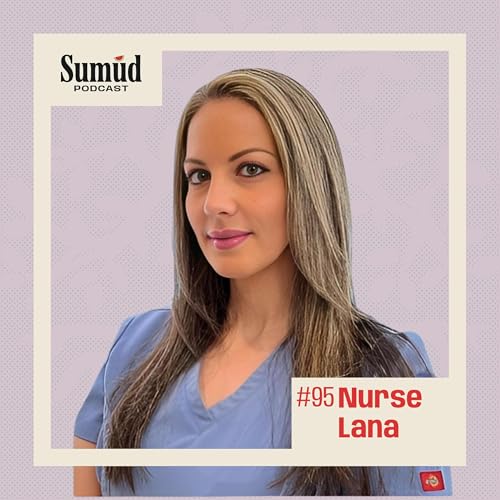
  • Nurse Lana: Bearing Witness in Gaza | Sumud Podcast
    Mar 13 2026
    🎙️In this episode of the Sumud Podcast, Palestinian-American nurse and humanitarian volunteer Nurse Lana shares her firsthand experiences working inside Gaza during the war. Through powerful testimony, she recounts what she witnessed in hospitals overwhelmed with casualties, and reflects on the emotional weight of hearing the stories of those who survived unimaginable violence, torture, and displacement. She also discusses the personal toll of returning home after witnessing war, the responsibility she believes healthcare workers have to “bear witness,” and how those experiences led her to help create Peace Med, a network of medical professionals advocating for humanitarian aid and a ceasefire. DISCLAIMER: This episode contains traumatic eyewitness testimony from Gaza, including descriptions of war, medical emergencies, violence and abuse and may be difficult for some viewers. Viewer discretion is advised. 🌍In February of 2024 and again in 2025, Nurse Lana entered Gaza not just as a nurse, but as a witness to humanity’s breaking point. She worked in hospitals running on more hope than supplies. Each moment carved a scar into her heart, each life lost became a weight she still carries. In nursing, they say “if it wasn’t documented, it wasn’t done”. And with a heart forever scarred by genocide, she documented the cries, the chaos, and the courage, not in medical charts, but in a book. Her recently released book, "Healing Under Fire" is her testimony to what it felt like to work at the bedside of a genocide as a privileged American nurse. 🔑 In this conversation, we explore → The moment Nurse Lana decided to volunteer in Gaza → Preparing for the possibility of death before leaving home → Entering Gaza and witnessing the reality of life under siege → Treating patients in hospitals with almost no supplies → The emotional weight of losing patients who could have survived elsewhere → The resilience, generosity, and humanity of Palestinians in Gaza → Witnessing the release of Palestinian detainees and signs of torture → The psychological toll of returning home and learning how to cope ⏱ Chapters 00:00 Opening message 01:00 Introducing Nurse Lana 03:00 The decision to volunteer in Gaza 06:00 Preparing for the possibility of death 10:30 Entering Gaza and first impressions 18:00 Working inside Gaza’s overwhelmed hospitals 32:00 Living and working under bombardment 43:00 Witnessing the release of Palestinian detainees 56:00 Returning home and coping with trauma Sponsored by The Karate Attorney (@karateattorney) fighting for justice inside and outside the courtroom. Visit KarateAttorney.com 🎬 Full episode on https://sumudpod.com 📲 Follow @dredhasan | @sumudpod | @Nurse_Lana Learn more about your ad choices. Visit megaphone.fm/adchoices
    Show More Show Less
    1 hr and 17 mins