• Learn to Breathe With Me - Guided Practice for Anxious Minds and Bodies
    Dec 24 2025

    If breathing exercises have ever felt uncomfortable, overwhelming, or hard to follow, you’re not alone. We’ll keep this simple, slow, and flexible. This practice includes tactile and visual strategies to help you better engage the diaphragm and, in turn, activate the vagus nerve and signal safety to the body.

    As we go, you may notice thoughts, distractions, or a desire to do it correctly. That’s okay. Nothing needs to be fixed or pushed away. You can come back to the sound of my voice whenever it feels helpful.

    This practice is for general wellness and education, not medical or mental health treatment. If you have a medical condition that affects your breathing, or if anything here feels uncomfortable, you can pause or stop at any time. You’re always in control of how you participate.

    Here is a written tutorial for future practice:

    Step 1. Set your position

    You can do this sitting upright, reclining, or lying on your side. Choose a position where your ribs and belly can move freely. There is no single correct posture.

    Step 2. Begin with a soft nasal inhale

    Breathe in through your nose for a slow count of three. The inhale should feel soft and gentle, not deep or forced. Imagine someone handing you flowers. You pause, notice them, and gently smell them. Repeat this a few times until the inhale feels easy and unstrained.

    Step 3. Add the diaphragm and belly

    Once the gentle inhale feels comfortable, begin picturing a flower blooming as you breathe in. As the flower opens, imagine the air traveling down into your belly and lower ribs. The image helps cue your diaphragm to move downward, allowing space for the lungs to fill without lifting your shoulders or tightening your chest.

    Step 4. Slow, controlled exhale through the mouth

    Exhale through pursed lips with slow, steady pressure. This should not be forced. Imagine blowing gently on hot coffee so it cools without splashing, or blowing bubbles through a wand. The exhale is calm, quiet, and controlled.

    Aim for the exhale to be about twice as long as the inhale. If you inhaled for three, exhale for six. If six feels like too much at first, shorten it. This improves with practice.

    Step 5. Use your hands to guide the breath

    Hands provide feedback to help your brain understand where the breath is going. This allows us to practice rib expansion: forwards, backwards, and to the sides.

    First placement

    Place both hands on your left side ribs. Breathe for about 30 seconds, directing the air into your hands. Your job is simply to raise your hands with the breath. It is okay if other areas move too.

    Second placement

    Move both hands to the center front of your ribs and upper belly. Repeat the same gentle breathing, allowing the ribs and belly to expand forward.

    Third placement

    Move both hands to the right side ribs and repeat.

    Fourth placement

    Place your hands on your back ribs. Many people find this easiest while lying on their side or bending slightly forward while seated. Focus on sending the breath outward into your hands, as if gently inflating the back of the ribcage.

    Step 6. Timing and practice

    Practice this breathing for short periods rather than long sessions. Even one to two minutes is effective.

    Helpful times to practice include before eating, before bed, or during transitions when your body tends to hold tension.

    Important reminders

    This skill takes time. Most people do not “get it” right away. That is normal.

    If you feel lightheaded, retur

    Recommendations, Feedback, Comments? I’d love to hear from you!

    Support the show

    With Care,

    Dr. Lauren Schaefer - Hidden in Plain Sight Podcast

    Show More Show Less
    14 mins
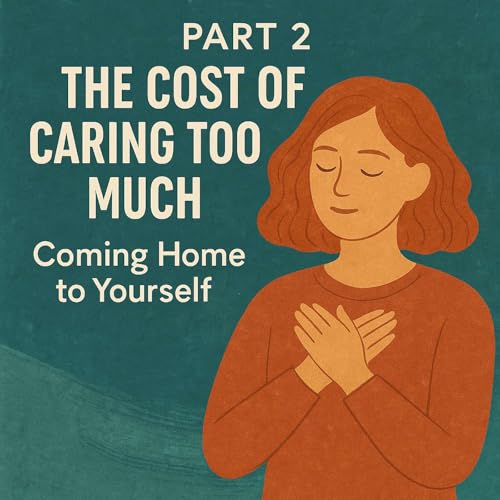
  • Part Two: The Cost of Caring Too Much - Coming Home to Yourself
    Nov 27 2025

    TL/DR Episode Summary: This episode explores the tender line between empathy and emotional fusion, and why so many sensitive, overgiving women lose themselves while trying to care for others. If you’ve ever felt responsible for someone else’s feelings, this one will feel like coming home to yourself.

    Welcome Back!

    In this second part of the series, we step into one of the most tender, defining truths of the overgiving pattern: the difference between empathy and fusion. This is the moment in therapy where clients usually go quiet, or cry, or exhale in that way that tells me something finally landed.

    Because most people who care “too much” aren’t struggling with empathy at all. They’re struggling with over-identification. Emotional merging. Becoming a one-person sponge for everyone else’s feelings while slowly disappearing inside their own life.

    In this episode, we explore how fusion feels in the body, why it masquerades as kindness, and how it forms in childhood, long before you had words for any of this.

    We look at the nervous system mechanics behind over-attunement, the praise that rewarded your self-erasure, and the subtle ways fusion shapes your posture, your breath, your sense of self, and your relationships.

    You’ll hear real-world examples that make the pattern unmistakable, the heavy-text spiral, the relationship “pause,” the emotional weather system that turns someone else’s storm into your climate. And you’ll learn why this reflex isn’t a flaw; it’s a survival strategy your body learned to keep you safe.

    Most importantly, we talk about what healthy empathy actually looks like, and the sentence that becomes a turning point for so many sensitive, intuitive women:

    You can care… without carrying.

    If you’ve ever felt like you know everyone else’s feelings but not your own, if you’ve ever lost yourself in someone’s silence, if you’ve ever confused hyper-attunement with love, this episode is a homecoming.

    Let’s walk it slowly, together.

    Recommendations, Feedback, Comments? I’d love to hear from you!

    Support the show

    With warmth,

    Dr. Lauren Schaefer

    Show More Show Less
    36 mins
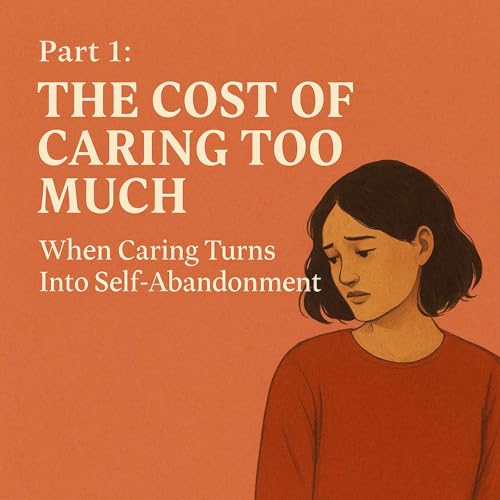
  • Part 1: The Cost of Caring Too Much - When Caring Turns Into Self-Abandonment
    Nov 19 2025

    Dr. Lauren Schaefer unpacks the psychology of overgiving and explores the quiet slide from compassion into self-erasure. We explore when empathy becomes vigilance, when connection becomes labor, and when our nervous system mistakes intensity for intimacy. Through attachment, trauma bonding, and neurodivergent wiring, we’ll look at why these patterns form and the addictive push-pull that keeps so many deep feelers stuck in relationships that drain them.

    We’ll learn why “caring harder” becomes a reflex, and why certain patterns feel magnetic even when they’re painful. A validating exploration of overgiving, for anyone who feels like they’re always managing the emotional weather around them.

    Recommendations, Feedback, Comments? I’d love to hear from you!

    Support the show

    With warmth,

    Dr. Lauren Schaefer

    Show More Show Less
    33 mins
  • From Triggered to Grounded: Why Calm Feels So Hard (and How to Find It Anyway)
    Nov 2 2025

    Ever feel like you know you’re overreacting but can’t stop? Dr. Lauren Schaefer breaks down why frustration hits harder for sensitive, high-alert nervous systems, and how small shifts in thought, breath, and rhythm can rebuild your frustration tolerance from the inside out.

    What if your frustration isn’t a flaw but a signal? In this episode, Dr. Lauren Schaefer unpacks the science and psychology behind an overactive alert system: the blend of hormones, beliefs, and attachment that turns small stress into big emotion. You’ll learn how to spot your body’s “I can’t stand this” loop and rewire it into calm, compassion, and trust. This episode bridges cognitive therapy and body-based regulation to help you move from reactive to resilient.

    Recommendations, Feedback, Comments? I’d love to hear from you!

    Support the show

    With warmth,

    Dr. Lauren Schaefer

    Show More Show Less
    39 mins
  • When Control Becomes the Cage: Letting Go of Anxious Safety Behaviors
    Oct 27 2025

    In this episode, we dig into the quiet habits that masquerade as “self-care” but actually keep us trapped in anxiety, what therapists call safety behaviors. A safety behavior is anything you do to try to feel less anxious, uncertain, or uncomfortable in the moment. From mental reassurance loops to over-planning every possible outcome, these small acts are our brain’s way of begging for certainty. The trouble is, they work against us in the fight to manage anxiety.

    We’ll explore how these patterns show up in everyday life (e.g., checking, avoiding, asking for validation) and how each one reinforces the belief that we can’t handle discomfort or uncertainty. We will explore how to respond more effectively.

    This is an invitation to meet uncertainty differently. To stop negotiating with fear and start experimenting with trust. If you’ve ever caught yourself thinking, “I just need to make sure,” this episode is for you.

    See my companion substack (When Control Becomes the Cage) for a written copy of what we review in this episode.

    Recommendations, Feedback, Comments? I’d love to hear from you!

    Support the show

    With warmth,

    Dr. Lauren Schaefer

    Show More Show Less
    24 mins
  • Why I Created the Hidden in Plain Sight Podcast
    Oct 27 2025

    This brief episode explores the purpose of this podcast and why it was created.

    So many women look fine on the outside, capable, kind, accomplished, while quietly suffering on the inside. Hidden in Plain Sight is for the ones who hold it all together, the ones who care too much, the the high-functioning, deeply feeling women who have been dismissed for their anxiety, while all along may have been dealing with something else (e.g., ADHD, ASD, OCD). In this podcast, Psychologist Dr. Lauren Schaefer invites listeners to understand what is behind the over-thinking, to unmask the roles of helper, fixer, good girl, and emotional manager, and begin coming home to who they really are.

    Each episode explores the intersection of neurodivergence, trauma, perfectionism, and emotional burnout with honesty and compassion. This is not a self-improvement show. It’s a self-seeing one.

    Recommendations, Feedback, Comments? I’d love to hear from you!

    Support the show

    With warmth,

    Dr. Lauren Schaefer

    Show More Show Less
    8 mins
  • Is It Anxiety or OCD? Understanding Overthinking
    Oct 27 2025

    If you’ve ever found yourself thinking and thinking and thinking, turning a situation over in your mind like a Rubik’s cube, trying to find the right feeling, the right explanation, the right evidence that you’re safe or good or okay—this episode is for you.

    Today on the podcast, we’re exploring one of the more confusing overlaps in mental health: the difference between anxiety and OCD, especially when it’s fueled by attachment wounds, a hyperactive mind, perfectionism, and a deeply wired need to feel “good enough” in your relationships.

    This isn’t your typical diagnostic breakdown. Instead, we’re gently unpacking the function of your thoughts, because in many cases, what looks like anxiety is actually mental compulsions.

    And when your nervous system has been shaped by early inconsistency, emotional attunement gaps, or rejection sensitivity, it makes sense that your brain might latch on to intrusive thoughts about:

    • Whether you upset someone
    • If you were “too much”
    • If your motives were pure enough
    • What a past interaction really meant

    In this episode, I’ll walk you through:

    • How OCD hijacks your brain’s natural meaning-making system
    • Why high-functioning women with anxious or disorganized attachment often go undiagnosed
    • The difference between emotional processing vs compulsive rumination
    • What mental compulsions sound like (spoiler: they’re often praised as "self-awareness" or "empathy")
    • The science-backed treatment approaches that actually work: including ERP and compassion-based strategies

    Plus, I’ll guide you through a closing reflection to help you practice sitting with uncertainty, the thing OCD tells you is unsafe, but your body needs to slowly learn to trust.

    If this episode resonates, I hope it helps you feel seen. I created Hidden in Plain Sight for people like you. For those who’ve always cared deeply, thought too much, and tried too hard… without realizing how much of that effort was rooted in survival, not self.

    You don’t need to keep earning your safety. You’re allowed to rest, to trust yourself, and to feel uncertain without needing to fix it.

    I’m so glad you’re here.

    Recommendations, Feedback, Comments? I’d love to hear from you!

    Support the show

    With warmth,

    Dr. Lauren Schaefer

    Show More Show Less
    14 mins
  • When the Mind Won’t Stop Checking: OCD and Mental Compulsions
    Oct 16 2025

    In this episode, Dr. Lauren Schaefer unpacks the often invisible or overlooked side of OCD, mental compulsions. While many people associate OCD with visible rituals or checking behaviors, for others the compulsions happen largely in the mind: replaying conversations, analyzing motives, or mentally reviewing to find certainty and relief.

    Lauren explores how these silent loops can disguise themselves as problem-solving or “just being thorough,” yet quietly maintain anxiety and self-doubt. She explains how to begin noticing when a thought becomes a compulsion, how reassurance-seeking reinforces the fear cycle, and what healing looks like when you learn to let the uncertainty stay.

    Gentle, relatable, and deeply validating, this episode is for anyone who feels trapped in their thoughts and ready to start reclaiming their mental space.

    Relevant Links:

    Non-Engagement Responses https://iocdf.org/expert-opinions/how-do-i-stop-thinking-about-this-what-to-do-when-youre-stuck-playing-mental-ping-pong/ and this

    https://www.treatmyocd.com/blog/effective-ways-you-can-respond-to-unwanted-thoughts

    International OCD Foundation: How to find the right therapist. https://iocdf.org/ocd-finding-help/how-to-find-the-right-therapist/

    Read more on Lauren’s Substack: https://substack.com/@hiddeninplainsightpodcast

    Recommendations, Feedback, Comments? I’d love to hear from you!

    Support the show

    With warmth,

    Dr. Lauren Schaefer

    Show More Show Less
    15 mins