• Are Electrolytes a Huge Scam?
    Nov 17 2026

    Send us Fan Mail

    Are electrolyte supplements a waste of money? Do electrolyte drinks actually improve hydration, exercise performance and recovery, or are we paying for something most of us don't need?

    Electrolytes are essential for the human body, but that doesn't necessarily mean you need to supplement them. In this episode of the All or Something Podcast, we explore the science behind electrolyte supplements, sports drinks and hydration to separate genuine benefits from clever marketing.

    We discuss:

    - What electrolytes actually do and why they're important
    - Whether you need electrolyte supplements during exercise
    - How much sodium you lose through sweat
    - Whether electrolyte drinks improve hydration and athletic performance
    - Who actually benefits from electrolyte supplementation
    - Whether you need electrolytes for everyday hydration
    - The difference between sports drinks and electrolyte supplements
    - When electrolyte products are useful and when they're unnecessary
    - Whether the booming electrolyte industry is selling you something you don't need

    Electrolytes are essential. Electrolyte supplements? That's a different question.

    P.S., If you want to support us and would like monthly lifting workouts, you can join the Momentum by Sohee fitness app. http://momentumbysohee.com

    If you are interested in fat loss science, you can purchase Ben's best-selling comprehensive fat loss book, Everything Fat Loss. http://geni.us/EverythingFatLoss

    Show More Show Less
    45 mins
  • Does Cardio Kill Your Gains? The Science of Cardio and Muscle Growth
    Nov 10 2026

    Send us Fan Mail

    Does cardio kill your gains? Does running interfere with muscle growth, or is the so-called interference effect being exaggerated?

    If you've ever been told that you need to choose between building muscle and improving your cardiovascular fitness, this episode is for you.

    We explore the science of concurrent training: combining resistance training with endurance exercise, and whether doing both compromises your results.

    We look at the research that shaped our understanding of the interference effect, from the early studies that raised concerns about combining cardio and weights to more recent research that challenges some of those assumptions.

    We discuss:
    - What is the interference effect, and does it actually exist?
    - Can running compromise muscle growth and strength?
    - Is cycling better than running if you want to build muscle?
    - Does the type, intensity or volume of cardio matter?
    - Does doing cardio before or after weights make a difference?
    - How should you structure your training if you want to maximise both strength and cardiovascular fitness?

    Most importantly, we discuss what the evidence actually tells us about combining cardio and resistance training, and whether you really need to sacrifice one to get better at the other.

    Because being strong and having good cardiovascular fitness shouldn't have to be mutually exclusive.

    P.S., If you want to support us and would like monthly lifting workouts, you can join the Momentum by Sohee fitness app. http://momentumbysohee.com

    If you are interested in fat loss science, you can purchase Ben's best-selling comprehensive fat loss book, Everything Fat Loss. http://geni.us/EverythingFatLoss

    Show More Show Less
    35 mins
  • Everything You Need to Know About Gut Health Featuring Dr Karan Rajan
    Nov 3 2026

    Send us Fan Mail

    Gut health is everywhere right now. From probiotics and prebiotics to microbiome diversity, fibre supplements and the gut-brain connection, it can be difficult to separate genuinely useful advice from marketing hype.

    So we sat down with Dr Karan Rajan to answer some of the biggest questions about gut health and what you can actually do to improve it.

    We discuss:

    - What does having a healthy gut really mean?
    - What are the biggest factors influencing your gut health?
    - Why is fibre so important, and are most of us eating enough?
    - What's the difference between soluble and insoluble fibre?
    - Can you eat too much fibre?
    - What does the research tell us about fibre and colorectal cancer?
    - What is the gut microbiome, and why does its diversity matter?
    - Can your gut bacteria influence your mood and mental health?
    - What's the difference between prebiotics and probiotics?
    - Do probiotic supplements work, and does the specific bacterial strain matter?
    - What are the biggest gut health myths people should stop believing?

    We also discuss flatulence, the science behind some of the most popular gut health claims, and the practical steps that can make a meaningful difference to your digestive health.

    If you've ever wondered whether you need a probiotic supplement, whether you're eating enough fibre, or what all the fuss about your microbiome is actually about, this episode is for you.

    P.S., If you want to support us and would like monthly lifting workouts, you can join the Momentum by Sohee fitness app. http://momentumbysohee.com

    If you are interested in fat loss science, you can purchase Ben's best-selling comprehensive fat loss book, Everything Fat Loss. http://geni.us/EverythingFatLoss

    Show More Show Less
    1 hr and 8 mins
  • Do Diets Actually Make You Fatter? The Science of Yo-Yo Dieting
    Oct 27 2026

    Send us Fan Mail

    Do diets actually make you fatter? Does yo-yo dieting permanently damage your metabolism, make you store fat more efficiently, or leave you heavier than if you'd never tried to lose weight in the first place?

    The idea that dieting makes you fatter might sound absurd at first, but there are genuine scientific reasons why researchers have investigated this possibility for decades. From early experiments in rats to long-term human studies examining weight regain, body composition and metabolic rate, the evidence is more interesting than you might expect.

    In this episode of the All or Something Podcast, we explore the science of weight cycling to separate what the research actually shows from some of the more exaggerated claims surrounding yo-yo dieting.

    We discuss:
    - Why scientists first hypothesised that repeated dieting could make the body more efficient at storing energy.
    - What early experiments in rats revealed about repeated cycles of weight loss and regain.
    - Why people who diet often end up heavier years later, and why this doesn't necessarily mean dieting caused the additional weight gain.
    - Whether repeated weight loss and regain permanently damages your metabolism.
    - What the research says about weight cycling, body fat, lean mass and metabolic rate.
    - Why observational studies linking weight fluctuations to poorer health cannot necessarily establish cause and effect.
    - How restrictive diets can affect hunger, food cravings and your relationship with food.
    - Why repeatedly losing and regaining the same 20 pounds can be emotionally exhausting, regardless of what the science says about your metabolism.

    We'll also discuss a crucial distinction: dieting and weight cycling are not the same thing as dieting causing you to become progressively fatter. The fact that people who diet sometimes end up heavier years later doesn't prove that dieting itself caused their weight gain. And while weight cycling has been associated with certain health risks in observational research, that doesn't automatically mean the weight fluctuations themselves are responsible.

    As always, we're looking beyond the headlines, examining the evidence and trying to make the science understandable without losing the nuance.

    P.S., If you want to support us and would like monthly lifting workouts, you can join the Momentum by Sohee fitness app. http://momentumbysohee.com

    If you are interested in fat loss science, you can purchase Ben's best-selling comprehensive fat loss book, Everything Fat Loss. http://geni.us/EverythingFatLoss

    Show More Show Less
    55 mins
  • The Dark Side of Being an Elite Athlete (Featuring Bethany Flores)
    Oct 20 2026

    Send us Fan Mail

    What happens when the sport you love becomes your whole livelihood? What happens when that is taken away from you because of injuries or you need to take a break during pregnancy?

    In this episode of the All or Something Podcast, we sit down with elite CrossFit athlete Bethany Flores to talk about the realities of competing at the highest level, navigating injury and pregnancy, and learning to separate your self-worth from your performance.

    Bethany has spent years pushing her body to its limits in pursuit of competitive success. But behind the training, competition, and results is a more complicated story about body image, food, sponsorships, and the pressure to keep improving even when life demands something different.

    After a back injury kept her out for the entire 2022 season, Bethany faced questions about who she was outside the gym. Then, competing during early pregnancy and navigating postpartum recovery brought a new set of challenges, forcing her to reconsider what it means to be an athlete when you can't always train, compete, or perform the way you used to.

    We discuss what elite CrossFit training actually looks like, the pressures of making a living as an athlete, and the support competitors can realistically expect from their sport and sponsors when injury or pregnancy changes everything.

    We also get into Bethany's longstanding struggles with body image, her relationship with food, and how becoming a mother has influenced the way she thinks about health, exercise, and the example she wants to set for her son.

    In this episode, we discuss:
    * What CrossFit is and what it takes to compete at an elite level
    * The impact of injury on athletic identity and self-worth
    * The pressures of competing around pregnancy and navigating postpartum recovery
    * Why being at your fittest doesn't always mean feeling good enough
    * The financial and emotional realities of being a professional athlete
    * Sponsorships, pregnancy, and the support athletes need but may not receive
    * Body image struggles, food, and fueling performance
    * The pressure to return to competition while other athletes keep progressing
    * Motherhood, body image, and breaking unhealthy patterns
    * How to know when you're ready to return to sport — and when to wait
    * Learning to value yourself beyond what you achieve

    This isn't just a conversation about CrossFit. It's about what happens when the thing that gives you purpose also becomes the thing that makes you question your worth — and how to find a healthier balance without losing the ambition that made you successful in the first place.

    P.S., If you want to support us and would like monthly lifting workouts, you can join the Momentum by Sohee fitness app. http://momentumbysohee.com

    If you are interested in fat loss science, you can purchase Ben's best-selling comprehensive fat loss book, Everything Fat Loss. http://geni.us/EverythingFatLoss

    Show More Show Less
    1 hr and 14 mins
  • The Rise and Fall of the Carnivore Diet
    Oct 13 2026

    Send us Fan Mail

    The carnivore diet exploded in popularity, with claims that eating nothing but meat could help you lose weight, reduce inflammation, heal your gut, and even reverse chronic disease. But what does the science actually say about the carnivore diet, and why has the hype started to fade?

    In this episode of All or Something, we explore the rise and fall of the carnivore diet, tracing how an extreme animal-based diet became one of the most controversial nutrition trends on social media. We examine some of the biggest carnivore diet health claims, some of the biggest carnivore diet proponents and how some of the hype has already started to fizzle out.

    From the rise of the carnivore movement and its most influential advocates to concerns about cholesterol, saturated fat, fiber, and long-term health, we separate what we know from what is still uncertain.

    In this episode, we discuss:

    - What is the carnivore diet, and what can you eat on it?
    - How and why the carnivore diet became so popular
    - The biggest carnivore diet benefits claimed by influencers
    - Can the carnivore diet help with weight loss and body composition?
    - Are the health benefits from a carnivore diet actually about what you eat or rather what you avoid?
    - Why anecdotes and personal success stories aren't the same as scientific evidence
    - Why many people on the carnivore diet actually do not care what the research says
    - Why some prominent carnivore advocates have reconsidered their positions

    The carnivore diet raises important questions about how we evaluate nutrition advice. People may experience real improvements when they change their diets, but that doesn't automatically mean the diet itself is responsible for every reported benefit, or that the same results apply to everyone.

    Our goal is to look beyond the headlines, examine the available evidence, and ask whether the claims made about the carnivore diet stand up to scientific scrutiny.

    If you're interested in evidence-based nutrition, diet trends, weight loss, gut health, metabolic health, and the science behind popular diets, this episode is for you.

    P.S., If you want to support us and would like monthly lifting workouts, you can join the Momentum by Sohee fitness app. http://momentumbysohee.com

    If you are interested in fat loss science, you can purchase Ben's best-selling comprehensive fat loss book, Everything Fat Loss. http://geni.us/EverythingFatLoss

    Show More Show Less
    56 mins
  • Can You Really Be Healthy At Any Size? We Debate
    Oct 6 2026

    Send us Fan Mail

    Is Health at Every Size actually healthy?

    In this episode, someone specifically asked us for our hot takes on Health at Every Size (HAES), and weight-centric vs health-centric care.

    Health at Every Size (HAES) has become one of the most debated ideas in nutrition, fitness and healthcare. Supporters argue that health should not be reduced to body size or weight, while critics have raised questions about some of the theory's claims, assumptions and practical implications.

    This is a very sensitive topic and it is actually one a lot of people don't understand properly, so we are approaching this a little bit differently and doing this in a debate format. Rather than just telling you our opinions, we are going to discuss some common claims and criticisms with rebuttals.

    That way you can see where some thought processes stem from, where some of their criticisms stem from, and perhaps where some ideas fall short.

    In this episode of All or Something, we wanted to have that conversation without turning it into a simple “HAES is good” versus “HAES is bad” argument.

    Rather than presenting one side as obviously correct, we work through the disagreements and try to figure out where the strongest arguments actually lie.

    We discuss:
    - Why Health at Every Size (HAES) is NOT THE SAME THING as people claiming you are always healthy at every size.
    - Are there risks associated with body weight?
    - Are those risks simply correlations or does your body weight cause those risks?
    - Can focusing less on weight improve health outcomes?
    - What role does weight discrimination play when it comes to poor health?
    - Do some people go too far to criticise the role that body composition can play in your health?

    This isn't intended to be a takedown of Health at Every Size, nor is it an attempt to dismiss the concerns that led to the movement in the first place.

    It's an attempt to have a more nuanced conversation about a topic that is often discussed in extremes.

    If you've ever wondered whether the criticisms of HAES are fair, whether the responses to those criticisms hold up, or where the truth lies somewhere between the two sides, this episode is for you.

    P.S., If you want to support us and would like monthly lifting workouts, you can join the Momentum by Sohee fitness app. http://momentumbysohee.com

    If you are interested in fat loss science, you can purchase Ben's best-selling comprehensive fat loss book, Everything Fat Loss. http://geni.us/EverythingFatLoss

    Show More Show Less
    46 mins
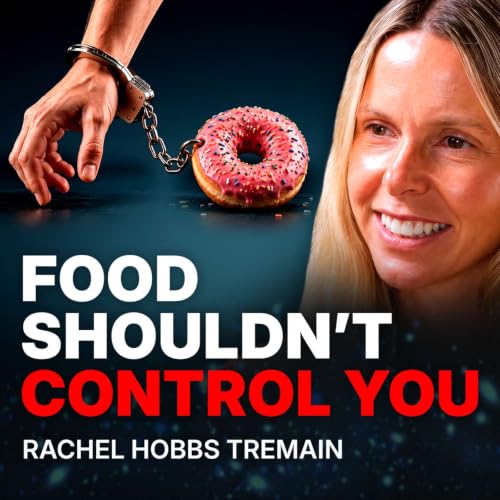
  • When Does Healthy Eating Become Disordered Eating? (Featuring Rachel Hobbs Tremain)
    Sep 29 2026

    Send us Fan Mail

    When does healthy eating become disordered eating, and how can you tell when your relationship with food has started to become unhealthy?

    In this episode of the All or Something Podcast, we sit down with Registered Dietitian and coach Rachel Hobbs to have a nuanced conversation about dieting, eating disorders, disordered eating, binge eating, fitness culture, and what it actually means to have a healthy relationship with food.

    Rachel describes her philosophy as “anti-diet culture, but not anti-diet, a distinction that opens up a much bigger conversation about where healthy nutrition ends and problematic behaviors begin.

    We talk about the difference between an eating disorder and disordered eating, whether dieting actually causes eating disorders, and the warning signs that someone's relationship with food may be becoming problematic.

    We also discuss binge eating, including some of the common misconceptions surrounding it and why simply telling someone to “have more willpower” completely misses the bigger picture.

    The conversation then moves into the fitness world, where behaviors like calorie tracking, following meal plans, getting lean, cutting weight and pursuing a certain physique can be completely normalised.

    We explore what happens when someone genuinely wants to improve their health but doesn't want food and dieting to consume their life.

    What can you do if you're constantly thinking about food? What if you struggle to adhere to a calorie target or meal plan? And does failing to follow a diet mean you've failed, or could the approach itself be part of the problem?

    We also discuss how parents can help children develop a healthy relationship with food without unintentionally creating fear, guilt or unnecessary food rules.

    In this episode, we discuss:
    - What “anti-diet culture, but not anti-diet” actually means
    - The difference between eating disorders and disordered eating
    - Whether dieting causes eating disorders
    - Warning signs of a problematic relationship with food
    - Why binge eating is often misunderstood
    - Calorie tracking and meal plans
    - Why struggling with adherence doesn't necessarily mean you've failed
    - Food obsession and constantly thinking about eating
    - When healthy fitness behaviors become unhealthy
    - Disordered eating in athletes and strength sports
    - Why losing your period shouldn't simply be dismissed as part of being lean
    - How to help children develop a healthy relationship with food
    - Whether you can improve your health without traditional dieting

    The goal isn't to stop caring about nutrition or to imply that nutritious diets are not health promoting. It's to make sure nutrition doesn't become the thing controlling your life.

    P.S., If you want to support us and would like monthly lifting workouts, you can join the Momentum by Sohee fitness app. http://momentumbysohee.com

    If you are interested in fat loss science, you can purchase Ben's best-selling comprehensive fat loss book, Everything Fat Loss. http://geni.us/EverythingFatLoss

    Show More Show Less
    1 hr and 12 mins