• How to Teach Students to Ask Better Questions in Math
    Apr 21 2026
    Many students say the same thing when they are stuck in math:"I need help."But they often cannot explain what they need help with.In this episode of Tier 1 Interventions, we explore how teachers can help students develop the ability to ask better questions, identify where they are stuck, and become more independent learners.Instead of relying on whole-class lectures, this session shows how small group facilitation, mini lessons, and responsive teaching can help students learn how to articulate their thinking.In this session we discuss:• Why students often struggle to explain what they don’t understand • How teachers can train students to ask clearer questions • The role of mini lessons in responsive teaching • How classroom structure supports independence and problem solving • Why facilitation often looks different from traditional teachingWhen students learn how to identify their confusion and ask specific questions, they begin to take ownership of their learning.This video is Session 7 of a 10-part October Workshop Series exploring how math instruction can support deeper thinking and stronger student independence.👍 Subscribe to Tier 1 Interventions for more strategies that improve math learning and student success.🔗 Get involved with Tier 1 Interventions coaching: Check the link in the show notes to join live sessions or access the full year of professional learning. Join one Mastery Math Method Workshop for just $47.Contact jonily@mindsonmath.com👇 Comment below: Where do you see kids getting stuck most often in math?⏱ Timestamps0:30 Why students often say “I need help”1:20 Helping students identify what they don’t understand2:15 Teaching students to ask better questions3:20 Mini lessons vs. whole-class instruction4:15 How small group facilitation supports learning5:10 Training students to think about their thinking6:00 Helping students articulate their confusion7:00 Classroom structures that support independence8:10 Why responsive teaching builds stronger learners🎯 Ready to Change Math Outcomes in 10 Days?👉 Join our FREE Masterclass for school leaders, teachers, and OTs: https://disabilitylabs.com/calendar🎧 Prefer to Listen On the Go?SpotifyApple PodcastsAmazon/Audible🔗 Stay Connected🌐 Website: https://disabilitylabs.com/courses/mastery-math-bundle 📧 Disability Labs Community: https://disabilitylabs.com/community/3d-learning-lounge-1🎙️ Credits: Host: Cheri Dotterer Co-Host: Jonily Zupancic Production: Disability Labs Podcast Network🧠 Resources Mentioned:Mastery Math Method Level One (Lifetime Access): https://disabilitylabs.com/courses/mastery-math-bundleMastery Math Method Live sessions (Annual Subscription): https://disabilitylabs.com/courses/mastery-math-method-group-coaching⚠️ Disclaimer: The content shared in this video is for educational purposes only and does not replace your district’s policies or individualized education plans. Always consult with your instructional team before implementing new strategies.KeywordsTier 1 math instruction, math achievement, math intervention, Algebra 1 instruction, brain-based math, math pacing guide, math scope and sequence, Novel Model, Mastery Math Method, math structure, K-12 math, math education reform, Tier 1 interventions, number sense, math retention
    Show More Show Less
    17 mins
  • The Math Education Shift Teachers Need
    Apr 16 2026

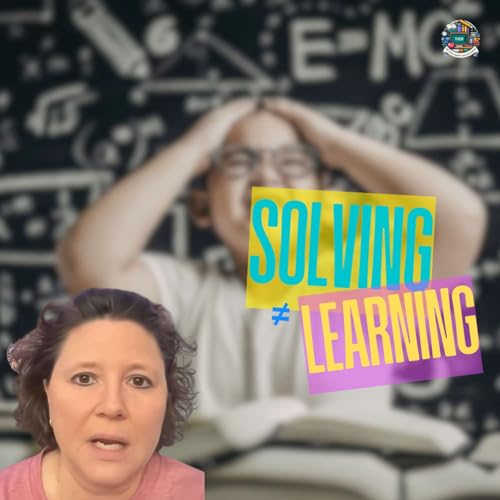
    Why do students struggle with math — even when they get the answer right?

    In this full math professional development training, Jonily — founder of Minds on Math and host of Saturday Math — challenges one of the biggest misconceptions in math education:

    Solving is not learning.

    For decades, math instruction has prioritized procedures, algorithms, and finishing problems. But true math achievement comes from something deeper: number sense, reasoning, and conceptual understanding.

    If you're a math teacher, instructional coach, intervention specialist, or school leader working to improve math achievement and raise math test scores, this training will show you what most curriculum models get wrong — and how to fix it.

    In This Math Instruction Training, You’ll Learn:

    ✔ The critical difference between number sense and notation
    ✔ Conceptual vs procedural math instruction — and why balance matters
    ✔ Why solving problems doesn’t guarantee understanding
    ✔ How to improve math test scores without teaching more procedures
    ✔ How the brain actually learns mathematics
    ✔ Instructional strategies that scale math achievement across K–12 classrooms

    Whether you're preparing for state testing, redesigning your math curriculum, implementing Tier 1 math instruction, or seeking effective math intervention strategies, this session provides practical, research-informed insights grounded in real classroom results.

    Who This Is For

    This training is designed for:
    • K–12 math teachers
    • Intervention specialists
    • Instructional coaches
    • School administrators
    • District leaders focused on math achievement

    If you're serious about improving math instruction and reducing math anxiety while increasing student confidence, this session will challenge your thinking — and give you a clear instructional shift to implement.

    About Jonily
    Jonily is the host of Saturday Math and founder of Minds on Math. She specializes in helping educators improve math achievement through instructional shifts that prioritize thinking, reasoning, sense-making, and number sense — without sacrificing performance.


    Ready to Go Deeper?
    Join our next free math professional development training:
    https://us06web.zoom.us/meeting/register/tcMBm3kYSe29Uk2gXlRwPw

    Because improving math instruction starts with one powerful truth:

    Solving is not learning.

    🎧 Prefer to Listen On the Go?

    Spotify
    Apple Podcasts
    Amazon/Audible

    🎙️ Credits:
    Host: Jonily Zupancic
    Production: Disability Labs Podcast Network


    ⚠️ Disclaimer: The content shared in this video is for educational purposes only and does not replace your district’s policies or individualized education plans. Always consult with your instructional team before implementing new strategies.

    Show More Show Less
    1 hr and 30 mins
  • Why Productive Struggle Matters in Math
    Apr 14 2026
    Why do so many students stop trying after just one mistake?In this episode of Tier 1 Interventions, we explore why mistakes are an essential part of learning mathematics—and why many classrooms unintentionally train students to quit when they encounter difficulty.Think about how humans naturally learn. When babies learn to walk, they fall hundreds—sometimes thousands—of times before they succeed. Yet in school, mistakes are often treated as failure instead of a necessary part of learning.In this session we discuss:• Why students often stop after making a single mistake • How adult reactions can unintentionally teach students to quit • Why perseverance is essential for deep mathematical understanding • How teachers can guide students through mistakes instead of rescuing them • The role of questioning strategies like “Tell me about…” in helping students thinkWhen classrooms embrace productive struggle, students develop resilience, deeper understanding, and confidence in their mathematical thinking.This video is Session 6 of a 10-part October Workshop Series exploring how math instruction can support deeper thinking and stronger student independence.👍 Subscribe to Tier 1 Interventions for more strategies that improve math learning and student success.🔗 Get involved with Tier 1 Interventions coaching: Check the link in the show notes to join live sessions or access the full year of professional learning. Join one Mastery Math Method Workshop for just $47.Contact jonily@mindsonmath.com👇 Comment below: Where do you see kids getting stuck most often in math?⏱ Timestamps0:30 Why students often quit after one mistake1:10 How adult responses influence perseverance2:00 The walking analogy: how humans actually learn3:00 Why school sometimes discourages struggle4:00 Breaking the cycle of perfectionism in learning5:00 Why meaningful change in classrooms takes time6:10 Retrieval practice and why forgetting is necessary7:20 “Tell me about…” – a questioning strategy for teachers8:20 Moving from telling to guiding student thinking9:30 Closing thoughts🎯 Ready to Change Math Outcomes in 10 Days?👉 Join our FREE Masterclass for school leaders, teachers, and OTs: https://disabilitylabs.com/calendar🎧 Prefer to Listen On the Go?SpotifyApple PodcastsAmazon/Audible🔗 Stay Connected🌐 Website: https://disabilitylabs.com/courses/mastery-math-bundle 📧 Disability Labs Community: https://disabilitylabs.com/community/3d-learning-lounge-1🎙️ Credits: Host: Cheri Dotterer Co-Host: Jonily Zupancic Production: Disability Labs Podcast Network🧠 Resources Mentioned:Mastery Math Method Level One (Lifetime Access): https://disabilitylabs.com/courses/mastery-math-bundleMastery Math Method Live sessions (Annual Subscription): https://disabilitylabs.com/courses/mastery-math-method-group-coaching⚠️ Disclaimer: The content shared in this video is for educational purposes only and does not replace your district’s policies or individualized education plans. Always consult with your instructional team before implementing new strategies.KeywordsTier 1 math instruction, math achievement, math intervention, Algebra 1 instruction, brain-based math, math pacing guide, math scope and sequence, Novel Model, Mastery Math Method, math structure, K-12 math, math education reform, Tier 1 interventions, number sense, math retention
    Show More Show Less
    20 mins
  • The Moment Students Stop Thinking in Math Class
    Apr 7 2026


    Have you ever watched students suddenly stop thinking during a math lesson?


    In this episode of Tier 1 Interventions, we explore the moment when students shift from active problem-solving to waiting for the teacher to tell them what to do next.


    Many classrooms unintentionally train students to depend on the teacher for the next step. Over time, students stop engaging in deep thinking and instead look for hints, procedures, or answers.


    In this session we discuss:
    • The moment students shift from thinking to waiting
    • How classroom habits can unintentionally create dependency
    • Why productive struggle is necessary for mathematical understanding
    • How teachers can encourage deeper thinking without rescuing students too quickly


    Helping students remain engaged in thinking is one of the most important shifts teachers can make to build independence and long-term math confidence.


    This video is Session 5 of a 10-part October workshop series exploring how math instruction can support deeper thinking and stronger student independence.


    👍 Subscribe to Tier 1 Interventions for more strategies that improve math learning and student success.

    🔗 Get involved with Tier 1 Interventions coaching:
    Check the link in the show notes to join live sessions or access the full year of professional learning.

    Join one Mastery Math Method Workshop for just $47.

    Contact jonily@mindsonmath.com

    👇 Comment below: Where do you see kids getting stuck most often in math?


    ⏱ Timestamps

    0:22 The moment students stop thinking in math

    1:05 When students begin waiting for answers

    1:45 How classroom habits shape student thinking

    2:30 The shift from solving problems to seeking answers

    3:15 Why students start depending on the teacher

    4:00 What productive struggle actually looks like

    4:45 Supporting students without rescuing them

    5:30 Strategies that keep students thinking longer

    6:15 Encouraging persistence in problem solving

    7:00 Closing thoughts


    🎯 Ready to Change Math Outcomes in 10 Days?

    👉 Join our FREE Masterclass for school leaders, teachers, and OTs:
    https://disabilitylabs.com/calendar


    🎧 Prefer to Listen On the Go?

    Spotify
    Apple Podcasts
    Amazon/Audible


    🔗 Stay Connected

    🌐 Website: https://disabilitylabs.com/courses/mastery-math-bundle
    📧 Disability Labs Community: https://disabilitylabs.com/community/3d-learning-lounge-1


    🎙️ Credits:
    Host: Cheri Dotterer
    Co-Host: Jonily Zupancic
    Production: Disability Labs Podcast Network


    🧠 Resources Mentioned:

    Mastery Math Method Level One (Lifetime Access): https://disabilitylabs.com/courses/mastery-math-bundle
    Mastery Math Method Live sessions (Annual Subscription): https://disabilitylabs.com/courses/mastery-math-method-group-coaching


    ⚠️ Disclaimer: The content shared in this video is for educational purposes only and does not replace your district’s policies or individualized education plans. Always consult with your instructional team before implementing new strategies.


    Keywords

    Tier 1 math instruction, math achievement, math intervention, Algebra 1 instruction, brain-based math, math pacing guide, math scope and sequence, Novel Model, Mastery Math Method, math structure, K-12 math, math education reform, Tier 1 interventions, number sense, math retention

    Show More Show Less
    20 mins
  • Why Math Instruction Isn’t Working for Many Students
    Mar 31 2026
    Many teachers work incredibly hard to help students succeed in math, yet students continue to struggle with independence, perseverance, and deep understanding. In this episode of Tier 1 Interventions, we explore three hidden problems in math classrooms that may be quietly limiting student learning.Through real classroom examples and discussion, we examine how well-intentioned teaching habits—both in schools and at home—can unintentionally interfere with productive struggle and long-term mathematical thinking.When students are constantly rescued from mistakes or pushed toward perfection, they often lose the opportunity to build independence and persistence. Over time, this affects how they approach problem solving, learning, and even their confidence in mathematics.In this session we discuss: • How perfectionism can develop through school and parenting experiences • Why middle school students often appear less independent than younger students • The role of productive struggle in long-term math achievement • Why telling students everything can limit deep learning • How teachers can shift classroom practices to support stronger thinkingThis video is Session 4 of a 10-part October Workshop series exploring how math instruction can better support student thinking, independence, and conceptual understanding.If you work with students in math classrooms, intervention programs, or special education services, this series will help you rethink how learning actually happens.👍 Subscribe to Tier 1 Interventions for more strategies that improve math learning and student success.🔗 Get involved with Tier 1 Interventions coaching: Check the link in the show notes to join live sessions or access the full year of professional learning. Join one Mastery Math Method Workshop for just $47.Contact jonily@mindsonmath.com👇 Comment below: Where do you see kids getting stuck most often in math?⏱ Timestamps0:20 Reflecting on the Classroom Experience0:50 Why Younger Students Often Show More Independence1:25 The Challenge of Rebuilding Independence in Older Students2:00 Perfectionism and Parenting Expectations2:40 How Early Messages Shape Learning Behavior3:20 Breaking Generational Learning Patterns4:00 Honest Conversations With Students and Families4:50 Teaching Lessons That Transfer Beyond the Classroom5:40 What Teachers Can Do When Students Make Mistakes6:20 Turning Mistakes Into Learning Opportunities7:00 Brain Development in Middle School Students7:40 Why Middle Schoolers Sometimes Act Like Toddlers8:20 Teaching Independence Instead of Expecting It9:00 Measurement and Modeling Activities in Math10:00 Barriers Teachers Face With Productive Struggle10:50 Helping Students See What Collaboration Looks Like11:40 The Role of Support Staff and Adults in the Room12:20 Why Removing Struggle Prevents Learning13:10 Evidence From Schools About What Isn’t Working14:00 The Reality Teachers Face With Curriculum Pressure14:30 Closing Thoughts and Workshop Invitation🎯 Ready to Change Math Outcomes in 10 Days?👉 Join our FREE Masterclass for school leaders, teachers, and OTs: https://disabilitylabs.com/calendar🎧 Prefer to Listen On the Go?SpotifyApple PodcastsAmazon/Audible🔗 Stay Connected🌐 Website: https://disabilitylabs.com/courses/mastery-math-bundle 📧 Disability Labs Community: https://disabilitylabs.com/community/3d-learning-lounge-1🎙️ Credits: Host: Cheri Dotterer Co-Host: Jonily Zupancic Production: Disability Labs Podcast Network🧠 Resources Mentioned:Mastery Math Method Level One (Lifetime Access): https://disabilitylabs.com/courses/mastery-math-bundleMastery Math Method Live sessions (Annual Subscription): https://disabilitylabs.com/courses/mastery-math-method-group-coaching⚠️ Disclaimer: The content shared in this video is for educational purposes only and does not replace your district’s policies or individualized education plans. Always consult with your instructional team before implementing new strategies.KeywordsTier 1 math instruction, math achievement, math intervention, Algebra 1 instruction, brain-based math, math pacing guide, math scope and sequence, Novel Model, Mastery Math Method, math structure, K-12 math, math education reform, Tier 1 interventions, number sense, math retention
    Show More Show Less
    16 mins
  • The Teaching Mistake That Kills Student Independence
    Mar 24 2026
    In this episode of Tier 1 Interventions, we explore a common classroom mistake that quietly destroys student independence: stepping in too quickly to fix the problem.During a real classroom activity where students were measuring height and collecting data, an unexpected moment revealed how easily adults can interrupt productive struggle. Instead of allowing students to explore, make mistakes, and think through the process, the task was taken over—removing the learning opportunity.Students build mathematical thinking through experience, experimentation, and problem solving. When we rescue them too quickly, we unintentionally teach them to wait for the answer instead of discovering it.In this session we discuss: • Why productive struggle is essential for learning • How rescuing students limits independence • What controlled chaos looks like in a classroom • Why elementary students often handle independence better than older students • How teachers can support thinking without taking overThis video is Session 3 of a 10-part October Workshop series exploring better ways to teach mathematics and support student thinking.If you work with students in math classrooms, intervention programs, or special education services, this series will help you rethink how learning actually happens.👍 Subscribe to Tier 1 Interventions for more strategies that improve math learning and student success.🔗 Get involved with Tier 1 Interventions coaching: Check the link in the show notes to join live sessions or access the full year of professional learning. Join one Mastery Math Method Workshop for just $47.Contact jonily@mindsonmath.com👇 Comment below: Where do you see kids getting stuck most often in math?⏱ Timestamps0:25 Review: When Teachers Should Tell vs Let Students Discover1:00 Fact Fluency vs Conceptual Learning1:40 Mini Lesson Example: Inches, Feet, and Yards2:20 Why Telling Does Not Equal Learning3:00 Preparing Students for the Measurement Activity3:45 Designing a “Controlled Chaos” Lesson4:30 The Classroom Teacher Leaves for a Meeting5:00 Students Begin Measuring Height5:40 When Productive Struggle Begins6:10 The Substitute Steps In6:50 The Moment Learning Was Interrupted7:30 Why Rescuing Students Hurts Learning8:15 How Schools Accidentally Teach Dependence9:00 Why Students Stop Persevering9:40 Classroom Discussion About Independence10:30 Elementary vs Middle School Independence11:30 What Controlled Chaos Should Look Like12:30 Why Students Need Space to Think13:30 Reflection on the Classroom Experience14:20 Invitation to the Monthly Masterclass🎯 Ready to Change Math Outcomes in 10 Days?👉 Join our FREE Masterclass for school leaders, teachers, and OTs: https://disabilitylabs.com/calendar🎧 Prefer to Listen On the Go?SpotifyApple PodcastsAmazon/Audible🔗 Stay Connected🌐 Website: https://disabilitylabs.com/courses/mastery-math-bundle 📧 Disability Labs Community: https://disabilitylabs.com/community/3d-learning-lounge-1🎙️ Credits: Host: Cheri Dotterer Co-Host: Jonily Zupancic Production: Disability Labs Podcast Network🧠 Resources Mentioned:Mastery Math Method Level One (Lifetime Access): https://disabilitylabs.com/courses/mastery-math-bundleMastery Math Method Live sessions (Annual Subscription): https://disabilitylabs.com/courses/mastery-math-method-group-coaching⚠️ Disclaimer: The content shared in this video is for educational purposes only and does not replace your district’s policies or individualized education plans. Always consult with your instructional team before implementing new strategies.KeywordsTier 1 math instruction, math achievement, math intervention, Algebra 1 instruction, brain-based math, math pacing guide, math scope and sequence, Novel Model, Mastery Math Method, math structure, K-12 math, math education reform, Tier 1 interventions, number sense, math retention
    Show More Show Less
    15 mins
  • Why Students Need to Struggle Before Learning Math
    Mar 17 2026
    In this episode of Tier 1 Interventions, we explore one of the most misunderstood ideas in teaching: students often need to experience the struggle before the lesson in order for real learning to occur.Too often, teachers step in too quickly to rescue students from mistakes. But when students are allowed to explore, experiment, and even get things wrong, they begin to build deeper understanding of numbers, measurement, and mathematical relationships.In this session, we walk through a real classroom example where students collect data, measure, and begin to make sense of mathematical ideas through experience before direct instruction.This approach helps students develop: • stronger number sense • deeper conceptual understanding • independence in problem solving • lasting math fluencyYou’ll also hear about the four stages of effective lesson design, including the often-missing step of pre-planning before instruction begins.This video is Session 2 of a 10-part series from our October Workshop focused on improving math instruction and helping students think more deeply about mathematics.If you work with students in math classrooms, intervention programs, or special education services, this series will give you practical strategies to improve learning and engagement.👍 Subscribe to Tier 1 Interventions for more strategies that improve math learning and student success.🔗 Get involved with Tier 1 Interventions coaching: Check the link in the show notes to join live sessions or access the full year of professional learning. Join one Mastery Math Method Workshop for just $47.Contact jonily@mindsonmath.com👇 Comment below: Where do you see kids getting stuck most often in math?⏱ Timestamps0:20 Review: Lockers, Rectangles, Pizzas Framework0:50 The Two Data Points Activity1:20 The “Five Pound” Story2:00 Understanding Weight and Comparison2:40 Difference as Distance on a Number Line3:20 A Lesson That Changed Direction4:05 The Importance of Pre-Planning4:40 The Four Stages of Teaching5:40 Why Most Teachers Skip Pre-Planning6:15 Masterclass Overview and Teaching Structure7:05 Returning to the Classroom Lesson8:00 Introducing the Scale and Measurement Activity8:50 Why Students Must Experience Before Instruction9:40 Letting Students Struggle With the Task10:25 Why We Often Save Students Too Quickly11:10 Mini-Lesson After Experience12:00 Reading the Scale and Number Patterns13:00 Measuring With Meter Sticks14:00 Confirming Facts vs Discovery Learning15:00 When Teachers Should Tell Students the Answer16:00 How Fact Fluency Fits Into Conceptual Learning16:30 Workshop Invitation and Closing🎯 Ready to Change Math Outcomes in 10 Days?👉 Join our FREE Masterclass for school leaders, teachers, and OTs: https://disabilitylabs.com/calendar🎧 Prefer to Listen On the Go?SpotifyApple PodcastsAmazon/Audible🔗 Stay Connected🌐 Website: https://disabilitylabs.com/courses/mastery-math-bundle 📧 Disability Labs Community: https://disabilitylabs.com/community/3d-learning-lounge-1🎙️ Credits: Host: Cheri Dotterer Co-Host: Jonily Zupancic Production: Disability Labs Podcast Network🧠 Resources Mentioned:Mastery Math Method Level One (Lifetime Access): https://disabilitylabs.com/courses/mastery-math-bundleMastery Math Method Live sessions (Annual Subscription): https://disabilitylabs.com/courses/mastery-math-method-group-coaching⚠️ Disclaimer: The content shared in this video is for educational purposes only and does not replace your district’s policies or individualized education plans. Always consult with your instructional team before implementing new strategies.KeywordsTier 1 math instruction, math achievement, math intervention, Algebra 1 instruction, brain-based math, math pacing guide, math scope and sequence, Novel Model, Mastery Math Method, math structure, K-12 math, math education reform, Tier 1 interventions, number sense, math retention
    Show More Show Less
    17 mins
  • Why Students Forget Math — And 3 Problems That Fix It
    Mar 10 2026
    Why do so many students forget math concepts just weeks after learning them? In this episode of Tier 1 Interventions, we explore three powerful math problems that help build real fluency and long-term understanding.Instead of relying on memorization or repetitive worksheets, these problems help students connect ideas, recognize patterns, and strengthen mathematical thinking. When students experience math through meaningful tasks, they retain what they learn and apply it more confidently.This video is Session 1 of a 10-part series exploring instructional strategies that improve math fluency, student independence, and deeper conceptual understanding.In this session, we discuss: • Why students often forget math after instruction • The difference between memorization and fluency • Three math problems that strengthen mathematical thinking • How these tasks help students retain concepts over timeThese ideas come from real classroom experience and are designed to support teachers, interventionists, and specialists in helping students truly understand mathematics—not just complete assignments.📚 Session 1 of 10 in the Math Fluency SeriesIf you work with students who struggle to retain math concepts, this series will help you rethink how fluency is built in the classroom.👍 Subscribe to Tier 1 Interventions for more strategies that improve math learning and student success.🔗 Get involved with Tier 1 Interventions coaching: Check the link in the show notes to join live sessions or access the full year of professional learning. Join one Mastery Math Method Workshop for just $47.Contact jonily@mindsonmath.com👇 Comment below: Where do you see kids getting stuck most often in math?⏱ Timestamps0:28 About This Series: October Workshop Excerpts0:45 The Three Concepts That Build Math Fluency1:00 Lesson Structure for Today’s Session1:35 The Classroom Story Begins2:20 Observing Teaching in Action3:00 The CES Framework: Culture • Essentials • Seasons4:10 Why Traditional Math Instruction Often Fails5:00 What to Avoid: Telling Too Much Too Soon6:20 How to Create Better Math Learning Environments7:05 Classroom Observation Story8:10 Teaching Math Across Grade Levels9:05 Real Classroom Activity: Measuring Height and Weight10:10 Why Bar Graphs May Limit Learning11:00 A Better Approach: Two-Variable Graphs12:05 Preparing Students for Secondary Mathematics13:05 Patterns and Relationships in Data14:10 Why Early Math Experiences Matter🎯 Ready to Change Math Outcomes in 10 Days?👉 Join our FREE Masterclass for school leaders, teachers, and OTs: https://disabilitylabs.com/calendar🎧 Prefer to Listen On the Go?SpotifyApple PodcastsAmazon/Audible🔗 Stay Connected🌐 Website: https://disabilitylabs.com/courses/mastery-math-bundle 📧 Disability Labs Community: https://disabilitylabs.com/community/3d-learning-lounge-1🎙️ Credits: Host: Cheri Dotterer Co-Host: Jonily Zupancic Production: Disability Labs Podcast Network🧠 Resources Mentioned:Mastery Math Method Level One (Lifetime Access): https://disabilitylabs.com/courses/mastery-math-bundleMastery Math Method Live sessions (Annual Subscription): https://disabilitylabs.com/courses/mastery-math-method-group-coaching⚠️ Disclaimer: The content shared in this video is for educational purposes only and does not replace your district’s policies or individualized education plans. Always consult with your instructional team before implementing new strategies.KeywordsTier 1 math instruction, math achievement, math intervention, Algebra 1 instruction, brain-based math, math pacing guide, math scope and sequence, Novel Model, Mastery Math Method, math structure, K-12 math, math education reform, Tier 1 interventions, number sense, math retention
    Show More Show Less
    16 mins