• Tired Even When Your Tracker Says You’re Fine? This Might Be Why
    Feb 18 2026

    👉 Take the Dynamic Metabolic Type Quiz : https://bit.ly/46dAvTY

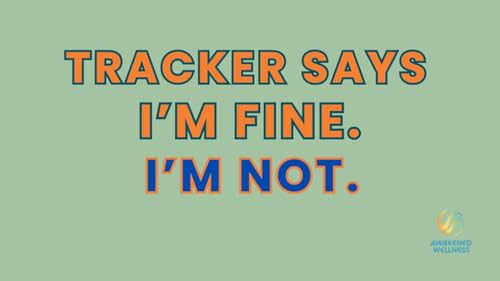
    Your tracker says you’re fine.

    Your readiness score looks acceptable.

    But you still feel tired.

    Not wiped out.

    Not sick.

    Just… not yourself.

    In this episode of Women’s Metabolism MD, Dr. Mylaine Riobé breaks down why persistent fatigue can continue even when your data looks “normal” — and why reacting to trackers alone often keeps women stuck.

    We explore:

    • Why fatigue isn’t random — even when labs and wearables look okay

    • What trackers can show you — and what they can’t

    • Why “doing everything right” can still backfire

    • How chronic stress quietly pushes metabolism into compensation

    • Why guessing the fix often makes things worse

    This episode is for high-achieving women who track, optimize, and try — yet still feel low energy, foggy, or not fully recovered.

    If your body doesn’t match your data, there’s a reason.

    And it starts with clarity.

    #shorts

    #womensmetabolism

    #chronicfatigue

    #metabolichealth

    #hrv

    Show More Show Less
    10 mins
  • Is It Perimenopause Or Something else?
    Feb 11 2026

    TAKE THE DYNAMIC METABOLIC TYPE® QUIZ:

    https://form.jotform.com/250528550970055

    Think it’s early perimenopause?

    Before you assume hormonal decline, listen to this.

    If you’re in your 30s or 40s and noticing:

    • Fatigue that wasn’t there before

    • Weight that won’t respond

    • Workouts that feel inflammatory

    • Sleep that’s lighter or fragmented

    • PMS that feels stronger

    You might be wondering if this is the beginning of perimenopause.

    But what if it’s something else?

    In this episode of Women’s Metabolism MD, Dr. Mylaine Riobé, board-certified OB-GYN and integrative physician, explains:

    • The difference between ovarian decline and metabolic compensation

    • Why labs can look “normal” while you feel unstable

    • How stress-driven compensation patterns mimic perimenopause

    • Why generic advice works for some women and backfires for others

    • The six Dynamic Metabolic Types™

    • Why each pattern requires a different stabilization strategy

    Perimenopause is real.

    But metabolic dysregulation often shows up first.

    And if you misidentify compensation as hormone decline, you’ll apply the wrong strategy — and deepen the instability.

    This episode is about clarity.

    Because the earlier you identify your compensation pattern, the easier it is to stabilize before hormonal variability amplifies everything.

    Start with the Dynamic Metabolic Type® Quiz above.

    Stop guessing.

    Identify your pattern.

    Stabilize deliberately.

    If you’ve already taken the Dynamic Metabolic Type® Quiz and enrollment for the 7-Day Women’s Metabolic Stabilization Journey is open, you’ll receive an invitation with details.

    If you’re watching this after enrollment has closed, you can join the waitlist for the next cohort here: https://mylaineriobemd7.activehosted.com/f/15

    #Perimenopause #EarlyPerimenopause #HormoneHealth #WomensMetabolism #MetabolicHealth #FatigueInWomen #BurnoutInWomen #OBGYN #IntegrativeMedicine #DynamicMetabolicType #WomensHealthPodcast #StressAndHormones

    Show More Show Less
    10 mins
  • Why Stress is Quietly Rewriting Your Metabolism
    Jan 14 2026

    Stress Is a Metabolic Input

    Stress isn’t just something you “manage.”

    It’s a biological input your metabolism responds to — constantly.

    In this episode, we unpack why stress is so often misunderstood in women’s health, and why treating it as an emotional or mindset issue misses what’s actually happening physiologically.

    For women, stress directly alters:

    • metabolic signaling

    • energy production

    • hormonal balance

    • inflammation and recovery

    When stress is ignored as a metabolic input, symptoms can start to feel random — even when labs look “normal” and you’re doing all the right things.

    🧠 This episode reframes stress from a psychological burden to a biological signal

    🌿 And explains why generic advice so often fails to resolve fatigue, inflammation, and hormonal symptoms in women

    This conversation builds on the foundation laid in earlier episodes and sets the stage for understanding how metabolic patterns adapt under load.

    If you want to understand how your metabolism responds to stress, the next step is identifying your Dynamic Metabolic Type.

    👉 I invite you to take the Dynamic Metabolic Type Quiz here:

    https://form.jotform.com/250528550970055

    #womensmetabolism

    #metabolichealth

    #stressandhealth

    #hormonehealth

    #integrativemedicine

    #functionalmedicine

    #womenswellness

    Show More Show Less
    16 mins
  • Why Generic Health Advice Fails Women -- And What Actually Works
    Jan 8 2026

    Why does the same diet, workout, or protocol help one woman feel better — and leave another feeling worse?

    In this episode, I introduce the concept of Dynamic Metabolic Types (DMTs) — a framework for understanding how a woman’s metabolism is currently responding to stress, demand, and recovery.

    Most health advice is generic.

    Women are not.

    Here, we explore why women experience fatigue, inflammation, hormonal symptoms, and metabolic “stalling” so differently — and why personalization isn’t a luxury, it’s a physiological necessity.

    This episode isn’t about fixing your body.

    It’s about understanding the pattern it’s been responding from — so you can stop trial-and-error approaches that backfire and start working with your biology.

    🧠 Clarity replaces confusion.

    🌿 Personalization replaces guessing.

    If you’d like to understand your own metabolic pattern, you can take the Dynamic Metabolic Type Quiz here:

    👉 https://form.jotform.com/250528550970055

    This quiz is optional, but it can be helpful context as you listen to the next episode, where we’ll discuss how to apply this information using the DART Method.

    Show More Show Less
    13 mins