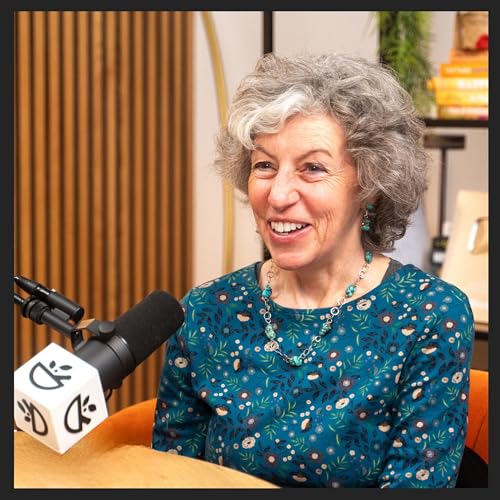
• 5 Gut health habits that improve eczema, acne and psoriasis | Farzanah Nasser
    Apr 22 2026

    If there are five people in a room with eczema, they’re probably all dealing with it for completely different reasons.

    And that’s something we don’t talk about enough.

    Eczema, acne, psoriasis… these are rarely just skin issues. They’re often a reflection of what’s happening inside the body, particularly in the gut.

    So instead of just asking what to put on your skin, this episode is about asking a better question. What’s actually driving this underneath?

    My guest today is Farzanah Nasser, a registered nutritionist and certified functional medicine practitioner specialising in gut health, immune health and chronic skin conditions.

    She works with people every day, dealing with long-standing skin issues using a practical, gut-first approach.

    She’s also the author of “The Everyday High-Fibre Plan”, full of simple, gut-friendly recipes… including those cookies on the table if you’re watching on YouTube 👀


    We cover 👇🏽

    • How gut health impacts skin conditions like eczema, acne and psoriasis
    • A functional medicine approach to eczema
    • How to build your meals for better skin health
    • Foods that support liver function
    • Whether food sensitivity tests are worth it
    • Farzanah’s personal journey with psoriasis
    • Tips to reduce bloating when increasing fibre


    🎬 Watch the podcast on YouTube here

    📱 Download The Doctor’s Kitchen app

    🌐 View full show notes, including guest details, on our website


    ☕️ Try Exhale Coffee here

    🥗 Join the newsletter and receive a 7 day meal plan

    📷 Follow on Instagram


    Hosted on Acast. See acast.com/privacy for more information.

    Show More Show Less
    1 hr and 17 mins
  • Can ayurveda improve your health with food, herbs and daily routines? | Dr Vijay Murthy
    Apr 8 2026

    There’s a fascinating ancient system of medicine called Ayurveda, originating in India over 3,000 years ago, that has helped millions of people tune into their bodies through simple food, daily rhythms and plants.

    I grew up thinking it was just a set of beliefs and traditions, but my guest today really challenged that. What I came to understand is that Ayurveda is actually a codified system of observations and experiments, documented, debated and written in Sanskrit texts.

    My guest is Dr Vijay Murthy, an internationally acclaimed integrative physician who blends Ayurveda with modern, evidence-based medicine. He has over 30 years of clinical experience and regularly publishes in peer-reviewed journals.

    What’s remarkable is that many of the practices we unpack today closely mirror what modern research now tells us about gut health, lifestyle medicine and nutrition.

    This conversation genuinely made me reflect on my own daily routines in a different way. And there are a couple of simple practices in here that you might want to try for yourself.


    We cover:

    • What Ayurveda actually is
    • Daily routines and living in sync with natural cycles
    • How to identify your dominant dosha and what it means
    • How Ayurveda can support gut health and digestion
    • How to eat according to Ayurvedic food principles
    • What an Ayurvedic breakfast looks like
    • Key herbs used in Ayurveda for digestion, blood sugar, thyroid health, skin and hair
    • How to choose high-quality herbs and avoid contaminants


    🎬 Watch the podcast on YouTube here

    📱 Download The Doctor’s Kitchen app

    🌐 View full show notes, including guest details, on our website


    ☕️ Try Exhale Coffee here

    🥗 Join the newsletter and receive a 7 day meal plan

    📷 Follow on Instagram


    Hosted on Acast. See acast.com/privacy for more information.

    Show More Show Less
    2 hrs and 12 mins
  • 7 Habits a neuroscientist swears by to keep your mind sharp at any age | Dr Tommy Wood
    Mar 25 2026

    One of the biggest myths about brain health is that decline is inevitable as we get older. That at some point our memory fades, our thinking slows down, and there’s not much we can do about it.

    My guest today argues the opposite.

    Dr Tommy Wood is a neuroscientist, Professor at the University of Washington, and performance consultant to world-class athletes.

    He’s published more than 100 scientific papers and has lectured all over the world on brain health, metabolism, physical activity and human performance.

    He’s also the author of the brilliant new book The Stimulated Mind: Future-Proof Your Brain from Dementia and Stay Sharp at Any Age (Harmony, March 2026).


    It’s a really practical conversation about small, everyday habits that can keep your mind 🧠 sharper for longer, without needing extreme diets or stacks of nootropics.


    He walks us through 3 powerful levers to sharpen your mind:

    1. How to stimulate it with specific exercises and mental challenges
    2. How to supply it with key nutrients
    3. And how to support it by changing your perspective on stress and sleep


    I’ve already changed a few simple things in my daily routine, and I’ve been sharing it with friends and family because this is something that really matters to most of us: keeping our minds sharp through life. I hope you find this conversation as useful and motivating as I did.


    If you want specific recipes and meal ideas, we have a whole brain‑healthy collection on the Doctor’s Kitchen app and website to help you put these principles into practice straight away.


    🎬 Watch the podcast on YouTube here

    📱 Download The Doctor’s Kitchen app

    🌐 View full show notes, including guest details, on our website


    ☕️ Try Exhale Coffee here

    🥗 Join the newsletter and receive a 7 day meal plan

    📷 Follow on Instagram


    Hosted on Acast. See acast.com/privacy for more information.

    Show More Show Less
    1 hr and 58 mins
  • #338 How to Use Your Breath to Sleep Better, Stress Less and Live Longer | James Nestor
    Mar 11 2026

    We breathe over 20,000 times a day. Those breaths do far more than just keep us alive. They shape your sleep, your focus, your energy, even your blood pressure and long-term risk of disease.

    That’s over 20,000 opportunities to support your health, every single day.

    The challenge is that modern life makes it harder to breathe well. We sit hunched over laptops, we’re constantly switched on, we chew softer foods, and many of us mouth-breathe, especially at night.

    My guest today is on a mission to improve our health through our breath.

    James Nestor is an award-winning science journalist and author of the bestseller “Breath”. He’s travelled the world to understand how our breathing has changed, and most importantly, what simple, practical steps we can take to improve it.

    This episode genuinely shifted things for my team and me. I hope it inspires you to make a few small changes too. And if you know a committed mouth breather, send it their way.

    We cover:

    • The risks of mouth breathing and James’ 10-day experiment
    • Why nasal breathing makes such a difference
    • Tips for a blocked nose or deviated septum
    • How to train your diaphragm for easier breathing
    • Why softer modern diets can affect your airways
    • Whether “mewing” is worth trying
    • Easy breathing habits you can start today


    🎬 Watch the podcast on YouTube here

    📱 Download The Doctor’s Kitchen app

    🌐 View full show notes, including guest details, on our website


    ☕️ Try Exhale Coffee here

    🥗 Join the newsletter and receive a 7 day meal plan

    📷 Follow on Instagram


    Hosted on Acast. See acast.com/privacy for more information.

    Show More Show Less
    1 hr and 26 mins
  • #337 Why Mould Harms Your Health and How to Protect Yourself | Dr Peter Cook PhD
    Feb 25 2026

    I talk a lot about what we eat for our health. But what about the air we breathe at home?


    If you or your kids have asthma, constant sniffles, a lingering cough, sinus issues, or you’ve noticed damp patches and that musty smell, this episode could change how you think about your home.

    As a new dad, I'm personally really interested in how our home environment shapes early immune development. This conversation made me think differently about ventilation, condensation and what really matters.


    My guest is Dr Peter Cook, a Wellcome Trust Sir Henry Dale Fellow at the MRC Centre for Medical Mycology at the University of Exeter. His research looks at how airborne fungal spores interact with the immune system and drive allergic and asthmatic disease, an area that has been surprisingly neglected.


    In this episode, we go into:

    • What mould actually is and when it becomes a problem
    • What is a safe level of mould?
    • How mould exposure can trigger asthma and allergic disease
    • Who’s most at risk
    • Whether mould testing kits are worth your money
    • If dehumidifiers and air purifiers actually work
    • Practical steps you can take this week to reduce your exposure and protect your health


    🎬 Watch the podcast on YouTube here

    📱 Download The Doctor’s Kitchen app

    🌐 View full show notes, including guest details, on our website


    ☕️ Try Exhale Coffee here

    🥗 Join the newsletter and receive a 7 day meal plan

    📷 Follow on Instagram

    Hosted on Acast. See acast.com/privacy for more information.

    Show More Show Less
    52 mins
  • #336 Whether Antidepressants Actually Work and the Myth of Serotonin Imbalance | Professor Joanna Moncrieff
    Feb 18 2026

    Today we’re having an uncomfortable but very necessary conversation about antidepressants and the theory that these drugs work for those with depression by correcting imbalanced chemicals in their brain.


    Our guest to discuss this topic is Joanna Moncrieff, a Professor of Psychiatry at University College London, and works as a consultant psychiatrist in the NHS. She is author of numerous scientific papers including a major review that showed there was little evidence to support the idea that depression is caused by a serotonin abnormality. Her most recent book "Chemically Imbalanced: the making and unmaking of the serotonin myth” is what we’re going to be discussing today.


    This was a complete eye opener for me. For years I believed in the pharmaceutical washed message that antidepressants worked because of a genuine brain chemical imbalance that we corrected with medications. This is not proven.


    Today we’ll discuss over-use and misrepresentation of psychiatric drugs in the public sphere, the changing philosophy of mental health and how we got to a point where over 8 million people in the UK use antidepressants.


    We discuss what serotonin is, how we measure it in the body, why the imbalance theory is inconclusive, whether antidepressants have good evidence that they work and their many side effects.


    I want to make it clear that this episode is not meant to shame or belittle anyone on medications for mental health, but provide accurate information about how we can safely treat these problems and offer informed consent weighing up the pros and cons of medications like antidepressants. The use of these medications has well recognised withdrawal and dependency effects and should not be stopped without strict supervision of your medical practitioner.


    We’ve also linked to the Maudsley deprescribing guidelines here in the show notes for practitioners educating themselves on how to do this with their patients.


    Chemically Imbalanced Book


    Website: https://joannamoncrieff.com/


    🎬 Watch the podcast on YouTube here

    📱 Download The Doctor’s Kitchen app

    🌐 View full show notes, including guest details, on our website


    ☕️ Try Exhale Coffee here

    🥗 Join the newsletter and receive a 7 day meal plan

    📷 Follow on Instagram


    Hosted on Acast. See acast.com/privacy for more information.

    Show More Show Less
    1 hr and 30 mins
  • #335 Saliva Tests, Poop Cameras, Digital Coaches and What the Future of Health Looks Like with Lara Lewington
    Feb 11 2026

    Even though I’m a skeptic I love health tech. I wear a wearable, I play with red light therapy gadgets and I monitor my bloods more regularly than a lot of my peers. Rather than being overwhelmed with the data, I thrive in it, and I’m able to reasonably weigh up the information from all these inputs because of my experience of being a medical doctor for over 15 years.


    But with so much health tech interest, the landscape has become confusing and it can be hard to separate health from hype.


    So we’re chatting to Lara Lewington today who’s covered some of the world’s greatest innovations, presenting the BBC’s flagship technology show, Click and many more. She’s explored Artificial Intelligence in health, the use of home hormone testing and whether there are any devices that can actually help us meditate better.


    This is a super fun episode where we discuss what tech is available today that can help us eat, sleep and exercise better as well as stress less and prevent disease. I learnt both about the world of breath testing to guide our food choices, an app to help you with jet lag, as well as the potential for intelligent and personalised cancer screening.


    Hacking Humanity dives into this and a lot more, which is available in all good bookstores.


    Some of the products discussed include:

    Whoop

    Oura

    Omed

    Dexcom and Abbot CGMs

    Timeshifter App

    Eli Health

    BrainPatch AI

    Grail Testing

    Truecheck

    Ezra


    🎬 Watch the podcast on YouTube here

    📱 Download The Doctor’s Kitchen app

    🌐 View full show notes, including guest details, on our website


    ☕️ Try Exhale Coffee here

    🥗 Join the newsletter and receive a 7 day meal plan

    📷 Follow on Instagram


    Hosted on Acast. See acast.com/privacy for more information.

    Show More Show Less
    1 hr and 30 mins
  • #334 The One Pesticide Everyone is Exposed To and Why It Should Be Banned | Prof Michael Antoniou
    Feb 4 2026

    Glyphosate is the world’s most widely used weedkiller. It’s found on farms, in parks, and in over 50% of UK urine samples. Today you’re going to find out more about its impact on human health and why it should be banned, from Professor Michael Antoniou.


    Professor Michael Antoniou is a molecular geneticist and gene engineering expert at King’s College London, whose research explores how agricultural chemicals like glyphosate affect our bodies, our microbiome, and our long-term health.


    We discuss:

    🌿 What glyphosate actually is and how it works by blocking a crucial enzyme in plants and microbes.

    ⚗️ Why it was deemed safe and why new evidence suggests we may have underestimated its risks.

    🧠 The latest research linking glyphosate exposure to gut microbiome disruption, liver disease, and cancer.

    🥦 Which foods carry the highest residues and whether washing, peeling, or buying organic makes a real difference.

    🧬 How chronic exposure builds up in the body and what steps you can take to reduce your exposure today.


    Professor implores everyone to support the PAN movement to prevent glyphosate use in towns and across the UK food supply. You can check out the link to help create pesticide free towns here.

    https://pan-uk.eaction.org.uk/pesticide-free-towns


    🎬 Watch the podcast on YouTube here

    📱 Download The Doctor’s Kitchen app

    🌐 View full show notes, including guest details, on our website


    ☕️ Try Exhale Coffee here

    🥗 Join the newsletter and receive a 7 day meal plan

    📷 Follow on Instagram

    Hosted on Acast. See acast.com/privacy for more information.

    Show More Show Less
    1 hr and 21 mins