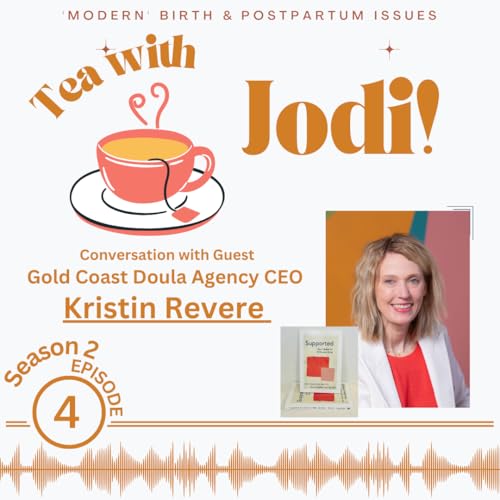
• Tea with Jodi S2-E4 - Conversation: CEO of Gold Coast Doulas Agency
    Dec 8 2025
    2025-TWJ-S2-E4 - Conversation with CEO of Gold Coast Doulas Agency Outline Kristin Revere's Background and Introduction Jodi Graves introduces Kristin Revere, CEO of Gold Coast Doulas, highlighting her education, credentials, and achievements.Kristin's background includes a Bachelor of Science in Journalism from Central Michigan University and a Master of Management and Marketing from Aquinas College.She is the host of the "Ask the Doula" podcast and has been featured in various publications.Kristin was recognized as one of the 50 most influential women in West Michigan by the Grand Rapids Business Journal in 2016 and 2022. Introduction to the Book "Supported" Jodi Graves expresses excitement about Kristin's book, "Supported: Your Guide to Birth and Baby," co-written with Alyssa Vanna Claus.The book was launched on Mother's Day and focuses on understanding options and resources for pregnancy, birth, and postnatal recovery.It is divided into two sections: pregnancy and birth preparation by Kristin, and newborn care, feeding, and postnatal support by Alyssa.The book includes compiled resources, stories from past clients, and doula tips. Motivation Behind Writing the Book Kristin explains that the book was written based on the needs they wished they had during their own pregnancies.There is a lack of judgment-free, comprehensive resources that support all types of feeding, birthing, and parenting methods.The book aims to fill the gap by providing accessible information in various formats, including e-book, paperback, hardcover, and soon, audiobook.Jodi Graves shares her excitement about the audiobook format, which suits her busy schedule. Challenges and Missing Pieces in Maternal Health Jodi Graves and Kristin discuss the lack of awareness and understanding of support options during pregnancy and postpartum.They highlight the importance of various support providers like pelvic floor physical therapists, lactation consultants, and different types of doulas.There is a need for better education on the roles of doulas versus midwives and other healthcare professionals.Kristin emphasizes the importance of non-biased, non-judgmental support for families' unique needs and choices. Impact of Social Media and Family Influence Jodi Graves and Kristin discuss the pressure and stress caused by social media, Pinterest, and Instagram, which present idealized parenting scenarios.They highlight the importance of setting expectations during pregnancy and communicating needs to family and friends.The unique goals and visions of each family should be respected, and families should focus on their individual needs and goals.Jodi Graves shares her experience of helping families navigate conflicting advice and opinions from family members. Remote Working and Parenting Challenges Kristin discusses the challenges of remote working and parenting, especially during the pandemic.Doulas help fill the gaps by providing support for both working parents and those at home, ensuring peak performance and meeting the needs of the family.The hybrid work schedule adds complexity, but doulas can help manage these challenges.Jodi Graves and Kristin agree on the importance of flexible support for families in different situations. Progress and Issues in Maternal Health Jodi Graves and Kristin discuss the progress in maternal health, including increased coverage for doulas and the benefits of continuous support during labor.They highlight the need for better prenatal care, accessibility, and reducing high cesarean rates.The importance of informed consent and addressing discrimination related to race in maternal health is emphasized.Kristin shares her observations on the higher induction rates and the cascade of interventions, leading to higher cesarean rates. Vaginal Birth After Cesarean (VBAC) and Hospital Policies Jodi Graves and Kristin discuss the progress in VBAC options and the support from some hospitals.They highlight the importance of having VBAC-friendly hospitals and the positive impact on families.Jodi Graves shares her concern about unnecessary cesareans and the need for better hospital policies.Kristin emphasizes the importance of having informed consent and addressing the root causes of high cesarean rates. Final Thoughts and Resources Jodi Graves expresses her excitement about Kristin's book and the additional resources it provides for families.Kristin provides information on how to find her book, "Supported," in various formats and where to find her agency, Gold Coast Doulas.She also mentions her podcast, "Ask the Doulas," which provides expert advice on birth and early parenting.Jodi Graves thanks Kristin for her contributions and looks forward to future collaborations. Link: Michigan Family Doulas Jodi Graves interviews Kristin Revere, CEO of Gold Coast Doulas, about her new book "Supported: Your Guide to Birth and Baby," co-authored with Alyssa Vanna Claus. The book, launched on Mother's Day, covers pregnancy, birth, and ...
    Show More Show Less
    28 mins
  • Tea with Jodi S2-E3 - Birth Story: Shelby Harshbarger
    Jul 21 2024
    2025-TWJ-S002-E003 - Birth Story: Shelby Harshbarger Outline Birth story with Shelby Harshbarger, including early labor symptoms and hospital birth.
    • Shelby Harshbarger shares her birth story, highlighting the challenges she faced in a hospital setting.
    • Pregnant woman experienced smooth pregnancy with early labor symptoms.
    Labor and delivery experience with a focus on birth plan requests.
    • Speaker 1 experienced front labor pain, which was foreign to them, and was relieved to know it was how it should be.
    • Speaker 1 had a breech baby that flipped and was not a major concern, but was monitored throughout pregnancy.
    • Jodi Graves hands her birth plan to the nurse, requesting no cervical checks, IV, or excessive medication, and frequent fetal monitoring with movement.
    • The nurse looks over the plan but doesn't seem to understand or respect Jodi's wishes, leading Jodi to feel anxious and unsure about the birth process.
    Cervical exams during labor, patient declines.
    • Speaker 1 discusses their birth plan with provider, including no cervical exams.
    • Speaker 1 resisted cervical exam, citing previous discussion and obvious labor signs.
    • Midwife Hannah assured no issue, reassured on monitoring and exam avoidance.
    Unnecessary cervical exams in childbirth.
    • Speaker argues against cervical exam requirement during labor.
    • Speaker 1 resisted cervical exam, insisting on comfort in a room instead of triage.
    • Doula raised concern about space and equipment for emergency situations.
    Birthing options, medical staff disagreements, and a baby born after a chaotic delivery.
    • Speaker 1 expresses frustration with lack of privacy and care during labor, including being denied a room with life-saving equipment and being asked to consent to an exam without proper explanation.
    • Speaker 1's doula advocates for her rights and seeks clarification on hospital policies, leading to a confrontation with the nurse and midwife over their refusal to accommodate her wishes.
    • Speaker 1's water broke unexpectedly, leading to a chaotic and overwhelming birth experience.
    • Despite the challenges, the mother and baby received excellent care from the mother-baby nurses, who prioritized skin-to-skin contact and delayed cord clamping.
    Birth trauma and lack of listening to mother's wishes during delivery.
    • Midwife administered Pitocin against birth plan, despite no IV or fetal monitoring.
    • Jodi Graves shares her birth story, highlighting disregard for her wishes and lack of listening from medical staff.
    • Jodi appreciates the opportunity to share her story, hoping it will bring change in the way women are treated during labor.
    Vaginal exams during labor, patient advocacy, and hospital policies.
    • Midwife disputes hospital policy on comfort measures during labor
    • Jodi Graves expresses outrage over medical professional's refusal to perform a vaginal exam without consent.
    • Jodi Graves argues against routine vaginal exams during labor, citing low accuracy rate and risks of infection.
    Vaginal exams during pregnancy and their potential risks.
    • Jodi Graves discusses study that correlates vaginal examination with premature rupture of membranes, increasing risk of maternal fever and other complications.
    • Study of 273 at-term deliveries in an Air Force Regional Hospital found 11% incidence of premature rupture of membranes in patients with primary cesarean section.
    • Jodi Graves criticizes maternity care in the US, citing inaccurate vaginal exams and unnecessary interventions.
    • Graves argues that maternal health outcomes in Michigan are poor, with the March of Dimes giving the state a D+ grade in 2022.

    Link: Michigan Family Doulas

    Shelby Harshbarger shared her challenging birth experience on the "Tea with Jodi" podcast. Despite having an easy pregnancy and a clear birth plan requesting minimal interventions, Shelby faced resistance from hospital staff who insisted on performing cervical exams. Despite being in active labor, she was denied admission until she consented to the exam. Shelby's water broke, and she was rushed into a room. Despite her refusal, she was given IV Pitocin and had fetal monitoring against her wishes. Her daughter was born, and the hospital staff later corrected the birth time and other details in her records. Shelby emphasized the importance of listening to women's birth plans and wishes.

    Transcripts: Birth Story: Shelby Harshbarger

    Show More Show Less
    38 mins
  • Tea with Jodi S2-E2 - Badass Breastfeeding
    May 12 2024
    Episode Highlights Breastfeeding challenges, including poor information and hospital policies. 0:08Abby and Diane are co-hosts of the "Badass Breastfeeding" podcast, sharing their experiences and advice on breastfeeding and parenting.Abby struggled with breastfeeding after having her 12-year-old son, leading her to become a blogger and social media influencer, while Diane is a lactation consultant with 18 years of experience.Speaker 2: Hospitals have financial relationships with formula companies, leading to conflicting advice.Speaker 3: New parents are getting poor information, leading to confusion and conflicting beliefs.Speakers discuss the importance of providing accurate information to parents about breastfeeding and formula feeding. Breastfeeding support and information, including hospital policies and formula feeding. 6:57Speaker 3's local hospital still provides formula, but not for free from formula companies.Speaker 3: Mission is providing evidence-based support and information to families.Speaker 3: Families often lack information on how to safely supplement breastfeeding. Breastfeeding challenges and cultural norms. 9:56Speaker 2 emphasizes the importance of normalizing breastfeeding in public and reducing shame associated with it.Speaker 3 highlights the impact of social media on normalizing breastfeeding and sharing experiences, with many people sending in pictures of themselves breastfeeding their babies.Speaker 2 mentions cultural norms and generational pressure as barriers to successful breastfeeding, citing the sexualization of the female body and societal discomfort with public breastfeeding.Speaker 2 believes that cultural norms are powerful and ingrained, leading to unrealistic expectations and beliefs about breastfeeding, despite biological facts and personal experiences. Breastfeeding challenges and finding support from lactation consultants. 14:25Encourage families to bond with their baby and listen to their instincts.Help people make informed decisions and combat misinformation.Jodi Graves shares her experience with lactation consultants, emphasizing their importance in breastfeeding support.Graves encourages listeners to seek lactation consultants if they're struggling with breastfeeding, citing their ability to change everything. The role of doulas in supporting breastfeeding families. 18:46Doulas can act as case managers, connecting families with other professionals and providing basic breastfeeding education.Doulas can serve as shields or keepers of information, helping families navigate the birthing and postpartum process.Speaker 2 suggests providing breastfeeding and birth education in high school health classes.Speaker 2 and Speaker 3 discuss the importance of normalizing body parts and early conversations about sex and reproduction. Breastfeeding challenges and solutions with healthcare professionals. 24:02Speaker 3: Nurses lack education on breastfeeding, leading to confusion and harm for families.Speaker 3: Pediatricians often provide incorrect or insufficient information, causing frustration and confusion for parents.Jodi Graves and guest discuss the importance of accurate information for breastfeeding success (0:26:51-0:28:55)Doulas and ibclc support can help new parents navigate early parenting challenges (0:28:01-0:29:13) Breastfeeding challenges and bias in maternity care. 29:18Jodi Graves discusses bonding with baby and breastfeeding, addressing misinformation and lack of doula care.Doula care is essential for informed consent and decision making in labor and delivery, according to Jodi Graves.Jodi Graves discusses bias in maternity care, arguing that statements like "breast is best" can be harmful.Graves believes that addressing bias is crucial to improving maternity care in the US and Western world. Link: Michigan Family Doulas BadassBReastfeeing Podcast Host Bio: DIANNE CASSIDY I am a lactation consultant in Rochester, New York. I became interested in the field of lactation consulting after breastfeeding my own children. After spending thousands of hours working with new mothers and babies, I was able to sit for the board exam, which qualified me as an International Board Certified Lactation Consultant, or IBCLC. In 2010, I completed my Advanced Lactation certification and BS in Maternal Child Health/Lactation. In the fall of 2013, I completed my MA in Health and Wellness/Lactation. ABBY THEURING I had my first son, Jack, at 35 years old. I was focused on my career and planned to return to work after his birth. Until the day before he was born I worked as a social worker with abused and neglected adolescent wards of the state. I was a case worker, youth counselor, supervisor and therapist before I ended my career to be a mom (or so I thought). Transcripts: Baddass Breastfeeding Podcast Hosts Interview
    Show More Show Less
    35 mins
  • Tea with Jodi S2-E1 - Doula Roundtable, Part 3 0f 3
    Apr 20 2024
    The conversation centered around the professionalization and integration of doulas in the medical system. Speakers emphasized the importance of doulas in improving birth experiences, lowering cesarean rates, and creating positive trends in the birth industry. They also discussed the economic factors driving the increase in cesarean sections and the need for a comprehensive approach to evidence-based birth practices that balances medical expertise with empowered motherhood. Speakers highlighted the importance of prioritizing birthing persons' autonomy and informed decision-making, and raised concerns about the medical establishment's control over birth. Summary Midwifery care in the US, including legal and access issues. 0:08 Midwives in the US must work under an OBGYN's supervision, even in home births. Other countries have government-funded health insurance that covers midwifery care, which is cheaper and healthier for low-risk pregnancies. Speaker 4 shares their experience with home births in Alabama, mentioning the lack of access to obstetric care and the importance of midwives. Speaker 4 reveals that they did not know home births were illegal in Alabama until their first birth, which was not a legal home birth. Birth centers, insurance coverage, and advocacy. 5:55 Speaker 5 discusses the legal and financial challenges of running a birth center, including Kaiser's involvement and the potential for mismanagement. Speaker 2 shares the story of two birth centers in North Carolina that went out of business due to financial difficulties, highlighting the importance of stable funding sources. Speaker 2 laments lack of success for freestanding birth centers in North Carolina, despite client demand. Doula Kimberly empowers clients by helping them navigate insurance coverage for out-of-hospital births. Challenges in the birth industry, including insurance and postpartum care. 10:57 Jodi Graves and Speaker 2 discuss insurance challenges in alternative birthing, including TRICARE pilot program issues. Speaker 2 discusses challenges with TRICARE reimbursement for doula services, citing undervalued work and volume-based compensation. Speaker 2 advocates for doula coverage in state insurance and private insurance, seeking pay equality and proper compensation for services. Jodi Graves wants to improve postpartum care, particularly the first 6 weeks after giving birth, where people are often left without support. Graves aims to make an impact by providing clinical eyes on people during the critical early parenting period, addressing the black hole of healthcare. Providing continuity of care and community support for new parents. 18:07 Lactation consultant offers free classes and support to new parents. Doula group focuses on building community and support for new and expectant parents. Postpartum care and education. 22:35 Speaker 2 aims to create a one-stop shop for prenatal and postpartum care, integrating providers like pelvic floor therapists and chiropractors. Speaker 2 also hosts community events on car seat safety and baby wearing education, providing free resources to the community. Speaker 6 emphasizes the importance of postpartum education, highlighting society's lack of focus on this critical period. Postpartum education and support for new mothers. 27:19 Speaker 6 emphasizes the importance of realistic expectations for postpartum recovery and breastfeeding learning period. Prenatal education should include grandparents to provide a supportive community for new mothers. Speaker 6 emphasizes the importance of thriving, not just surviving, for families and birthing people. Jodi Graves appreciates the guests' time and looks forward to hearing about their agencies' progress in the future. Link: Michigan Family Doulas Participants: Lacey Morgan - founder of King of Prussia Doulas Kymberly Fleming - founder of Redwood Doulas, provides doula support in California and Washington Aida Algarin - founder of Central Carolina Doulas, providing services to military families in North Carolina Celeste Kraft - Michigan Southeast Based Agency Owner Tracy Abney - founder of Rocket City Doulas, offers support from pregnancy to postpartum in North Alabama Transcripts: Doula 'Roundtable' Conversation, segment 3 of 3
    Show More Show Less
    33 mins
  • Tea with Jodi S2-E1 - Doula Roundtable, Part 2 0f 3
    Apr 20 2024
    The conversation centered around the professionalization and integration of doulas in the medical system. Speakers emphasized the importance of doulas in improving birth experiences, lowering cesarean rates, and creating positive trends in the birth industry. They also discussed the economic factors driving the increase in cesarean sections and the need for a comprehensive approach to evidence-based birth practices that balances medical expertise with empowered motherhood. Speakers highlighted the importance of prioritizing birthing persons' autonomy and informed decision-making, and raised concerns about the medical establishment's control over birth. Summary Doulas' role in improving birth experiences. 0:08 Speaker advocates for doulas in hospitals, promotes collaboration. Hospitals seek doulas to improve birth experiences and lower cesarean rates. Positive changes in the birth industry, trends across the US, and the importance of professionalism and respect for doulas. 4:47 Speaker 2 emphasizes importance of relationships and visibility for doulas. Jodi Graves highlights need for respect and reverence in the birth industry. Jodi Graves has 8 doulas on her team, while Lacey has 40. Non-evidence based care trends include unregulated doula training programs and lack of standardized certification. The impact of research on birth practices, with a focus on induction and interventions. 10:20 Providers in San Francisco Bay Area are seeing a trend of women opting for early inductions at 39 weeks, leading to a higher C-section rate. Speakers discuss disparities in implementation of evidence-based practices in obstetrics, with midwives prioritizing client wishes and normal physiological birth. Birth induction practices and their impact on outcomes. 14:29 Providers who are more likely to use gentle, low-intervention approaches to induce labor are also more likely to prioritize slow and steady induction, rather than trying to "shoot the baby out by 10am" (Tracy). Confirmation bias may play a role in how providers interpret and apply the ARRIVE study findings, with some providers prioritizing their existing practices and biases over the study's recommendations (Speaker 4). Speaker 4 expresses concern about medicalization of birth, feeling it can be at odds with natural physiological aspects. Speaker 1 agrees that studies tend to lean towards what may be beneficial for hospitals, rather than undisturbed birth outcomes. Hospital interventions and their impact on birth outcomes. 19:25 Speaker 1 mentions money as the reason for hospitals to want more interventions during birth. Speaker 5 clarifies that hospitals, not providers, benefit financially from C-sections. Speaker 5 highlights the importance of provider practices and schedules in cesarean rates, suggesting that those who work longer shifts are less likely to perform cesareans at dinner time. Speaker 6 raises the point that providers who make more money from cesareans may be more likely to perform them at dinner time, potentially impacting communities and birthing people. The Arrive Study and its impact on birth practices, including the benefits of using a doula agency. 24:45 Speaker 1 highlights the benefits of working with a doula agency, including local knowledge and provider relationships. Jodi Graves references the Arrive study and its findings on early induction at 39 weeks, encouraging providers to refer back to the study for more information. Jodi Graves and Speaker 5 discuss the limitations of the Arrive study and the importance of considering other evidence, such as clinical data from people who have given birth after the study. Speaker 4 highlights the relevance of the "Induction for Due Date" article from Evidence Based Birth, which provides insights into the challenges of inducing labor on a specific date. Medical interventions in childbirth and their impact on bonding and natural processes. 29:51 Jodi Graves discusses the differences between obstetric and midwifery models of care, emphasizing the importance of trusting the physiological process of labor and birth. Jodi Graves quotes a fantastic midwifery-related quote, "With a midwife, you have to prove that you cannot birth with an OB; you have to prove that you can." Jodi Graves and Speaker 6 discuss the impact of medical interventions on the birthing process and bonding between mother and baby. Speaker 2 shares a positive change in birth practices, while Speaker 1 and Jodi Graves express concerns about the use of Johnson and Johnson products on newborns. Improving postpartum care in hospitals. 34:38 Speaker highlights importance of postpartum care in midwifery model of care. Speaker 4 expresses financial feasibility concerns for hospitals regarding modern birth and postpartum issues. Link: Michigan Family Doulas Participants: Lacey Morgan - founder of King of Prussia Doulas Kymberly Fleming - founder of Redwood Doulas, provides doula ...
    Show More Show Less
    38 mins
  • Tea with Jodi S2-E1 - Doula Roundtable, Part 1 0f 3
    Apr 20 2024
    The conversation centered around the professionalization and integration of doulas in the medical system. Speakers emphasized the importance of doulas in improving birth experiences, lowering cesarean rates, and creating positive trends in the birth industry. They also discussed the economic factors driving the increase in cesarean sections and the need for a comprehensive approach to evidence-based birth practices that balances medical expertise with empowered motherhood. Speakers highlighted the importance of prioritizing birthing persons' autonomy and informed decision-making, and raised concerns about the medical establishment's control over birth. Summary Doula agency ownership with 5 owners from across the US. 0:08 Kimberly Fleming, founder of Redwood Doulas, provides doula support in California and Washington. Tracy Abney, founder of Rocket City Doulas, offers support from pregnancy to postpartum in North Alabama. Speaker 4 expresses gratitude for friendship and support among agency owners. Aida Algarin introduces Central Carolina Doulas, providing services to military families in North Carolina. Positive changes in the birth industry, including alternative pushing positions and empowering women. 5:45 Speaker 6 highlights positive change in birth industry: closing the pushing trend, credit to Brittany McCollum. Speaker 6 discusses impact of doulas on birth experience, particularly in southeastern Pennsylvania. Local expert Britney educates medical providers on alternative pushing positions in Philadelphia hospitals. Speaker 4 notes shift from bed-centric to empowering positions during childbirth. Positive changes in birth industry, including increased awareness of maternal mental health, support for partners, and informed consent. 12:06 Speaker 5 highlights the growing awareness of maternal mental health, including prenatal resources and insurance coverage. Speaker 1 agrees, noting positive trends in mental health awareness over the past 20 years. Speaker 1 & 2 discuss postpartum depression awareness and support, highlighting the importance of involving all partners in the family. Businesses and corporations are starting to provide parental leaves, making it more accessible for families to care for their children. Tracy sees positive changes in birth industry, such as more informed parents seeking evidence-based information. Tracy highlights the need for informed consent, where parents feel comfortable declining procedures against medical advice. Shift in birth work culture, with new providers embracing evidence-based practices and doulas building relationships with providers for better client outcomes 20:11 New physicians are following evidence-based medicine, making birth experiences more positive (Speaker 3) Community is seeing shifts in provider attitudes and practices, leading to better care for clients (Speaker 4) Speaker 4 shares their experience as an early doula, recognizing the need for positive relationships with providers to better serve clients. Speaker 4 advocates for a cohesive team approach in birth and parenting, prioritizing clients' needs and interests. Doulas' role in supporting patients and providers, with a focus on respect and education. 25:52 Doulas help steer clients away from hospitals with high C-section rates. Consultants help clients evaluate hospital choices based on alignment with birth goals. Birth and postpartum experiences, including hospital choices and patient advocacy. 29:18 Speaker 2 shares personal goal of providing informed consent to clients, highlighting hospital with high cesarean rate and low breastfeeding success. Speaker 2 advises clients to consider Tacoma General Hospital or birth center attached to a hospital with Franciscan midwives, citing better nurse training and new birth tubs. Speaker 2 highlights the importance of building relationships with nurses and hospital admins for patient advocacy. Speaker 3 emphasizes the value of forming connections with nurses as a doula, both for personal and professional growth. Doula shares experiences and insights from working with hospitals and communities. Link: Michigan Family Doulas Participants: Lacey Morgan - founder of King of Prussia Doulas Kymberly Fleming - founder of Redwood Doulas, provides doula support in California and Washington Aida Algarin - founder of Central Carolina Doulas, providing services to military families in North Carolina Celeste Kraft - Michigan Southeast Based Agency Owner Tracy Abney - founder of Rocket City Doulas, offers support from pregnancy to postpartum in North Alabama Transcripts: Doula 'Roundtable' Conversation, segment 1 of 3
    Show More Show Less
    37 mins
  • Tea with Jodi S1-E7 - The State of our Health Care System with Mich Rep Laurie Pohutsky
    Aug 5 2023

    Introducing Laurie Pohutsky. 0:08

    Introducing Laurie Pohutsky, 17th district Michigan House of Representatives.

    Maternal and infant health.

    What can the government do to better support parents? 2:54

    Doula and birth center expansion in Michigan.

    The most important issue facing new families.

    The availability of resources in Michigan.

    The double standard for private and public insurance.

    The lack of postpartum support for new parents. 7:32

    Lack of postpartum support for families.

    The six-week gap in health care.

    How do you see the relationship between maternal health and early parenting? 9:56

    The relationship between maternal health and early parenting.

    High infant mortality rate in the United States.

    What does prenatal care look like for different communities? 11:40

    Understanding what prenatal care looks like for different communities.

    Understanding why people choose doulas or midwives.

    What is the future of birth like? 13:59

    How midwifery is different than an obstetrician.

    The global pandemic and the birth center.

    Department of health and human services and Medicaid reimbursement.

    Maternal and infant health crisis.

    Doula support is not about making $1.50 an hour. 18:37

    Critic of accepting Medicaid insurance for payment.

    Good quality care comes from good quality care.

    Speaker Pro Tempore Laurie Pohutsky introduces herself. 20:36

    Introducing Laurie Pohutsky, Speaker Pro Tempore, Michigan House of Representatives.

    Laurie's background.

    Doula reimbursement rates aren't sustainable. 22:14

    Reimbursement rates for doulas in Michigan are horrible.

    Lack of care and lack of support.

    How Medicaid paying for doula services perpetuates poverty.

    The Michigan family doula movement.

    Link: Michigan Family Doulas

    Speaker Pro Tempore Laurie Pohutsky is serving her third term representing the 17th House District, which encompasses parts of Northwest Detroit, North Redford Charter Township and Northeast Livonia. She is a long-time activist and volunteer, and spent time as a crisis hotline volunteer and a caregiver at Angela Hospice.

    Pohutsky graduated from Michigan State University with a degree in microbiology. While a student at MSU, she took part in community outreach activities and protests at the Capitol. These experiences instilled a deep interest in politics and demonstrated the importance of ensuring everyone has a voice in government.

    After college, Pohutsky worked in the fields of food safety, toxicology and health care. She brings this knowledge, along with her experience in water quality testing, with her to the Michigan House of Representatives. She has a deep commitment to bringing a scientific perspective to government and advocating for environmental causes.

    Pohutsky is a member of the Livonia Democratic Club and is active in Michigan United. She lives in Livonia with her rescue pets.

    Transcripts: The State of our Health Care System with Mich Rep Laurie Pohutsky

    Show More Show Less
    26 mins
  • Tea with Jodi S1-E6 - The Decline of Midwifery Care with Ruth Zielinski
    Jun 8 2023
    · Introducing Ruth Solinsky, a certified nurse midwife and University of Michigan nursing professor. 0:08 o Welcome to Ruthsolinsky, a certified nurse midwife and university of Michigan nursing professor. o About Ruth. · What are the differences between midwifery and obstetric care? 2:18 o The differences between midwifery and obstetric care. o Maternity care in the US. o Everyone should receive midwifery care, including high-risk pregnancies. o Midwife partners are vocal supporters of midwife care. · What is the difference in outcomes between midwifery vs obstetric care? 6:22 o Intervention is almost always a good thing. o Routine episiotomy in Michigan. o The difference between midwifery care and obstetric care. o The difference in outcomes over the years. · What is the difference between midwifery and obstetric care? 10:12 o Lower rates of epidural and cesarean birth. o Maternal satisfaction with midwifery care. o Oxymoronic, oxymoronic and condescending. o Ascension cutting nursing and profits. · What's happening with the midwifery service at the hospital. 13:56 o Borgias hospital, kalamazoo. Midwifery service ended last summer. o Borgia Hospital is considering hiring midwives again. o Midwifery care is not about care, but money. o People want choices and choices. · How doulas can fill the gap in midwifery and birthing communities. 17:11 o Every patient has the right to choose a home birth. o The midwifery and birthing community. o How doulas can fill the gap. o Being a doula takes a lot of courage. o Maternity leave and maternity leave in this country. o The first six weeks of maternity leave. · Doulas fill the gaps in a lot of ways in the delivery room. 24:12 o Doulas filling the gaps in the delivery room and postpartum. o Maternity care loopholes. o Evidence-based care at the University of Michigan. o Patient autonomy, decision making and relational model. o Keeping the trust of midwives at U of M. o Risks of rupture of membranes. · Routine electronic fetal monitoring or skin to skin? 32:11 o Routine electronic fetal monitoring and skin-to-skin care. o Other midwifery programs in Michigan. o The importance of evidence-based support for midwives. o Maternity leave and doulas. o Taking the full six weeks off after giving birth. Link: Michigan Family Doulas Ruth Zielinski is a Clinical Professor at the University of Michigan School of Nursing. She received her MS in Nursing in 1995 – Midwifery Track, and her PhD in Nursing/Graduate Certificate in Women's Studies in 2005 both from the University of Michigan. Ruth's midwifery experience came first in Southwest Michigan and then with the University of Michigan midwives. While she no longer practices in Michigan, she precepts students in global settings such as Uganda and the United Arab Emirates. She has served ACNM as Michigan Affiliate Vice-President and President, and as Chair of the Clinical Standards & Documents Committee. Her research experience has been primarily on topics of body image/sexual health, maternal health outcomes, and midwifery education in the US and global contexts. Transcripts: Tea with Jodi S001-E006 - The Decline of Midwifery Care with Ruth Zielinski, Ph.D
    Show More Show Less
    39 mins