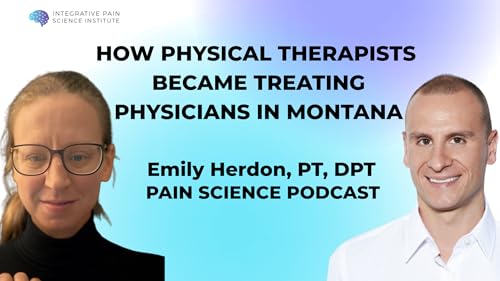
• How Physical Therapists Became Treating Physicians in Montana
    Feb 23 2026

    Emily Herndon, PT, DPT, shares her inspiring journey of how Montana physical therapists became recognized as primary care providers, influencing legislation and expanding the scope of practice. Discover strategies for advocacy, legislative success, and transforming physical therapy into a true primary care profession.

    Visit integrativepainscienceinstitute.com for CEU training in psychologically informed pain care for physical therapists and other practitioners.

    Thank you for listening,

    Joe Tatta, PT, DPT
    CEO, Integrative Pain Science Institute

    Show More Show Less
    57 mins
  • Physical Therapists Managing Mental Health With Mary Beth Osborne, PT, DPT
    Feb 2 2026

    In this episode of the Pain Science Podcast, Dr. Mary Beth Osborne discusses the integration of mental health into physical therapy practice. She shares her personal experiences with suicide in her family, which have shaped her commitment to addressing mental health issues in her work. The conversation explores the importance of screening for mental health conditions, the role of physical therapists in providing holistic care, and the evolution of the PT Cares clinic at the University of Connecticut. Dr. Osborne emphasizes the need for physical therapists to be proactive in addressing mental health and the barriers that currently exist in the healthcare system.

    Visit integrativepainscienceinstitute.com for CEU training on psychologically-informed pain care for physical therapists and other practitioners.

    Thank you for listening,

    Joe Tatta, PT, DPT
    CEO, Integrative Pain Science Institute

    Show More Show Less
    36 mins
  • APTA Expands PT Mental Health Role
    Jan 26 2026

    In this episode, Dr. Joe Tatta discusses the recent policy changes by the American Physical Therapy Association regarding the role of physical therapists in behavioral and mental health. He emphasizes the importance of this policy in legitimizing the role of physical therapists in addressing mental health issues, moving from mere acknowledgment to active inclusion in practice. The discussion covers the historical context of these policies, the implications for physical therapy education and practice, and the ethical responsibilities that come with this expanded scope. Dr. Tatta highlights the need for competence and the importance of viewing physical therapists as whole health clinicians capable of integrating mental health into their practice.

    Visit integrativepainscienceinstitute.com for CEU training on integrative, psychologically-informed pain care for physical therapists and other practitioners.

    Thank you for listening,

    Joe Tatta, PT, DPT
    CEO, Integrative Pain Science Institute

    Show More Show Less
    10 mins
  • Nutrition, Rheumatoid Arthritis, and the New Food Pyramid with Sara Brown, PT, DPT, MS
    Jan 19 2026

    In this episode of the Pain Science Podcast, Joe Tatta, PT, DPT, welcomes Sarah Brown, PT, DPT, MS a doctor of physical therapy and nutritionist, to discuss the intricate relationship between food, the immune system, and chronic joint pain, particularly focusing on rheumatoid arthritis (RA). Dr. Brown shares her unique journey from physical therapy to nutrition, emphasizing the importance of combining movement and dietary changes to manage chronic pain effectively. They delve into the impact of diet on inflammation and pain, highlighting the significance of the Mediterranean diet and the potential benefits of an elimination diet for those suffering from RA.

    The conversation also explores the pathophysiology of rheumatoid arthritis, including genetic and environmental triggers, and the role of gut health in managing inflammation. Dr. Brown explains how lifestyle factors such as diet, stress, and sleep can influence the immune response and overall health. The episode concludes with practical advice on dietary changes, the importance of understanding food's role in health, and the potential of supplements like omega-3 fatty acids, curcumin, and resveratrol in alleviating symptoms of RA. This insightful discussion aims to empower listeners with knowledge and practical strategies to improve their health through nutrition and lifestyle adjustments.

    Visit integrativepainscienceinstitute.com for CEU training on integrative, psychologically-informed pain care for physical therapists and other practitioners.

    Thank you for listening,

    Joe Tatta, PT, DPT
    CEO, Integrative Pain Science Institute

    Show More Show Less
    58 mins
  • Delivering Community Pain Care with Sharna Prasad, PT, DPT
    Jan 5 2026

    In this episode of the Pain Science Podcast, Joe Tatta, PT, DPT, interviews Sharna Prasad, PT, DPT, about her journey from India to the U.S. and her experiences in pain management. They discuss the cultural influences on pain perception, the importance of understanding social determinants of health, and the need for a shift in physical therapy education. Dr. Prasad shares her insights on community empowerment, the development of pain education curricula, and the challenges faced in implementing new pain care models.

    Visit integrativepainscienceinstitute.com for CEU training on integrative, psychologically-informed pain care for physical therapists and other practitioners.

    Thank you for listening,

    Joe Tatta, PT, DPT
    CEO, Integrative Pain Science Institute

    Show More Show Less
    47 mins
  • Treating Anxiety, Dizziness and Pain with Sarah Conover, PT, MHS, CHC
    Sep 16 2025

    In this episode, Joe Tatta, PT, DPT, speaks with Sarah Conover, PT, MHS, CHC, a vestibular therapist with a background in treating conditions related to anxiety, dizziness, and pain. Sarah shared her journey, starting from her early career in the late 1980s, working in acute neuro care, to her current practice, which focuses on chronic vestibular issues. She highlighted the evolution of vestibular therapy and the increasing recognition of conditions like vestibular migraine, 3PD (persistent postural perceptual dizziness), and Mal de Débarquement syndrome.

    We delved into the intricate connections between the vestibular system and mental health, discussing how dizziness can trigger anxiety and other autonomic responses due to the close interplay between the vestibular system, the autonomic nervous system, and brain structures like the amygdala and hypothalamus. Sarah emphasized the importance of a holistic approach in treatment, incorporating mindfulness and acceptance-based strategies to help patients manage their symptoms.

    Sarah also shared her personal journey with anxiety and how it has influenced her practice. She employs a range of tools, including mindfulness practices, thought reframing, and expressive writing, to assist her patients in developing a sense of safety and acceptance regarding their symptoms. We also touched on the role of spirituality in healing, with Sarah explaining how she gently explores this aspect with her patients to support their overall well-being.

    To learn more about Sarah's work, visit her at dizzycoach.com

    Visit integrativepainscienceinstitute.com for more information and CEU courses on pain and mental health for physical therapists.

    Thank you for listening,

    Joe Tatta, PT, DPT
    CEO, Integrative Pain Science Institute

    Show More Show Less
    43 mins
  • Integrating Mental Health and Pain Science into the Doctor of Physical Therapy Program
    Sep 1 2025

    In this episode, Joe Tatta, PT, DPT, speaks with Dr. Sarah Case-Morris, assistant professor at the University of Michigan–Flint, to explore how mental health, pain science, and health and wellness promotion are being woven into the Doctor of Physical Therapy program.

    Dr. Case-Morris shares her inspiring journey from teaching assistant to shaping the next generation of PTs, and we dive into her research on how early-career therapists—trained in the biopsychosocial model—approach pain and mental health differently than those rooted in a more traditional biomedical lens.

    We also talk about the real-world challenges of implementing clinical practice guidelines, especially when it comes to screening for psychosocial risk factors in back pain. Sarah gives us a behind-the-scenes look at how she's integrating pain science, mental health, and health and wellness into her teaching—right as CAPTE requirements are evolving to highlight the mental, psychological, and emotional dimensions of health.

    This is an important conversation about the future of physical therapy education and how preparing students with a whole-person approach can change the way we care for individuals and communities.

    For more information, visit integrativepainscienceinstitute.com

    For CEU courses on pain and mental health, visit integrativepainscienceinstitute.com/course/

    Thank you for listening,

    Joe Tatta, PT, DPT
    CEO, Integrative Pain Science Institute

    Show More Show Less
    34 mins
  • The Power of Walking to Prevent Low Back Pain with Tash Pocovi, PhD
    Mar 18 2025

    In this episode, Joe Tatta, PT, DPT, speaks with physiotherapist and researcher Tash Pocovi, PhD about her groundbreaking study in the Lancet on the effectiveness and cost-effectiveness of an individualized, progressive walking and education intervention for the prevention of low back pain recurrence.

    The trial, known as the Walk Back Trial, involved 24 physiotherapists across Australia who delivered an individualized and progressive walking program along with education. The participants, who were mostly sedentary, were given walking prescriptions tailored to their current activity levels, age, BMI, and comorbidities. The goal was to gradually increase their walking to 30 minutes most days of the week over six months.

    The results were promising, showing a relative risk reduction in low back pain recurrences and a reduction in care-seeking episodes. This has significant implications for both individual health and healthcare system burdens, highlighting the potential of simple interventions like walking combined with education.

    Dr. Pocovi also discussed the cost-effectiveness of the intervention, noting that it was highly likely to be cost-effective based on willingness-to-pay thresholds. The biggest savings were seen in reduced work absenteeism.

    For more information, please visit integrativepainscienceinstitute.com

    For CEU courses, please visit integrativepainscienceinstitute.com/course/

    Love the show? Please subscribe, rate, and review.

    Thank you for listening,

    Joe Tatta, PT, DPT
    CEO, Integrative Pain Science Institute

    Show More Show Less
    39 mins