• The Dark Pattern: The Hidden Dynamics of Corporate Scandals with Guido Palazzo
    Dec 13 2025

    In this episode of Leadership Bites, I interview Guido Palazzo, Professor of Business Ethics, University of Lausanne, who explores the dark side of corporate behaviour and the systemic issues that lead to ethical failures. We discuss Guido's background, the concept of his brilliant book 'The Dark Pattern: The Hidden Dynamics of Corporate Scandals' in corporate scandals, and the importance of understanding the systems and cultures that allow unethical behaviour to thrive.

    The conversation delves into the psychological aspects of corporate culture, the slippery slope of ethical compromise, and the need for organisations to create environments that promote ethical decision-making. Ultimately, we highlight the importance of awareness and proactive measures to prevent ethical failures in business.

    Takeaways

    • Guido focuses on the absence of ethics in business.
    • Corporate scandals often involve good people making bad decisions.
    • Systems, not just individuals, drive unethical behaviour.
    • Leadership plays a crucial role in shaping organisational culture.
    • Group dynamics can lead to conformity and ethical blindness.
    • The slippery slope of compromise can lead to significant ethical failures.
    • Survival instincts can overshadow ethical considerations in the workplace.
    • Creating a 'bright pattern' can help organisations avoid ethical pitfalls.
    • Awareness and proactive measures are essential for ethical business practices.
    • The importance of having a court jester to provide honest feedback in organisations.

    Key Moments & Chapters

    00:00 Introduction to Ethics and Corporate Responsibility
    03:03 Guido's Background and Academic Journey
    05:37 Understanding Ethics in Business
    08:49 The Role of Systems in Ethical Failures
    11:45 Exploring Corporate Scandals and Dark Patterns
    14:35 The Impact of Leadership on Organizational Culture
    17:41 Group Dynamics and Ethical Decision Making
    20:30 The Combination of Dark Patterns in Corporations
    23:28 Survival and Ethical Compromise in Business
    26:12 Conclusion: The Human Element in Corporate Ethics
    26:42 The Dark Patterns of Corporate Culture
    29:39 The Slippery Slope of Compromise
    33:16 The Illusion of the Messiah in Leadership
    40:13 The Disconnect Between Leadership and Reality
    44:11 Finding the Bright Pattern in Dark Times


    To find out more about Guy Bloom and his award winning work in Team Coaching, Leadership Development and Executive Coaching click below.

    The link to everything CLICK HERE
    UK:
    07827 953814
    Email: guybloom@livingbrave.com
    Web: www.livingbrave.com

    Show More Show Less
    51 mins
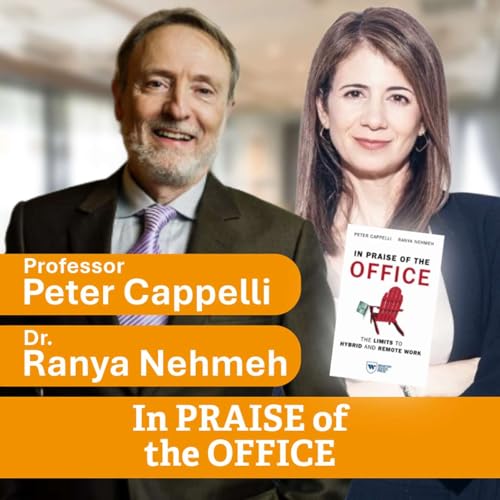
  • In PRAISE of the OFFICE! with Dr. Peter Cappilla & Ranya Nehmeh
    Nov 30 2025

    In this episode of Leadership Bites, host Guy Bloom engages with Peter Cappilla & Ranya Nehmeh, authors of 'In Praise of the Office: The Limits to Hybrid and Remote Work.'

    They discuss the evolving dynamics of work in the post-pandemic world, exploring the challenges and benefits of remote and hybrid work models.

    The conversation delves into the importance of social interactions, the generational divide in workplace culture, and the critical role of leadership in navigating these changes.

    The episode emphasises the need for organisations to adapt and find a balance between remote flexibility and the inherent value of in-person collaboration.

    Takeaways

    • The pandemic forced a massive experiment in remote work.
    • Social interactions are crucial for innovation and collaboration.
    • There is a generational divide in workplace culture.
    • Employees value flexibility but also miss in-person connections.
    • Leadership must model the behaviors they want to see.
    • The media often exaggerates the tension between employees and employers.
    • Organizations need to create intentional connections in the office.
    • Remote work can lead to social isolation and stress.
    • Measuring productivity in remote work is complex and nuanced.
    • The future of work requires a balance between remote and office environments.

    Chapters

    00:00 Introduction to Leadership Bytes
    02:55 Meet the Guests: Peter and Ranya
    05:54 The Concept of Office Work
    08:54 The Impact of the Pandemic on Work Dynamics
    11:41 Challenges of Remote Work
    14:29 The Generational Divide in Workplace Culture
    17:48 The Tug of War: Employees vs Employers
    20:40 The Role of Leadership in Hybrid Work
    23:34 The Importance of Social Interactions
    26:39 Measuring Innovation and Collaboration
    29:41 The Future of Work: Balancing Remote and Office
    32:28 Conclusion and Key Takeaways


    To find out more about Guy Bloom and his award winning work in Team Coaching, Leadership Development and Executive Coaching click below.

    The link to everything CLICK HERE
    UK:
    07827 953814
    Email: guybloom@livingbrave.com
    Web: www.livingbrave.com

    Show More Show Less
    55 mins
  • The Culture Trap with Dr. Jeanne Hardacre
    Nov 23 2025

    This with Jeanne Hardacre conversation explores Jeanne's book The Culture Trap the profound impact of emotions on behavior change, emphasizing that while knowledge and beliefs are important, it is ultimately our feelings that drive transformation. The discussion delves into how understanding behavior and the role of emotions can lead to more effective change strategies.

    Takeaways

    • What we think and know is important, but actually the change comes from what we feel.
    • Emotion is the energy that leads to behavior change.
    • Feelings are crucial for transformation.
    • Understanding behavior is key to change.
    • Knowledge alone isn't enough for change.
    • Belief shapes our actions and reactions.
    • Energy from emotions fuels our decisions.
    • Transformation requires emotional engagement.
    • Our emotion drives our actions.
    • The interplay of emotion and knowledge is vital for effective change.

    00:00 Introduction to Leadership and Power Dynamics
    02:52 Jeanne's Journey: From Baby Manager to Independent Consultant
    06:12 Challenging Authority: The Cost of Speaking Truth to Power
    09:08 The Shift to Independence: Embracing Freedom in Consultancy
    11:59 Patterns of Power: Perpetuation vs. Interruption
    14:54 The Courage to Change: Self-Reflection and Accountability
    17:56 The Role of Culture in Leadership
    20:54 Learning from Experience: The Importance of Humility
    23:54 Martial Arts and Leadership: The Art of Letting Go
    33:49 The Humility of Martial Arts and Leadership
    37:45 The Culture Trap: Understanding Workplace Dynamics
    46:28 The HUMAN Approach: Transforming Organizational Culture
    55:54 Invitational Change: Empowering Teams to Evolve
    01:02:55 Emotional Connection: The Key to Behavioral Change


    To find out more about Guy Bloom and his award winning work in Team Coaching, Leadership Development and Executive Coaching click below.

    The link to everything CLICK HERE
    UK:
    07827 953814
    Email: guybloom@livingbrave.com
    Web: www.livingbrave.com

    Show More Show Less
    1 hr and 12 mins
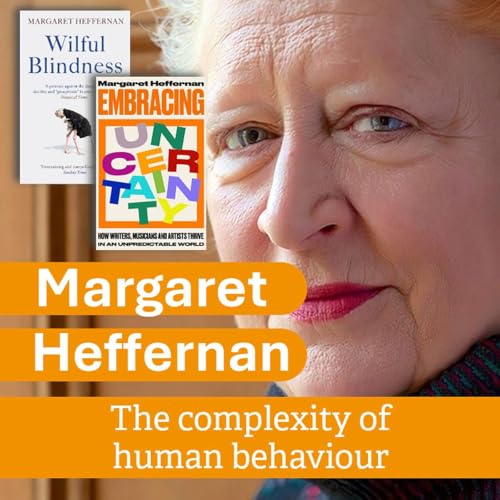
  • The Complexity of Human Behaviour with Margaret Heffernan
    Nov 9 2025

    In this episode I sit down with author, entrepreneur and thought-leader Margaret Heffernan to explore two of her seminal ideas: the hidden dangers of conforming to systems that blind us to obvious truths (from her book Willful Blindness) and the vital importance of embracing uncertainty, especially through the lens of writers, artists and creatives (from her latest work Embracing Uncertainty).

    We talk about how organisations and individuals get stuck in the comfort of predictability, why innovation is not merely incremental improvement, what creative people can teach business leaders about sensing the future and navigating chaos, and the critical role of agency, curiosity and courage even when outcomes are uncertain.

    It’s a conversation designed for senior leaders, coaches, team-effectiveness practitioners and anyone who wants to see beyond the status quo.

    00:00 Introduction & technical note
    02:15 Who is Margaret Heffernan: career, context and influences
    08:45 Exploring Willful Blindness: what it means, in business and culture
    17:20 Why systems and institutions encourage willful blindness
    23:30 The trigger for the next book: from Uncharted to Embracing Uncertainty
    29:08 Join to second recording – framing the shift to artists, music, creativity
    31:00 What does “embracing uncertainty” really mean in today’s world
    38:40 COVID, anticipation and why the future unsettled so many organisations
    45:50 Creatives, artists and the ability to sense the future ahead of others
    52:12 Divergent thinking vs incremental improvement: defining “innovation”
    56:22 Leadership and agency when certainty is not possible
    01:03:15 How context, character and culture interact in enabling creative agency
    01:10:00 Practical take-aways for senior leaders and coaches
    01:15:30 Closing thoughts: system change, individual mindsets, human skills


    To find out more about Guy Bloom and his award winning work in Team Coaching, Leadership Development and Executive Coaching click below.

    The link to everything CLICK HERE
    UK:
    07827 953814
    Email: guybloom@livingbrave.com
    Web: www.livingbrave.com

    Show More Show Less
    1 hr and 2 mins
  • The Devil Emails At Midnight with Mita Mallick
    Nov 2 2025

    In this episode of Leadership Bites, Mita Mallick shares her journey from being a bullied child to becoming a champion for inclusion in the workplace. She emphasizes the importance of consistency and discipline in achieving success and discusses how creating inclusive cultures starts at home. Mita highlights the need for respectful conversations in the workplace and the role of leaders in fostering psychological safety. She also introduces her new book, 'The Devil Emails at Midnight,' which explores the archetypes of bad bosses and encourages self-reflection among leaders.

    Takeaways

    • Mita is on a mission to fix what's broken in workplaces.
    • Consistency and discipline are key to success.
    • Everyone has experienced a time when they didn't belong.
    • Creating inclusive cultures starts at home.
    • We need to disagree with kindness and respect.
    • Psychological safety is crucial for open conversations.
    • Leaders must take ownership of their impact on others.
    • Understanding intent versus impact is vital in communication.
    • Self-reflection is necessary for effective leadership.
    • Mita's new book explores bad boss archetypes and encourages growth.


    Sound bites

    • "I'm on a mission to fix what's broken."
    • "Consistency is my underrated superpower."
    • "We all have one toxic habit."


    Chapters
    00:00 Introduction and Background
    02:58 The Importance of Consistency and Discipline
    05:53 Mita's Origin Story and Journey
    09:03 Creating Inclusive Cultures Starts at Home
    11:52 The Hijacking of Inclusion Conversations
    14:38 The Need for Kind and Respectful Conversations
    17:40 Psychological Safety in Conversations
    20:20 The Role of Leaders in Inclusion
    23:19 Understanding Intent vs. Impact
    26:24 Mita's New Book: The Devil Emails at Midnight
    29:27 Exploring Bad Boss Archetypes
    32:26 The Importance of Self-Reflection in Leadership
    35:30 Conclusion and Final Thoughts


    To find out more about Guy Bloom and his award winning work in Team Coaching, Leadership Development and Executive Coaching click below.

    The link to everything CLICK HERE
    UK:
    07827 953814
    Email: guybloom@livingbrave.com
    Web: www.livingbrave.com

    Show More Show Less
    42 mins
  • The Imposter Phenomenon with Dr. kate Atkin
    Sep 13 2025

    Guy Bloom interviews Kate Atkin, a speaker, facilitator, author, and author of The Imposter Phenomenon. They explore Kate's journey from a farming background to becoming an expert in the field, discussing the differences between the imposter phenomenon and imposter syndrome, the role of external validation, and the impact of societal expectations. Kate shares insights from her research on coping strategies and emphasizes the importance of psychological courage in overcoming imposter feelings.

    The conversation concludes with practical advice for leaders on how to support their teams in recognizing their worth and capabilities.

    Takeaways

    • The imposter phenomenon is not limited to women.
    • It's important to differentiate between a phenomenon and a syndrome.
    • External validation can be both helpful and harmful.
    • Coping strategies can sometimes be maladaptive.
    • Normalizing failure can help reduce imposter feelings.
    • Psychological courage is necessary to accept one's abilities.
    • The environment can influence feelings of belonging.
    • Parenting styles can impact self-perception and imposter feelings.
    • Self-handicapping behaviors can serve as excuses for underperformance.
    • Leaders should provide evidence of why their team members are amazing, not just accolades.

    👉 Kate’s book The Imposter Phenomenon is available on Amazon
    👉 Find Kate at https://kateatkin.com
    👉 Connect on LinkedIn: https://www.linkedin.com/in/kateatkin/

    🔔 Subscribe for more conversations with leading thinkers on leadership, confidence, and personal growth.


    Chapters

    00:00 Introduction to Imposter Phenomenon
    04:45 Kate's Origin Story and Journey
    09:53 Understanding the Imposter Phenomenon vs. Syndrome
    19:42 The Role of Internal and External Validation
    24:36 The Impact of Environment on Imposter Feelings
    29:25 Dunning-Kruger Effect vs. Imposter Feelings
    32:01 The Psychological Roots of Imposter Feelings
    44:04 Coping Strategies and Moving Forward
    50:19 The Role of Courage in Overcoming Imposter Feelings
    56:26 Final Thoughts on Leadership and Validation


    To find out more about Guy Bloom and his award winning work in Team Coaching, Leadership Development and Executive Coaching click below.

    The link to everything CLICK HERE
    UK:
    07827 953814
    Email: guybloom@livingbrave.com
    Web: www.livingbrave.com

    Show More Show Less
    1 hr
  • Transforming Mental Health Treatment with Erin Sivyer Lee
    Aug 31 2025

    In this episode of Leadership Bites, Guy Bloom interviews Erin Lee, the CEO of Flow Neuroscience, a company that has developed a wearable headset designed to treat depression through mild electrical stimulation of the brain.

    Erin shares her journey into the healthcare sector, the science behind the headset, and the promising results from clinical trials. The conversation explores the integration of Flow's technology with traditional treatments, the challenges faced in the medical community, and the potential future applications of this innovative approach to mental health.

    Erin emphasizes the importance of accessibility and affordability in mental health treatments, and the episode concludes with a call to action for listeners to explore Flow Neuroscience's offerings.

    Takeaways

    • Erin Lee runs a neuroscience company that treats depression with electricity.
    • The Flow headset is a wearable device that stimulates the brain.
    • Clinical trials have shown a 75% drop in suicidal ideation.
    • Erin's background includes experience in healthcare and tech companies.
    • The headset works for 50-70% of users in treating depression.
    • Flow can be used alongside traditional antidepressants.
    • The technology aims to be accessible and affordable for all.
    • Primary care clinicians are increasingly open to using Flow.
    • The future of mental health treatment may include more personalized approaches.
    • Flow is exploring applications for conditions like autism and ADHD.

    Sound Bites

    • "We saw a 75% drop in suicidal ideation."
    • "We can fit into a treatment for you that works."
    • "We’re not anti-drug, we’re anti-depression."

    Chapters

    00:00 Introduction to Flow Neuroscience
    02:55 The Science Behind the Headset
    06:05 Erin's Journey to Flow Neuroscience
    08:48 The Founders and Their Vision
    12:03 Understanding the Technology
    14:49 Integration with Traditional Treatments
    17:46 The Future of Mental Health Treatment
    20:45 Educating Healthcare Professionals
    24:09 Strategic Targeting and Clinician Response
    26:53 Challenges in Primary Care vs Psychiatry
    29:50 The Role of Data in Treatment Effectiveness
    31:45 Exploring Applications in Autism and Neurodivergence
    34:01 The Future of Technology in Mental Health
    35:57 Understanding the Use of Flow for Well Individuals
    38:46 Integrating EEG for Personalized Treatment
    42:45 Concluding Thoughts and Future Directions


    To find out more about Guy Bloom and his award winning work in Team Coaching, Leadership Development and Executive Coaching click below.

    The link to everything CLICK HERE
    UK:
    07827 953814
    Email: guybloom@livingbrave.com
    Web: www.livingbrave.com

    Show More Show Less
    46 mins
  • Crisis Management Unveiled with Rod Cartwright
    Aug 24 2025

    In this episode of Leadership Bites, Guy Bloom interviews Rod Cartwright, a crisis management expert, who shares insights on the importance of crisis preparedness, the role of human systems, and the impact of social media on crises. Rod discusses his background in public relations, the significance of leadership in crisis situations, and the need for organizations to focus on character and culture. He also highlights the importance of crisis simulations and training, and the findings from his recent Reputation Risk and Resilience Report.

    Takeaways

    • Crisis management involves preparing for major moments that threaten reputation.
    • Organizations often seek help too late, when crises occur.
    • Crisis preparedness should be embedded in organizational culture.
    • Human systems are crucial for effective crisis management.
    • Crisis simulations help organizations prepare for real-life scenarios.
    • Character and culture are as important as operational capability.
    • Social media can amplify crises beyond control.
    • Crisis training should create a safe space for learning.
    • Organizations must focus on relationships, not just reputation.
    • Crisis management requires a long-term perspective.

    Chapters

    00:00 Introduction to Crisis Management
    02:54 Rod's Background and Experience
    06:11 Understanding Crisis Preparedness
    08:44 The Importance of Human Systems in Crisis
    11:47 Case Study: Coldplay CEO Crisis
    14:45 Character vs. Capability in Crisis Management
    17:44 Crisis Simulations and Training
    20:41 The Role of Leadership in Crisis
    23:48 The Future of Crisis Management
    26:42 The Impact of Social Media on Crises
    29:26 The 2025 Reputation Risk and Resilience Report
    32:25 Long-term vs. Short-term Thinking in Organizations
    35:14 Conclusion and Future Directions


    To find out more about Guy Bloom and his award winning work in Team Coaching, Leadership Development and Executive Coaching click below.

    The link to everything CLICK HERE
    UK:
    07827 953814
    Email: guybloom@livingbrave.com
    Web: www.livingbrave.com

    Show More Show Less
    53 mins