• The case for underwriting as the new defensible moat in healthcare | Sean Doolan & Emre Karatas (Virtue VC)
    May 14 2026

    Sean Doolan and Emre Karatas from Virtue VC join to discuss their thesis that a new actuarial infrastructure layer is emerging in healthcare and why they're investing behind it.

    The starting point is a simple observation: most healthcare risk is either mispriced or unpriced, and the incumbents who could theoretically fix it are structurally prevented from doing so because their business models depend on the mispricing. That creates an opening for a new category of companies that can quote a number, bear the risk, and stand behind their math.

    Sean and Emre walk through how they think about this infrastructure layer, with dashboards and workflow tools on top and underwriting as the chassis underneath. RightWise, a portfolio company repricing pharmacy claims at the individual drug level for self-insured SMB employers, serves as a concrete illustration of their thesis.

    The conversation also covers where else the thesis applies: ACOs, medical malpractice, surgical centers of excellence, and site of care arbitrage. On go-to-market, Sean and Emre explain why pharmacy is a cleaner starting point than medical, why SMBs are the right initial customer, and why focused execution beats trying to serve the whole market at once.

    Sean and Emre wrap by underscoring that actuarial infrastructure is one of the more defensible investment categories in an AI world and what kind of founders Virtue wants to hear from.


    For more from Health Tech Nerds, subscribe to our weekly newsletters: https://www.healthtechnerds.com/subscribe

    Show More Show Less
    18 mins
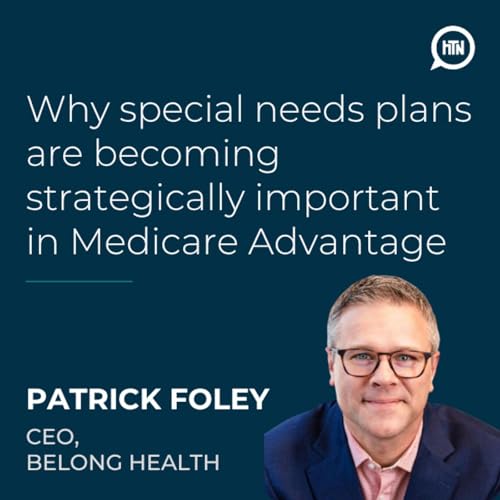
  • Why special needs plans are becoming strategically important in Medicare Advantage | Patrick Foley (Belong Health)
    May 13 2026

    Patrick Foley, CEO of Belong Health, joins to discuss the growing opportunity in Medicare Advantage special needs plans and how Belong is helping community health plans compete in a market increasingly dominated by nationals.

    Patrick walks through the three types of special needs plans — D-SNP for dually eligible members, C-SNP for chronic conditions, and I-SNP for institutional settings — and why C-SNP has become the highest growth segment over the past two to three years. The P&L dynamics are part of the story: C-SNP reimbursement reflects more accurate risk capture and higher member engagement, which makes it an attractive product for plans navigating a difficult MA environment.

    The conversation also explores the strategic tension between nationals and community health plans. Nationals can take a portfolio approach — using C-SNPs to differentiate in specific markets and generate higher margins. Community plans don't have that option. They've been rooted in their communities for 50 years and can't walk away from Medicare lines of business even when the economics are tough. Belong's role is helping those plans make special needs products sustainable.

    The episode closes on broker relationships and year-round enrollment, where C-SNPs and D-SNPs give community plans a tool to build multi-decade broker relationships rather than competing on benefits alone during open enrollment.


    For more from Health Tech Nerds, subscribe to our weekly newsletters: https://www.healthtechnerds.com/subscribe

    Show More Show Less
    17 mins
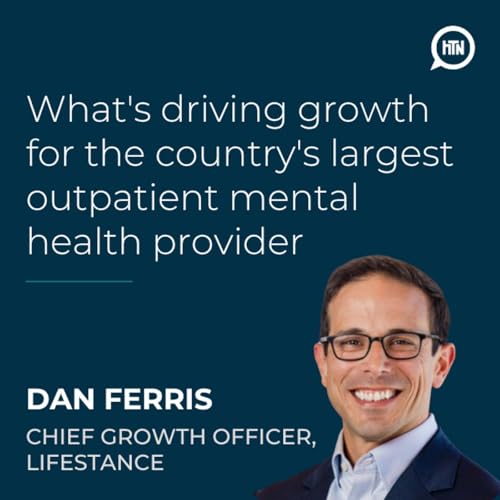
  • What's driving growth for the country's largest outpatient mental health provider | Dan Ferris (LifeStance Health)
    May 12 2026

    Dan Ferris, Chief Growth Officer at LifeStance Health, joins following the company's Q1 earnings to discuss how the largest outpatient mental health provider in the country is thinking about growth, operations, and the road ahead.

    LifeStance serves over a million patients annually across 600 clinics and 33 states, with 8,300 employed clinicians. Dan walks through the growth algorithm: a confident organic engine running at mid-teens growth, complemented by tuck-in M&A to enter communities where LifeStance doesn't yet have a presence.

    The conversation covers the national rollout of interventional psychiatry — TMS and Spravato — where payers are increasingly seeing the value for patients who have failed multiple antidepressants. Dan also shares how LifeStance is thinking about AI across four parts of the business, with the clearest ROI so far in back office functions like scheduling, intake, and revenue cycle.

    On the commercial side, Dan discusses the shift from cash pay to insurance across behavioral health and LifeStance's goal of making the in-network experience indistinguishable from what patients believe they'd get by paying out of pocket.

    The episode closes on the progress of value-based care in behavioral health. While it's still early, LifeStance is preparing internally while embedding mental health into the physical health journey through referral partnerships with primary care offices, health systems, and at-risk VBC groups organizations further along the VBC journey.


    For more from Health Tech Nerds, subscribe to our weekly newsletters: https://www.healthtechnerds.com/subscribe

    Show More Show Less
    14 mins
  • The Grand Roundup: Strong Q1s driven by operational execution, hospital market power, MinuteClinic / Mass General Brigham, SNP growth, pharmacy patient experience, and more
    May 11 2026

    News & Analysis from Health Tech Nerds

    Q1 earnings broadly reinforced a shift away from hype narratives and toward operational execution across value-based care and healthcare services companies.

    • Agilon: Stock jumped after a "turn the corner" quarter. The standout data point: new heart failure diagnoses occurring after hospital admissions reduced from 40-50% industry-wide to roughly 5%, reflecting stronger risk stratification and earlier intervention.
    • Evolent: Continuing to build its oncology story — roughly 10% of the oncology market runs through Evolent today, with 50% still insourced by payers. Their thesis is that increasing complexity in oncology will push more payers toward outsourced specialty management.
    • Privia: Continued its shared risk strategy with strong free cash flow and disciplined M&A patience. Management believes private-market provider enablement assets remain overpriced and are willing to wait for valuations to reset.
    • Oscar: Strong quarter, with ACA enrollment attrition coming in materially better than worst-case scenarios. ICHRA and the new Lucy marketplace are the growth narratives beyond the ACA core, though Lucy still feels underdeveloped.

    Zack Cooper published an op-ed in the New York Times arguing hospital market power is the primary driver of rising healthcare costs. The AHA responded, and Kevin and Martin's read is that the defensiveness itself is the signal. Recent consolidation in Minnesota and Missouri illustrates the core tension: economically problematic, but increasingly hard to avoid.

    The CVS MinuteClinic / Mass General Brigham partnership gets a detailed look after Massachusetts regulators flagged a $40M annual cost increase. Most of it comes from 34,000 patients gaining a PCP for the first time — at $650 more per year in claims — plus convenience care now billing at MGB rates. A useful case study in the tradeoffs between expanding access and controlling cost.


    Guest: Dan Ferris (LifeStance)
    Dan discusses LifeStance's Q1 results, the return to tuck-in M&A after three years, the national rollout of interventional psychiatry including TMS and Spravato, and the accelerating shift from cash pay to insurance across behavioral health.


    Guest: Patrick Foley (Belong Health)
    Patrick explains why Medicare Advantage special needs plans — particularly C-SNPs — are becoming strategically important for both nationals and regional nonprofit health plans, and how SNPs enable tighter alignment between primary care, care management, and health plans while helping navigate difficult MA economics.


    Guests: Sean Doolan & Emre Karatas (Virtue VC)
    Sean and Emre discuss Virtue's emerging thesis around a new actuarial infrastructure layer in healthcare, arguing that increasingly complex risk models, specialty benefit design, and value-based payment structures are creating demand for more sophisticated tooling beneath the surface of managed care markets.


    Guest: Otto Sipe (Photon Health)
    Otto makes the case that pharmacy is the most underutilized patient touchpoint in health systems — patients interact with pharmacy ten times more often than primary care. He walks through Photon's prescription price transparency model, the $16M raise, and why health systems thinking about patient LTV should be organizing around pharmacy cadence rather than medical claims.


    For more from Health Tech Nerds, subscribe to our weekly newsletters: https://www.healthtechnerds.com/subscribe

    Referenced:

    Zack Cooper NYT op-ed: https://www.nytimes.com/2026/05/04/opinion/health-care-hospitals-insurance.html

    AHA response to op-ed: https://www.aha.org/news/blog/2026-05-06-setting-record-straight-three-ways-hospital-blame-narrative-gets-it-wrong

    Virtue VC thesis: https://www.virtuevc.com/writings/hypothesis---a-new-actuarial-infrastructure-layer-is-emerging

    CVS <> Mass General Brigham CMIR: https://masshpc.gov/publications/market-oversight-report/cmir-report-mass-general-brigham-and-cvs-minuteclinic-primary

    Photon's funding announcement: https://photonhealth.com/blog/series-a-growth-in-darkness

    Show More Show Less
    1 hr and 58 mins
  • The NC State Health Plan: a case study in managed care, benefit design, and healthcare affordability | Brian Miller (NC State Health Plan)
    May 8 2026

    The North Carolina State Health Plan turnaround offers a compelling case study for what happens when a state leverages the full set of managed care and benefit design tools available to them. Vice Chairman Brian Miller joins to share his perspective on the philosophy behind the plan's member-first approach and what it suggests for healthcare affordability more broadly.

    Brian walks through the principles guiding the turnaround: income-adjusted premiums modeled on Medicare, benefit design that avoids penalizing members with chronic conditions, and a preferred provider strategy that uses the plan's purchasing volume to steer members toward better value. He emphasizes that these tools have existed for decades but have not been applied deliberately and with the member's financial interest as the north star.

    The conversation also covers drug affordability, where Brian makes the case that FDA biosimilar regulation is a more effective and underappreciated lever than payment policy. Updating the pathway could make biologics cheap the same way generics made small molecules cheap, without undermining incentives for innovation.

    The episode closes on the MA versus original Medicare cost debate. Brian's framework: the answer depends on which of three lenses you use, most people pick the one that gives them the answer they want, and the policy conversation would be better served by using all three.


    For more from Health Tech Nerds, subscribe to our weekly newsletters: https://www.healthtechnerds.com/subscribe

    Show More Show Less
    21 mins
  • Healthcare affordability, declining trust, and the realities of reform | Natalie Davis (United States of Care)
    May 7 2026

    Natalie Davis, CEO of United States of Care joins to discuss the organization’s latest polling on healthcare affordability and what it reveals about voter sentiment heading into the next election cycle.

    Drawing from research across more than 30,000 Americans, Natalie explains why affordability consistently emerges as the public’s top healthcare concern—not just because of medical bills, but because of the emotional stress, delayed care, and distrust the system creates. She walks through the policy solutions voters support most strongly, including prescription drug affordability, price transparency, site-neutral payments, and anti-competitive merger scrutiny.

    The conversation also explores the growing erosion of trust in healthcare institutions and the broader public backlash against a system increasingly perceived as prioritizing profits over patients. Natalie discusses why affordability reform is gaining traction in conservative states, how fragmented incentives make systemic change difficult, and why many organizations no longer have the leverage to independently reduce costs even when they want to. They also touch on AI in healthcare, where patients are simultaneously optimistic and deeply skeptical, with transparency and trust emerging as the key factors shaping adoption.


    For more from Health Tech Nerds, subscribe to our weekly newsletters: https://www.healthtechnerds.com/subscribe

    Show More Show Less
    15 mins
  • What Kelonia's journey to exit could mean for cell & gene therapies | Bryan Roberts (Venrock)
    May 6 2026

    Bryan Roberts from Venrock joins to discuss Eli Lilly's acquisition of Kelonia, a gene therapy company Venrock seeded in 2020, for up to $7 billion.

    Bryan walks through the original investment thesis: autologous ex vivo CAR-T therapy was producing remarkable efficacy in late-stage multiple myeloma, but everything else about the model was broken: six to seven week processing times, $220,000 cost of goods, and delivery restricted to academic medical centers. The bet was that Kelonia's in vivo platform, developed out of MIT and CNRS in France, could preserve the efficacy while eliminating the rest.

    He describes the path to exit as anything but linear. The 2022 biotech financing freeze hit preclinical cell and gene therapy companies especially hard. Kelonia survived through pharma partnership deals with Astellas and J&J that funded operations without giving up the lead program, and by staying focused on getting to clinical data, which they achieved mid-2025.

    The conversation closes with Bryan's honest read on the cell and gene therapy landscape: the $2M+ commercial launches have largely failed, the path forward is pricing in the $300-400K range, and the infrastructure required to deliver these therapies broadly is at least a decade away from where it needs to be.


    For more from Health Tech Nerds, subscribe to our weekly newsletters: https://www.healthtechnerds.com/subscribe

    Show More Show Less
    15 mins
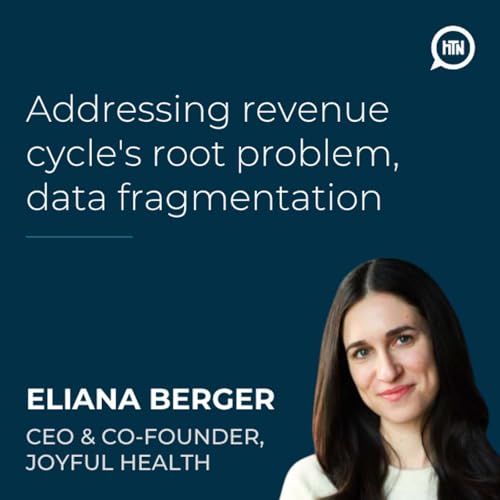
  • Addressing revenue cycle's root problem, data fragmentation | Eliana Berger (Joyful Health)
    May 5 2026

    Eliana Berger, CEO and co-founder of Joyful Health, joins Kevin and Martin following the company's recent $17M Series A. Eliana walks through what she observed spending two years inside provider practices as a fractional CFO, the data fragmentation that sits underneath revenue cycle, and how she thinks about the distinction between AI services and AI agents in denials work.


    Topics discussed:

    • What Eliana found working inside practices as a fractional CFO, and why finance kept surfacing as the hair-on-fire problem
    • Addressing revenue cycle's root problem: the lack of a financial source of truth across EHRs, billing systems, clearinghouses, payer portals, and bank accounts
    • Why Joyful shifted from selling software to owning the outcome end-to-end
    • The distinction between AI services and AI agents, and where rules-based automation works versus where expertise is required
    • The mechanics of working a denial, including ERAs, vague denial codes like CO-16, and the cross-system "detective work" involved
    • The payer-provider dynamic and how AI is showing up on both sides
    • Joyful's system-agnostic go-to-market and four-to-eight week implementation timeline
    • The longer-term vision of integrating from payer contracts through to the bank account

    For more from Health Tech Nerds, subscribe to our weekly newsletters: https://www.healthtechnerds.com/subscribe

    Show More Show Less
    14 mins