• Predicting the next Pandemic with Dr. Larry Brilliant
    Mar 9 2026

    Predicting the next Pandemic with Dr. Larry Brilliant.

    The next pandemic will not be a virus. During the ICT&health World Conference, Lucien Engelen sat down with epidemiologist Larry Brilliant for a focused conversation on what he sees as the real global threat: a worldwide pandemic of chronic disease that is shortening healthy life expectancy and quietly destabilising healthcare systems and economies.Brilliant draws a sharp line between living longer and living healthier.

    The widening gap between life expectancy and healthy life expectancy is, in his view, the defining challenge of our time. Prevention is no longer a public health slogan. It is a strategic imperative.


    For ICT&health Global, this conversation goes to the heart of healthcare transformation. Technology, AI and data matter. But only if they help extend healthy years, strengthen prevention and support system level redesign. Brilliant also reflects on the eradication of smallpox and what true global leadership and coordination can achieve when urgency meets collaboration.For policymakers, health leaders and innovators shaping the future of care, this is essential listening.

    Listen to the episode and join the global conversation on prevention, leadership and sustainable healthcare systems.

    Summary

    In this engaging podcast episode, Dr. Larry Brilliant discusses his remarkable journey in public health, including his pivotal role in eradicating smallpox and his insights on pandemics, healthspan, and innovations in healthcare. He emphasizes the importance of communication in public health and the need to address the growing healthspan-lifespan gap. Dr. Brilliant also shares his thoughts on overcoming barriers in public health and the collaborative efforts that led to the success of the smallpox eradication program.


    Dr. Larry Brilliant played a crucial role in eradicating smallpox.

    The movie 'Contagion' was inspired by the H1N1 pandemic.

    Life expectancy has doubled, but healthspan has not kept pace.

    The U.S. ranks poorly in healthspan compared to other countries.

    Chronic diseases are a growing concern in public health.

    Preventable diseases account for a significant portion of health issues.

    Innovative strategies are needed to improve health outcomes.

    Communication is key in public health messaging.

    Collaboration was essential in the smallpox eradication effort.

    The success of smallpox eradication serves as a model for future public health initiatives.


    sound bites

    "Fiction is a better communicator than facts."

    "We need to find a way to solve that."

    "We did it and we sent the tire."


    Chapters

    00:00 The Journey of Dr. Larry Brilliant

    04:36 Pandemics: Past, Present, and Future

    09:25 The Healthspan-Lifespan Gap

    12:31 Innovations in Healthcare and Longevity

    16:22 Overcoming Barriers in Public Health

    22:42 The Eradication of Smallpox: A Triumph of Collaboration


    Show More Show Less
    25 mins
  • Improving physician, nurse and care team collaboration
    Mar 6 2026

    How can we improve physician, nurse and care team collaboration?

    Interprofessional collaboration, patient engagement, healthcare innovation, nursing, AI in healthcare, patient education, healthcare culture, simulation training, self-care, and healthcare barriers.

    An episode moderated in December 2025 by Lucien Engelen with Alessio Morley-Fletcher, MD, MMSc, Marjolein Heemels (RN, MSc, MHA) Heemels and Dave deBronkart (e-Patient Dave) deBronkart.

    This conversation explores the critical theme of interprofessional collaboration in healthcare, emphasizing the roles of patients, nurses, and physicians.

    The discussion highlights the importance of patient engagement, the impact of AI, and the need for cultural shifts within healthcare systems.

    Key insights include the necessity of shared governance structures, the value of simulation training, and the call for proactive patient involvement in their care.

    The participants share their experiences and perspectives on overcoming barriers to collaboration and improving healthcare delivery.

    Takeaways:

    -Interprofessional collaboration is essential for effective healthcare delivery.

    -Patients should be seen as active partners in their care.

    -AI can augment decision-making but should not replace human collaboration.

    -Cultural shifts are necessary to improve healthcare systems.-simulation training enhances communication and teamwork among healthcare professionals.

    -Self-care initiatives empower patients to manage their health.

    -Governance structures can facilitate better collaboration in healthcare.

    -Reducing cognitive load can improve patient and provider experiences.

    -Healthcare professionals need to be trained together to foster collaboration.

    -Engaging patients in their care leads to better outcomes.


    Chapters

    00:00 Introduction to Interprofessional Collaboration

    06:16 The Role of Nurses in Healthcare

    09:28 Patient Involvement in Healthcare Decisions

    12:28 Physician Perspectives on Collaboration

    15:13 Cultural Barriers in Healthcare

    16:12 AI's Role in Patient Care

    20:15 Patient Academy: Empowering Self-Care

    23:54 Motivating Patients and Nurses

    27:29 The Importance of Communication in Healthcare

    31:02 Moving from Healthcare to Well-Care

    32:44 Interprofessional Collaboration in Healthcare Training

    35:46 The Role of Simulation in Medical Education

    38:22 Technology and Human-Centered Design in Healthcare

    41:17 Patient Participation and Shared Governance

    44:11 Tangible Actions for Improving Collaboration

    47:04 Building Governance Structures for Better Care

    49:04 Navigating Healthcare Access and Patient Empowerment

    Show More Show Less
    49 mins
  • Designing healthcare for 2030 and beyond with Dr. Daniel Kraft
    Mar 4 2026

    The viral video of Will Smith eating spaghetti became a shorthand for how fast generative AI can improve. From awkward and unreliable to almost flawless in a year. At the @ICT&health World Conference in Maastricht, Daniel Kraft, MD used that moment to explain what we are now seeing in healthcare AI.
    Early systems struggled with hallucinations and narrow use cases. Today, AI supports medical imaging, cardiology, diagnostics and clinical workflows, from second readers in radiology to AI scribes that reduce administrative burden and improve the patient conversation. According to Kraft, this is not linear progress but exponential change, invisible for years and suddenly impossible to ignore.
    That shift echoes what Lucien Engelen described years ago as a Copernican moment in healthcare, moving from professional centred systems to patient centred care. AI accelerates that transition, enabling earlier detection, continuous monitoring and more personalised care, far beyond hospital walls.
    Yet the article also makes a crucial point. Technology grows exponentially, people and systems do not. Adoption, trust, equity and human judgement remain decisive. AI should amplify intelligence, not replace it. The real risk is not that AI moves too fast, but that healthcare systems move too slowly to translate what is already possible into daily practice. Podcast hosts Lucien Engelen⁠ and Jessica Workum.

    Show More Show Less
    17 mins
  • A patient, a doctor, a nurse and a healthcare strategist walk into a ... Linkedin LIVE
    Dec 22 2025

    Interprofessional collaboration, patient engagement, healthcare innovation, nursing, AI in healthcare, patient education, healthcare culture, simulation training, self-care, healthcare barriers. An episode moderated by Lucien Engelen with Alessio Morley-Fletcher, MD, MMSc, Marjolein (RN, MSc, MHA) Heemels and Dave (e-Patient Dave) deBronkart

    This conversation explores the critical theme of interprofessional collaboration in healthcare, emphasizing the roles of patients, nurses, and physicians. The discussion highlights the importance of patient engagement, the impact of AI, and the need for cultural shifts within healthcare systems. Key insights include the necessity of shared governance structures, the value of simulation training, and the call for proactive patient involvement in their care. The participants share their experiences and perspectives on overcoming barriers to collaboration and improving healthcare delivery.


    Takeaways

    • Interprofessional collaboration is essential for effective healthcare delivery.
    • Patients should be seen as active partners in their care.
    • AI can augment decision-making but should not replace human collaboration.
    • Cultural shifts are necessary to improve healthcare systems.
    • Simulation training enhances communication and teamwork among healthcare professionals.
    • Self-care initiatives empower patients to manage their health.
    • Governance structures can facilitate better collaboration in healthcare.
    • Reducing cognitive load can improve patient and provider experiences.
    • Healthcare professionals need to be trained together to foster collaboration.
    • Engaging patients in their care leads to better outcomes.

    Chapters

    00:00 Introduction to Interprofessional Collaboration

    06:16 The Role of Nurses in Healthcare

    09:28 Patient Involvement in Healthcare Decisions

    12:28 Physician Perspectives on Collaboration

    15:13 Cultural Barriers in Healthcare

    16:12 AI's Role in Patient Care

    20:15 Patient Academy: Empowering Self-Care

    23:54 Motivating Patients and Nurses

    27:29 The Importance of Communication in Healthcare

    31:02 Moving from Healthcare to Well-Care

    32:44 Interprofessional Collaboration in Healthcare Training

    35:46 The Role of Simulation in Medical Education

    38:22 Technology and Human-Centered Design in Healthcare

    41:17 Patient Participation and Shared Governance

    44:11 Tangible Actions for Improving Collaboration

    47:04 Building Governance Structures for Better Care

    49:04 Navigating Healthcare Access and Patient Empowerment

    Show More Show Less
    54 mins
  • What 6 Surprising Insights Everyone Gets Wrong About Health Tech.
    Dec 16 2025

    What 6 Surprising Insights Everyone Gets Wrong About Health Tech.

    Six surprising Insights of Edition #6-2025 of ICT & Health magazine that also will be discussed, debated and explored at the ICT & health World Conference January 27-29, 2026 in Maastricht .


    Healthcare is often portrayed as a technological solution to its problems. AI, big data, and digital transformation are seen as the silver bullets that will address issues like rising costs and staff shortages. The promise is a future of seamless, data-driven, and efficient care. However, the leaders, clinicians, and technologists building this future are learning that the greatest challenges are human. They’ve discovered that meaningful progress requires empathy, communication, and a clear moral compass, not just better algorithms. This article reveals six counter-intuitive lessons from the vanguard of health innovation. These insights challenge our assumptions about technology’s role in care and point toward a more surprising and human future.

    Show More Show Less
    14 mins
  • RN2Blend report Dutch Nursing Care: Quality, Organization, and Differentiated Roles
    Feb 19 2025

    This report from the RN2Blend consortium presents findings from a five-year study on differentiated nursing practices in Dutch hospitals. The research explores how hospitals are implementing varied roles for nurses, the challenges they encounter, and the effects on professional development, care quality, and cost-effectiveness. The study demonstrates that differentiated working leads to increased nurse involvement in policy and quality improvement, and can improve nurse retention, but requires the engagement of various stakeholders and ongoing investment. It highlights the necessity to consider historical contexts, power dynamics, and the diversity of nurses’ ambitions when implementing differentiated practices, emphasising that it is not a one-size-fits-all solution and that the effects depend on the context. The study concludes that while there have been positive steps, further support is needed to ensure the sustainable embedding of new roles, enhanced nurse empowerment, and improved team collaboration.

    Show More Show Less
    14 mins
  • To HR or Not to HR...
    Feb 11 2025

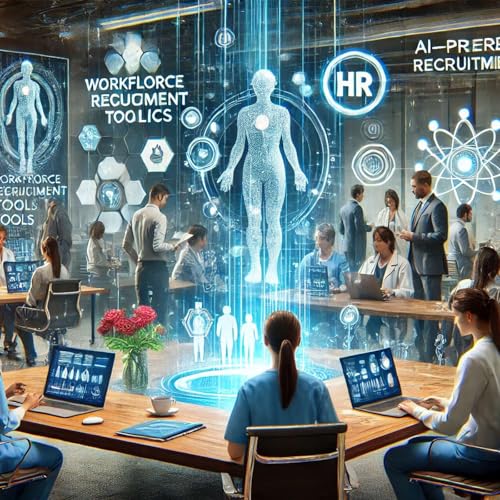
    NotebookLM version of my essay (soon to be published on my LinkedIn page) in which I examine the evolving role of Human Resources (HR) in healthcare, emphasising its transition from an administrative function to a strategic driver of organisational success. The chapters outline several of HR's new responsibilities concerning clinician retention, engagement, and satisfaction, as well as its growing role in facilitating organisational change, including digital transformation and innovation. Key strategies involve adopting data-driven approaches, prioritising employee well-being, fostering a culture of innovation, and aligning HR strategy with organisational goals. Despite these advancements, HR encounters challenges such as workforce shortages, burnout, regulatory compliance, resistance to change, and resource constraints. The essay underscores the necessity for HR to proactively tackle these challenges to enhance workforce stability and improve patient care delivery.


    Show More Show Less
    14 mins
  • Prevention Over Treatment: The Economic Case for Health Innovation
    Dec 23 2024

    In this episode, an audio extract of Lucien Engelen’s lecture at the Majlis Mohammed bin Zayed in November 2024, discusses the future of healthcare delivery. We examine the healthcare crisis marked by workforce shortages and systemic pressures. Lucien presents innovative views on how technology and retail integration can transform healthcare, highlighting that interventions make up only 6% of health outcomes while consuming 90% of budgets. We explore solutions like self-measurement kiosks and digital humans and discuss preventive health’s economic implications. This episode is crucial for healthcare professionals, policymakers, technologists, and anyone interested in healthcare’s future.


    Show More Show Less
    34 mins