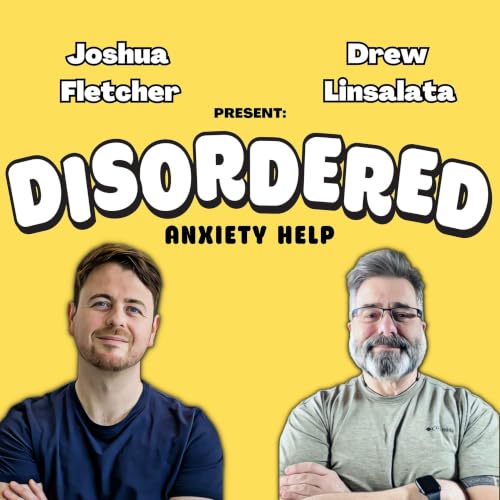
Disordered: Anxiety Help cover art

Disordered: Anxiety Help

Disordered: Anxiety Help

By: Josh Fletcher and Drew Linsalata
Listen for free

This Season's Biggest Deal | $0.99/mo for 3 months + $20 Audible bonus

Auto-renews at $8.99/mo. after 3 months - terms apply.
Summary
Disordered is the podcast that delivers real, evidence-based, actionable talk about anxiety disorders and anxiety recovery in a kind, compassionate, community-oriented environment. Josh Fletcher is a qualified psychotherapist in the UK. Drew Linsalata is a therapist practicing under supervision in the US. They're both bestselling authors in the anxiety and mental health space. Josh and Drew are funny, friendly, and they have a knack for combining lived experience, formal training, and professional experience in an encouraging, inspiring, and compassionate mental health message.© 2026 Disordered: Anxiety Help Hygiene & Healthy Living Psychology Psychology & Mental Health
Episodes
  • Urgency and Impatience in Anxiety Recovery (Episode 181)
    Nov 13 2026

    Send a question or comment via text message

    "It's not working. I'm doing something wrong. What else can I do?"

    This week we talk about urgency and impatience in anxiety recovery, and why pushing harder so often backfires.

    We get into why urgency is part of the threat response itself, so behaving urgently tells your brain the alarm was right. We also talk about why "how long will this take?" has no answer we can give you, why a deadline like a wedding or a move can add pressure to the very process you're trying to ease, and what happens when a lifelong problem solver or high achiever tries to fix anxiety the way they fix everything else. We also look at self-compassion as a practical tool, and at why a good therapist never makes you feel behind. Our view here is clinical opinion, and it doesn't apply when there's a real danger.

    Plus Did It Anyway wins, including a first family reunion in over thirty years and a delayed breakfast after a blood draw.

    Drew's book Seven Percent Slower is mentioned in this episode. Find it here:

    https://geni.us/baH7N


    ----

    Want to talk about this episode, interact with us, and communicate with others that are sharing your experience? We're hanging out in the Disordered Community Space

    https://disordered.fm/community

    ----

    The Disordered Guide to Health Anxiety is available now:

    ⁠https://www.disordered.fm/the-disordered-guide-to-health-anxiety/⁠

    ---

    Struggling with worry and rumination that you feel you can't stop or control? Check out ⁠⁠⁠⁠⁠⁠⁠⁠⁠⁠⁠⁠⁠⁠⁠⁠⁠⁠⁠⁠⁠⁠⁠⁠⁠⁠⁠⁠⁠⁠⁠⁠⁠⁠⁠⁠⁠⁠⁠⁠⁠⁠⁠⁠Worry and Rumination Explained⁠⁠⁠⁠⁠⁠⁠⁠⁠⁠⁠⁠⁠⁠⁠⁠⁠⁠⁠⁠⁠⁠⁠⁠⁠⁠⁠⁠⁠⁠⁠⁠⁠⁠⁠⁠⁠⁠⁠⁠⁠⁠⁠⁠, a two hour pre-recorded workshop produced by Josh and Drew.

    -----

    Got questions or did it anyways to share? ⁠Send us an email or voicemail on our website⁠.

    https://disordered.fm

    ---

    Disclaimer: Disordered is not therapy or a replacement for therapy. Listening to Disordered does not create a therapeutic relationship between you and the hosts or guests of the podcast. Information here is provided for psychoeducational purposes. As always, please consult your mental health and/or medical care providers. If you are having a mental health crisis, always reach out immediately for in-person help.

    Show More Show Less
    41 mins
  • Is Exposure Therapy Traumatizing? (Episode 180)
    Nov 6 2026

    Send a question or comment via text message

    Is exposure therapy traumatizing? It's a question we hear often, and one that makes some therapists hesitate to use exposure at all. This week we take it on directly, with the caveat that this is our clinical opinion and not a substitute for care tailored to you.

    We talk about the difference between a crisis, where your ability to cope is temporarily overwhelmed, and trauma, and why intense fear or discomfort doesn't automatically mean someone has been traumatized. We also explain when a history of genuinely dangerous events changes the approach, why trauma-informed work may need to come first for some people, and why a good clinician formulates the problem and builds a graduated hierarchy before anyone is sent into the hardest situation. We also get into how the words we choose shape the story we tell ourselves.

    Plus did it anyway wins, including a first day back at work with agoraphobia, a trip away from a safe person, and a Halloween gig.


    ----

    Want to talk about this episode, interact with us, and communicate with others that are sharing your experience? We're hanging out in the Disordered Community Space

    https://disordered.fm/community

    ----

    The Disordered Guide to Health Anxiety is available now:

    ⁠https://www.disordered.fm/the-disordered-guide-to-health-anxiety/⁠

    ---

    Struggling with worry and rumination that you feel you can't stop or control? Check out ⁠⁠⁠⁠⁠⁠⁠⁠⁠⁠⁠⁠⁠⁠⁠⁠⁠⁠⁠⁠⁠⁠⁠⁠⁠⁠⁠⁠⁠⁠⁠⁠⁠⁠⁠⁠⁠⁠⁠⁠⁠⁠⁠⁠Worry and Rumination Explained⁠⁠⁠⁠⁠⁠⁠⁠⁠⁠⁠⁠⁠⁠⁠⁠⁠⁠⁠⁠⁠⁠⁠⁠⁠⁠⁠⁠⁠⁠⁠⁠⁠⁠⁠⁠⁠⁠⁠⁠⁠⁠⁠⁠, a two hour pre-recorded workshop produced by Josh and Drew.

    -----

    Got questions or did it anyways to share? ⁠Send us an email or voicemail on our website⁠.

    https://disordered.fm

    ---

    Disclaimer: Disordered is not therapy or a replacement for therapy. Listening to Disordered does not create a therapeutic relationship between you and the hosts or guests of the podcast. Information here is provided for psychoeducational purposes. As always, please consult your mental health and/or medical care providers. If you are having a mental health crisis, always reach out immediately for in-person help.

    Show More Show Less
    44 mins
  • Anxiety and The Obsession With Optimizing EVERYTHING (Episode 179)
    Oct 30 2026

    Send a question or comment via text message

    Optimization OCD seems to be a thing. Actually, across a large number of anxious people, the pull to get recovery, sleep, food, fitness, and even your own feelings exactly right is pretty common. This week we're talking about the drive to optimize recovery ... or anything.

    We talk about how "I should" is an anxious thought, why optimizing can mean sending yourself dozens of daily messages that you're not good enough as you are, and why "am I doing this right?" quietly treats some feelings as unwelcome. We also get into resource gathering, tracking devices, outsourcing discomfort to AI, and why you can't optimize your way out of uncertainty. None of this applies to medical conditions that need active management, and what we share about tracking, AI, and wellness culture is our clinical opinion.

    Plus Did It Anyway wins, including opening the shop on an anxious Monday, a panic attack in a conference room followed by a packed stadium, and a wedding speech given anxious.

    ----

    Want to talk about this episode, interact with us, and communicate with others that are sharing your experience? We're hanging out in the Disordered Community Space

    https://disordered.fm/community

    ----

    The Disordered Guide to Health Anxiety is available now:

    ⁠https://www.disordered.fm/the-disordered-guide-to-health-anxiety/⁠

    ---

    Struggling with worry and rumination that you feel you can't stop or control? Check out ⁠⁠⁠⁠⁠⁠⁠⁠⁠⁠⁠⁠⁠⁠⁠⁠⁠⁠⁠⁠⁠⁠⁠⁠⁠⁠⁠⁠⁠⁠⁠⁠⁠⁠⁠⁠⁠⁠⁠⁠⁠⁠⁠⁠Worry and Rumination Explained⁠⁠⁠⁠⁠⁠⁠⁠⁠⁠⁠⁠⁠⁠⁠⁠⁠⁠⁠⁠⁠⁠⁠⁠⁠⁠⁠⁠⁠⁠⁠⁠⁠⁠⁠⁠⁠⁠⁠⁠⁠⁠⁠⁠, a two hour pre-recorded workshop produced by Josh and Drew.

    -----

    Got questions or did it anyways to share? ⁠Send us an email or voicemail on our website⁠.

    https://disordered.fm

    ---

    Disclaimer: Disordered is not therapy or a replacement for therapy. Listening to Disordered does not create a therapeutic relationship between you and the hosts or guests of the podcast. Information here is provided for psychoeducational purposes. As always, please consult your mental health and/or medical care providers. If you are having a mental health crisis, always reach out immediately for in-person help.

    Show More Show Less
    45 mins
No reviews yet
In the spirit of reconciliation, Audible acknowledges the Traditional Custodians of country throughout Australia and their connections to land, sea and community. We pay our respect to their elders past and present and extend that respect to all Aboriginal and Torres Strait Islander peoples today.