• 109. An unusual cause of shoulder pain - what's the diagnosis? Physio Edge Shoulder success podcast with Jo Gibson
    Feb 23 2021

    An unusual cause of shoulder pain - what's the diagnosis? Solve this patient case study with Jo Gibson (Clinical Physiotherapy Specialist) and discover musculoskeletal and non-musculoskeletal causes of shoulder pain that are important to keep in mind when features don't fit.

    Free webinar "5 common mistakes therapists make with shoulder pain, and what to do about them" with Jo Gibson

    Register now for the free webinar "5 common mistakes therapists make with shoulder pain, and what to do about them" with Jo Gibson (Upper Limb Specialist Physio)

    Frozen and stiff shoulder assessment & treatment with Jo Gibson

    Improve your assessment and treatment of frozen and stiff shoulders now with Jo Gibson's online course at clinicaledge.co/frozenshoulder

    Shoulder: Steps to Success online course with Jo Gibson

    Improve your assessment and treatment of shoulder pain with the Shoulder: Steps to Success online course with Jo Gibson, now available for enrolment at clinicaledge.co/shouldersuccess

    Links associated with this episode:
    • Improve your assessment and treatment of frozen and stiff shoulders now with Jo Gibson's online course at clinicaledge.co/frozenshoulder
    • Improve your shoulder assessment & treatment with the Shoulder: Steps to Success online course with Jo Gibson
    • Improve your confidence and clinical reasoning with a free trial Clinical Edge membership
    • Join Jo Gibson live on Facebook & ask your shoulder related questions every Monday
    • Download and subscribe to the podcast on iTunes
    • Download the podcast now using the best podcast app currently in existence - Overcast
    • Listen to the podcast on Spotify
    • Jo Gibson on Twitter
    • Let David know what you liked about this podcast on Twitter
    • Review the podcast on iTunes
    • Infographics by Clinical Edge
    Show More Show Less
    25 mins
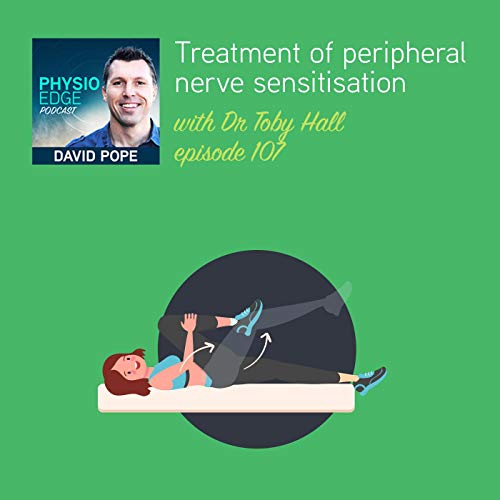
  • 107. Treatment of peripheral nerve sensitisation with Dr Toby Hall
    Oct 23 2020
    When your patient has neck and arm pain, or low back and leg pain from neural tissue pain disorders (NTPD) such as peripheral nerve sensitisation (PNS), how will you treat them? Pain associated with PNS can occasionally be mild and non-irritable, but more often than not, it's severe, highly irritable, and easy to stir up. How can you provide treatment that settles their pain, without stirring them up? What advice, education, manual therapy and exercise will you provide to help improve symptoms and speed up recovery? What are the keys to success with PNS patients? In Physio Edge podcast 104, Dr Toby Hall and I discussed PNS, common symptoms, causes, questions to ask, and how to assess and diagnose PNS in your patients. In this followup podcast, the second in our two-part series, Dr Toby Hall and I take you through the next phase - how to treat PNS. You'll discover: The 7 keys to success with PNSHow to successfully treat PNS in the neck and upper limb, AND the low back and lower limb.What education and advice should you provide to your patient about activities to avoid or reduce, and which activities should they increase?What are the most effective exercises for patients with PNS?Should exercise be painful or painless?When is neural mobilisation an effective treatment?When should you avoid using neural mobilisation as a treatment?Is manual therapy effective in PNS?Which manual therapy techniques can you use to improve symptoms and range of movement (ROM) immediately?How to perform effective manual therapy techniques that reduce pain without stirring up your patients.How can you combine neural mobilisation with manual therapy?If you use manual therapy to improve symptoms, what home exercises should patients perform after each treatment session? CLICK HERE to get access to Sherlock Holmes and the sign of the four hypotheses with Nick Kendrick Links associated with this episode: Physio Edge podcast 104 - Peripheral nerve sensitisation & neural tissue pain disorders with Dr Toby HallComprehensive, practical training to improve your skills, clinical reasoning, treatment results & confidence with a free trial Clinical Edge membershipThe new "Making sense of pain" module available with a free trial Clinical Edge membership Download and subscribe to the podcast on iTunesDownload the podcast now using the best podcast app currently in existence - OvercastListen to the podcast on SpotifySherlock Holmes & the Sign of the Four Hypotheses case study with Nick KendrickComprehensive, practical training to improve your skills, clinical reasoning, treatment results & confidence with a free trial Clinical Edge membershipDr Toby Hall on TwitterLow back pain treatment online course with Dr Toby Hall and Manual ConceptsManual ConceptsDr Annina SchmidLet David know what you liked about this podcast on Twitter Review the podcast on iTunesJoin live Q&A podcasts on FacebookInfographics by Clinical Edge
    Show More Show Less
    1 hr and 23 mins
  • 105. Scapular dyskinesis - Does it really matter? with Jo Gibson
    Jun 29 2020
    When you assess your patients shoulder movements, and notice a winging scapula, altered resting position or timing of scapula movement, do you need to treat it? Can we diagnose "Scapular dyskinesis", and does it matter? How can you simplify your scapular assessment? In this podcast, Jo Gibson (Clinical Physiotherapy Specialist) explores common beliefs and myths around the scapula, including: Abnormal scapular kinematics cause painWe can predict patients that are going to get shoulder painUpper traps should be retrained to decrease their activationScapular-based interventions are superior to rotator cuff based treatmentThere are reliable and valid ways to assess scapular movement Alongside this mythbusting, you'll explore: Is there any point assessing the scapula?Is scapular asymmetry normal or abnormal?Is scapular dyskinesis a normal response to exercise or loading?How accurate are we at identifying scapular dyskinesis compared to findings in laboratory studies of scapula movement?What scapular findings will you commonly observe in patients with massive rotator cuff tears, nerve injuries & stiffness?How does rotator cuff fatigue impact scapular movement?How does fear avoidance and worry about particular movements impact muscle activity and movement?When is increased upper traps activity helpful and beneficial?Should we try to decrease upper traps activity in patients with C/Sp driven shoulder pain?Can we preferentially target the scapular or rotator cuff with our exercises?Do improvements in shoulder pain correlate with changes or "improvements" in scapular movement?How do scapular assessment test (SAT) results impact your treatment and exercise prescription?If the SAT improves pain, does that mean we should perform scapular based exercises?Can we use scapular dyskinesia classification to stratify patients or guide our treatment?Is there any reliability in scapular assessment?Does the SAT simply identify those that have a favourable natural history ie are going to get better on their own regardless?Do scapular treatments increase the subacromial space, and does this matter?Is winging post-surgery (posterior stabilisation + labral repair) a product of surgery or does this need to be addressed?How does incorporating the kinetic chain into rehab impact patient movement strategies, scapular and rotator cuff recruitment?Are scapulothoracic bursae relevant to shoulder pain?How can you address patient beliefs and fear avoidance around their shoulder pain? Podcast handout Free webinar "5 common mistakes therapists make with shoulder pain, and what to do about them" with Jo Gibson Register now for the free webinar "5 common mistakes therapists make with shoulder pain, and what to do about them" with Jo Gibson (Upper Limb Specialist Physio) Frozen and stiff shoulder assessment & treatment with Jo Gibson Improve your assessment and treatment of frozen and stiff shoulders now with Jo Gibson's online course at clinicaledge.co/frozenshoulder Shoulder: Steps to Success online course with Jo Gibson Improve your assessment and treatment of shoulder pain with the Shoulder: Steps to Success online course with Jo Gibson, now available for enrolment at clinicaledge.co/shouldersuccess CLICK HERE to get access to Sherlock Holmes and the sign of the four hypotheses with Nick Kendrick Links associated with this episode: Improve your assessment and treatment of frozen and stiff shoulders now with Jo Gibson's online course at clinicaledge.co/frozenshoulderImprove your shoulder assessment & treatment with the Shoulder: Steps to Success online course with Jo Gibson Download and subscribe to the podcast on iTunesDownload the podcast now using the best podcast app currently in existence - OvercastListen to the podcast on SpotifyImprove your confidence and clinical reasoning with a free trial Clinical Edge membershipLet David know what you liked about this podcast on Twitter Review the podcast on iTunesLike the podcast on FacebookInfographics by Clinical EdgeJo Gibson on Twitter Articles associated with this episode: Download the podcast handout to receive the articles associated with this podcast.Andersson SH, Bahr R, Clarsen B, Myklebust G. Risk factors for overuse shoulder injuries in a mixed-sex cohort of 329 elite handball players: previous findings could not be confirmed. British journal of sports medicine. 2018 Sep 1;52(18):1191-8.Asker M, Brooke HL, Waldén M, Tranaeus U, Johansson F, Skillgate E, Holm LW. Risk factors for, and prevention of, shoulder injuries in overhead sports: a systematic review with best-evidence synthesis. British journal of sports medicine. 2018 Oct 1;52(20):1312-9. Christiansen DH, Møller AD, Vestergaard JM, Mose S, Maribo T. The scapular dyskinesis test: Reliability, agreement, and predictive value in patients with subacromial impingement syndrome. Journal of Hand Therapy. 2017 Apr 1;30(2):208-13.
    Show More Show Less
    35 mins
  • 104. Peripheral nerve sensitisation & neural tissue pain disorders with Dr Toby Hall
    Jun 18 2020

    How can you identify the source of your patients leg, shoulder or arm pain? Is it from neural tissue compression, sensitisation or irritation or nearby joints, tendons or muscles? What questions and objective tests will help you diagnose a neural tissue pain disorder (NTPD)?

    In this podcast with Dr Toby Hall (Specialist Musculoskeletal Physiotherapist, FACP, PhD), you'll discover:

    • Three types of neural tissue pain disorders, and how to identify each one
    • What is Peripheral nerve sensitisation (PNS)?
    • What clues in your subjective examination will help you identify PNS?
    • Why do nerves become inflamed or irritated?
    • How to identify & differentiate radiculopathy and radicular pain in patients with radiating limb pain.
    • Do all patients with NTPD have obvious neuro symptoms such as pins and needles, numbness or weakness?
    • Quick screening tests you can use in your assessment to identify PNS.
    • How to identify if your patients shoulder and arm pain is from neural tissue or from local shoulder structures.
    • How to diagnose a NTPD in patients with hip or leg pain.
    • How to perform passive neurodynamic tests such as the straight leg raise (SLR), upper limb neurodynamic test (ULNT), slump test and femoral nerve slump test.
    • What information does a positive or negative neurodynamic test provide?
    • Can we identify the location of a nerve lesion or irritation with our passive neurodynamic tests or palpation?
    • Initial PNS treatment options
    • Is exercise helpful or harmful in patients with PNS?
    • How can you palpate over neural tissue, and what information does this provide?
    • Do opioids provide pain relief, or prolong recovery in patients with NTPD?

    This podcast is the first part in a two part series on neural tissue pain disorders with Dr Toby Hall. Part 1 (this podcast) guides you through the types of NTPD, and how to assess and diagnose NTPD. Part 2 (available soon) will take you through how to treat PNS.

    I highly recommend listening to this episode (part 1) prior to part 2, to have a thorough understanding of when and how to treat PNS.

    CLICK HERE to get access to Sherlock Holmes and the sign of the four hypotheses with Nick Kendrick

    Links associated with this episode:
    • Download and subscribe to the podcast on iTunes
    • Download the podcast now using the best podcast app currently in existence - Overcast
    • Listen to the podcast on Spotify
    • Sherlock Holmes & the Sign of the Four Hypotheses case study with Nick Kendrick
    • Comprehensive, practical training to improve your skills, clinical reasoning, treatment results & confidence with a free trial Clinical Edge membership
    • Dr Toby Hall on Twitter
    • Manual Concepts
    • Free online conference with Toby Hall & other presenters
    • Dr Annina Schmid
    • Let David know what you liked about this podcast on Twitter
    • Review the podcast on iTunes
    • Join live Q&A podcasts on Facebook
    • Infographics by Clinical Edge
    Show More Show Less
    1 hr and 25 mins