Episodes

  • Five Years in Four! The Union's Race to Industrialize (The Revolution From Above Part 2)
    Jul 31 2026

    From the launch of the First Five-Year Plan in 1928 to the eve of the German invasion in 1941, the Soviet Union underwent one of the most dramatic economic transformations in modern history. In little more than a decade, a predominantly agrarian country became one of the world's leading industrial powers, constructing vast steelworks, hydroelectric dams, railways, and entire new cities while mobilizing millions of workers in pursuit of an ambitious socialist vision.

    In this episode of Unbreakable Union, hosts Jason and Matthew examine the origins, goals, and achievements of the Five-Year Plans. They discuss the enormous challenges that accompanied this unprecedented drive for modernization, considering the debates surrounding the Five-Year Plans, and separating myth from reality and examining why historians continue to disagree over their legacy.

    Whether viewed as an extraordinary feat of socialist planning or one of the twentieth century's most controversial economic experiments, the Five-Year Plans transformed the Soviet Union and laid the industrial foundations that would prove decisive in the struggle against Nazi Germany. Join us as we explore one of the defining chapters of Soviet history.

    Show More Show Less
    1 hr and 23 mins
  • Collectivization and the Union's Great Gamble (The Revolution From Above Part 1)
    Jul 17 2026

    Beginning in 1928, the Soviet Union embarked on one of the most radical and thoroughgoing economic experiments in human history: to transform its agricultural base from a quasi-feudal to a comprehensively modern mode of production and management. This process, known as "collectivization" remains one of the defining moments of the soviet experience.

    In this episode, hosts Matthew and Jason explore collectivization, its successes and perilous shortcomings and the immense sacrifices made by the Soviet people to its cause.

    Show More Show Less
    1 hr and 23 mins
  • They Are Both Worse Part 2
    Jul 1 2026

    Matthew narrates the final clashes of the inner-party conflict that dominated soviet politics during its first decade and left Joseph Stalin and the marjoritist leadership in clear command of the USSR.

    Show More Show Less
    1 hr and 15 mins
  • They Are Both Worse Part 1: The Soviet Inner Party Conflict 1922-1927
    Mar 4 2026

    The decade following the Russian Civil War was one of reconstruction, experimentation, and extraordinary uncertainty. The Soviet Union had survived foreign intervention, economic collapse, and armed counter-revolution, but many of the questions facing the Bolshevik Party remained unresolved. How quickly should the country industrialize? What role should market forces play under the New Economic Policy? How should the Communist Party be organized? And perhaps most importantly, who would lead the revolution after the death of Vladimir Lenin? The answers to these questions would shape not only the future of the Soviet Union, but the course of twentieth-century history.

    In this first part of a two-part episode, we're exploring the inner-party conflicts that defined the Soviet Union throughout the 1920s. Far from being a simple struggle between ambitious personalities, these debates reflected genuine disagreements over economic policy, political strategy, party organization, and the direction of socialist construction. We'll examine the emergence of the Left Opposition led by Leon Trotsky, the alliance of Grigory Zinoviev and Lev Kamenev, and the political skill with which Joseph Stalin and his ally Nikolai Bukharin navigated and ultimately outlasted defeated their rivals.

    We'll follow these disputes as they unfolded against the backdrop of a rapidly changing Soviet Union. We'll discuss the debate over "socialism in one country" versus the prospects for international revolution, the controversies surrounding industrialization and grain procurement, the question of party democracy and factionalism, and the shifting alliances that saw yesterday's allies become tomorrow's opponents.

    We'll also consider the role of Lenin's illness and death, the significance of his political legacy, and the institutional changes within the Communist Party that shaped the outcome of these struggles. The decisions made during the 1920s did not simply determine who occupied the Kremlin; they influenced the pace of industrialization, the future of the New Economic Policy, and the political culture of the Soviet state for decades to come.

    So join us for this special episode as Matthew revisits one of the most consequential political struggles of the twentieth century. It's a story of ideology, ambition, conviction, and compromise. A contest within the leadership of the world's first socialist state that would profoundly influence the future of the Soviet Union and the wider world.

    Bibliography:

    Show More Show Less
    1 hr and 8 mins
  • The First Ten Years of Soviet Power
    Jun 17 2026

    Season Two is Here!

    From revolution to the consolidation of power - join us as we recap the first decade of Soviet history and examine how it set the stage for the turbulent and transformative USSR of the 1930s!

    Show More Show Less
    1 hr and 26 mins
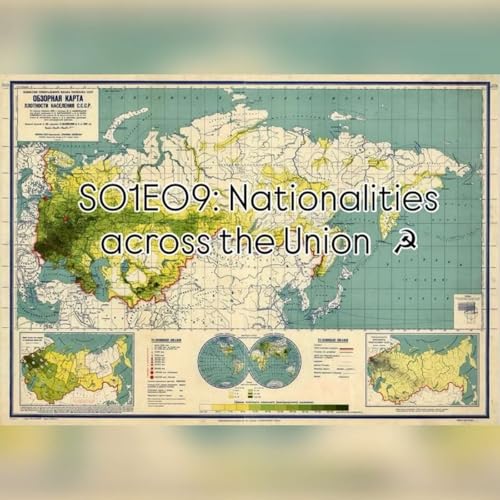
  • Nationalities Across the Union ☭
    Feb 18 2026

    The Soviet Union was not born as a nation-state, but as a multinational federation. Stretching from the forests of Eastern Europe to the deserts of Central Asia and the mountains of the Caucasus, it was home to hundreds of ethnic groups, dozens of languages, and an extraordinary diversity of cultures, religions, and historical experiences. The collapse of the Russian Empire and the upheavals of revolution and civil war had unleashed powerful forces of national self-determination, raising one of the greatest challenges facing the Bolsheviks: how could a socialist state unite so many different peoples without simply recreating the old imperial order?

    In this episode, we're exploring the ethnic composition of the Soviet Union in the years immediately following the Russian Civil War. We'll examine the remarkable diversity of the new state, from the Russians, Ukrainians, and Belarusians of the western republics to the peoples of the Caucasus, Central Asia, Siberia, and the Far East. We'll look at how geography, language, religion, and history shaped the experiences of these different communities, and why the national question became one of the defining issues of the early Soviet period.

    We'll also explore the Bolsheviks' approach to nationality policy. Rejecting the chauvinism associated with the old Tsarist Empire, the new government proclaimed the equality of nations, recognized the right of self-determination, and sought to build a voluntary union of socialist republics. We'll discuss the creation of the Union of Soviet Socialist Republics in 1922, the process of national delimitation, and the policy of korenizatsiya, or "indigenization," which encouraged the development of local languages, cultures, and national elites within the framework of the new Soviet state.

    Understanding the ethnic mosaic of the early Soviet Union is essential to understanding the history of the USSR itself. It was a state that inherited the immense diversity of the former Russian Empire but attempted to organize it on fundamentally different principles. The debates and institutions established during the 1920s would shape Soviet nationality policy for decades to come and leave a lasting imprint on Eurasia long after the Soviet Union itself ceased to exist.

    So join us as Matthew journeys across the vast expanse of the early Soviet Union, exploring the peoples, cultures, and nationalities that came together to form one of the most diverse states in modern history, and the bold political experiment that sought to unite them under the banner of socialism.

    Bibliography

    Show More Show Less
    1 hr and 26 mins
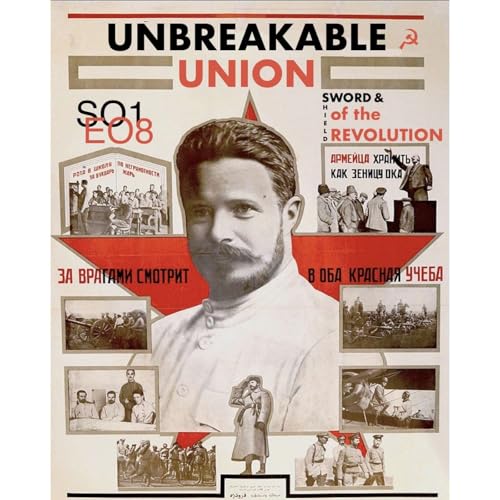
  • The Sword and Shield of the Revolution: The Red Army and the Intelligence Services of the USSR
    Feb 4 2026

    Few institutions of the early Soviet state have generated as much fascination, or controversy, as its military and security services. Born in the turmoil of revolution and civil war, the Red Army and the Soviet intelligence apparatus were charged with an immense responsibility: defending a fragile socialist state that faced foreign intervention, armed counter-revolution, political instability, and widespread economic collapse. For the Bolshevik leadership, these institutions were not simply instruments of coercion; they were considered essential to the survival of a revolution that many believed remained under constant threat.

    In this episode, we're exploring the evolution of the Soviet Union's military and intelligence services during the 1920s. We'll trace the transformation of the Red Army from the improvised force that fought the Civil War into a more professional and modern military under leaders such as Leon Trotsky and Mikhail Frunze. We'll examine the debates over military doctrine, the development of officer education, and the challenges of preparing for future conflicts in an uncertain international environment.

    We'll also follow the changing face of Soviet state security. Beginning with the Extraordinary Commission, the Cheka, established during the Civil War, we'll examine its transition into the GPU and later the OGPU as the Soviet government moved from wartime emergency to peacetime administration. We'll explore why these institutions were reorganized, what responsibilities they assumed during the New Economic Policy, and how they balanced intelligence gathering, border security, counter-espionage, and the suppression of armed opposition.

    Just as importantly, we'll separate myth from history. Popular culture often presents the Soviet security services as a single, unchanging institution, but the reality was considerably more complex. The powers, structure, and priorities of the Cheka differed from those of the GPU and the OGPU, reflecting the changing political and economic circumstances of the 1920s. We'll discuss how these organizations evolved alongside the Soviet state itself and consider the historiographical debates surrounding their role in consolidating Bolshevik rule.

    Finally, we'll place these institutions within their broader historical context. The Soviet leadership emerged from years of revolution, civil war, and foreign intervention convinced that the new state remained vulnerable to internal and external enemies. How did those experiences shape the development of Soviet military doctrine and state security? To what extent were these institutions responding to genuine threats, and how did their responsibilities change as the Soviet Union entered a more stable phase under the New Economic Policy?

    So join us as Jason presents on the soldiers, intelligence officers, and security organizations that defended the world's first socialist state during its formative years. Their story is one of war and reconstruction, ideology and pragmatism, institutional evolution, and the enduring challenge of protecting a revolution while building a new society.

    Bibliography:

    Poster image provided by Poster Plakat.com

    Show More Show Less
    1 hr and 14 mins
  • World Revolution & Rapprochement Policies Compared
    Jan 21 2026

    The Soviet Union emerged from revolution and civil war isolated, exhausted, and surrounded by a world that was, at best, deeply suspicious of its existence. Many of the major powers had intervened in the Russian Civil War, refused to recognize the new government, and hoped that the Bolshevik experiment would ultimately collapse under the weight of economic hardship and political instability. Yet by the end of the 1920s, the Soviet Union had established diplomatic relations with many of those same states, expanded international trade, and secured a place in the European balance of power. How did such a dramatic transformation occur?

    In this episode, we're exploring the Soviet Union's international position during the era of the New Economic Policy, a decade defined by a central tension in Bolshevik foreign policy: the relationship between world revolution and diplomatic rapprochement. The Bolsheviks remained committed to the long-term goal of international socialist revolution, supporting communist movements abroad through the Communist International, or Comintern. At the same time, the Soviet leadership recognized that the survival of the revolution depended upon peaceful relations with capitalist states, access to foreign technology, and the economic breathing space needed to rebuild a country devastated by war.

    We'll examine how these seemingly contradictory objectives shaped Soviet diplomacy throughout the 1920s. We'll discuss the creation and mission of the Comintern, the failure of revolutionary uprisings in Germany and elsewhere, and the gradual acceptance that socialism might have to be built in a hostile international environment. We'll also follow the remarkable diplomatic achievements of the decade, from the Treaty of Rapallo with Germany to expanding trade agreements, formal diplomatic recognition by Britain and other European powers, and, eventually, recognition by the United States in 1933.

    Along the way, we'll ask whether revolution and rapprochement were truly opposing strategies, or whether they represented two complementary aspects of Soviet statecraft. Was Soviet foreign policy driven primarily by ideological commitment or by pragmatic concerns of security and economic development? How did debates within the Communist Party influence relations with the outside world? And how did foreign governments respond to a state that simultaneously proclaimed the eventual triumph of world socialism while seeking normal diplomatic and commercial relations?

    The answers to these questions would shape not only the fate of the Soviet Union during the NEP years but also the international order of the interwar period. They reveal a government navigating the difficult transition from revolutionary movement to sovereign state, attempting to balance ideological aspirations with the practical demands of diplomacy, trade, and national survival.

    So join us as your host Jason explores one of the defining dilemmas of the early Soviet Union: how a state born from international revolution learned to coexist, negotiate, and compete with the capitalist world, while never entirely abandoning its revolutionary vision for the future.

    Bibliography:

    Show More Show Less
    1 hr and 10 mins