• Resilience isn't a rebrand. It's what sustainability always was.
    Apr 27 2026

    The word "resilience" is everywhere right now. Which probably means it's already in trouble.

    In our latest Two Steps Forward episode, Soli and Joel and pulled on this thread — and found something worth sharing: resilience isn't a rebrand for sustainability. It's what sustainability always was, just dressed in language that the C-suite might finally recognize.

    Show More Show Less
    42 mins
  • Insurance isn’t the back office of sustainability. It’s front and center
    Apr 6 2026

    We spoke with Linda Freiner, Group Chief Sustainability Officer at Zurich Insurance Group, on the role of insurance in a world of increasing risk. What became clear is that insurance isn’t peripheral to sustainability. It is, in many ways, the operating system beneath it.

    Insurance, after all, is about pricing the future. And right now, the future is anything but predictable.

    Freiner frames insurance not as a brake on risk-taking, but as an enabler. Without it, businesses don’t launch, infrastructure doesn’t get built, and innovation doesn’t scale. Insurance is the social safety net that allows the economy to function — and, increasingly, to transform.

    But here’s the catch: The model is under strain.

    Show More Show Less
    46 mins
  • The next generation of sustainability professionals is ready — and they're watching us
    Mar 23 2026

    What does it take to start a career in sustainability today — when the field is more established, but the expectations are higher than ever? In this episode, we speak with three early-career professionals about breaking in, building influence and navigating the realities of corporate sustainability. It’s a candid, hopeful and occasionally sobering conversation about what’s changed, what hasn’t and what sustainability elders can do to support — and learn from — the next generation.

    Show More Show Less
    45 mins
  • Why the music industry holds sustainability’s biggest untapped lever
    Mar 2 2026

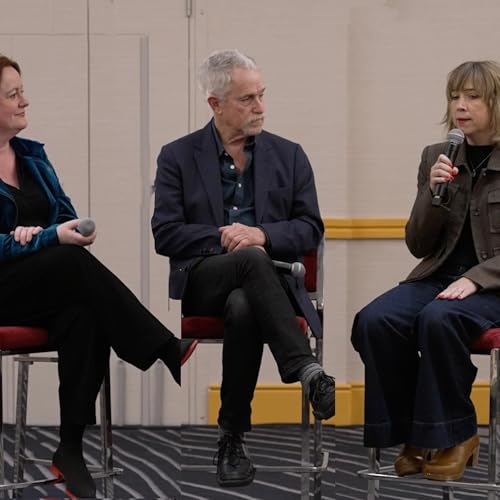
    Recorded live at the GreenBiz 26 conference in February, this episode of Two Steps Forward features Dylan Siegler, head of sustainability at Universal Music Group. Siegler discusses how the music industry’s greatest sustainability impact may come not from reducing emissions, but from influencing billions of fans through culture and storytelling. The conversation explores sustainable merch, artist advocacy, fandom as a force for behavior change, and the growing importance of “handprint” impact alongside traditional corporate footprint metrics.

    Show More Show Less
    53 mins
  • What Interface still gets right about sustainability
    Feb 16 2026

    For much of the past decade, corporate sustainability has been absorbed into the machinery of management — metrics, disclosures, target-setting and compliance. Necessary work, certainly. But something essential has been lost along the way: the idea that sustainability is fundamentally about invention.


    That thread runs through the latest episode of Two Steps Forward, in which we talk with Liz Minné, who heads global sustainability strategy at Interface, the floorcovering giant.


    Interface remains instructive not because it is perfect or singular, but because it demonstrates what happens when sustainability becomes part of a company’s identity rather than a program. Over time, that identity attracts employees, shapes culture and builds customer loyalty — reinforcing itself in ways no disclosure requirement can mandate.

    Show More Show Less
    46 mins
  • The biggest climate myth right now isn’t denial. It’s silence.
    Feb 2 2026

    For all the noise surrounding climate — the backlash, the culture wars, the political theatrics — here’s an uncomfortable truth: most Americans haven’t changed their minds at all.


    That’s the quiet bombshell from our recent podcast conversation with Yale’s Anthony Leiserowitz, founder and director of the Yale Program on Climate Change Communication. Despite a second Trump administration openly attacking climate science and policy, despitecorporate retreat and the rise of “climate hushing,” public concern about climate change in the United States has remained remarkably stable.

    Which raises an obvious question: Ifthe public hasn’t moved, why has business?


    The answer, he told us, has less to do with ideology than imagination. Or rather, a failure of it.

    Show More Show Less
    43 mins
  • Story as strategy: What writing climate fiction teaches us about communicating sustainability
    Jan 18 2026

    In this episode, we talked about Solitaire's remarkable new novel — but the most useful part of the conversation wasn’t about the book’s alternative Roman Empire or its sword-wielding heroine. It was about what writing fiction taught her about what makes any story actually work.


    Solitaire’s biggest takeaway is deceptively simple: Stories are not about issues, they are about people. Not systems, trends, frameworks or even impacts.


    People.


    That sounds obvious, until you look closely at most sustainability communications. We routinely aspire to tell stories when we’re actually merely presenting information: emissions trajectories, regulatory developments, technology roadmaps, ESG metrics.


    All are important. Most are necessary. And little of it, on its own, is storytelling.

    Show More Show Less
    34 mins
  • Sustainability Journalism: Reflecting on the Past, Navigating the Future
    Jan 5 2026

    In the first episode of our Two Steps Forward podcast for 2026, we reflect on the evolution of sustainability journalism. The occasion: Marking 25 years of covering sustainable business on Trellis.net (née GreenBiz.com).


    As sustainability has evolved, so too has the field of journalism. In the early days, sustainability was largely about environmental engineering — reducing waste or saving energy. Today, the issues are broader and more complex: climate justice, social equity, biodiversity and other topics.


    The challenge for journalists is translating these complex topics into something understandable and meaningful for the public. The growing use of insider speak — terms like “double materality” — has only added to the confusion.


    One big question for 2026: Can sustainability drive affordability?

    Show More Show Less
    38 mins