• The Office Crisis & Why Work Feels Broken With Cali Williams Yost
    Dec 3 2025

    In this episode of The Real Finds Podcast, host Gordon Lamphere sits down with Cali Williams Yost, CEO and founder of the Flex+Strategy Group, to explore how CEOs, COOs, HR leaders, and real estate decision makers can move beyond simple “return to office” mandates and design truly high performance flexible work models. Cali has been a pioneer in flexible work since the late 1990s, and she explains how technology, shifting demographics, and the shock of COVID created today’s clash between leadership expectations, employee realities, and underutilized office space.

    Cali and Gordon dig into what it really means to redefine your operating model around performance across places, spaces, and time. They talk about why “hybrid” is the wrong frame, how to decide what work must happen in person versus remotely, and why some underused space can still deliver strong ROI when it is designed around the right interactions. They also tackle one of the biggest challenges many companies face today: engaging mid career employees who are critical carriers of culture and institutional knowledge, but often the least likely to show up in person.

    You will learn:

    - Why most organizations are stuck arguing about days in office instead of defining a clear, flexible work model

    - How to design intentional in person interactions for development, collaboration, innovation, and culture

    - What Cali calls the “clash of contexts” between C suite leaders and early career employees, and how to bridge it

    - How to re engage mid career talent so they see in person time as high value, not a waste of time

    - The “new math” of workspace utilization and why perfect occupancy is not the goal

    - How flexible work principles are showing up in manufacturing, R&D, healthcare, and other on site environments

    - Why change management, or “change magic,” is the real unlock for productivity, well being, and culture in a post pandemic world

    - How AI fits into the next decade of work, and what should stay fully human

    Connect with Cali:

    Website: flexstrategygroup.com

    LinkedIn: linkedin.com/in/caliwilliamsyost

    Substack: The Now and Next of Work

    If you found this conversation helpful, please like the video, subscribe to The Real Finds Podcast, and leave a 5-star rating and review. Your support helps us bring on more world-class guests who are shaping the future of work, commercial real estate, and the built environment.

    Watch more episodes on YouTube or listen on Spotify, Apple Podcasts, or wherever you get your podcasts.

    Reach out to our team of commercial real estate experts!

    Show More Show Less
    34 mins
  • What's Fueling Industrial Outdoor Storage Deals With Andrew Wiesemann
    Nov 19 2025

    In this episode of The Real Finds Podcast, host Gordon Lamphere sits down with industrial outdoor storage specialist Andrew Wiesemann to unpack one of the hottest, most misunderstood asset classes in commercial real estate today. From zoning headaches and generational turnover to cap rate spreads and sovereign wealth funds, this conversation is a masterclass in how IOS really works on the ground.

    Andrew shares how he went from buying multifamily in Chicago for a family office to focusing on single-tenant industrial assets in Wisconsin and Indiana, and ultimately into IOS after discovering how crucial outdoor storage was to the tenants at a Lansing, Michigan site. That pivot gave him a front row seat to the structural supply shortage that has pushed IOS into the spotlight.

    Gordon and Andrew dig into why IOS is so constrained by zoning and legacy big box development, and how that lack of supply is colliding with demand from trucking, equipment rental, data center infrastructure, utilities, waste, and building materials users. Andrew explains why municipalities often misunderstand truck yards and storage yards, how long standing users lose their rights when sites go vacant, and why that keeps choking off future supply even when land looks available from the street.

    They also walk through the investor side. Andrew breaks down who is buying IOS today, from private 1031 buyers treating it like a retail income play to institutional capital looking for mark-to-market stories with three to five-year weighted average lease terms. He compares traditional industrial cap rates to IOS portfolios, explains why there is still a spread, and why he expects cap rate compression as data, comps, and standardization catch up.

    If you invest in IOS or are even just IOS curious, you will want to hear Andrew’s framework for what makes a Class A yard versus a Class B or C yard. He walks through the user focused checklist: access and truck flow, dual ingress and egress, stabilization and pavement, clear heights and door heights, yard configuration, lighting and security, and how all of this ties into long term functionality as equipment and user needs evolve.

    They go deep on:

    - How e commerce, trucking restrictions, and retailer parking policies created a national truck parking and IOS crunch

    - Why only certain heavy industrial zoning categories allow outdoor storage by right and how early 2000s big box development quietly ate up that land

    - The generational turnover wave among long time junkyards, scrap yards, and automotive users, and why some are sitting on an unrecognized gold mine

    - What happens when a long term tenant finally turns over and the site suddenly has to meet today’s codes, from fencing and landscaping to parking and paving

    - How to think about IOS cap rates relative to traditional industrial and why portfolios can price differently from one off sites

    - Why infrastructure is destiny for IOS, and how markets like Chicago, DFW, Memphis, Kansas City, Mobile, and Savannah benefit from heavy public and private investment in ports, highways, and intermodals

    For more, reach out to Gordon Lamphere and our team of commercial real estate experts at https://www.vvco.com, Chicago's trusted commercial real estate agents and commercial property managers.

    Show More Show Less
    42 mins
  • How To Right-Size Your Office Without Crushing Culture With Prof. Alana Dunoff
    Nov 12 2025

    In this episode of The Real Finds Podcast, host Gordon Lamphere sits down with Alana F. Dunoff, ProFM, FMP, IFMA Fellow, a strategic facilities planning consultant, adjunct professor in Temple University’s Facility Management program, and principal of AFD Professional Services. With more than 30 years of experience helping organizations align people, process, and place, Alana brings a unique perspective on how companies can reimagine the workplace for a post-pandemic world.

    Alana shares how her background in environmental psychology shaped her approach to workplace strategy and why the return-to-office conversation is really about meaning, culture, and belonging. She explains why the most effective offices function like kindergarten classrooms, offering flexibility, creativity, and comfort in equal measure. Together, Gordon and Alana explore how to right-size portfolios, refresh spaces without major capital projects, and measure success through innovation and engagement rather than attendance.

    They discuss how to align HR, facilities, and leadership strategy to create hybrid models that actually work and how to invest in people by investing in place. Alana also reveals how coffee rituals, collaboration zones, and wellness spaces can quietly rebuild culture and help employees reconnect with their organization’s purpose.

    🔍 Key Topics Covered:

    - Why task-based “kindergarten classroom” layouts outperform traditional office design

    - How hybrid work is redefining space planning and employee engagement

    - Strategies for right-sizing portfolios while preserving long-term flexibility

    - Metrics that matter: innovation, engagement, and culture over square footage per head

    - Small space upgrades that drive big behavior changes

    - How to train and support managers for flexible, distributed teams

    - The growing influence of Gen Z on workplace design and company culture

    - Practical ways to rebuild belonging and human connection inside the office

    Whether you are an HR leader, a facilities manager, or a commercial real estate investor, this episode offers clear, actionable insights for designing workplaces that balance flexibility, performance, and purpose in today’s evolving business landscape.

    📚 Alana’s Recommended Read: Start With Why by Simon Sinek — a reminder that purpose and clarity drive performance more than policy.

    📍 Learn More About Alana and AFD Professional Services:

    Website: https://www.afdfacilityplanning.com

    LinkedIn: https://www.linkedin.com/in/alanadunoff

    Email: alanadunoff@gmail.com

    About the Author Gordon Lamphere is a Chicago-area commercial real estate agent and host of The Real Finds Podcast, where operators, economists, and developers share how they’re reshaping the built world. Learn more at www.vvco.com

    🎧 Listen and Subscribe to The Real Finds Podcast: Spotify | Apple Podcasts | YouTube

    Show More Show Less
    45 mins
  • The Midwest Rebalance: Industrial Winners and Losers With Xander Snyder
    Nov 5 2025

    Today’s Guest: Xander Snyder, Senior Commercial Real Estate Economist at First American. Xander blends a rare mix of family-office investing experience and data-driven economic analysis, helping institutional investors, developers, and lenders make sense of real-world market trends. With 15+ years in the business, he’s part economist, part operator, translating macro shifts into actionable market intelligence.

    Why this matters now: Industrial has been the darling of commercial real estate for five straight years, but the cycle is maturing. After peaking at nearly 800 million SF under construction in 2022, the U.S. is now in a rebalancing phase: large-box supply is heavy, tenants are consolidating, and rent growth is slowing at the top end. Meanwhile, small-bay remains one of the most resilient slices of the market.

    In this episode, Xander breaks down how industrial demand, labor, power, and capital are reshaping the Midwest and what the data says about where the next opportunities will emerge.

    What You’ll Learn

    - Who Xander Is: From a multi-generation LA family office to First American’s national research team, why he sees industrial through both a data and dealmaker’s lens.

    - Boom → Rebalance: How low rates and pandemic demand created an unprecedented surge — and why developers are now pulling back on spec.

    - Midwest in Focus: Chicago, Indianapolis, Columbus, Detroit, and Minneapolis — which markets have already absorbed supply, and which are still overshooting.

    - Small-Bay Advantage: Vacancy near 3%, steady rent growth, and a broader tenant pool make it the most stable industrial segment right now.

    - Labor & Incentives: Why the availability of skilled industrial labor predicts rent growth better than any headline metric.

    - IOS, Cold Storage, and Data Centers: How new sub-asset classes are evolving and why “power is the new zoning.”

    - Investor View: Cap rates are up 150–170 bps from 2022 lows, and for the first time in years, positive leverage is back on the table.

    About the Author Gordon Lamphere is a Chicago-area commercial real estate agent and host of The Real Finds Podcast, where operators, economists, and developers share how they’re reshaping the built world. Learn more at www.vvco.com

    Show More Show Less
    45 mins
  • How CEOs View The 2026 Economic Outlook & Return To Office With Joe Galvin
    Oct 29 2025

    Today’s guest: Joe Galvin, Chief Research Officer at Vistage (44,000+ members worldwide). A former Gartner analyst and sales leader, Joe now runs one of the country’s most data-driven windows into the mid-market CEO mindset. The Vistage CEO Confidence Index.

    His data captures what business owners and leaders are actually seeing on the ground — what they fear, where they’re cutting or investing, and how they’re navigating the hybrid era without losing people or profit.

    Why this matters now: CEO confidence is still hovering near historic lows, even as most leaders continue to project growth. That tension — optimism inside companies, pessimism about the economy — defines 2025. It’s driven by uncertainty around tariffs, interest rates, inflation, and labor shortages that aren’t about headcount but about skills. Add in AI-driven productivity shifts, and you get a market where leaders feel like they’re steering through fog with one hand tied behind their back.

    Joe explains how small and mid-market CEOs — the real backbone of the U.S. economy — are adjusting to the “new normal”: running leaner operations, rewarding loyalty, and testing AI tools that cut time but raise new questions about value and engagement.

    What You’ll Learn

    - Hybrid Without the Hype — Why most SMBs have stabilized into predictable hybrid routines (three or four days in office), why big swings in policy erode trust, and how leaders define flexibility as a retention strategy — not a perk.

    - Talent ≠ Headcount — Demand for workers has flattened, but skills haven’t kept up. Construction, manufacturing, and energy companies are scrambling for qualified people while white-collar teams learn to do more with fewer. The bar is higher everywhere.

    - Tariffs & Margins — 43% of CEOs say they’ve raised prices in the past six months; 51% plan to raise again soon. Margins are under pressure, and companies are balancing passing costs along with keeping customers loyal in a slow growth environment.

    - Productivity, Not Busyness — The meeting tax is real. Joe explains why the illusion of activity still haunts post-COVID workflows and how leaders are reclaiming time for deep work through “collaboration windows” on in-office days.

    - AI’s Three Waves — First comes individual productivity (people cutting a four-hour task to thirty minutes), then team automation (removing friction in how groups work together), and finally organizational reinvention. Joe argues the office of the future must be more human, not less, built for trust, creativity, and relationship-building while machines handle the repetitive work.

    - Culture That Sticks — Every organization has a culture — the question is whether it’s intentional. Joe unpacks why managers are the “apostles of culture,” how trust is built and lost, and why engagement depends on connecting individual work to purpose and outcomes.

    If you’re a CEO, owner, or HR leader in the Midwest: I help teams match space strategy to how people actually work — hybrid cadence, collaboration zones, and time-to-productivity. DM me or visit vvco.com.

    Subscribe for weekly conversations with the operators and analysts shaping the built world. ▶️ Listen, rate, and share if this helped your 2026 plan.

    Show More Show Less
    39 mins
  • 50% Faster, 10% Cheaper: Factory-Built Housing That Pencils With Rory Rubin
    Oct 28 2025

    There’s a lot of noise about modular housing construction, and then there’s what actually pencils. Today, Rory Rubin, CEO of SI Container Builds, breaks down how steel-framed, factory-built homes and multifamily can be ~50% faster to deliver and ~10% less expensive (out the door) than traditional site-built, while still meeting code, appraising, and insuring like any other home.

    We get into the realities behind the headlines: ICC code compliance since 2016, why “rusty boxes” are a myth, customization vs standardization, ADUs and Chicago’s slog, the missing-middle opportunity, and why developers care about time-to-revenue more than anything. We also dig into financing, comps, insurance, and how AI is already improving procurement and schedules on the factory floor.

    What you’ll learn:

    - How factory builds de-risk weather, sequence trades efficiently, and compress schedules

    - Where the 10% cost and up to 50% schedule savings actually come from

    - How municipalities view containerized housing (and how to educate past the myths)

    - Why steel + cladding = neighborhood fit without “modular” stigma

    - Financing/insurance realities: comps, steel vs timber, and who’s writing the policies

    - The sweet spot: ADUs and missing-middle two-/three-flats that create generational wealth

    Projects mentioned:

    - Palatine, IL: 7,000 SF group home for trafficked girls (with HODC, Shelter Inc., DCFS)

    - Navy Pier commercial bespoke build

    - Multifamily stackable systems (containers are designed to stack 9-high; higher with structural steel)

    Rory’s recs:

    - Modular Building Institute (Tom Hardiman)

    - Offsite Dirt (Audrey Grubesik)

    - Gary Fleisher’s publications

    Book: The Alchemist (for mindset and leadership)

    Connect with Rory:

    - LinkedIn: linkedin.com/in/roryrubin

    - Email: rory@sicbs.com

    Company: SI Container Builds: https://www.sicontainerbuilds.com/

    About The Real Finds Podcast: Real operators. Real deals. Actionable playbooks for the built world. Subscribe for weekly conversations across development, logistics, AI, and the future of cities.

    Contact Our Team Of Commercial Real Estate Agents: https://www.vvco.com/commercial-real-estate-agent-in-chicago/

    Show More Show Less
    40 mins
  • The Sensor Stack Powering Tomorrow’s Workplace With Bob Cicero
    Oct 15 2025

    When you talk about the future of work meeting the reality of buildings, few voices are clearer than Bob Cicero. A technologist who fell in love with architecture, Bob has spent his career at the intersection of people, space, and technology—showing how platforms, sensors, and design can turn offices into AI-ready, data-driven workplaces that people actually want to use.

    He’s helped flip the old A/E sequence on its head—user journey → tech → furniture/shape—and proven, with real data, that most teams collaborate in small groups. From trapezoid tables that give every participant “a face” on video, to low-voltage (PoE) ceilings that make lights, shades, and HVAC software-addressable, to Wi-Fi/BLE/UWB and video endpoints working as privacy-safe occupancy sensors, Bob’s approach turns buzzwords like “smart building” into an out-of-the-box operating model.

    In this episode of The Real Finds Podcast, host Gordon Lamphere sits down with Bob to unpack:

    - How a platform mindset replaces point-solution sprawl—and bakes in data hygiene from day one.

    - Why the real utilization data says 3–4 seat rooms beat 12-person conference spaces (and how to right-size your floor).

    - The design trick behind hybrid equity: camera angles + trapezoid tables so everyone has a face in the meeting.

    - What a smart building actually looks like: PoE ceilings, sensors “in everything,” and portfolio intelligence via Cisco Spaces.

    - How to use Wi-Fi/BLE/UWB + room video endpoints as sensors—deduping devices, zoning floors, and informing real estate decisions.

    - The post-COVID mix that works: 70% “we” space / 30% “me” space plus measurable well-being (air quality, circadian light, acoustics).

    - Why agentic AI needs years (not months) of clean data—and what “agents for workers, rooms, and ops” change next.

    Bob’s philosophy isn’t just about gadgets; it’s about experience, evidence, and iteration—a build-measure-learn loop that keeps spaces aligned with how teams truly work.

    If you’ve ever wondered how to move from pilots to a portfolio-wide smart workplace, or how to make your offices AI-ready without a Frankenstein stack, this is the playbook.

    🔗 Watch the full episode on The Real Finds Podcast with Gordon Lamphere.

    🎧 Available on YouTube, Spotify, and Apple Podcasts.

    👤 Connect with Bob: linkedin.com/in/bobcicero/

    Connect With Our Team Of Chicagoland Agents

    Show More Show Less
    41 mins
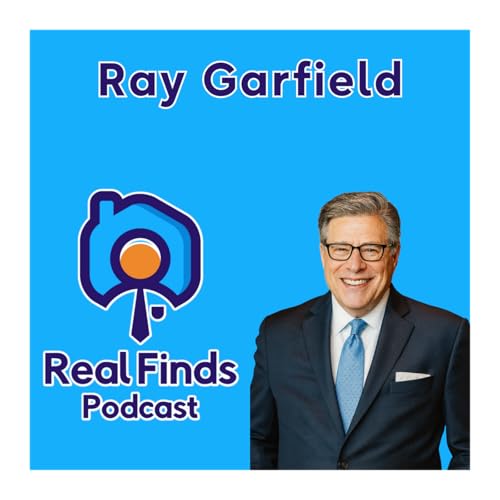
  • The Business Of Billion Dollar Public Projects With Ray Garfield
    Oct 8 2025

    When you talk about longevity and impact in American real estate, few names carry the weight of Ray Garfield. From flying jets for the U.S. Navy to restructuring billion-dollar companies and advising the Rockefellers, Ray’s six-decade career has crossed every frontier of commercial real estate, finance, syndication, capital markets, and public infrastructure.

    He’s seen every cycle since the 1970s, from 18% mortgage rates to the birth of CMBS and the rise of public-private partnerships. He’s led billion-dollar restructurings, sold companies to Merrill Lynch and Syntex, and helped pioneer modern design-build and tax-exempt financing models that have reshaped how America builds courthouses, hotels, and convention centers.

    In this episode of The Real Finds Podcast, host Gordon Lamphere sits down with Garfield to unpack:

    - How a former naval aviator went from Dallas land syndications to underwriting the first commercial mortgage securities on Wall Street.

    - The inside story of rescuing Vista Properties from bankruptcy and turning $1.5 billion in losses into strategic leverage.

    - Why design-build-finance revolutionized how Turner Construction and other giants win public-sector deals.

    - How Garfield Public Private became the quiet force behind hundreds of millions in city, county, and state projects nationwide.

    - The future of public infrastructure, real estate finance, and AI in underwriting—from one of the few people who has successfully bridged Wall Street, Main Street, and City Hall.

    Ray Garfield’s story isn’t just about success: it’s about resilience, reinvention, and the kind of decades-long excellence that defines what a real estate career can look like when purpose meets precision.

    If you’ve ever wondered how great developers think, how billion-dollar public projects actually get financed, or how to build trust between the private and public sectors. This is the masterclass.

    🔗 Watch the full episode on The Real Finds Podcast with Gordon Lamphere.

    🎧 Available on YouTube, Spotify, and Apple Podcasts.

    For more from our team of Chicago commercial real estate agents 🔗

    Show More Show Less
    1 hr and 13 mins