Episodes

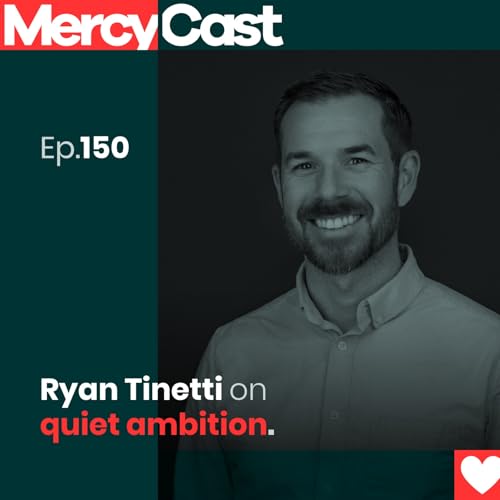
  • Ryan Tinetti on quiet ambition.
    Mar 11 2026

    Ambition isn’t the enemy. But we can reframe it.

    This week on MercyCast, I sit down with Ryan Tinetti, author of The Quiet Ambition. We talk about the quiet line from First Epistle to the Thessalonians that has haunted him for years: make it your ambition to live quietly.

    That verse doesn’t trend.

    It won’t grow your platform.

    It won’t help you build a brand.

    But it might change your life.

    Ryan shares the moment early in ministry when ambition pushed him to the edge—literally landing him in the ER with what he thought was a heart attack. It wasn’t. It was a panic attack. The kind that shows up when you believe everything depends on you.

    We talk about the lie that louder equals faithful. About the subtle pressure—even in ministry—to build something impressive for God. About how the Kingdom often moves more slowly than we want. And how God usually works through small obedience rather than big moments.

    We also talk about falling. Not failing—falling. Ryan tells a story about learning to cross-country ski in Michigan and a friend telling him, “That was a good fall.” It stuck with him. Because the Christian life isn’t about never falling. It’s about learning to fall into the arms of Christ.

    We wrestle with the tension between ambition and humility. Scripture doesn’t call us to laziness. But it does call us to a different kind of ambition—the kind aimed at pleasing God rather than elevating ourselves.

    A quiet ambition.

    One that looks like:

    • faithfulness in your vocation
    • carving away at your small corner of the Kingdom
    • trusting that God is doing more than you can see


    We talk about why verses like “Be still and know that I am God” from the Book of Psalms can feel threatening in a culture built on striving.

    Because if we stop striving…

    What if we’re forgotten?

    And yet the gospel tells a different story. God meets us not in spectacle but through ordinary means—Word, water, bread, and wine.

    In the quiet.

    In the mundane.

    In the places we usually overlook.

    By the end, Ryan offers two simple practices that resist the culture of hurry:

    • Use the crockpot. Let something take time.
    • Take a walk without earbuds. Just you and God.


    No platform.

    No applause.

    Just faithfulness.

    And maybe that’s where the real work of the Kingdom happens.

    If you want to learn more, check out Ryan's substack and his new book, The Quiet Ambition.

    You can follow MercyCast on Instagram, Twitter, and Facebook.

    You can follow Raleigh on Twitter and Instagram.


    Thanks for listening. We want to hear from you!

    Email us at info@mercycast.com.


    Support this podcast at — https://redcircle.com/the-mercycast/exclusive-content
    Show More Show Less
    42 mins
  • Mark Buchanan on quiet heroism, vulnerability, and our true allegiance.
    Mar 4 2026

    What if obedience to Jesus actually costs us something? What if faith wasn’t safe, tidy, or convenient—but relational, risky, and deeply transformative?

    In this episode of the Mercy Cast, I sit down with author Mark Buchanan to talk about his powerful novel, What Is Left of the Night, inspired by the true story of Le Chambon-sur-Lignon. During World War II, this small French village quietly resisted Nazism. Around 900 residents sheltered more than 2,500 refugees—mostly Jews—with no refugee deaths. Their courage wasn’t loud. It was steady. Scripture-shaped. Costly.

    We talk about the leadership of pastors André Trocmé and Magda Trocmé, whose lives were anchored in Matthew 25 and Jubilee theology. Their allegiance to Christ led them not only to protect the vulnerable, but—after the war—to show compassion even to German POWs. That’s the kind of gospel witness that unsettles our categories.

    Mark shares how writing this novel coincided with the launch of New Story Community, a live-in healing ministry for Indigenous women. We wrestle with what it means to choose vulnerability today. To risk proximity. To move beyond ideology and into embodied love. To trade tribal loyalty for singular allegiance to Jesus.

    Here’s what I want you to hear: quiet obedience can change the world. Vulnerability is not weakness—it’s the pathway to transformation. And when we step toward the marginalized, we don’t just offer mercy—we’re remade by it.

    If you’ve been wondering what faithfulness looks like in a polarized, performative age, this conversation is for you.

    Listen in. Then ask yourself:

    Where is obedience becoming inconvenient for me?

    Who is God inviting me to move toward?

    What would it look like to choose costly love?

    Let’s be people whose lives make mercy visible.

    Takeaways

    • Obedience becomes real when it costs us something.
    • The story of Le Chambon reveals quiet, steadfast heroism.
    • Vulnerability is an act of radical faith.
    • Scripture must shape not just what we believe, but how we live.
    • Proximity to the marginalized transforms us.
    • Community creates space for mutual healing.
    • Friendship deepens in discomfort and risk.
    • Pilgrimage and place can awaken conviction.
    • Allegiance to Christ must rise above political or cultural loyalties.
    • Ideology shrinks love; the gospel expands it.


    Learn more about Mark and how to follow his work at Markbuchanan.net. Also, don’t forget to buy his new book, What is Left of the Night.

    You can follow MercyCast on Instagram, Twitter, and Facebook.

    You can follow Raleigh on Twitter and Instagram.


    Thanks for listening. We want to hear from you!

    Email us at info@mercycast.com.


    Support this podcast at — https://redcircle.com/the-mercycast/exclusive-content
    Show More Show Less
    47 mins
  • Alicia Barr on breaking free from secrecy.
    Feb 25 2026

    Secrecy is quiet at first. Then it gets heavy. Then it owns the room.

    In this powerful episode of MercyCast, I sit down with Alicia Barr, author of More Than a Secret, for a raw and redemptive conversation about confession, compromise, accountability, and the transforming power of grace.

    Alicia shares her story of a four-year extramarital affair, hitting rock bottom two years in, and quietly searching for a Christian resource written from the mistress’s perspective.

    “I went searching in confidence… and I couldn’t find it.”

    So she wrote the book she needed.

    This episode addresses:

    • The emotional and spiritual impact of secrecy
    • Church hurt, isolation, and loss of belonging.
    • Infidelity recovery and personal responsibility
    • Christian counseling and confession
    • Grace greater than shame

    This is not a story of blame-shifting. Alicia takes full responsibility for her choices. But she also courageously names the vulnerabilities beneath them—loneliness, disconnection, and the deep human need to be seen and known.

    As Scripture warns in 1 Corinthians 10:12, “If you think you are standing firm, be careful that you don’t fall.” None of us is beyond temptation.

    Rock Bottom: When Secrets Collapse

    Alicia describes rock bottom as lying on her bedroom floor, crying out to God, wanting nothing more than to die.

    Years later, at a conference, author and speaker Annie F. Downs paused mid-session and said a sentence that would change Alicia’s life.

    That moment pierced through the silence.

    Alicia told her sister.

    She found a counselor.

    She stepped into the light.

    According to research by Michael Slepian, author of The Secret Life of Secrets, the average person carries 13 secrets—five of which are never told to anyone.

    We are not built to carry that weight alone.

    Grace Greater Than Shame

    During counseling, as Alicia condemned herself repeatedly, her therapist gently said:

    “That’s what Jesus Christ went to the cross for.”

    The cross did not excuse her sin—it transformed her.

    “The story doesn’t end with secrecy. It ends with the cross.”

    Today, community is non-negotiable. Alicia has trusted women in her life who can ask her anything, anytime, anywhere. Accountability is no longer optional—it’s life-giving.

    This episode of MercyCast is for:

    • Anyone carrying a secret
    • Anyone battling shame after infidelity.
    • Anyone who feels unforgivable
    • Anyone afraid that being fully known means being abandoned.


    Healing begins with truth.

    Community breaks isolation.

    Grace is stronger than your worst decision.

    Learn more about Alicia at Aliciabarr.com. Buy her new book, More than a Secret.. Follow her on Instagram.

    You can follow MercyCast on Instagram, Twitter, and Facebook.

    You can follow Raleigh on Twitter and Instagram.


    Thanks for listening. We want to hear from you!

    Email us at info@mercycast.com.


    Support this podcast at — https://redcircle.com/the-mercycast/exclusive-content
    Show More Show Less
    53 mins
  • JT Tapias on what you can't say no to.
    Feb 18 2026

    What if the thing you can’t say no to is shaping your spiritual life?

    On this episode of the Mercycast, I talk with JT Tapias—former pro soccer player, once-homeless teen, and founder of a Christ-centered nutrition and wellness movement. His story moves from cartel violence and addiction to faith, redemption, and holistic health.

    It began with a question I didn’t want to answer:

    “What is your relationship to food?”

    I wanted tactics. But behavior reveals belief—and belief shapes identity.

    After hidden addiction led to an AFib diagnosis and a suicide letter, JT encountered Jesus in a way he couldn’t explain. The next day, he said it felt like “a 2,000-pound gorilla” had lifted off his shoulders.

    Dopamine, Discipline & Surrender

    We’re constantly chasing relief—food, alcohol, screens, approval. In JT’s word’s: “We are constantly scanning the room for dopaminergic moments.”

    So here’s the question: What can’t you say no to?

    This isn’t white-knuckled discipline. As I shared: “The law can reveal where you are, but it can’t deliver you. Only the gospel can do that.” In the Christian life, it is motivated by the Gospel. But the Holy Gospel has implications for the whole person. Holistic health—mind, body, and spirit—matters to God. Our stewardship can strengthen our spiritual resilience.

    Key Takeaways:

    • The “why” behind behavior matters.
    • Addiction often hides in plain sight.
    • Self-control flows from the Holy Spirit.
    • Faith must be lived, not just professed.

    If this episode stirred something in you, sit with this:

    What can’t I say no to?

    Bring it to the Lord.

    Let surrender shape your growth.

    Subscribe to the Mercycast for more conversations on compassion, adversity, faith, wellness, and personal growth—and share this with someone who needs hope today.

    Learn about JT’s Empty Your Bucket Plan. Follow him on instagram.

    You can follow MercyCast on Instagram, Twitter, and Facebook.

    You can follow Raleigh on Twitter and Instagram.

    Thanks for listening. We want to hear from you!

    Email us at info@mercycast.com.


    Support this podcast at — https://redcircle.com/the-mercycast/exclusive-content
    Show More Show Less
    47 mins
  • Tanner Olson on being first-time humans.
    Feb 11 2026
    This week on the MercyCast podcast, I sat down with my friend Tanner Olson, author of the new book, Getting Through What You’re Going Through, to talk about something we don’t slow down enough to admit:It’s just hard to be a human being.Not the polished, Instagram version.Not the “better than I deserve” church answer.The real version.The version where you’re grieving.The version where life didn’t turn out the way you thought it would.The version where the only prayer you have left is, “Help.”Recently, I officiated the funeral of someone who was like a second father to me. In that moment, I realized something important about grief and healing: so many of us try to get past our pain instead of going through it. We want closure. We want resolution. We want to look in the rearview mirror and say, “I’m glad that’s over.”But true healing doesn’t work that way.When it comes to processing grief, emotional pain, and spiritual struggle, the only way out… is through.In This Episode, We Discuss:How to process grief in a healthy wayThe difference between “processing” and actually healingWhat Christian hope really means in the middle of sufferingWhy vulnerability strengthens relationships and mental healthHow to navigate disappointment when life doesn’t go as plannedHow each of us is a “first-time human being.”The power of asking, “How are you doing… really?”Simple, honest prayer during hard seasonsWe talk about the temptation to rush through pain — to fix ourselves, silence the negative voice, or solve the entire problem at once. But real spiritual growth and emotional healing often begin with something much smaller:The next faithful step.Not the marathon.Not the five-year plan.Just the next step toward hope.We also explore the messiness of life — the “messy middle” where growth, resilience, and faith are formed. If you’re walking through uncertainty, grief, anxiety, or burnout, this conversation offers encouragement rooted in Christian faith, prayer, and honest vulnerability.Prayer, we discovered, doesn’t have to be polished or poetic, but as one word whispered in a cathedral or your car: “Help.”And if you’re struggling with feeling like a burden, hear this:You are not a burden.But you do have burdens.And you don’t have to carry them alone.If You’re Navigating a Hard Season…If you’re searching for:How to heal emotionallyHow to deal with griefHow to find hope in hard timesHow to pray when you don’t have wordsHow to slow down and be presentHow to build an authentic Christian communityThis episode is for you.Don’t wait until you’re “through it” to talk about what you’re going through.Don’t minimize your pain with “it could be worse.”Don’t rush past the season you’re in.Sit with it.Invite someone into it.Pray through it.Walk — don’t sprint — through it.If this week feels heavy… if you’re tired… if you’re quietly trying to hold it all together — you are not alone.Listen in.Slow down.Take one step toward healing.And if this conversation encourages you, share it with someone who might need hope today — and ask them the question that matters most:“How are you doing… really?”Find Tanner’s new book, Getting Through What You’re Going Through. Follow Tanner on threads.You can follow MercyCast on Instagram, Twitter, and Facebook.You can follow Raleigh on Twitter and Instagram. Thanks for listening. We want to hear from you!Email us at info@mercycast.com.Support this podcast at — https://redcircle.com/the-mercycast/exclusive-content
    Show More Show Less
    38 mins
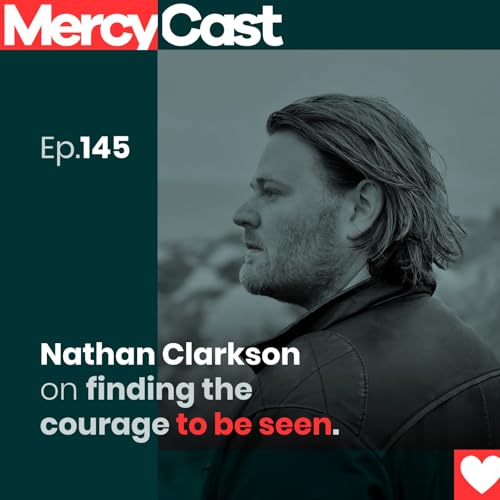
  • Nathan Clarkson on finding the courage to be seen.
    Feb 4 2026

    What happens if the shoe doesn’t drop? What happens if you find the thing that you were looking for?

    In this episode of MercyCast, I sit down with Nathan Clarkson—actor, filmmaker, and author of the new book I Am the Worst: How Freedom Is Found in Admitting Our Faults—for one of the most honest conversations we’ve ever had about identity, acceptance, and healing.

    We talk about why Jesus tells us to pay attention to the log in our own eye before we reach for the speck in someone else’s—and why doing that isn’t about shame, but about freedom. Nathan shares how learning to face his own failures, cracks, and darkness didn’t destroy him. Instead, it became “not a wall that broke me, but a bridge to healing that recreated me.”

    We explore how busyness often disguises itself as virtue, especially in fast-paced places like New York, and how noise can become a way of avoiding stillness—because stillness forces us to look inward. As Nathan puts it, “Stillness is hard because it forces us to listen to the parts of ourselves we’d rather drown out.”

    This episode goes deep into how many of us build our identity on what we do—our productivity, success, relationships, or reputation—and how fragile that foundation really is. Nathan shares vulnerably about seasons where his ability to “do” was taken away, forcing him to confront a terrifying but liberating truth that you are not loved because of what you accomplish, but because you are made in the image of God.

    We also talk about the power of community, why healing never happens alone, and how asking for help is not weakness—it’s faith. Sometimes, the holiest prayer we can pray is just one word: help.

    At the core of this conversation is a truth we all need to hear again and again:

    You are more broken than you want to admit—and more loved than you ever dared to believe.

    What We Talk About in This Episode

    • Why acceptance is the first step toward real change
    • How facing our own faults leads to freedom, not shame
    • The danger of confusing busyness with worth
    • Why identity rooted in accomplishment always leads to exhaustion
    • The role of stillness in spiritual and emotional healing
    • How vulnerability becomes a bridge to grace
    • Why community is essential for redemption
    • How asking for help opens the door to transformation
    • What it truly means to be loved unconditionally


    Key Takeaways

    • Healing begins when we stop hiding
    • Stillness reveals what busyness conceals
    • Our identity cannot survive on performance alone
    • Weakness, when admitted, becomes a doorway to grace
    • Community carries us when we can’t carry ourselves
    • Freedom is found on the other side of honesty
    • Our worth is rooted in being God’s image-bearers—not our achievements


    If you’re tired of trying to prove yourself…

    If you’re exhausted from holding it all together…

    If you’re afraid of what you might find if you slow down…

    This episode is for you.

    Listen now and discover why admitting our faults may be the first step toward real freedom.

    Find Nathan’s new book, I’m the Worst.

    You can follow MercyCast on Instagram, Twitter, and Facebook.

    You can follow Raleigh on Twitter and Instagram.

    Thanks for listening. We want to hear from you!

    Email us at info@mercycast.com.


    Support this podcast at — https://redcircle.com/the-mercycast/exclusive-content
    Show More Show Less
    39 mins
  • Rachel Krentzman on healing when it's not linear.
    Jan 28 2026

    Sometimes life doesn’t fall apart all at once.

    Sometimes it cracks.

    In this episode of MercyCast, I sit down with Rachel Krentzman, author of As Is: A Memoir on Healing the Past through Yoga, to talk about what happens when the world you thought you understood suddenly looks different—and you can’t unsee it. Rachel shares the story behind her memoir, including the cost of vulnerability, the courage it took to tell the truth, and the long, uneven road of healing that followed.

    We talk about what it means to go first, to name discomfort instead of escaping it, and to learn compassion not from a distance but from the inside of our own pain. Rachel reflects on how practices like yoga, writing, and time in nature helped her separate her identity from her experiences—and how being truly seen and accepted changed everything.

    This conversation is honest, tender, and grounded in the reality that healing is rarely quick or tidy. It’s about learning to sit with what hurts, trusting that growth isn’t linear, and discovering that we are always more than our stories.

    If you’ve ever felt broken—but not destroyed—this episode is for you.

    Listen now, and if this conversation resonates, I’d love for you to share it with someone who needs permission to slow down, be seen, and begin again.

    In This Episode, We Explore:

    • How compassion is often learned through adversity, not comfort
    • Why vulnerability always costs us something—and why it’s still worth it
    • The power of writing as a way to process pain and tell the truth
    • Why healing is not linear and what it means to honor the ups and downs
    • How mindfulness helps us notice thoughts without letting them define us
    • The importance of sitting with discomfort instead of numbing or escaping it
    • Why nature has a grounding, restorative effect on our minds and bodies
    • The role of safe community in healing—and why being seen matters
    • How professional guides can help us see what we can’t see alone
    • What it looks like to transform pain into compassion for others


    If something in this episode stirred something in you, I’d love to hear from you.


    Reach out, share your story, or let us know how you’re learning the art of compassion through adversity.

    You’re not alone—and you don’t have to rush the healing.


    Find Rachel’s new book on Amazon.

    You can follow MercyCast on Instagram, Twitter, and Facebook.

    You can follow Raleigh on Twitter and Instagram.


    Thanks for listening. We want to hear from you!

    Email us at info@mercycast.com.


    Support this podcast at — https://redcircle.com/the-mercycast/exclusive-content
    Show More Show Less
    42 mins
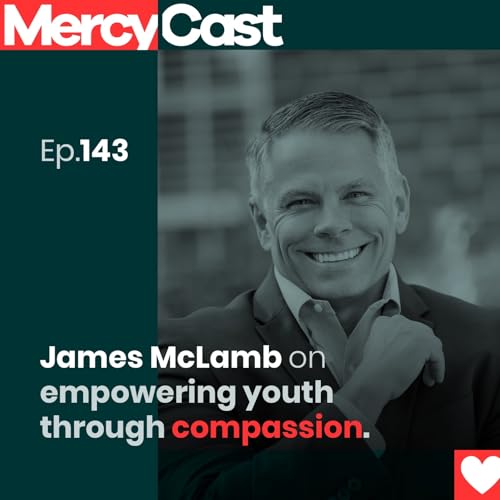
  • James McLamb on empowering youth through compassion.
    Jan 21 2026

    What works better: connection or correction?

    We answer this question and others in this week’s episode.  Today I had the privilege of speaking with James McLamb, a National Youth Empowerment Strategist and founder and CEO of Generation Youth. Our conversation centered on the powerful role mentorship plays in young people's lives.

    As someone who believes deeply in the transformative power of mercy and guidance, I was struck by how James highlighted the importance of connection over correction. Too often, we focus on fixing rather than understanding. But when we choose to show up, to be present, and to invest our time, we build the trust that youth need to flourish.

    We dug into how adversity, though difficult, can actually shape our leadership skills and teach resilience. James reminded me—and I hope you—that hope deferred is not hope lost. With the right support, that hope can be realized. This is where mentorship becomes so crucial: a mentor’s influence can alter the entire trajectory of a young person’s life, helping them discover their identity and purpose.

    Parenting is never easy, and James and I talked honestly about the challenges of raising children with resilience and independence. It’s not about control but about empowerment—giving our kids the tools and confidence to lead themselves and others. Mercy in our guidance fosters not just growth but real understanding, both for the youth we serve and ourselves.

    Ultimately, this episode is a call to action for all of us. Whether we’re parents, mentors, or simply caring adults, we have a unique opportunity to empower the next generation. Let’s choose compassion, lead with hope, and remember that we’re all learning and healing together. That’s where true connection—and lasting impact—begins.

    Episode Highlights:

    • Compassion is developed through shared experiences and mentorship. Mentorship can profoundly impact youth, shaping their future.
    • Hope deferred is not lost; it can be realized with support.
    • Building trust with youth requires time and presence.
    • Connection is more important than correction in guiding youth.
    • Adversity teaches resilience and leadership skills.
    • Parents should aim to empower rather than control their children.
    • Identity plays a crucial role in how we guide others.
    • Mercy in guidance fosters growth and understanding. We are all on a journey of learning and healing together.


    Learn more about James and his ministry with Generation Youth.

    You can follow MercyCast on Instagram, Twitter, and Facebook.

    You can follow Raleigh on Twitter and Instagram.


    Support this podcast at — https://redcircle.com/the-mercycast/exclusive-content
    Show More Show Less
    37 mins