• Linkedin Best Practices 2025
    Apr 29 2025
    This Episode talks about Optimizing your profile, share valuable and engaging content (diverse formats, strong hooks, storytelling), understand the algorithm (meaningful comments, dwell time, native content), actively engage, post consistently, repurpose content, consider AI, and track performance. Balance professional and personal content, use humor appropriately, create savable frameworks, and share case studies to enhance your LinkedIn presence and opportunities.
    Show More Show Less
    15 mins
  • Growing a Greener Future: A Conversation with Aditya Sharma, Founder of Ecotyl
    May 4 2025
    Join us for an inspiring session with Aditya Sharma, the visionary behind Ecotyl, a brand rooted in the power of natural and sustainable living. Ecotyl is more than just a brand; it's a commitment to providing 100% natural, eco-friendly, and high-quality products while nurturing the planet. In this exclusive collaboration, we'll delve into Aditya's journey and the philosophy that drives Ecotyl's "farm to fork" approach. Discover how Ecotyl meticulously sources products from the best-grown locations across India, ensuring minimal environmental impact every step of the way. Learn about Ecotyl's diverse range of offerings, from natural food staples to sustainable household essentials, all delivered with a focus on preserving freshness and quality through conscious packaging. This is a unique opportunity to gain insights into building a purpose-driven brand, the importance of sustainable practices in our daily lives, and how Ecotyl is making a difference in the health and wellness landscape. Whether you're passionate about organic living, sustainability, or conscious consumerism, this conversation with Aditya Sharma will leave you enlightened and inspired to cultivate a greener future together. Visit : https://www.ecotyl.in/
    Show More Show Less
    55 mins
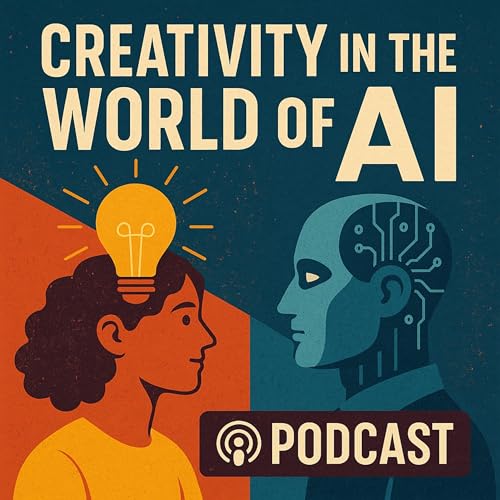
  • Creativity Dead with AI? Let's Find Out!
    May 14 2025
    With AI now generating text, images, and music, some claim it has "outpaced human creativity" on certain metrics. Does this mean creativity, as we know it, is dying? Join us as we tackle this provocative question. While AI excels at rapidly generating ideas and content, acting as a potent brainstorming tool, human creativity involves a richer blend of originality, intention, emotion, and personal context. Current AI often struggles with deeper creative problem-solving, abstract thinking, and long-term coherence, lacking true agency or spontaneity. The emerging consensus is that AI functions best as a powerful tool to support human talent, not replace it. It can handle routine tasks and streamline processes, freeing human creators to focus on their unique perspectives. The future points towards collaboration and synergy, where humans work with AI as a co-creator to expedite and inspire their process. AI can provide prompts or options to get started, but human imagination remains crucial. AI also holds the potential to democratise creativity, lowering barriers and making artistic expression more accessible. However, challenges like ensuring originality and coherence in complex outputs persist, along with ethical considerations. So, is creativity truly dead? Or are we entering an era where human creators are unleashed by partnering with AI, exploring new boundaries with this sophisticated co-pilot? Tune in to explore the future of creativity in the age of artificial intelligence!
    Show More Show Less
    9 mins
  • AI and Our Kids: Navigating the Opportunities and Risks in a Rapidly Changing World
    May 26 2025
    Artificial Intelligence (AI) is no longer a futuristic concept; it's actively shaping the world our children are growing up in. From personalised learning tools to interactive entertainment, AI is integrated into many aspects of their lives. But what does this mean for their development? In this episode, we explore the profound impact of AI on children, examining both the incredible opportunities and the significant challenges it presents. We'll discuss how AI can enhance learning through personalized approaches, adapting to a child's unique strengths and weaknesses. We touch upon how AI tools can support skill development, making complex subjects like coding more accessible and fostering creativity through tools that help create interactive stories without coding. We also consider how exploring AI concepts can prepare children for future job markets. However, this technological wave isn't without its potential pitfalls. We delve into the risks associated with AI use, including concerns about its impact on children's social and emotional development. Could increased interaction with AI affect their ability to build genuine human connections? We also look at the cognitive implications, such as the potential for over-reliance on technology hindering critical thinking and the challenges of evaluating information from AI, especially the risk of misinformation from synthetic content. Safety is paramount, and we address the concerns around potential exposure to harmful content and protecting children's privacy in systems that collect vast amounts of data. We also consider how AI can perpetuate bias and the importance of equitable access. Navigating this landscape requires understanding and action. We'll discuss the importance of AI literacy – teaching children (and adults!) to understand AI's capabilities, limitations, and ethical dimensions, and to critically evaluate the content it produces. We highlight the need for thoughtful design of AI tools specifically for children, potentially using more controlled approaches rather than purely generative AI for younger users. Finally, we underscore the collective responsibility of parents, educators, developers, and policymakers in setting boundaries, fostering open conversations, and ensuring AI serves as a tool to support, not replace, healthy child development. Join us as we explore how we can harness the potential of AI while safeguarding the well-being and future of the next generation.
    Show More Show Less
    9 mins
  • Growing Energy Needs with AI Rising
    Jun 12 2025
    The episode underscores the need for responsible AI deployment, focusing on efficiency innovations like model pruning and quantization, and using carbon-aware software to shift workloads to greener energy times or locations. Integrating renewable energy to power data centers is also crucial. Policymakers are encouraged to mandate transparent reporting of AI's environmental effects and ensure that AI development aligns with climate goals. Ultimately, the net impact of AI will depend on scaling its efficiency-enhancing applications as rapidly as its demand-generating ones.Artificial Intelligence (AI) presents a dual impact on the environment, posing both significant challenges and offering powerful solutions for sustainability. The operation of AI, particularly generative AI, is resource-intensive. Data centers, the backbone of AI infrastructure, are projected to double their global electricity demand by 2026. A single generative AI query, such as on ChatGPT, consumes nearly ten times more energy than a standard Google search. Furthermore, AI is a "water guzzler," with global water consumption for cooling potentially reaching 6.6 billion cubic meters by 2027. This escalating demand strains power grids and has even delayed the closure of coal-fired plants. Tech giants like Google, Microsoft, and Meta have reported increased greenhouse gas emissions directly linked to their AI growth. Conversely, AI serves as a powerful tool for climate action and enhanced efficiency. It can optimize energy systems, as demonstrated by Google's DeepMind, which reduced data center cooling bills by 40%. The UK National Grid, for instance, doubled its electricity demand forecast accuracy with AI, leading to better integration of renewable energy. AI also plays a crucial role in environmental monitoring. Climate TRACE utilizes AI and satellite data to independently quantify global greenhouse gas emissions, while Google's Flood Hub provides real-time flood forecasts to 80 countries. In agriculture, AI predicts locust outbreaks and optimizes the use of pesticides and water. It can also guide sustainable product design and reduce overproduction. The responsible deployment of AI is crucial. This involves focusing on efficiency innovations such as model pruning and quantization, and using carbon-aware software to shift workloads to times or locations with greener energy. Integrating renewable energy sources to power data centers is also vital. Policymakers should mandate transparent reporting of AI's environmental effects and ensure that AI development aligns with climate goals. Ultimately, the net environmental impact of AI will depend on the rapid scaling of its efficiency-enhancing applications to match its demand-generating ones.
    Show More Show Less
    13 mins
  • Fundamentals of Building Unicorns in 2025 in India
    Jul 2 2025
    This episode of "Joy of Building Things," hosted by Madhav Shankar, delves into what truly made startups unicorns in India in 2025. Contrary to the frenzy of previous years, 2025 was a period of maturation and strategic evolution for the Indian startup ecosystem. Key takeaways from the episode include: • Fewer, but Stronger Unicorns: In 2025, India saw six confirmed new unicorns, with a combined valuation of $6.44 billion, averaging around $1.07 billion each. These companies diversified across six different sectors, showcasing the ecosystem's breadth. • Shift to Profitability and Capital Efficiency: A major theme was the move away from "growth-at-all-costs" to a focus on improved capital efficiency and sustainable business models. Companies like Fireflies.ai achieved unicorn status without new funding rounds since 2021, highlighting the priority investors place on profitability and resilience. • Strategic Growth Drivers: The success was underpinned by AI and Deep Tech integration, with the IndiaAI Mission providing significant support. Government policy, such as the ₹10,000 crore Fund of Funds for deep tech, and the Startup India initiative, continued to play a crucial role. Strategic partnerships and acquisitions, alongside a focus on essential services and infrastructure (like digital payment systems), were also vital. The episode underscores that 2025's unicorns represent a more robust, value-driven approach to building businesses in India, focusing on fundamental business models for long-term sustainability.
    Show More Show Less
    16 mins
  • AI Agents and AI Browsers : The Future
    Aug 4 2025
    In this episode of "Joy of Building Things," host Madhav Shankar delves into the transformative world of AI agents and AI browsers, exploring how these intertwined technologies are set to revolutionise our interaction with the internet. The episode begins by demystifying AI agents, portraying them not as futuristic concepts, but as increasingly practical tools that can autonomously handle complex digital tasks, from planning travel to managing business workflows. Madhav then introduces AI browsers as the necessary next step in our digital evolution, browsers designed to be intelligent partners that understand context, synthesize information, and create a more seamless and productive online experience. The discussion also confronts the significant ethical considerations, particularly data privacy and the potential for over-reliance on AI. The episode concludes with a compelling call to action, urging listeners to become informed and active participants in shaping a future where technology augments human intelligence and is built on a foundation of privacy and principle More about Madhav on : madhavshankar.com
    Show More Show Less
    9 mins
  • The AI Tsunami: How to Survive and Thrive in the Next 5 Years of Work
    Aug 18 2025
    In this episode of "Joy of Building Things," host Madhav Shankar confronts the imminent and profound impact of Artificial Intelligence on the global workforce over the next five years. The episode opens with the jarring reality of AI-driven job displacement, sharing the personal story of a copywriter made redundant by ChatGPT, and citing predictions of up to 300 million job losses. However, the narrative quickly pivots from a dystopian forecast to one of cautious optimism and empowerment. Drawing parallels with historical technological shifts like the printing press and the automobile, Madhav explores the dual nature of AI as both a disruptor and a creator of new opportunities. The episode delves into the types of new roles emerging in the AI era, such as AI trainers and ethicists, and highlights the increasing demand for uniquely human skills like emotional intelligence, creativity, and critical thinking. The central message is a powerful call to action for listeners to embrace lifelong learning and adaptability as the cornerstones of a future-proof career. Madhav emphasizes that the future of work is not a battle of humans versus machines, but a collaboration where AI augments human capabilities. The episode concludes with practical advice on how to start preparing for this new reality, urging listeners to take ownership of their professional development and to view AI not as a threat, but as a tool for personal and professional growth. This intellectually stimulating and emotionally resonant episode is a must-listen for anyone looking to navigate the evolving landscape of work in the age of AI.
    Show More Show Less
    11 mins