• Episode 43 – Special Episode: The US Strikes against Iran
    Mar 4 2026

    The President who had promised an end of “forever wars” and of unnecessary entanglements has greenlit strikes against Iran. Since February 28, Iran is under US and Israeli attack; Ayatollah Khamenei was among the first of the Irani leadership to be killed. President Trump has called on the Iranian people to “take back their country” and has promised the operation to be concluded within five weeks. While few observers mourn the possible demise of the Islamic theocracy, many fear that the US and Israel might have unleashed a regional conflict with a more than doubtful ending. How do the strikes fit into the security strategy as it had been outlined by the Trump Administration? How does Trump’s war put “America First” and fit into “MAGA”? And can we make out a Trump doctrine after all? In this episode we are dissecting these questions with St.Gallen’s security policy expert and Professor of International Relations, James W. Davis.

    Professor James Davis has been a fixture for HSG students in International Affairs since 2005 when he left Munich to take on St.Gallen’s Chair in International Relations. Originally from Michigan, he first studied at Michigan State University and then went on to obtain both his Master’s and his PhD from Columbia. He has held positions at various leading research institutions, for instance at Harvard’s John M. Olin Institute for Strategic Studies, and he has received numerous awards and accolades for his work, including the 2011 Credit Suisse Award for Best Teaching, Awarded by the Student Union of the University of St.Gallen. Prof. Davis bridges research and practice, as he has most recently demonstrated by co-initiating the European Nuclear Study Group (ENSG) which he is co-chairing alongside Dr. Tobias Bunde (Munich Security Conference & Hertie School), and Dr. Claudia Major (Stiftung Wissenschaft und Politik, Berlin).

    Show More Show Less
    32 mins
  • Episode 42 – The Trouble with Chagos
    Feb 27 2026

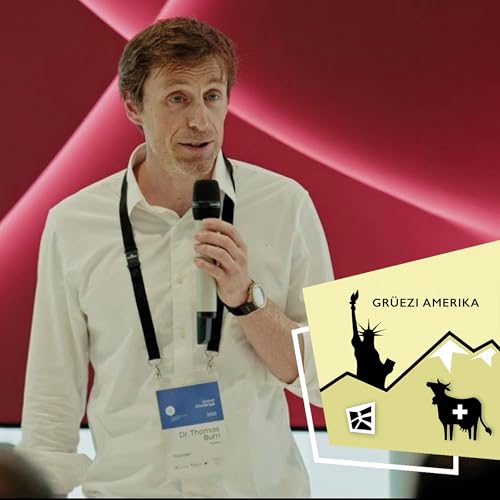
    Disputes over territory seem to be the new norm in transatlantic relations: after fears over the world’s largest island Greenland rattled the entirety of Europe, the fate of a small archipelago in the Indian Ocean has worsened US-UK relations. In 2024, the United Kingdom reached an agreement with Mauritius, transferring sovereignty over the Chagos archipelago to the latter. Earlier, President Trump applauded the deal – but he has since backtracked and demands that the UK keep sovereignty over the group of islands. What’s the trouble with Chagos? And why has its status been disputed for decades? We are breaking down the background of this conflict with Professor Thomas Burri who has been following the story of Chagos for several years.

    Professor Thomas Burri is the co-editor of The International Court of Justice and Decolonisation: New Directions from the Chagos Advisory Opinion and has started a series of papers on “Phenomenological Law,” focusing first on the case of Chagos. Since 2011, he has been teaching International and European Law at the University of St.Gallen where he received the Impact Award for launching «The First University of St.Gallen Grand Challenge – The EU A.I. Act 2023.» Professor Burri received his education at University of Zurich (Dr. iur.), in Bruges (College of Europe, LLM), Basel and Paris (Lic. iur., University of Basel).

    Recommendations:

    1. Philippe Sands, The Last Colony
    2. David Vine, Island of Shame

    Show More Show Less
    39 mins
  • Episode 41 – Trump, Tariffs, and the Court
    Feb 23 2026

    It's a landmark case: in Learning Resources, Inc. v. Trump (2026), the Supreme Court declared Donald J. Trump's tariff regime unconstitutional. Specifically, the Court holds that the International Emergency Economic Powers Act (IEEPA) does not authorize the President to impose tariffs. Expectedly, the President denounced the decision and the three conservative Justices who went with the 6:3 majority, including Chief Justice Roberts. We are trying to make sense of it all with Prof. Christoph Frei.

    Prof. emeritus Christoph Frei teaches history of political thought, international governance, and world politics at the University of St.Gallen. An award-winning researcher and lecturer, he spent formative research years in the United States and has maintained strong ties to the States throughout his career.

    Further reading:

    1. Ilya Shapiro, Supreme Disorder
    2. Claudia F. Brühwiler, "Politiker in Roben? Der Supreme Court und der Vorwurf der Politisierung", Alexandria (full text) content / Richterzeitung (pay wall): Politiker in Roben?
    3. Oren Cass and the future of American conservatism | HSG Focus 25/01 (includes link to the podcast episode with Chris Griswold) und The Federalist Papers

    Show More Show Less
    38 mins
  • Episode 40 –Henry Wirz, Swiss War Criminal of the Civil War
    Feb 15 2026

    Nov. 10, 1865: Heinrich “Henry” Wirz is executed as only one of three men tried, convicted, and executed for war crimes during the Civil War – a Swiss who had fought for the Confederacy. As Captain, he had been in charge of Andersonville Prison, a prisoner-of-war camp in Georgia, and he would be held responsible for the dire conditions under which Union soldiers were held there: “45,000 Union soldiers were imprisoned there, and nearly 13,000 died from disease, poor sanitation, malnutrition, overcrowding, or exposure”. How did Wirz, born in Zurich, end up commanding Andersonville? And was he a mere scapegoat or the monster he was made out to be? Historian Dr. Ben Cloyd will help us shed light on Wirz’s story.

    Dr. Cloyd wrote one of the few books that give us insight into Heinrich “Henry” Wirz’s time at Andersonville Prison: Haunted by Atrocity: Civil War Prisons in American Memory focuses on the role of military prison camps in post-Civil War memory and myths. Dr. Cloyd graduated from Louisiana State University with a Master’s degree and a PhD; earlier, obtained a Bachelor’s degree in history from the University of Notre Dame. Nowadays, he is part of the leadership of Mississippi Delta Community College where he serves as Vice President of Enrollment Management.

    Recommended reading:

    1. The Destructive War: William Tecumseh Sherman, Stonewall Jackson, and the Americans


    Show More Show Less
    39 mins
  • Episode 39 – Grönlandträume
    Jan 23 2026

    «We need Greenland» – nicht zur Miete, sondern als Besitz, erklärte US-Präsident Donald J. Trump mehrfach, zuletzt auch am World Economic Forum in Davos. Doch dann löste sich die Anspannung: Ein Abkommen mit der NATO sei in Sicht, verkündete er nur Stunden nach einer Rede, in der er zwar einen Militärschlag zur Besitzergreifung ausgeschlossen, den Besitzanspruch aber nochmals unterstrichen hatte. Nie wurde intensiver über das Schicksal der grössten Insel der Welt gesprochen – und nie fühlte sich die dortige Bevölkerung mehr als Spielball anderer. Gemeinsam mit Prof. Dania Achermann erweitern wir den Blick auf Grönland, von der Trumpschen Begehrlichkeit auf ein Territorium mit wechselhafter Geschichte und grosser Bedeutung für die Wissenschaft.

    Prof. Dania Achermann ist Associate Professorin an der School of Humanities and Social Sciences der Universität St.Gallen und befasst sich mit Wissenschafts- und Technikgeschichte. Zuvor war sie Juniorprofessorin an der Bergischen Universität Wuppertal, wo sie unter anderem zur Entstehung der Eisbohrkernforschung gearbeitet hat. Vor ihrem Doktorat an der Aarhus University und der Ludwig-Maximilians-Universität München studierte sie in Zürich Allgemeine Geschichte, Geographie und englische Linguistik.

    Tipps

    1. Exploring Greenland: Cold War Science and Technology on Ice
    2. Noch nie unabhängig: Wem gehört Grönland?
    3. Peter Hoeg, Fräulein Smillas Gespür für Schnee (1992)
    4. Grönland: Aus Politik und Zeitgeschichte 38/2025

    Show More Show Less
    39 mins
  • Episode 38 – Drugs and the Donroe Doctrine
    Jan 14 2026

    On January 3, 2026 US troops captured Venezuela's President Nicolás Maduro at his home in Caracas. The political heir of Hugo Chávez had been in office for nearly thirteen years, resorting to electoral fraud and suppressing the opposition to stay in power. During his time in government, around nine million people fled Venezuela. U.S. prosecutors accuse him and the Venezuelan government of a cocaine-trafficking conspiracy and partnering with cartels designated as terrorist groups. But is Venezuela indeed that important for the regional drug trade? And how do countries in the region perceive the U.S. intervention?

    Professor Matías Dewey helps us change perspectives and shares with us his expertise on illicit markets. He is Associate Professor of Latin American Studies at the School of Humanities and Social Sciences of the University of St.Gallen. A sociologist by training, he studied first in his native country Argentina at the University Del Salvador before pursing a doctorate at the University of Rostock. He obtained his "habilitation" from the University of Duisburg-Essen.

    Recommendations:

    1. Javier Ayuero and Katherine Sobering: "The Ambivalent State"
    2. Thomas Grisaffi: "Coca Yes, Cocaine No: How Bolivia's Coca Growers Reshaped Democracy"
    3. HSG FOCUS on "Economies of Crime"

    Show More Show Less
    35 mins
  • Episode 37 – Die Schweizer Wirtschaftsbeziehungen zu den USA nach einem Jahr Trump 2.0
    Jan 11 2026

    Das Verhältnis zwischen der Schweiz und den USA scheint nach einem Jahr unter Donald Trump 2.0 angespannt, kühl und unsicher. Ausgerechnet zum Nationalfeiertag erreichte die Schweiz die Botschaft, dass die Zollverhandlungen gescheitert, das für das Land weiterhin schlechtere Handelsvoraussetzungen als beispielsweise für die EU-Mitgliedstaaten gelten würden. Auch die Einigung vom November wurde nicht überall als Erfolg gefeiert. Von Goldbarren- oder Oligarchendiplomatie war die Rede, als eine Gruppe Schweizer Wirtschaftsführer mit Präsident Donald J. Trump das amerikanische Zollregime diskutierten. Wie steht es wirklich um die Schweizer Wirtschaftsbeziehungen zu den USA unter Trump 2.0? Wie gut, wie schlecht ist der Zoll-Deal? Kaum jemand kann die Lage besser einordnen als Dr. Rahul Sahgal.

    Der CEO der Swiss-American Chamber of Commerce, also der schweizerisch-amerikanischen Handelskammer, ist dreifacher HSG-Alumnus: Nachdem er Abschlüsse in BWL und Jus erlangte, verfasste er eine Dissertation zu «Foreign Direct Investment Decision-making Processes: The Case of Swiss Companies in India». Nach mehrjähriger Erfahrung in der Privatwirtschaft, unter anderem als CEO in Indien, wechselte er in das Eidgenössische Departement des Äusseren und arbeitete von 2017 bis 2021 in der Schweizer Botschaft in Washington, D.C. Vor seiner jetzigen Funktion amtete er zuletzt als stellvertretender Leiter der Steuerabteilung im Staatssekretariat für internationale Finanzfragen (SIF) in Bern.

    Empfehlungen:

    1. Politico: Politics, Policy, Political News - POLITICO
    2. Axios: Axios - Breaking news, U.S. news and politics, and local news
    3. Lex Fridman: Lex Fridman - YouTube

    Show More Show Less
    45 mins
  • Episode 36 – ‘tis the Season to Watch Christmas Movies!
    Dec 21 2025

    What gets you in a festive mood? For some it’s the lights and mulled wine, wrapping gifts and decorating their home – and for others it’s a Christmas movie! But what is a Christmas movie, anyway? Let’s discuss this with my colleague Professor Suzanne Enzerink! She picks the most American, the most iconic, and the most underrated American Christmas movie.

    Suzanne had joined us earlier for Episode 18 to discuss “Hollywood in Times of Political Division.” A Dutch native, she did most of her American Studies coursework at the University of Groningen, with an exchange at the University of North Carolina at Chapel Hill, and then obtained a PhD at Brown University. Before joining HSG, she served as an Assistant Professor at American University in Beirut. Her first book, Give Me Color, is scheduled be published in spring 2026.

    Trailers for the recommended movies:

    1. Most American
    2. Most iconic
    3. Most underrated 1 / Most underrated 2
    4. Honorable mention

    Show More Show Less
    23 mins