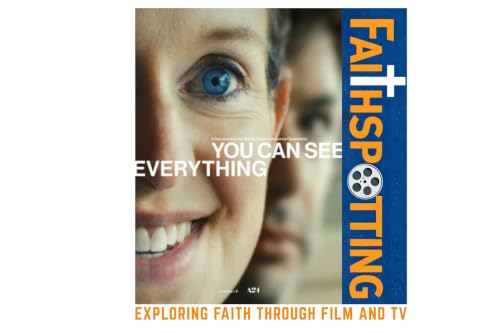
Faithspotting cover art

Faithspotting

Faithspotting

By: Cross Roads Faith & Film
Listen for free

This Season's Biggest Deal | $0.99/mo for 3 months + $20 Audible bonus

Auto-renews at $8.99/mo. after 3 months - terms apply.
Summary
Faithspotting is a podcasts dedicated to spotting and sharing issues of life, faith, and theology presented in film, television, and music, then empower listeners to use these stories as tools to strengthen and apply faith in their everyday life. Art Spirituality
Episodes
  • "You Can See Everything" But Is It The Truth, A Lie, A Fraud Or What? Faithspotting Review
    Oct 27 2026

    Faithspotting Hosts Kenny and Mike discuss You Can See Everything, the A24 breakout documentary film directed by Nathan Fielder and Lance Oppenheim. The film chronicles the 34 days leading up to Theranos Founder and convicted felon Elizabeth Holmes beginning her 11 year sentence for defrauding investors . Fielder is present to capture all of the conversations between Holmes and her partner Billy Evans as they prepare for Holmes's surrender to custody, and life during and perhaps following her sentence. Eventually Fielder is invited and moves in with Holmes and Evans and their children and becomes a character / subject of the film.

    Hailed as a groundbreaking documentary You Can See Everything raises more questions than it answers, and the questions lead to long detailed conversations, many of which begin in the theater with strangers, and continue with others who have seen the film. All those who have seen the film can't help but discussing it. This element of the film includes Faithspotting hosts Mike and Kenny who have differing thoughts, questions, and answers that lead to more questions, etc.

    Not only is there Oscar buzz as a Best Feature Documentary, but also buzz about a nomination for best picture.

    Faith Elements Spotted:

    What is Truth? The films shows the fragility of truth and consequences when truth is personalized. ("my truth") Truth is more than just avoiding lies. For persons of faith, it (should) includes accepting and living by what one believes and accepting the cost that accompany truth.

    Narcissism and Idolatry: The worship and use of power, success, and notoriety as a tool to gain adoration from others so in an effort to control all things and people in one's life and surroundings.

    The place and importance of confession and repentance in receiving and accepting grace and forgiveness.

    A reminder of the need to be aware of and eliminating as much as possible one's personal bias and opinions when studying Scripture. The proper study and use of Scripture calls one to draw teaching and meaning from the text, (exegesis) as opposed to reading one's beliefs etc. into the text (eisegesis.) Such suspension of beliefs requires humility and a willingness to have personal beliefs challenged and changed by Scripture and faithful discernment.

    Show More Show Less
    51 mins
  • Faithspotting "Heart of the Beast"
    Sep 23 2026

    Mike and Kenny discuss the latest collabortation between Brad PItt and director David Ayer (Fury), the survival thriller Heart of the Beast. In the film, James Belmont (Pitt) is a retired Special Forces officer who flies into the wild of Alaska with Odin (Uber) his retired German Shepherd partner. After spending two nights fishing and camping they are involed in a plane crash on the way home and must traverse 58 miles of rough terrain, wolves and bears, while overcoming injuries sustained in the crash and along the journey. The film shows the dedication James and Odin have for each other as they work together on their dangerous trek out of the Alaskan wild.

    Faith Spotted:

    As one might expect in a film about a difficult and dangerous journey, the film reflects the growth one can achieve in when persevering trials and suffering. In Romans 5 Paul teaches that suffering produces endurance, and endurance produces character, and character produces hope. Such perseverance also leads to hope when journeying through the wilderness of the struggles faced in life.

    In addition, the film depicts the role of a shepherd as told through the 23rd Psalm. Both James and Odin serve as shepherds to the other and are present together as they walk through the hills and valleys of the Alaskan wild which serve as the valley of the shadow of death. Both work to restore each other's souls as they are impacted by PTSD from the trauma experienced in the war in Iraq. Odin specifically leads James as the shepherd led the psalmist. The Psalm speaks of the loyalty and love of the shepherd for the flock, loyalty James and Olin have and that represents the faitfulness and love of God who is also present with us as we journey through dark valleys and green pastures and who restores our soul.

    Psalm 22 is also reflected in again showing that despite the dangers and enemies one faces, God is present and God turns loss and sure death into everlasting life.

    Another element reflected in the film is the power and place of purpose. As holocaust survivor and psychiatrist Viktor Frankl expeienced and shares in his acclaimed book, Man's Search for Meaning it was the prisoners who found a purpose, not necessarily the strongest or initially healthiest, that were most likley to survive the horrors of the concentration camps. The call to ministry and discipleship offers that purpose that also gives meaning in both the struggles as well of joys of life.

    Heart of the Beast is rated PG-13

    Thank you WIT PR for the opportunity for Faithspotting to host a pre-screening in the Dallas area.

    Show More Show Less
    27 mins
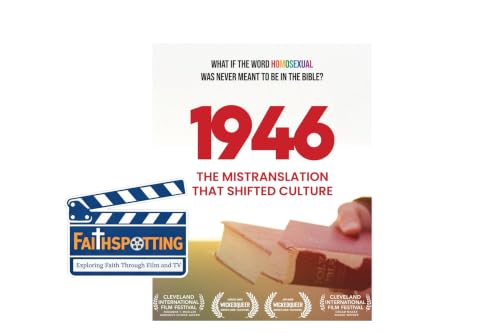
  • Faithspotting "1946: The Mistranslation That Shifted Culture
    Aug 31 2026

    Kenny and Mike are joined by Director and Producer Sharon "Rocky Roggio for a discussion of her documentary film 1946: The Mistranslations That Shifted Culture. The film chronicles the first time the word "homosexual" appears in the Bible, the Revised Standard Verson (RSV) which was first published in 1946. The film stars Kathy Baldock and Ed Oxford, researchers who discover the translation committee that worked on the original Revised Standard Version Bible conflated and translated the Koine Greek words malakoi and arsenokoitai as "homosexual." Prior to 1946 major translations such as the King James Version (KJV) used the words for the sexual acts rather than an identity label. The work of Kathy and Ed cast light on the translation process used by the RSV committee leading up to their publication, and how changes were made to the original translastion.

    Interwoven throughout the film are the personal stories of Ed and Sharon and their struggles as persons of faith who faced rejection in or from their congregations. Sharon's father ,Sal Roggio, an Evangelical pastor who does not accept the mistranslation is also featured throughout parts of the film. While the film does depict tension, disagreement and pain between Sharon and her father, the film also shows that they still love one another and are in relationship, which is not always the case in families. This focus on being able to hold tension of disagreement while also maintaining a relationship is model of faith for others to consider to replicate.

    Sharon Roggio

    In the discussion, Sharon also discusses how she produced and has distrubuted the film. 1946 won over 20 awards on the festival circuit including the prestigious Audience Award at the 2022 DOC NYC. It was also eligible for consideration for best feature documentary for the Academy Awards in 1924. In 2025 Sharon organized a "1946 Tour" where they showed the film in conservative communities in the United States as a way to speak for the LGTB community and have dialogue with others in the towns. Sharon has also shown the film internationally including Korea, Japan, various Eurpopean countries and is taking the film to South Africa as well. There are also plans for "Good Faith" tour in 2027 in the United States.

    Kathy Baldock Ed Oxford

    Show More Show Less
    51 mins
No reviews yet
In the spirit of reconciliation, Audible acknowledges the Traditional Custodians of country throughout Australia and their connections to land, sea and community. We pay our respect to their elders past and present and extend that respect to all Aboriginal and Torres Strait Islander peoples today.