Episodes

  • Stop Being Beige: Branding For Designers
    Aug 10 2026

    Send us Fan Mail

    Your projects might be exceptional, but if your studio looks and sounds like everyone else, the market won’t always give you the chance to prove it. We’re joined by Emily Konwiak Stevens of Emily Stevens Studio, an architecture brand designer and strategist, to talk about what branding really means for architects, interior designers, and other design-led businesses, especially in a competitive New Zealand and Australian landscape where the DIY instinct runs deep.

    We get practical about brand strategy: the workshop questions that uncover what matters, the competitor and ideal client research that sharpens positioning, and how a genuine point of difference often comes from a mix of niche, approach, access, and place rather than trendy buzzwords. Emily also unpacks why rebranding can feel scary and personal, and why the goal isn’t to invent a persona, it’s to close the communication gap so your online presence, website, visuals, and tone of voice reflect the quality you deliver.

    We also challenge a few industry habits: why PR, publications, and awards programmes are often image boosters instead of lead engines, how simple marketing consistency builds confidence over time, and what “personal brand” can look like for architects without the influencer vibe. If you’ve ever worried that promoting your practice feels smarmy, this conversation reframes branding as honesty, clarity, and craft. If it helps, subscribe, share it with a studio mate, and leave a review with the biggest branding question you’re still trying to answer.

    Please Like and Subscribe it really helps :)

    Follow us on @designpriciplespod on Instagram and if you wish to contact us hit our DMs or our personal pages. We love to hear from you it really encourages us to keep going and the ideas and feedback we get from the listeners is awesome!

    Show More Show Less
    50 mins
  • How Much Wood Would Chuck, Chuck?: NZ's Treated Timber Trouble
    Jul 27 2026

    Send us Fan Mail

    A pile of treated timber offcuts looks harmless until you ask the awkward question: where does it actually go, and what does it do once it gets there? We get interviewed by Toby, a University of Otago Master’s student researching timber circularity, and we go straight at the uncomfortable parts of New Zealand construction. We talk about how NZS 3604 and stick framing shape almost everything we build, and how a quiet “fear of liability” can lead to over-spec framing, more thermal bridging, and far more timber waste than we think.

    From there we zoom out to the landfill reality, including why timber is such a problem material for sites like Victoria Flats in Queenstown Lakes District: it’s bulky, it doesn’t compact, it clogs machinery, and a huge portion is treated. We dig into the knowledge gaps around treated timber, including CCA-treated timber, and why perception, evidence, and education matter when you start talking about reuse, chipping, furnaces, or any other recovery pathway.

    We also keep it practical. We share design moves that reduce timber without compromising performance, the promise of prefabrication and off-site manufacture, and why SIPs (structurally insulated panels) can dramatically cut timber in external walls. We touch on HomeStar and Green Star, embodied carbon measurement, material passports, and designing for disassembly so buildings become material banks rather than future waste.

    If you care about sustainable building, timber recycling, and a real circular economy in Aotearoa, you’ll get plenty to argue with and plenty to act on. Subscribe, share this with someone in the industry, and leave a review, then tell us: what’s the first timber change you’d make?

    Please Like and Subscribe it really helps :)

    Follow us on @designpriciplespod on Instagram and if you wish to contact us hit our DMs or our personal pages. We love to hear from you it really encourages us to keep going and the ideas and feedback we get from the listeners is awesome!

    Show More Show Less
    43 mins
  • A Bit Of This, A Bit Of That: Year-End Design Debrief
    Dec 9 2025

    Send us Fan Mail

    Year-end is when the honest stuff bubbles up: what we built, what broke, and what we’ll try differently next time. We raise a glass to the community that’s carried this show and jump straight into the craft and chaos of design life—part celebration, part hard-won field notes.

    We start with the real costs and protections behind small studios: trusts, liability, and why construction firms fold faster than architects who keep overheads lean. From there, the stories turn tactile. A shaky three-storey demo becomes a lesson in salvage economics, where windows and steel pay the bills. Then comes the headline experiment: hydroforming a stainless-steel sauna for a client with six tonnes of water. We break down triple welds, reinforcement, polishing, spray foam to shift the dew point, and smart vent placement so the hottest air stays breathable. It’s a blueprint for making odd ideas safe, efficient, and beautiful.

    That hands-on build sparks a bigger provocation: what if cladding and structure are the same thing? We connect hydroforming to arches, keystones, and tensioned timber, arguing for performance-led form over decoration. Along the way we tackle the eternal software debate—Revit, Archicad, and the surprising power of simple stacks like Google Forms and Sheets for time, variations, and site workflows. We make the case for physical models that carry the concept from week two to the final pour, and for digital twins that guide renovations, farm fencing plans, and long-term maintenance without drowning in subscriptions.

    If you’re hungry for design that survives contact with the real world—pricing, risk, salvage, systems—and still leaves room for bold form, this one’s for you. Subscribe, share with a friend who loves building as much as drawing, and drop us a note with the one tool or habit that saved your studio this year.

    Please Like and Subscribe it really helps :)

    Follow us on @designpriciplespod on Instagram and if you wish to contact us hit our DMs or our personal pages. We love to hear from you it really encourages us to keep going and the ideas and feedback we get from the listeners is awesome!

    Show More Show Less
    44 mins
  • Your Beam Is Too Big: Architects & Engineers
    Nov 12 2025

    Send us Fan Mail

    Start with a flooded hotel room, end with a four‑metre cantilever, and in between unpack the messy, creative space where structure meets form. We sit down with structural engineer Joel Marsh of Pocket to map out how architects and engineers can move beyond transactional deliverables and into a truly design‑led process that saves money, reduces RFIs, and produces cleaner, more elegant buildings.

    Joel opens the playbook: meet early, sketch by hand at 10–15%, and use those concept drawings to align intent before any modelling lock‑in. From there, general arrangement plans become a shared workspace for spatial fit, and detailed coordination happens before consent so builders aren’t left juggling “garden salad details” on site. We talk real value vs low fees, the hidden cost of conservative members, and why a readable calculation package should tell a story of load paths, stiffness, and performance that architects and builders can follow at a glance.

    Materials get a clear‑eyed treatment. Timber is brilliant when it fits the constraints; steel and concrete still win in the right places. Joel walks through post‑tensioned slab logic, a prefabricated mountain hut helicoptered into place, and what it took to pull off a four‑metre cantilevered floor. We also touch on AI’s limits: it can automate parts, but it can’t replace the creative judgement that balances cost, constructability, and design intent. The through‑line is respect and shared language—because the best buildings reflect a professional consensus, not a one‑sided mandate.

    If you care about better drawings, simpler details, fewer RFIs, and a smoother path from concept to construction, this one’s for you. Subscribe, share with your project team, and leave a review to tell us the one collaboration habit you want to see more often.


    https://pocketeng.co.nz/

    Please Like and Subscribe it really helps :)

    Follow us on @designpriciplespod on Instagram and if you wish to contact us hit our DMs or our personal pages. We love to hear from you it really encourages us to keep going and the ideas and feedback we get from the listeners is awesome!

    Show More Show Less
    58 mins
  • The Narrative Power: Architecture & Film, Take Two
    Oct 23 2025

    Send us Fan Mail

    What if a building could be more than an object on a pedestal and instead feel like a living character on screen? We sit down with two architectural filmmakers, Nikolas Struger from ravens At Odds and Veeral Patel who show how to move beyond glossy hero shots and capture the heartbeat of design: process, people, and emotion. From software and cycling photography to architecture practice and brand strategy, their varied paths lead to the same conclusion—storytelling is the missing bridge between architects, clients, and the public.

    We unpack the craft behind compelling architectural film, starting with strategy. Short, vertical cutdowns can spark curiosity and build trust, while longer pieces on your site deliver depth and nuance. Preproduction is everything: treatments to align on tone and references, storyboards that map scenes to sun paths and locations, and schedules that protect the moments you can’t fake. On set, preparation meets improvisation as documentary instincts catch the unplanned gestures that make a space feel alive.

    This conversation goes beyond formats to focus on value. Forget chasing view counts. Strong films create social proof, clarify process, and strengthen pitches by reducing perceived risk. We discuss budget tiers, when to choose interviews over pure visuals, and how music, sound design, or even silence can carry narrative. Nik and Veeral share examples of process-driven edits, client-led arcs, and long-form projects that track a home through years of delays, decisions, and everyday life—proof that architecture resonates most when it reflects human stakes.

    If you’re tired of slick reels that say little, you’ll find practical guidance on planning light, collaborating with crews, and structuring stories that audiences remember. Subscribe, share with a colleague who needs a narrative upgrade, and leave a review telling us: which project in your world deserves a film—and why?

    Please Like and Subscribe it really helps :)

    Follow us on @designpriciplespod on Instagram and if you wish to contact us hit our DMs or our personal pages. We love to hear from you it really encourages us to keep going and the ideas and feedback we get from the listeners is awesome!

    Show More Show Less
    57 mins
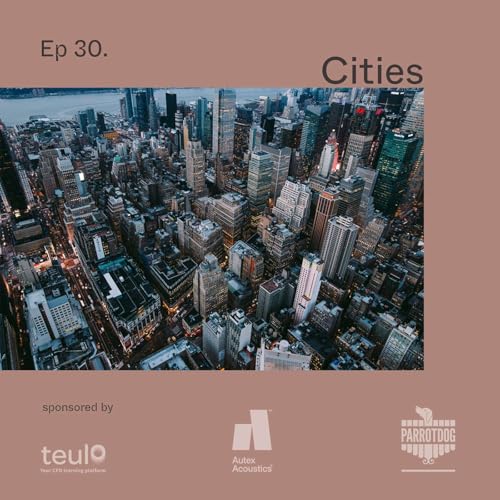
  • Cultivated City: Designed Solutions vs. Organic Growth
    Oct 1 2025

    Send us Fan Mail

    A city can make you breathe easier—or grind your teeth—before you’ve even named why. We follow that feeling from a flimsy townhouse hinge to the rhythm of a street that forces a ute to crawl, exploring how materials, widths, and mixed uses quietly choreograph daily life. In this episode we pull apart modernism’s big promises, tip our hats to classical street smarts, and ask what a genuinely New Zealand urban vernacular might look like—one with corrugate, brick, and crafted facades that hold up to weather, touch, and time.

    The heart of the chat is human-scale design. We talk walkability you can feel, where a tight lane and rougher surface set a natural speed limit, and where a dairy under a flat means your day stacks neatly without a dashboard. Medellín’s gondolas and covered escalators show how access can reverse decline when you cut the time penalty for the very people who make a city run. Christchurch’s rebuild sits in the balance: a missed chance for bold spines of transit and tighter hubs, yet proof that even partial wins matter when applied consistently. And yes, fares and parking prices quietly steer behaviour more than slogans ever will.

    Inside the front door, priorities tell on us. The “double garage with everything” inflates into a third of a house, while the rooms we actually live in shrink. We argue for smaller, better spaces—nooks, ladders, odd corners that make memories—over storage for cars. Materials matter too: brick can beat timber on cost and presence, corrugate deserves a smarter role in city scales, and layered skins can bring the street back to hand-level detail. If there’s a takeaway, it’s this: design works when it speaks plainly to how people move, meet, and make a day. Subscribe, share with a city-loving mate, and tell us—what one change would make your street slower, safer, and more alive?

    Please Like and Subscribe it really helps :)

    Follow us on @designpriciplespod on Instagram and if you wish to contact us hit our DMs or our personal pages. We love to hear from you it really encourages us to keep going and the ideas and feedback we get from the listeners is awesome!

    Show More Show Less
    56 mins
  • Capturing Architecture: Moving Image and Storytelling
    Sep 18 2025

    Send us Fan Mail

    When we consume architecture, which speaks louder - the frozen moment or the flowing narrative? This question sits at the heart of our fascinating conversation with Clare Chapman, editor of Home Magazine, and Simon Devitt, renowned architectural photographer.

    Despite both guests being masters of still imagery, our discussion reveals how moving image is transforming architectural storytelling in ways that complement rather than replace traditional photography. As Simon eloquently explains, "Video kind of can mimic how the mind maps space, whereas stills can't really do that. But stills hold another power that video can't possibly entertain... allowing the viewer to use their imagination."

    The conversation weaves through surprising revelations about how we consume architectural media today. While 6-second videos dominate social feeds, Home Magazine readers spend an astonishing 90 minutes with each issue. This paradox highlights our simultaneous hunger for both instant gratification and deep engagement with architectural stories.

    We explore the power of client perspectives in architectural media, with both guests agreeing these authentic voices often communicate more powerfully than architects themselves. As Clare notes, hearing homeowners discuss their spaces creates "that emotional connection" that's difficult to achieve through professional commentary alone.

    Perhaps most fascinating is the discussion around authenticity in an age of photorealistic renders. Simon observes that "we are starting to question is that real or is it not?" This has created new value for content that documents genuine, built work across multiple formats - something increasingly important as consumers become more sophisticated in their media consumption.

    Whether you're an architect seeking better ways to communicate your designs, a media professional navigating changing platforms, or simply someone who appreciates thoughtful discussion about how we experience buildings, this episode offers valuable insights into the evolving language of architectural representation.

    Subscribe to the Design Principles Pod for more conversations exploring the intersection of design, media, and technology in our built environment.

    Please Like and Subscribe it really helps :)

    Follow us on @designpriciplespod on Instagram and if you wish to contact us hit our DMs or our personal pages. We love to hear from you it really encourages us to keep going and the ideas and feedback we get from the listeners is awesome!

    Show More Show Less
    51 mins
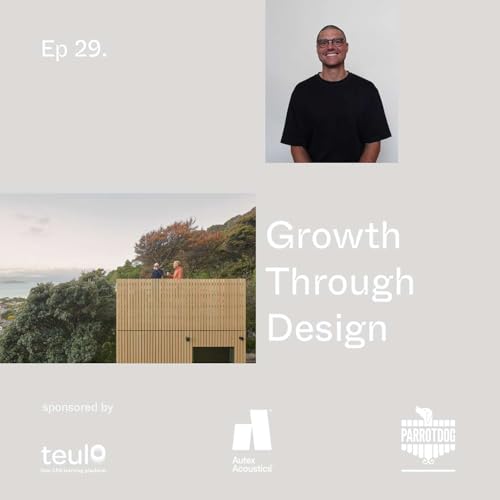
  • Growth Through Design: An Architectural Evolution
    Aug 29 2025

    Send us Fan Mail

    The path to finding your architectural voice isn't a straight line—it's a series of experiments, failures, resets, and breakthroughs. Sam Brown, founding director of Arête Architects, takes us on a candid journey through his evolution as a designer and the growth of his practice.

    Starting with foundational experiences at Victoria University, Mason Wales, and Foster Melville Architects, Sam reveals how these early influences shaped his approach before launching his own practice in 2021. Rather than immediately establishing a signature style, Arête began with experimentation, allowing real-world projects to guide their development. The breakthrough came when budget constraints forced them to rethink conventional approaches, leading to a deep exploration of modular design using structurally insulated panels (SIPs).

    What makes Sam's perspective particularly valuable is his willingness to recognize when a design direction has run its course. After successfully developing a family of modular projects—from the Restricted Section to The Dart—Arête deliberately sought new challenges rather than continuing to refine a proven formula. This strategic reset prevents creative stagnation and pigeonholing, allowing the practice to maintain versatility while building a diverse portfolio.

    Beyond their bespoke work, Arête developed SIPtris, a series of high-performance modular homes available as products—asking what if warm, dry, energy-efficient homes weren't a premium option but the default for everyone? Throughout their various explorations, one principle remains constant: the integration of performance and aesthetics from day one.

    Sam's approach offers a powerful metaphor: your design mind is like a muscle that requires varied exercise. By embracing experimentation, learning from failures, and knowing when to reset, architects can build practices that remain fresh, relevant, and deeply connected to both client needs and environmental responsibilities. What design muscle are you exercising today?

    Video link with slides here - https://youtu.be/auPJcFL_FcM

    https://www.aretearchitects.co.nz/

    Please Like and Subscribe it really helps :)

    Follow us on @designpriciplespod on Instagram and if you wish to contact us hit our DMs or our personal pages. We love to hear from you it really encourages us to keep going and the ideas and feedback we get from the listeners is awesome!

    Show More Show Less
    57 mins