CILIP Scotland Podcast cover art

CILIP Scotland Podcast

CILIP Scotland Podcast

By: CILIPS Admin
Listen for free

We are the Chartered Institute of Library and Information Professionals in Scotland, and believe that libraries and quality information are essential in Scotland, now more than ever. Our vision is of a nation where the vital value of library and information professionals is recognised everywhere, and where our members are empowered to continue developing their innovative skills and knowledge.

Join the CILIP Scotland team as we invite guests and discuss topics surrounding the Library and information sector. As our members lie at the heart of what we do, we want to delve into the topics that matter to you, and provide guidance and support- with a lot of fun too!

The team consists of Sean McNamara (Head of CILIPS), Kirsten MacQuarrie (Membership Officer for CILIPS), and Leah Higgins (CILIPS Graduate Trainee).

Thanks for tuning in! If you'd like to get in touch to be a guest, or to suggest a topic for the team to discuss, please email admin@cilips.org.uk.

Give us a follow on our socials too!

Instagram: @cilip_scotland

Twitter: @CILIPScotland

Website: www.cilips.org.uk

CILIPS Admin
Economics Management Management & Leadership
Episodes
  • Open Shelf Episode 1: Feminist Librarianship
    Aug 21 2026

    The Open Shelf podcast episode is brought to you by the University of Glasgow Impact Acceleration Fund.

    Host Dr David McMenemy, Professor of Information Ethics and Policy at the University of Glasgow (formerly Reader of Information Studies) welcomes guest Kirsten MacQuarrie, Sector Development Manager at CILIPS and Editor of Feminist Librarianship: Principles, Practices and Provocations (Facet Publishing).


    2026 saw the publication of Feminist Librarianship and in this episode, Kirsten and David converse on the various themes of the book, which sees contributions from over 20 women across the Library and Information sector and beyond. The first of its kind to take a look at women’s work in the sector in the UK the book explores many topics from attachment theory and eco feminism to imposter syndrome. Intersectional theory practiced throughout the text allows different facets and experiences to be shared and reflected on by the women working on the front lines.

    This conversation delves into the systemic biases at play for women in the sector and explores how this has been dealt with historically, and how it impacts on the sector contemporarily. As a steadfast advocate for the profession, Kirsten often shares that an investment in libraries is an investment in women, this podcast captures Kirsten’s reflections on this rallying cry and provides practical insights into how we can make the sector a more hospitable place for women’s contributions.

    Reflections from CILIPS colleagues and contributors Leah Higgins and Sean McNamara highlight the need for allyship and widening the conversation to include a range of perspectives from all experiences.

    Listen now to this powerful conversation!

    Music is by AleXZavesa from Pixabay.


    Show More Show Less
    1 hr and 12 mins
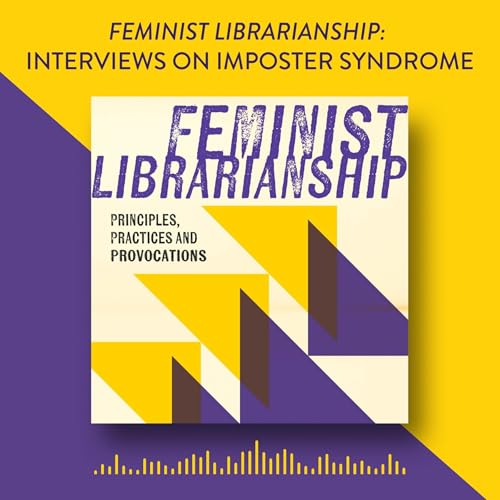
  • Feminist Librarianship - Interviews on Imposter Syndrome
    Mar 30 2026
    Feminist Librarianship - Notes on Imposter SyndromeThis podcast episode accompanies chapter 17, Notes from a New Professional II: Interviews on Imposter Syndrome, from the book Feminist Librarianship, written and produced by Leah Higgins. The chapter shines a light on the perspectives and experiences of seven women working in the library and information sector (or adjacent) fields, and how they have experienced and navigated the conversations around imposter syndrome. For a sector that is majority female, it seems implausible that so many of us consistently experience those negative self thoughts, projective oppressions and systemic biases that are labelled as ‘imposter syndrome’ a term which some feel ‘medicalises women’s normal feelings.’ Many threads are examined within this chapter including the systems at play attempting to keep women in a passive and overlooked state, one in which inequalities are deepened by intersectional factors such as education, class, race, sexuality, neurodiversity and more. Librarians as professionals exist to support communities and serve requests, and in addition to this scope can be very niche subject specialists - this chapter examines some of the features of this sector that exploit or lessen the impacts of imposter syndrome through the voices of women who have actually lived it. Is it something that you can grow out of or beat using extra qualifications or working harder? Are new professionals or the National Librarian of Scotland immune to these feelings? There are no right or wrong answers in this discussion, only lived experiences and perspectives that have been woven together to provide support, relief and methods to overcome these challenges. With thanks to the podcast contributors Chaeli Brown, Jennifer Findlay, SarahLouise McDonald, Gill Ryan, Amina Shah. About Feminist LibrarianshipBuy your copy here: https://www.facetpublishing.co.uk/page/detail/feminist-librarianship/?k=9781783308033Women constitute 75% of library and information workers and yet their achievements and contributions to the LIS sector are often unspoken, overlooked and undervalued in every sense.This agenda setting book - the first of its kind in the UK - combines case studies from libraries of all sectors to illuminate the feminism-infused principles and practices that shape the profession. With powerful, thought-provoking contributions from more than twenty feminist thought leaders and librarians, the book articulates the strong link between libraries and female empowerment, evidencing the case that investment in libraries is an investment in women. At once a reappraisal of the centrality of women within libraries and a call to arms for their acknowledgement, this is an urgent, inspiring and essential book for all LIS professionals.Articles and resources mentioned in the episodeA Side Effect of Becoming by Plain View.Burey, J. and Tulshyan, R. (2021) For Many Women, Feeling Like an Outsider Isn’t an Illusion – It’s the Result of Systemic Bias and Exclusion, Harvard Business Review, 11 February, https://hbr.org/2021/02/stop-telling-women-they-have-imposter-syndrome.Hazelwood, J. (2023) Here’s Why We Must Stop Telling Black Women They Have ‘Imposter Syndrome’, Her Agenda, 5 June, https://heragenda.com/p/imposter-syndrome-among-black-women-professionals.Lewis, O. (2023) Women More Likely to Suffer from Imposter Syndrome than Men, According to Research, Independent, 7 April, www.independent.co.uk/life-style/women-imposter-syndrome-workplace-confidence-b2313770.html.Clance, P. R. and Imes, S. A. (1978) The Imposter Phenomenon in High Achieving Women: Dynamics and Therapeutic Intervention, Psychotherapy: Theory, Research & Practice, 15 (3), 241–7.Dunn, S. (2025) Imposter Syndrome Isn’t a Personal Flaw. It’s a Systemic Issue, Time, 25 February,https://time.com/7261073/imposter-syndrome-systemic-issue-essay.Music by Tunetank from Pixabay.
    Show More Show Less
    53 mins
  • Taking Root: Scotland's Green Libraries Part Two
    Oct 7 2024
    Episode two of Taking Root: Scotland’s Green Libraries kicks off with the CILIPS Team walking the walk of environmental action, showcasing all of the different projects that we’ve played a part in supporting across the last few years. There is an accompanying Environmental Jargon sheet for this series, which you can click here to download. Helping community climate action and understanding to grow, libraries across all parts of the sector- and country!- have carried out some incredibly innovative and important work. We start with contributions from our Green Libraries Scotland grant fund holders from 2024, and hear all about the CILIPS Research fund project Carbon Literacy for Libraries shareable course from the National Library of Scotland. And more! We end the episode with a discussion about the future of libraries, what we know can grow in the future and what is at stake if we don’t receive proper and sustained funding. It is a true call to action to politicians and decision makers to advocate and protect libraries, as climate action is just one of many exceptionally important strands which libraries water into their communities to help them grow. You can click here to see our Eco-feminism book recommendations in the GWL Catalogue! With special thanks to Julie Corcoran & Imogen Furlong from High Life Highland, Gillian Hunt from North Lanarkshire Libraries, Laragh Quinney & Julie Bon from the National Library of Scotland, Christina Riley from the Nature Library and Annika Norrvik from Glasgow Women's Library for playing a part in this story! Episode 2 Resources: Green Libraries Scotland projects: https://www.cilips.org.uk/gl-grant/ Highlands and Islands Climate Hub mentioned by Imogen: https://hiclimatehub.co.uk/ Libraries as Agents of Sustainability Thinking in Scotland funded by the CILIPS Research Fund: https://www.cilips.org.uk/sustainable-future/ Carbon Literacy Shareable Course funded by the CILIPS Research Fund: https://www.cilips.org.uk/cilips-research-fund/ Email Kirsten.Macquarrie@cilips.org.uk to join the Green Libraries basecamp. Green Libraries Manifesto: https://www.cilip.org.uk/page/GreenLibrariesManifesto Green Libraries Week: https://librariesweek.org.uk/ Music credit: Music by Olexy from Pixabay Don’t forget to Subscribe! Thanks for tuning in! If you'd like to get in touch to be a guest, or to suggest a topic for the team to discuss, please email admin@cilips.org.uk. Follow us on our socials too, where you can find updates for Scotland’s Libraries: Instagram: @cilip_scotland ( / cilip_scotland ) LinkedIn: CILIPS (www.linkedin.com/company/70704570) Website: www.cilips.org.uk (https://www.cilips.org.uk/)
    Show More Show Less
    54 mins
adbl_web_anon_alc_button_suppression_t1
No reviews yet
In the spirit of reconciliation, Audible acknowledges the Traditional Custodians of country throughout Australia and their connections to land, sea and community. We pay our respect to their elders past and present and extend that respect to all Aboriginal and Torres Strait Islander peoples today.