• Ep 574 Buy at 5x, Sell at 10x, inside a $200M exit
    Nov 27 2026

    At 29, Kory Mitchell and his brother bought their father's asbestos abatement business for nothing more than the retained earnings sitting in the company, about two times cash flow. From there they bought smaller companies for five times EBITDA or less, including one they acquired for its $100,000 tax bill. Then they stitched the pieces into a platform that sold in 2021 for $200 million, close to 10 times EBITDA.

    Mitchell is unusually candid about the mechanics. He explains how he structured each acquisition, why he merged with a peer backed by a family office that operated like a private equity fund, and which critical decision he came to regret. He also describes life inside a PE-backed juggernaut, including the stretch that almost killed him.

    Show More Show Less
    1 hr and 17 mins
  • Ep 573 32x EBITDA for a Bootstrapped Magazine With 20 Staff
    Nov 20 2026

    Andrew Scott launched Business Leader in 2012 as a side venture to promote his marketing agency. He knew nothing about publishing. He bootstrapped the magazine, the awards and the events with a shared team, and by the time it reached 100,000 readers it had become a successful business in its own right. Then Sir Richard Harpin, fresh off selling HomeServe for £4.1 billion, called and said he wanted to buy it. Andrew told him it wasn't for sale. Harpin came back with an offer worth roughly 20 times EBITDA. Andrew turned it down. The final deal closed at 32 times EBITDA.

    Show More Show Less
    54 mins
  • Ep 572 Selling Freshly to Nestle for $1.5B and Keeping $100M
    Nov 13 2026

    Every founder faces a choice at some point: own all of a business you can finance yourself, or give up most of it to raise the capital for something much bigger. Mike Wystrach chose the second path. He co-founded Freshly in 2012, raised more than $100 million in venture capital and another $50 million in venture debt, and by the time Nestle acquired the company for $1.5 billion in 2020 he owned just under 10 percent. He walked away with roughly $100 million.

    Mike learned the mechanics of a venture term sheet while he was negotiating one, and in this episode he breaks down the terms that sit behind a headline valuation and decide what a founder actually keeps if they take outside money.

    Show More Show Less
    58 mins
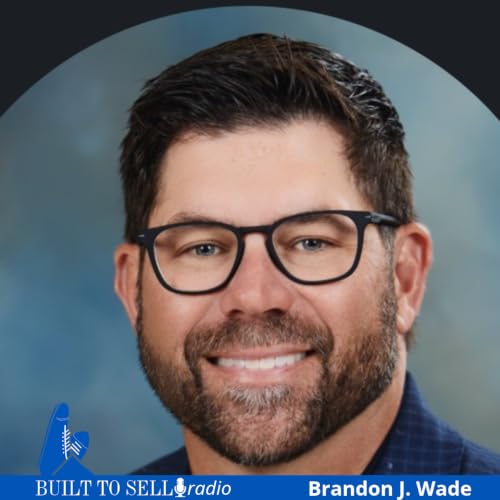
  • Ep 571 9.5x EBITDA for a Distributor (PE Offered 5x) with Brandon Wade
    Nov 6 2026

    Brandon Wade was 25 and three years into a career at PricewaterhouseCoopers when his father called to ask if he would come home and help him run the family's propane company in southern Illinois. The business had five employees and was still handwriting checks. Over the next 19 years, Brandon bought his way from 15% of the equity to 51%, grew to 7,000 customers and $10 million in revenue, and built the largest independent propane distributor in the state.

    Propane is about as close to a pure commodity as it gets, and the private equity firms circling the industry priced it that way, at roughly five times EBITDA. In 2022, Brandon sold the operating business to four members of the GrowMark network of farm co-ops for 9.5 times, keeping the real estate for himself.

    Show More Show Less
    1 hr and 4 mins
  • Ep 570 Why Exited Founders Lose Money Investing with Justin Donald, The Lifestyle Investor
    Oct 30 2026

    The traits that make someone a great entrepreneur are the same ones that get them into trouble once they sell. Optimism, conviction, the belief that any problem can be solved with enough effort. Those instincts build a company. Pointed at an investment, they lose money.

    Justin Donald has seen it happen to exited founders again and again. Justin built a mobile home park portfolio that covered his cost of living by 34, wrote the Wall Street Journal bestseller The Lifestyle Investor, and now studies how single family offices allocate serious money. He joins John Warrillow for the latest After the Deal episode of Built to Sell Radio, the series about making the most of life after a sale while avoiding the biggest mistakes founders make once the money lands.

    Show More Show Less
    55 mins
  • Ep 569 35 Employees, 4 PE Offers, and the Staff Reaction That Burned a Hole in His Soul
    Oct 23 2026

    Have you ever considered how you would tell your employees you've sold your business? It's one of the conversations most founders fear. You hope your employees will be happy for you, but you also worry some will view you as a sellout.

    Dr. Michael Filosi experienced the entire spectrum of reactions when he told his 35 employees he had sold his dental practice, the biggest in Adelaide, to private equity. While he had some congratulations, he also had one team member walk out saying "that's a bit disappointing," and another who wouldn't meet his eye for three days.

    Show More Show Less
    1 hr and 11 mins
  • Ep 568 Walked Away From $38M, Sold to Fiverr for $91M
    Oct 16 2026

    Lior Pozin started AutoDS to run his own eBay dropshipping stores. The software finds trending products to sell, tracks supplier price and stock changes, and fulfills orders automatically so a dropshipper never touches the inventory. He bootstrapped the company for eight years, keeping the bank balance at zero on purpose, and grew it to 200 employees and more than $20 million in annual recurring revenue. Along the way he turned down a $38 million private equity offer one day before signing, and still ended up selling to publicly traded Fiverr for roughly $55 million in cash plus a $36 million earnout.

    In this episode of Built to Sell Radio, Lior walks through what made him kill the private equity deal, why he chose Fiverr over higher bids, and how the earnout changed the way he ran the business.

    Show More Show Less
    58 mins
  • Ep 567 Rejected at 4x, Sold for 8 Figures: The Growth Mistake That Nearly Cost Jim Fitzgerald Half His Exit
    Oct 9 2026

    Jim Fitzgerald bootstrapped Taradel from a spare bedroom into a $30 million direct mail company. In 2016 he took the business to market, and the five buyers who made it to an indication of interest all offered roughly 4x EBITDA, about half of what Jim had in mind. He had spent years reinvesting every dollar in growth, and the market told him growth alone wasn't enough.

    So Jim rebuilt his company around profit. He started pulling cash out of the business so it couldn't be poured back in, and built a leadership team that could operate without him. When he went back to market, 120 teasers produced nine indications of interest, seven management presentations in two days, and a low eight-figure sale, all cash.

    Show More Show Less
    1 hr and 8 mins