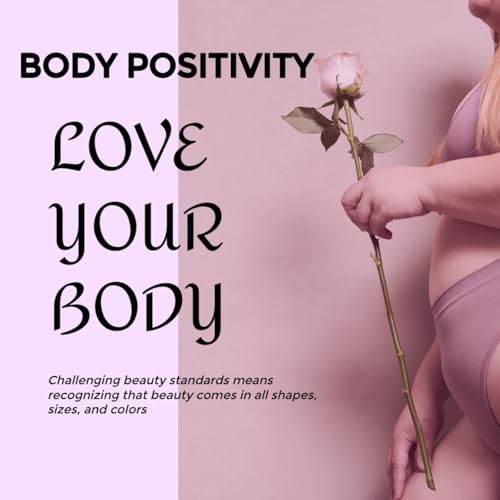
Body Positivity. cover art

Body Positivity.

Body Positivity.

By: AudioBooks
Listen for free

About this listen

Body Positivity.
Body positivity is a social movement that promotes a positive view of all bodies, regardless of size, shape, skin tone, gender, and physical abilities. Proponents focus on the appreciation of the functionality and health of the human body instead of its physical appearance.
This is related to the concept of body neutrality, which posits that a person's bodily appearance should have the least possible effect on their experience of life.
Viewpoints:
Body-positive advocates argue that body size—alongside race, gender, sexuality, and physical ability—is a key dimension through which individuals are socially valued or marginalized. Judgments about physical appearance, they contend, implicitly position individuals on a hierarchy of desirability, shaping their access to social power and influence. The movement seeks to challenge unrealistic standards of attractiveness, promote positive body image, and foster greater self-confidence. A central tenet of the movement is that beauty is a social construct and should not dictate an individual's confidence or sense of self-worth. It encourages people to cultivate self-love by not only accepting but actively embracing their physical characteristics.
Body positivity has roots in the fat acceptance movement and organizations such as the National Association to Advance Fat Acceptance. While fat acceptance primarily advocates for individuals classified as overweight or obese, body positivity is broader in scope, promoting inclusivity across all body types. The movement asserts that neither fat-shaming nor skinny-shaming is acceptable, and that all bodies can—and should—be celebrated.
Although body positivity is often associated with the celebration of physical appearance, many women also advocate for the normalization of body hair, bodily functions, and menstruation, challenging societal expectations surrounding female embodiment.[
Copyright AudioBooks
Hygiene & Healthy Living Personal Development Personal Success
Episodes
  • 22 - Notable Figures and Organizations.
    Apr 10 2026
    Notable Figures and Organizations.
    Early Pioneers and Influential Texts.
    Bill Fabrey, an engineer, founded the National Association to Aid Fat Americans (NAAFA) in 1969 after observing discrimination against his wife Joyce, establishing the organization as an early advocate for fat acceptance by challenging societal stigma and promoting civil rights for larger individuals. NAAFA's efforts focused on combating bias in employment, healthcare, and public spaces, laying groundwork for community support networks that emphasized self-acceptance over weight loss.
    In 1973, the Fat Underground, a radical feminist group in Los Angeles led by Judy Freespirit and Aldebaran (Sara Fishman), published the Fat Liberation Manifesto, framing fatness as a form of oppression intertwined with patriarchy and capitalism, particularly critiquing the diet industry as exploitative and linking body size to women's subjugation. The manifesto demanded an end to fat shaming and promoted pride in larger bodies as resistance to beauty standards, influencing subsequent activism by portraying fat discrimination as a civil rights issue akin to other feminist struggles.
    Susie Orbach's 1978 book Fat Is a Feminist Issue argued that women's overeating stemmed from internalized patriarchal controls on appetite and autonomy, advocating therapy groups to address emotional roots rather than dieting, which sold widely and inspired fat acceptance workshops across the UK and US. These pioneers fostered supportive communities that reduced some social isolation for fat individuals, yet their core assertions—that fatness posed no inherent health risks or could be decoupled from biological consequences—have faced empirical refutation, as longitudinal data consistently links higher body mass to elevated morbidity and mortality independent of stigma reduction efforts.

    Contemporary Advocates and Groups.
    Tess Holliday, a plus-size model and prominent fat acceptance advocate, has continued to promote body positivity and fat liberation in the 2020s through social media campaigns and public statements rejecting weight loss pressures. In April 2025, she discussed the impact of GLP-1 receptor agonist drugs like Ozempic on the movement, arguing that such medications reinforce anti-fat stigma rather than addressing systemic biases. Holliday's activism includes calls to dismantle "fatphobic logics of health," positioning fatness as compatible with fitness and empowerment, though her personal experiences with online harassment have highlighted internal tensions within body positivity circles.
    Other influencers, such as Tess Royale Clancy, have centered "fat joy" in 2025 advocacy efforts, using platforms to reject stigma associated with larger bodies and critiquing brands for diluting body positivity into less radical inclusivity. These figures often frame fat acceptance as a form of resistance against societal norms, with campaigns emphasizing self-acceptance over health interventions. However, experimental research indicates that body positivity messaging may reduce weight loss intentions more among individuals with higher BMIs compared to weight bias-focused appeals, potentially reinforcing stasis in obesity prevalence.
    The National Association to Advance Fat Acceptance (NAAFA), founded in 1969 but active into the 2020s, organizes events like Fat Liberation Month in August 2024, featuring virtual brunches, Gen-Z affinity spaces, and drag story hours to foster community and combat size discrimination. NAAFA's 2024 newsletter emphasized intersectional fat joy and opposition to biases in policy and culture, including healthcare settings where "fat-shaming" is portrayed as a barrier to equitable treatment. The group advocates for ending weight-based discrimination through education and legal challenges, though its volunteer-driven model relies on member support amid declining participation noted in broader movement shifts.
    The Association for Size Diversity and Health (ASDAH) promotes the Health at Every Size (HAES) framework, which prioritizes intuitive eating and joyful movement over weight reduction, influencing healthcare providers and educators in the 2020s. ASDAH's resources target dismantling weight-centered paradigms, claiming that size inclusivity improves outcomes without BMI-focused interventions, and it maintains directories of HAES-aligned professionals. In response to rising use of weight-loss drugs, ASDAH and similar groups have campaigned against medical "fat-shaming," arguing in 2024-2025 statements that such practices exacerbate stigma rather than health, despite epidemiological data linking higher BMIs to elevated risks independent of bias perceptions.


    This episode includes AI-generated content.
    Show More Show Less
    5 mins
  • 21 - Societal and Cultural Impacts.
    Apr 10 2026
    Societal and Cultural Impacts. Influences on Media, Fashion, and Consumer Culture. The Dove Campaign for Real Beauty, initiated in 2004, prominently featured women across body sizes in advertisements, marking an early corporate embrace of messages aligned with fat feminist critiques of slender-centric ideals and correlating with an 11% sales increase for the brand in subsequent years. This approach influenced broader advertising shifts, with brands like Aerie and Nike incorporating plus-size models by the mid-2010s to expand market reach, though analyses describe such efforts as primarily revenue-oriented rather than transformative. In fashion, fat feminism contributed to a boom in plus-size offerings, with the global market valued at $314.5 billion in 2024 and projected to grow at a 3% CAGR through 2030, driven by expanded lines from retailers such as Torrid and Savage X Fenty. U.S. plus-size clothing sales rose 6% to $21.4 billion in 2016 alone, outpacing general apparel growth, as designers responded to demands for sizes 12 and above in mainstream collections. Critics, however, argue this expansion exemplifies commercialization, where ideological appeals to acceptance generate profits without addressing production biases toward profitable "mid-plus" sizes (14-16) over truly obese representations. Media visibility for diverse body sizes grew in the 2010s, with fat feminist advocacy prompting more inclusive casting in outlets like Vogue and Netflix series, yet empirical reviews reveal ongoing weight bias, including stereotypical portrayals of overweight characters as comic relief or morally flawed. By the 2020s, articles in publications like Ad Age documented backlash, with brands scaling back body-positive ads amid consumer fatigue and health-focused critiques that highlighted the movement's tendency to sideline obesity risks. Consumer culture adapted with "fat-friendly" innovations, including ergonomic furniture and size-extended beauty tools, paralleling the plus-size market's surge to over 12,000 U.S. stores by 2023. Despite these developments, U.S. adult obesity rates rose from 30.5% in 1999-2000 to 40.3% in 2021-2023, with no observed decline linked to cultural diversification efforts. This persistence indicates that enhanced representations fostered acceptance without correlating to reduced body mass index trends or behavioral shifts toward leanness. Effects on Education, Policy, and Public Health. In higher education, fat studies has emerged as an interdisciplinary field integrated into curricula at institutions such as Harvard University, Toronto Metropolitan University, and the University of Maryland, where courses examine fatness as a form of oppression intersecting with other social injustices, often framing weight bias as a barrier to equity rather than addressing physiological health determinants. These programs emphasize social constructionist perspectives, critiquing medical models of obesity while promoting body acceptance, though empirical evaluations of their long-term impacts on student health behaviors remain limited. In K-12 settings, anti-bullying initiatives have increasingly incorporated protections against weight-based harassment, with research indicating that explicit inclusion of body size in school policies correlates with reduced educator weight bias; however, many programs overlook the prevalence of weight as the top bullying target—exceeding ethnicity or orientation—and fail to balance stigma reduction with evidence-based obesity prevention education. Policy responses influenced by fat acceptance advocacy include Michigan's Elliott-Larsen Civil Rights Act of 1976, the only U.S. state law explicitly prohibiting employment, housing, and public accommodation discrimination based on weight alongside height, extending protections to over 40% of adults facing such bias. Critics argue these measures overlook obesity's causal links to chronic diseases, potentially exacerbating fiscal burdens like the estimated $147 billion to $210 billion in annual U.S. medical costs, a substantial portion absorbed by Medicare through higher expenditures on comorbidities such as diabetes and cardiovascular conditions. Such policies may inadvertently stall anti-obesity initiatives by framing weight interventions as discriminatory, despite evidence that weight stigma interventions alone do not consistently improve BMI outcomes and can complicate targeted prevention efforts. In public health, the Health at Every Size (HAES) paradigm—advocating weight neutrality, intuitive eating, and size inclusivity—has gained traction in select guidelines and interventions, with studies showing short-term feasibility for enhancing well-being irrespective of body size. This approach contrasts sharply with the World Health Organization's position, which identifies obesity as a major risk factor for type 2 diabetes, heart disease, and certain cancers, recommending calorie reduction, ...
    Show More Show Less
    6 mins
  • 20 - Intersections with Other Movements.
    Apr 10 2026
    Intersections with Other Movements. Alliances with Racial and Ethnic Justice. Fat feminism has intersected with racial and ethnic justice movements through efforts to address how body size discrimination compounds racialized beauty standards, particularly in collaborations with Black feminist critiques of Eurocentric ideals. Organizations like the National Association to Advance Fat Acceptance (NAAFA) have promoted inclusivity by hosting events such as webinars on building community for fat women of color, emphasizing intersections of fatness, gender, and race. NAAFA has also committed to anti-racist principles, reflecting on Black leadership in fat liberation and integrating diversity, equity, and inclusion (DEI) frameworks that include body size alongside racial justice goals. These alliances draw from Black womanist traditions, which critique mainstream feminism for overlooking how fat phobia disproportionately affects women of color by reinforcing norms that pathologize non-white body types. Empirical data on obesity prevalence reveals disparities that complicate fat feminism's anti-stigma narratives in racial justice contexts: non-Hispanic Black women exhibit obesity rates of 56.9%, compared to 39.8% for non-Hispanic white women, according to National Institute of Diabetes and Digestive and Kidney Diseases (NIDDK) analyses of recent health surveys. These elevated rates among minority groups, corroborated by Centers for Disease Control and Prevention (CDC) reports showing non-Hispanic Black adults with the highest overall prevalence, underscore causal factors like socioeconomic inequities and dietary patterns rather than mere bias, challenging universal claims of fat acceptance that downplay health correlations with body size. Tensions arise from critiques that fat feminism and body positivity often recenter white experiences, marginalizing women of color by framing fat acceptance through lenses that prioritize lighter-skinned, less curvaceous ideals historically critiqued in Black feminism. A 2022 analysis of the body positive movement on social media found that despite inclusivity intentions, representations remain dominated by young, white, able-bodied figures, perpetuating a "monolithic fat narrative" that overlooks racialized oppressions. Scholars in Black studies argue for deeper engagement with fat studies to disrupt the hyper-visibility of thin white norms while addressing how fat Black women's bodies are rendered invisible or stereotyped, highlighting failures to fully integrate ethnic-specific justice without diluting empirical realities of disparate health outcomes. Connections to Queer and Disability Activism. Fat activism has drawn parallels with queer movements by positioning fat embodiment as a form of non-normative identity challenging heteronormative and thin-centric beauty standards, particularly within lesbian communities during the late 20th century. In the 1970s and 1980s, "fat dyke" groups emerged as a response to exclusion from mainstream lesbian feminist spaces, where fat women faced stigmatization despite shared critiques of patriarchal norms; these networks fostered visibility through zines, events, and manifestos that linked fatness to queer resistance against body policing. By the 1990s, collectives like the FaT GiRL zine collective amplified this synergy, creating spaces for fat queer women to explore intersections of size, sexuality, and activism, thereby increasing representation in queer subcultures. Connections to disability activism often invoke the social model of disability, which reframes impairments as products of societal barriers rather than inherent deficits, analogous to how fat activism via Health at Every Size (HAES) paradigms treats obesity as a neutral bodily variation subject to discrimination rather than a pathological state requiring medical intervention. HAES, developed in the 2000s from fat acceptance efforts influenced by disability rights advocacy, promotes weight neutrality and critiques weight-based oppression in ways that echo disability justice calls for accommodation over "cure." These alliances have yielded gains in visibility, such as joint campaigns against ableist and fatphobic policies in healthcare and public spaces. However, critics argue that equating fatness to disability overlooks key biological distinctions: unlike many immutable or congenital disabilities, obesity frequently correlates with modifiable behavioral factors like diet and activity, rendering parallels strained and potentially diluting advocacy for inherently non-volitional conditions. This viewpoint holds that while stigma exists, framing elective weight retention as akin to disability risks conflating choice-influenced states with fixed traits, a position substantiated by epidemiological data linking obesity to reversible risks absent in most disabilities. Tensions in Intersectional Applications. Fat feminism's intersectional framework, which ...
    Show More Show Less
    8 mins
No reviews yet
In the spirit of reconciliation, Audible acknowledges the Traditional Custodians of country throughout Australia and their connections to land, sea and community. We pay our respect to their elders past and present and extend that respect to all Aboriginal and Torres Strait Islander peoples today.