• Before Silicon Valley: How Guild Halls and Skilled Trades Drove Innovation
    Dec 21 2025
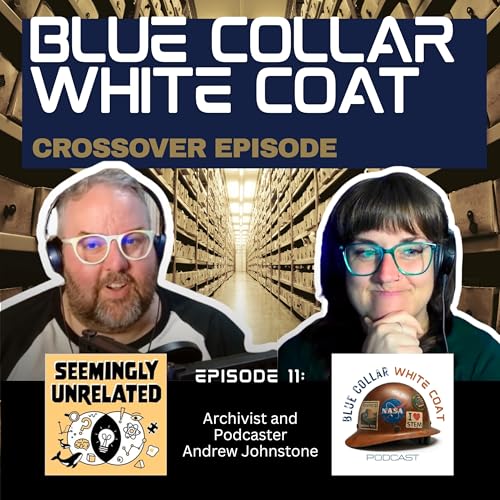
    Special crossover episode with Seemingly Unrelated

    What do medieval guild halls and the first mechanized loom have to do with modern science?

    In this special crossover episode, Blue Collar | White Coat teams up with Seemingly Unrelated host Andrew Johnstone to explore how knowledge has always been built, shared, and preserved through skilled, often invisible labor. From guild halls and tradespeople to archives and technicians, this conversation traces the human infrastructure that makes discovery — and history — possible.

    Andrew brings his archivist's perspective (and a talent for sneaking history lessons into great stories) to a wide-ranging conversation about how ideas move through time, who decides what gets preserved, and why so much of the work that underpins science and culture goes unseen.

    If you've ever wondered how history survives, how trust in institutions is built, or why blue collar work has always been essential to progress — this one's for you.

    This episode is a crossover with Seemingly Unrelated, hosted by Andrew Johnstone.

    Seemingly Unrelated explores surprising connections between history, culture, and the present day — often starting from one small question and spiraling into something much bigger. Andrew is also an archivist, bringing deep firsthand experience with the behind-the-scenes work of preserving history.

    Andrew also provided historical research support and fact-checking for this episode.

    Check out Seemingly Unrelated:

    • Podcast: https://shows.acast.com/seemingly-unrelated

    • YouTube: https://www.youtube.com/channel/UC9Qm06cYYzYJ4xzHTfqrryQ

    • Patreon: https://www.patreon.com/cw/SeeminglyUnrelated

    • Social media: @seeminglyunrelatedpod

    Blue Collar | White Coat tells the stories of the everyday people whose work makes science, technology, and discovery possible — especially the skilled and often invisible labor behind the scenes.

    Watch full video episodes on YouTube:
    https://www.youtube.com/@BlueCollarWhiteCoat

    Follow us on social at @bluecollarwhitecoatpod or email guest ideas and feedback to
    bluecollarwhitecoatpod@gmail.com

    Season 2 drops late March.

    Blue Collar | White Coat is hosted, produced, and edited by Amy Weldon.
    Social media content support by Kiera Gower.
    Historical research support and fact-checking for this episode by Andrew Johnstone, host of Seemingly Unrelated.

    Show More Show Less
    1 hr and 16 mins
  • Firefighter to R&D Machinist: Kyle Luker's Blue Collar STEM Career
    Dec 7 2025

    at does science look like when you strip away the lab coats and take a peek behind the equipment? In this episode of Blue Collar | White Coat, we meet Kyle Luker — a machinist, welder, former firefighter, and self-taught problem-solver whose hands quietly keep research moving forward. From wildland firefighting to managing an R&D machine shop at a major university, Kyle's winding path into the world of academic science is a reminder that discovery depends on far more than degrees and data.

    Kyle shares how he learned to weld in the field, why TIG welding feels like meditation, and how he eventually became the person scientists call when their experiments require something that has never been made before. Along the way, he breaks down the often unseen relationship between engineers and tradespeople, the hidden labor behind every experiment, and why practical experience is just as essential to innovation as theory.

    If you've ever wondered who actually builds the equipment that makes scientific breakthroughs possible — or if you're curious about unconventional paths into STEM — this episode will change the way you see scientific work.

    Show More Show Less
    1 hr and 16 mins
  • From Lab to Legislation: Training Scientists to Influence Policy
    Nov 16 2025
    In Episode 9 of Blue Collar | White Coat, Amy sits down with Robin Garcia, a former federal worker and now a professional science communications trainer with Compass Science Communication. Robin's career has taken her from marine biology labs to NOAA to Capitol Hill workshops — and in this episode, she breaks down exactly why communicating science effectively to Congress, policymakers, and everyday non-experts is more crucial than ever. We cover everything from shrimp-on-a-treadmill headlines to the realities of federal budgets, policy briefings, fellowships, science education, burnout in research, and why scientists so often struggle to translate their work outside of academia. Robin also shares a behind-the-scenes look at how she prepares scientists to speak with members of Congress and what policymakers actually need from experts when making funding decisions. If you've ever wondered how science moves from the lab bench to the halls of Congress — or why it sometimes doesn't — this episode is for you. What We Talk About in This Episode: How Robin went from marine biology to science communication Life as an aquarium intern, REU fellow, and grad student Crabs on treadmills, blue crabs, and climate impacts on marine species Why many scientists struggle with teaching and communication Working at NOAA, federal contracting, and "the power of the purse" How congressional staffers process scientific information Why scientists need simpler messages — not "dumbed down," just translated How Compass trains researchers to work with policymakers Why people assume science communication equals "media training" The rise of science communication careers in the U.S. Structural barriers to entering science (money, access, equity) Why the loudest anti-science group is not actually the largest What gives Robin hope for the future of science and policy Chapters / Timestamps 00:00 — Intro Amy sets the scene: what Congress funds, why science communication matters, and who actually understands scientific concepts on Capitol Hill. 03:42 — Reconnecting After 10+ Years Robin and Amy share the backstory of how they first met at the National Aquarium. 04:30 — "Shamu Showed Me the Light" Robin explains her early love for the ocean and the path to marine science. 06:30 — College, Chemistry, and Choosing Marine Biology Studying at the University of Miami, double-majoring, and surviving organic chemistry. 07:54 — REUs, Crabs on Treadmills, and Real Field Work A deep dive into research internships, metabolic studies, and why crustaceans need treadmills. 10:47 — Climate, Oxygen, and Estuary Life How environmental change impacts blue crabs, clams, oysters, and coastal ecosystems. 12:12 — The Hardest Job in Science: Teaching Why teaching assistantships are challenging and the difference between "knowing" and "teaching." 14:56 — From Educator to Environmental Research Robin's time teaching beach ecology and working in animal husbandry at NIH. 19:13 — Burnout in Research & Rethinking the Path Why the "aha moments" in science are so rare — and why she pivoted away from research. 20:58 — Discovering Science Communication Volunteering, building a portfolio, and learning how to translate research for non-experts. 23:47 — Joining Sea Grant & NOAA Federal contracting, budget stress, agency priorities, and working with coral reef programs. 26:28 — Palau, Coral Reefs & International Science Policy Behind the scenes of NOAA travel, jurisdictional meetings, and multi-agency collaboration. 27:51 — Who Really Works for the Government (And Why They Stay) IT staff, biologists, and federal workers choosing mission over money. 31:10 — What Compass Science Communication Does Training scientists, preparing fellows, and the key differences between experts and non-experts. 33:26 — Communicating With Policymakers How congressional offices operate, what staffers need, and why one-pagers matter. 36:12 — Bringing the Hill to the Classroom Compass' unique model of bringing in actual policy experts for workshops. 39:23 — How Policy Meetings Really Work Who to email, why contact forms go nowhere, and how to find the right staffer. 41:08 — Flip the Script: Start With the Result Why scientists must reverse the structure of academic papers when addressing the public. 43:52 — Simple, Not Simplistic Using a different "language" instead of dumbing down science. 47:37 — The Reality of Literacy Levels in America Understanding why plain language is essential — without judgment. 49:18 — Fellowships, Science Policy Careers & Early Training How fellowships bridge academia and policy, what they offer, and why they're growing. 55:22 — How Science Communication Has Changed From obscure niche to essential skill — and why communication must be baked into research. 59:08 — The Hidden Financial Barriers to Science Why research often requires unpaid labor and how that shapes who gets to become a scientist. 1:03:13...
    Show More Show Less
    1 hr and 11 mins
  • Apprentice Embalmer Michelle Tokarski: The Art and Science of Saying Goodbye(Pt. 2)
    Nov 8 2025

    What really happens behind the scenes in funeral homes? In this powerful and eye-opening episode of Blue Collar White Coat, mortician and funeral director Michelle Tokarski takes us into the world of death care — from organ and tissue donation to the art and science of embalming.

    Michelle breaks down the myths, misconceptions, and emotional realities of her work with honesty and heart. She explains what embalming truly is, why it's not always required, how funeral laws protect families, and how compassion, precision, and respect guide every step.

    This is a rare look at a profession most of us never think about until we have to — and a reminder that death work, at its core, is deeply human work.

    Chapters

    00:00 Embalming: A Personal Perspective
    04:17 Understanding Embalming Techniques
    07:06 Debunking Embalming Myths
    14:14 The Art of Embalming: Preserving Memories
    19:32 Attention to Detail: The Embalming Process
    27:09 Restoration and Repatriation: A Labor of Love
    35:51 Advice for Aspiring Embalmers: A Call to Service
    41:20 Starting a Career in Funeral Services Later in Life
    46:50 Overcoming Academic Challenges in Mortuary Science
    52:58 Environmental Considerations in Cremation Practices
    59:29 Outro

    Watch episodes on our YouTube Channel at: https://www.youtube.com/@BlueCollarWhiteCoat

    Follow us on Instagram, Facebook and TikTok: @bluecollarwhitecoatpod

    Follow up on BlueSky: @bcwcpodcast.bsky.social

    Show More Show Less
    1 hr
  • Funeral Director Michelle Tokarski on the Art and Science of Saying Goodbye (Pt. 1)
    Nov 1 2025

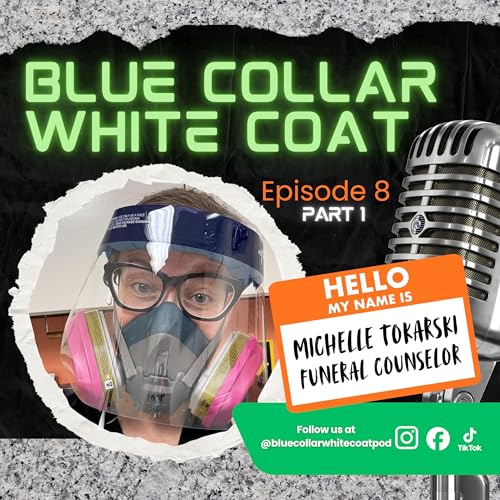
    What does death care have to do with science? A lot more than you think. In this first part of a special two-part Halloween episode of Blue Collar | White Coat, we talk with Michelle Tokarski, a California-based funeral counselor and apprentice embalmer who proves that compassion, chemistry, and cultural understanding all collide in one of the most misunderstood STEM careers.

    Michelle shares how she went from art school and customer service to caring for the dead and comforting the living. We dive into the science behind embalming, the chemistry of preservation, and the microbiology and anatomy that morticians must master—all while honoring the deeply human and cultural sides of grief.

    From the Civil War origins of modern embalming to today's diverse funeral traditions and the ethics of organ and tissue donation, this conversation reveals how funeral directors blend art, science, and empathy to help families heal.

    Whether you're STEM-curious, career-changing, or just fascinated by how science quietly shapes our daily lives, this episode will make you rethink what "science jobs" look like and who does them. Especially when Death doesn't work a 9-5.

    🎧 Listen to find out:

    • How you become a mortician and what training is required.
    • Why you should care NOW about making plans for eternity.
    • Why cultural diversity and empathy are vital in death care.

    Chapters

    00:00 Introduction to Michelle Tokarski
    03:29 Career Transitions and Life Lessons
    06:39 Finding Fulfillment in Nonprofit Work
    14:30 The Unexpected Path to Funeral Directing
    18:36 Navigating Education During a Pandemic
    24:15 Understanding the Roles: Mortician vs. Medical Examiner
    28:38 The Importance of Pre-Planning Funerals
    32:02 Planning for the Inevitable
    36:39 Cultural Sensitivity in Funerals
    41:45 The Grief of Loss
    46:26 Embalming: A Personal Perspective
    50:32 NEWCHAPTER

    Show More Show Less
    51 mins
  • Why Sharks (and social media) Matter: Dr. David Shiffman
    Oct 17 2025

    Marine biologist Dr. David Shiffman talks to host Amy Weldon about why scientists need to meet people where they are, whether that's on a fishing boat or online.


    Summary

    We're gonna need a bigger boat because marine biologist, shark scientist and social media expert Dr. David Schiffman is taking us out to sea on this episode of Blue Collar White Coat! We get into the importance of shark science, the impact of poor media representations (looking at you, Shark Week) and the need for effective communication in science. In our conversation, David emphasizes the significance of diversity in the field, shares fascinating shark facts, and highlights the role of social media in science communication. We also touch on conservation efforts and the future of shark research, encouraging public engagement and awareness. Hope you're ready for shark facts because there's a ton on this episode of Blue Collar White Coat!

    Find David on Instagram, Facebook and BlueSky @whysharksmatter

    Buy his book Why Sharks Matter

    And check out his website for information on his seminars, workshops, and public outreach programs here: https://davidshiffmancv.com/

    Show More Show Less
    58 mins
  • Why Curiosity Beats Perfection in Science — Lessons from the Deep with Marley Parker
    Oct 4 2025

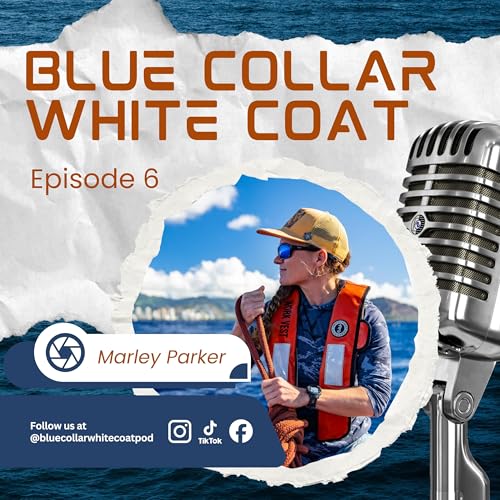
    What happens when you're told you'll never succeed in science because of an ADHD-type learning disorder? In this episode of Blue Collar | White Coat, Amy talks with Marley Parker, an underwater photographer and freelance science communicator who proves there's more than one way to belong in STEM. From documenting deep-sea expeditions to navigating freelance life with dyscalculia, Marley's story is about resilience, creativity, and building a science career on your own terms.

    Diagnosed early on with a math-related learning disorder, Marley was told she wasn't cut out for science. Instead, she built a career around it—telling the stories of oceanographers and researchers on the front lines of discovery. She shares how she turned setbacks into strengths, what it's really like to work at sea, and why adaptability and curiosity matter more than credentials.

    Links:

    ML Parker Media

    Marley Parker - Nautilus Live

    In this episode, you'll hear:

    • How Marley turned dyscalculia into a creative strength

    • The realities of underwater photography and expedition storytelling

    • Tips for managing freelance work with ADHD

    • What deep-sea research teaches about teamwork and trust

    • How resilience and curiosity open doors in STEM

    🎧 Blue Collar | White Coat reveals the human stories behind science—showing that discovery depends on the hands and hearts of real people.

    Keywords: ADHD, dyscalculia, neurodiversity in STEM, women in science, science communication, underwater photographer, marine biology, freelance science communicator, Nautilus Live, ocean exploration, STEM careers, storytelling in science, creative careers in STEM

    Show More Show Less
    55 mins
  • Meet host and creator Amy Weldon
    Sep 21 2025

    In this special episode of Blue Collar White Coat, host Amy turns the mic on herself. She shares the winding path from small-town Maryland to city living and the National Aquarium, from dolphin training to science communication at a national lab, and the blue-collar roots that shaped her perspective along the way.

    Amy reflects on growing up in a working-class family, navigating ADHD and college setbacks, and finding her place in STEM storytelling. Through tales of early jobs, graduate school abroad on a budget, and the realities of animal care jobs, she reveals why this show exists: to highlight the skilled tradespeople and scientists who keep discovery moving forward. And to remind us that at the end of the day, we all have stories worth listening to.

    Show More Show Less
    35 mins