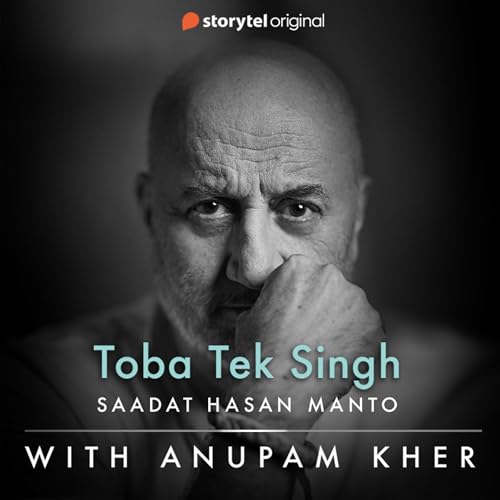
Toba Tek Singh cover art

Toba Tek Singh

Preview
Try Standard free
Select 1 audiobook a month from our entire collection.
Listen to your selected audiobooks as long as you're a member.
Get unlimited access to bingeable podcasts.
Auto-renews at $8.99/mo after 30 days. Cancel anytime.

Toba Tek Singh

By: Sadat Hasan Manto, TranslationPanacea - translator
Narrated by: Anupam Kher
Try Standard free

Auto-renews at $8.99/mo after 30 days. Cancel anytime.

Buy Now for $10.29

Buy Now for $10.29

About this listen

'Toba Tek Singh' is probably one of the most well known tragic stories about Partition written in 1954, by the legendary storyteller Saadat Hassan Manto. The story is set up around the migration of Hindu and Sikh mental asylum patients in Lahore to India. The main character, Bishan Singh came from a place called - Toba Tek Singh. He wanted to go back there but he finds out that he is being sent to India because of his Sikh identity. His emotional struggle for identity was something that was suffered by millions of partition refugees. This story raised many questions on the definition of sanity and the thin line between the 'mad' and the sane world. Though the story and the characters were fictional, the place called Toba Tek Singh still exists. It is a city in Pakistan's Punjab province. A person named Tek Singh used to help travellers and passersby by serving them water from a pond, called toba in Urdu. And that is why the place was named Toba Tek Singh. Saadat Hasan Manto was among the most famous, provocative, and controversial Urdu writers of the twentieth century. Although the story is fictional, an actual exchange of psychiatric patients between mental hospitals in Lahore and Amritsar took place in 1950.©2020 Storytel Original IN (P)2020 Storytel Original IN
No reviews yet
In the spirit of reconciliation, Audible acknowledges the Traditional Custodians of country throughout Australia and their connections to land, sea and community. We pay our respect to their elders past and present and extend that respect to all Aboriginal and Torres Strait Islander peoples today.