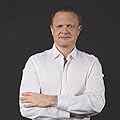
Cyril Tarquinio belongs to a generation of clinical psychologists who have made trauma, dissociation, and health psychology not only objects of research, but genuine fields of human exploration. Professor of Clinical Psychology at the University of Lorraine, he has for several years directed the Pierre Janet Center, a singular place where clinical practice, research, and training intersect. Clinicians, students, researchers, and patients—sometimes in situations of profound distress—meet there. It is a living laboratory where a significant part of his work has taken shape.
His scientific career has developed at the crossroads of several traditions: European psychopathology, the neurosciences of trauma, so-called “integrative” psychotherapies, and the careful study of the complex links between mental health and chronic illness. Early on, he became interested in the traces left by childhood violence and adversity—biological, psychological, and sometimes social imprints that persist well beyond the first decade of life. This guiding thread runs through many of his publications: dissociative disorders, the effects of complex trauma, traumatic memory, as well as pathways of recovery and resilience.
A tireless researcher, he has published more than one hundred scientific articles, several reference books, and numerous chapters in authoritative handbooks. His name regularly appears in French and European debates on the effectiveness of psychotherapies, the clinical understanding of trauma, chronic illness, and the intricate links between mind and body. He has also played a major role in establishing rigorous academic research on EMDR therapy within the French university landscape, as a practitioner, supervisor, trainer, and now one of the key institutional figures in the French-speaking European context.
His commitment extends well beyond academia. As Deputy Director of the INSPIIRE research unit (Inserm–University of Lorraine), he actively contributes to the development of interdisciplinary projects bringing together psychologists, physicians, biologists, epidemiologists, and data scientists. The objective remains constant: to understand how human experiences—both the most devastating and the most protective—shape the body, the brain, and long-term health trajectories.
In parallel, he serves as Editor-in-Chief of the European Journal of Trauma & Dissociation (Elsevier), where he promotes a demanding vision of science: rigorous, open, ethical, and firmly oriented toward a deep understanding of human experience. Through this editorial role, he plays a key part in the international dissemination of research on psychological trauma, dissociative disorders, evidence-based psychotherapies, and health psychology.
What runs through all of his work is a simple yet demanding conviction: to understand psychological suffering, one must think broadly—from the cellular level to life narratives. This holistic perspective underpins his current projects, which integrate psychotraumatology, One Health approaches, artificial intelligence, chronic illness, and translational research.
Today, Cyril Tarquinio continues to pursue this dual clinical and scientific path with unwavering consistency: advancing the understanding of trauma, training a new generation of clinician-researchers, and building care systems that are more humane, more effective, and more attuned to the complexity of patients. His work continues to open new perspectives on what a clinical psychology truly grounded in reality can be—forward-looking and deeply attentive to human experience in all its depth.
Deputy Director, INSPIIRE UMR 1319 – University of Lorraine, Inserm
Director, Pierre Janet Center – University of Lorraine
https://centrepierrejanet.univ-lorraine.fr/
Editor-in-Chief, European Journal of Trauma & Dissociation (Elsevier)
Associate Editor, Annales Médico-Psychologiques (Elsevier)
Board Member, French Society for Traumatic Stress Studies (FSTSS)
Board Member and Head of the Scientific Committee, EMDR France Association
Read more
Read less