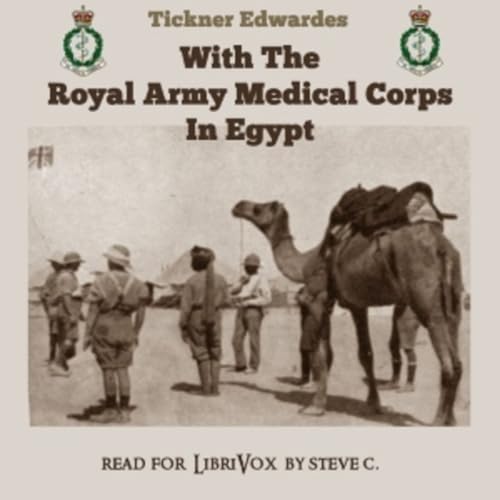
With The Royal Army Medical Corps in Egypt cover art

With The Royal Army Medical Corps in Egypt

With The Royal Army Medical Corps in Egypt

By: Tickner Edwardes
Listen for free

About this listen

During the tumultuous years of the First World War, the Royal Army Medical Corps stood as a vital lifeline for British and Allied troops, whether they were engaged in fierce battles on the frontlines or involved in various military operations across the vast theaters of war. As the conflict raged on and the battlefront expanded from Europe to the Middle East, the demand for medical support surged, necessitating the rapid establishment of extensive medical facilities to care for the increasing number of wounded, sick, and maimed soldiers needing urgent attention. The British and Allied forces swiftly commandeered buildings and repurposed them to create thousands of hospital beds, yet these resources were often overwhelmed, especially following the initial landings on the Gallipoli Peninsula in April 1915, when 16,000 wounded were received in just ten days. This poignant memoir, penned by Tickner Edwardes in 1918, offers a gripping firsthand account of his experiences as an operating theatre orderly in Egypt during the Great War. With a unique blend of keen observation and eloquent prose, Edwardes illuminates the critical roles and responsibilities of the R.A.M.C. in safeguarding the health and well-being of all personnel engaged in the arduous operations of war. - Summary by Steve CCopyright Biographies 2.0 Hygiene & Healthy Living World
Episodes
  • 21 - With The Royal Army Medical Corps in Egypt by Tickner Edwardes
    Aug 19 2025
    During the tumultuous years of the First World War, the Royal Army Medical Corps stood as a vital lifeline for British and Allied troops, whether they were engaged in fierce battles on the frontlines or involved in various military operations across the vast theaters of war. As the conflict raged on and the battlefront expanded from Europe to the Middle East, the demand for medical support surged, necessitating the rapid establishment of extensive medical facilities to care for the increasing number of wounded, sick, and maimed soldiers needing urgent attention. The British and Allied forces swiftly commandeered buildings and repurposed them to create thousands of hospital beds, yet these resources were often overwhelmed, especially following the initial landings on the Gallipoli Peninsula in April 1915, when 16,000 wounded were received in just ten days. This poignant memoir, penned by Tickner Edwardes in 1918, offers a gripping firsthand account of his experiences as an operating theatre orderly in Egypt during the Great War. With a unique blend of keen observation and eloquent prose, Edwardes illuminates the critical roles and responsibilities of the R.A.M.C. in safeguarding the health and well-being of all personnel engaged in the arduous operations of war. - Summary by Steve C
    Show More Show Less
    13 mins
  • 20 - With The Royal Army Medical Corps in Egypt by Tickner Edwardes
    Aug 19 2025
    During the tumultuous years of the First World War, the Royal Army Medical Corps stood as a vital lifeline for British and Allied troops, whether they were engaged in fierce battles on the frontlines or involved in various military operations across the vast theaters of war. As the conflict raged on and the battlefront expanded from Europe to the Middle East, the demand for medical support surged, necessitating the rapid establishment of extensive medical facilities to care for the increasing number of wounded, sick, and maimed soldiers needing urgent attention. The British and Allied forces swiftly commandeered buildings and repurposed them to create thousands of hospital beds, yet these resources were often overwhelmed, especially following the initial landings on the Gallipoli Peninsula in April 1915, when 16,000 wounded were received in just ten days. This poignant memoir, penned by Tickner Edwardes in 1918, offers a gripping firsthand account of his experiences as an operating theatre orderly in Egypt during the Great War. With a unique blend of keen observation and eloquent prose, Edwardes illuminates the critical roles and responsibilities of the R.A.M.C. in safeguarding the health and well-being of all personnel engaged in the arduous operations of war. - Summary by Steve C
    Show More Show Less
    55 mins
  • 19 - With The Royal Army Medical Corps in Egypt by Tickner Edwardes
    Aug 19 2025
    During the tumultuous years of the First World War, the Royal Army Medical Corps stood as a vital lifeline for British and Allied troops, whether they were engaged in fierce battles on the frontlines or involved in various military operations across the vast theaters of war. As the conflict raged on and the battlefront expanded from Europe to the Middle East, the demand for medical support surged, necessitating the rapid establishment of extensive medical facilities to care for the increasing number of wounded, sick, and maimed soldiers needing urgent attention. The British and Allied forces swiftly commandeered buildings and repurposed them to create thousands of hospital beds, yet these resources were often overwhelmed, especially following the initial landings on the Gallipoli Peninsula in April 1915, when 16,000 wounded were received in just ten days. This poignant memoir, penned by Tickner Edwardes in 1918, offers a gripping firsthand account of his experiences as an operating theatre orderly in Egypt during the Great War. With a unique blend of keen observation and eloquent prose, Edwardes illuminates the critical roles and responsibilities of the R.A.M.C. in safeguarding the health and well-being of all personnel engaged in the arduous operations of war. - Summary by Steve C
    Show More Show Less
    53 mins
No reviews yet
In the spirit of reconciliation, Audible acknowledges the Traditional Custodians of country throughout Australia and their connections to land, sea and community. We pay our respect to their elders past and present and extend that respect to all Aboriginal and Torres Strait Islander peoples today.