• The Unclassified Enigma of the Tully Monster
    Dec 23 2025
    Provides an overview of the Tully monster (Tullimonstrum gregarium), an extinct, soft-bodied sea creature that lived around 300 million years ago. It describes the animal as ranging from 7 to 38 centimeters in length, shaped like a melted football, and notable for its unique proboscis and stalked eyes. Fossils of the species have only been found in the Mazon Creek Fossil Beds of Illinois, making it the state fossil. Despite the discovery of over 100 specimens since 1958, scientists remain perplexed by its classification, having unsuccessfully attempted to assign it to phyla such as Mollusca, Annelida, and Chordata. Recent studies on its eyes have added further mystery, cementing the Tully monster’s status as a scientific enigma.


    You can listen and download our episodes for free on more than 10 different platforms:
    https://linktr.ee/wild_wonders1

    Produced by:
    https://www.podcaistudio.com/
    Show More Show Less
    10 mins
  • The Coffee Plant: Discovery and Effects
    Dec 22 2025
    Provides an overview of the coffee plant and the effects of caffeine on the human body. It covers the history and cultivation of coffee, including its origins in Ethiopia and its global spread, as well as botanical aspects of the Coffea species.
    The passage explains caffeine’s psychoactive properties, describing how it blocks adenosine receptors to increase alertness. It also discusses the risks of dependence, withdrawal symptoms, and potential overdose, clarifies that coffee does not counteract alcohol intoxication, and notes its additional effect as a natural laxative.

    You can listen and download our episodes for free on more than 10 different platforms:
    https://linktr.ee/wild_wonders1

    Produced by:
    https://www.podcaistudio.com/
    Show More Show Less
    8 mins
  • Mistletoe: Poison, Parasitism, and Pucker Power
    Dec 21 2025
    Provides an overview of mistletoe, highlighting both its botanical characteristics and cultural significance. It explains that mistletoe encompasses over a thousand species and is a hemiparasite, capable of photosynthesis while also extracting nutrients from host trees using structures called haustoria.
    The passage discusses mistletoe’s toxicity to humans, contrasted with its role as food and habitat for birds and insects, and notes the sticky viscin that aids in seed dispersal, often via birds. It also covers unique biological traits, such as the explosive seed dispersal seen in some dwarf mistletoes, and traces the origins of the holiday kissing tradition to Norse mythology, Celtic beliefs, and historical customs.

    You can listen and download our episodes for free on more than 10 different platforms:
    https://linktr.ee/wild_wonders1

    Produced by:
    https://www.podcaistudio.com/
    Show More Show Less
    11 mins
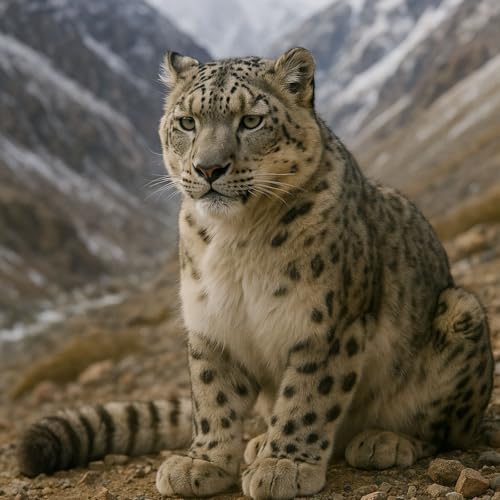
  • The Elusive Snow Leopard: Ghost of the Mountain
    Dec 20 2025
    Provides an overview of the snow leopard (Panthera uncia), often called the "ghost of the mountain." It highlights the cat’s physical adaptations for high-altitude survival, including dense fur, specialized wide paws, an enlarged nasal cavity for oxygen intake, and a thick, insulating tail that also aids in balance.
    The passage explains their classification, noting their close relation to tigers and their inability to roar. It also describes their hunting skills as efficient, opportunistic predators of wild sheep and goats. Finally, the text addresses the conservation status of snow leopards, noting they are considered vulnerable due to habitat loss and the effects of climate change.

    You can listen and download our episodes for free on more than 10 different platforms:
    https://linktr.ee/wild_wonders1

    Produced by:
    https://www.podcaistudio.com/
    Show More Show Less
    10 mins
  • Narcisse Snake Dens: Garter Snake Mating and Survival
    Dec 19 2025
    Provides an overview of the red-sided garter snakes at the Narcisse Snake Dens in Manitoba, Canada, highlighting the massive spring congregation of up to 75,000 snakes emerging from brumation to mate, making it the largest snake gathering in the world.
    It explains the geological factors that enable this phenomenon, such as the cracked limestone bedrock creating deep, warm tunnels that allow the snakes to survive the harsh Manitoba winters. The passage also describes the intense mating competition, including the skewed male-to-female ratio and behaviors like sexual mimicry, and details the snakes’ physical traits, diet, defense strategies, and reproductive habits. Finally, it notes threats to the population, such as vehicle collisions, and highlights conservation efforts, including the construction of protective tunnels.

    You can listen and download our episodes for free on more than 10 different platforms:
    https://linktr.ee/wild_wonders1

    Produced by:
    https://www.podcaistudio.com/
    Show More Show Less
    9 mins
  • The Punk Rock Desert Poplar
    Dec 18 2025
    Provides an overview of the desert poppler (Populus euphratica), a highly resilient tree native to arid regions spanning North Africa, Central Asia, and China. It highlights the tree’s ability to withstand extreme conditions, including drought, heat, and saline soils.
    The passage explains that this riparian species thrives along riverbanks, using its extensive root system to access deep underground water. It also describes unique features such as bent trunks and heteromorphic leaves. Finally, the text notes that despite the tree’s toughness, its desert forests are threatened by human activities like agriculture and deforestation.

    You can listen and download our episodes for free on more than 10 different platforms:
    https://linktr.ee/wild_wonders1

    Produced by:
    https://www.podcaistudio.com/
    Show More Show Less
    11 mins
  • The Menacing Antarctic Leopard Seal
    Dec 17 2025
    Provides an overview of the leopard seal (Hydrurga leptonyx), highlighting its physical and behavioral traits. It describes the seal’s large size, distinctive “reptilian” head, and solitary lifestyle in the frigid waters of Antarctica.
    The passage emphasizes the leopard seal’s formidable predatory abilities, including diverse hunting techniques, its capacity to filter krill with specialized molars, and its unique habit of preying on warm-blooded animals such as penguins and other seals. It also covers aspects of the seal’s reproductive cycle, vocalizations, and the potential risks to humans, while noting the impacts of climate change on its environment.

    You can listen and download our episodes for free on more than 10 different platforms:
    https://linktr.ee/wild_wonders1

    Produced by:
    https://www.podcaistudio.com/
    Show More Show Less
    9 mins
  • The Loggerhead Shrike: Avian Hellraiser and Butcher Bird
    Dec 16 2025
    Provides an overview of the loggerhead shrike, commonly known as the butcher bird, highlighting its unusual combination of songbird taxonomy and raptor-like hunting behavior. It details the bird’s carnivorous diet and distinctive hunting strategy of impaling prey on thorns or barbed wire, creating food caches called larders or pantries.
    The passage also covers the shrike’s reproductive habits and emphasizes the severe threats faced by eastern North American populations due to habitat loss and pesticide exposure. Ongoing conservation efforts aim to breed and reintroduce these birds into the wild to help stabilize their populations.

    You can listen and download our episodes for free on more than 10 different platforms:
    https://linktr.ee/wild_wonders1

    Produced by:
    https://www.podcaistudio.com/
    Show More Show Less
    11 mins