Episodes

  • Beloved by Toni Morrison Complete Audiobook
    May 18 2026
    Overview of Beloved by Toni Morrison
    Published in 1987, Beloved is a masterpiece of American literature that won the Pulitzer Prize for Fiction in 1988. It is a haunting, non-linear narrative that explores the physical, emotional, and spiritual devastation wrought by slavery, focusing heavily on the trauma of its aftermath and the psychological concept of "rememory."Core Premise & PlotThe novel is set in 1873 in Cincinnati, Ohio, focusing on Sethe, a formerly enslaved woman who lives with her teenage daughter, Denver, at 124 Bluestone Road. Their house is violently haunted by the angry, sad ghost of Sethe's third child, an unnamed baby girl whose tombstone bears only the single word: "Beloved."The Haunting of 124The narrative begins with 124 in a state of quiet siege. Sethe's sons have run away due to the ghost's violent outbursts, leaving only Sethe and Denver isolated from the rest of the community. The status quo is shattered by two arrivals:
    1. Paul D: One of the few surviving men from Sweet Home (the plantation where Sethe was enslaved). He manages to chase the chaotic spirit out of the house, offering a glimpse of a normal life.
    2. Beloved: Shortly after Paul D's arrival, a mysterious young woman emerges from a nearby stream and appears on their doorstep. She speaks with a child-like cadence, has smooth skin with no scars except for three scratches on her neck, and calls herself "Beloved."
    The Dark SecretAs the novel unfolds through fragmented flashbacks, the central tragedy of Sethe's life is revealed. Years earlier, Sethe escaped Sweet Home while pregnant, successfully crossing the Ohio River to freedom. However, just twenty-eight days later, her brutal former master (known as "Schoolteacher") tracked her down under the Fugitive Slave Act.Rather than let her children be dragged back into the horrors of slavery, Sethe took them to a woodshed to kill them. She succeeded in slitting the throat of her older daughter before being stopped.Key Characters
    • Sethe: The protagonist. A fiercely loving but deeply traumatized mother whose identity is entirely consumed by her maternal instinct and the guilt of her past choice.
    • Beloved: The physical manifestation of Sethe’s dead daughter, though she also embodies the collective trauma and "the Sixty Million and more" Africans who died during the Middle Passage. She is parasitic, demanding, and consumes Sethe’s life force.
    • Denver: Sethe’s youngest daughter. Isolated and fearful of the outside world, she grows up in the shadow of her sister's death and her mother's crime, but ultimately becomes the catalyst for the family's survival.
    • Paul D: A deeply scarred survivor of Sweet Home and a chain gang. He locks his own trauma away in the "tobacco tin" of his heart, but his love for Sethe forces him to confront his past.
    • Baby Suggs: Sethe's mother-in-law. An unordained minister who becomes a spiritual pillar for the local Black community, preaching self-love, until Sethe's tragedy breaks her spirit.
    Major Themes1. The Burden of Memory ("Rememory")Morrison coined the term "rememory" to describe how memory functions in the novel—not just as a mental recollection, but as a physical place or entity that exists out in the world, waiting to be bumped into again. The characters must find a way to confront their horrific pasts without letting those memories destroy their present.2. Motherhood and SlaveryThe novel examines how the institution of slavery systematically destroyed family structures and stripped enslaved women of their right to motherhood. Sethe’s act of infanticide is framed not as simple murder, but as a horrific manifestation of love: an ultimate assertion of ownership over her children in a system that claimed ownership over them all.3. Community and HealingIsolation is fatal in Beloved. Sethe and Denver are cut off from the Cincinnati community because the townspeople judge Sethe's actions. True healing and the ultimate exorcism of Beloved only become possible when the local community of women reunites to support and save Sethe.Literary Style
    • Magical Realism / Gothic Fiction: Morrison treats the supernatural as an undisputed reality. The ghost is not a metaphor; it is a physical presence that shapes the household.
    • Fragmented Narrative: The timeline shifts constantly between 1873 (the present), the 1850s (the escape from Sweet Home), and the deep past of the Middle Passage. This mimics the way trauma breaks a survivor's perception of time.
    "Freeing yourself was one thing, claiming ownership of that freed self was another."— Toni Morrison, Beloved
    Show More Show Less
    8 hrs and 45 mins
  • "What I Talk About When I Talk About Running" by Haruki Murakami Audiobook Part 2 (END)
    May 17 2026
    What I Talk About When I Talk About Running: OverviewPublished in 2007, What I Talk About When I Talk About Running (whose title is a playful nod to Raymond Carver's short story collection, What We Talk About When We Talk About Love) is a deeply personal memoir by the acclaimed Japanese author Haruki Murakami.Part travelogue, part training log, and part philosophical essay, the book explores Murakami’s twin passions: long-distance running and writing fiction.Key Narrative & ThemesThe memoir centers around Murakami's preparation for the 2005 New York City Marathon. As he trains, he reflects on his journey from a Tokyo jazz bar owner to a world-renowned novelist, a transition that happened simultaneously with his decision to start running in the early 1980s.The book highlights several core themes:
    • Running as a Catalyst for Writing: Murakami argues that novel writing requires a massive amount of physical stamina. For him, the daily discipline of running is exactly what provides the focus, endurance, and mental fortitude needed to sit at a desk and write complex novels year after year.
    • The Philosophy of Pain: A recurring motif in the book is the mantra: "Pain is inevitable. Suffering is optional." Murakami views running not as a competition against others, but as a solitary battle against his own limitations. It is a way to test his boundaries and accept his aging body.
    • A Glimpse into his Routine: Readers get a rare look into Murakami's highly disciplined life. He shares anecdotes about running a solo 26-mile ultramarathon from Athens to Marathon in Greece, participating in triathlons, and his daily routine of waking up early, writing for several hours, and then running 10 kilometers.
    Conclusion
    Ultimately, the book is not just a manual for runners or a standard autobiography. It is a profound meditation on the creative process, the passage of time, and the pursuit of self-betterment. Murakami beautifully illustrates that both running and writing are solitary, grueling endeavors that require a quiet, unrelenting dedication to the craft."Most of what I know about writing I've learned through running everyday."— Haruki Murakami

    Show More Show Less
    2 hrs and 10 mins
  • "What I Talk About When I Talk About Running" by Haruki Murakami Audiobook Part 1
    May 17 2026
    What I Talk About When I Talk About Running: OverviewPublished in 2007, What I Talk About When I Talk About Running (whose title is a playful nod to Raymond Carver's short story collection, What We Talk About When We Talk About Love) is a deeply personal memoir by the acclaimed Japanese author Haruki Murakami.Part travelogue, part training log, and part philosophical essay, the book explores Murakami’s twin passions: long-distance running and writing fiction.Key Narrative & ThemesThe memoir centers around Murakami's preparation for the 2005 New York City Marathon. As he trains, he reflects on his journey from a Tokyo jazz bar owner to a world-renowned novelist, a transition that happened simultaneously with his decision to start running in the early 1980s.The book highlights several core themes:
    • Running as a Catalyst for Writing: Murakami argues that novel writing requires a massive amount of physical stamina. For him, the daily discipline of running is exactly what provides the focus, endurance, and mental fortitude needed to sit at a desk and write complex novels year after year.
    • The Philosophy of Pain: A recurring motif in the book is the mantra: "Pain is inevitable. Suffering is optional." Murakami views running not as a competition against others, but as a solitary battle against his own limitations. It is a way to test his boundaries and accept his aging body.
    • A Glimpse into his Routine: Readers get a rare look into Murakami's highly disciplined life. He shares anecdotes about running a solo 26-mile ultramarathon from Athens to Marathon in Greece, participating in triathlons, and his daily routine of waking up early, writing for several hours, and then running 10 kilometers.
    Conclusion
    Ultimately, the book is not just a manual for runners or a standard autobiography. It is a profound meditation on the creative process, the passage of time, and the pursuit of self-betterment. Murakami beautifully illustrates that both running and writing are solitary, grueling endeavors that require a quiet, unrelenting dedication to the craft."Most of what I know about writing I've learned through running everyday."— Haruki Murakami
    Show More Show Less
    2 hrs and 7 mins
  • "Killing Commendatore" by Haruki Murakami Audiobook Part 4
    May 16 2026
    Overview
    Published in 2017, Killing Commendatore is a sweeping, surrealist novel that explores art, trauma, history, and the subconscious. Written in Murakami’s signature magical realism style, it echoes themes from his earlier masterpiece, The Wind-Up Bird Chronicle.
    Plot Synopsis : The Disappearance and the Retreat The story is narrated by an unnamed 36-year-old portrait painter. His life is upended when his wife suddenly asks for a divorce. Devastated, he goes on a solo road trip before settling down in an isolated mountain house owned by Tomohiko Amada, a famous and aging traditional Japanese master painter who is now in a care facility.The Discovery in the Attic While living in the quiet house, the narrator discovers a hidden, masterfully executed painting in the attic wrapped in brown paper. Titled Killing Commendatore, it depicts a bloody scene from Mozart's opera Don Giovanni, but rendered in the ancient Asuka-period style. He soon realizes that this artwork holds a deep, dark secret tied to Tomohiko Amada's traumatic past in Vienna during the rise of Nazism in the 1930s.The Mysterious Neighbor and the Pit The protagonist's quiet life is disrupted by Wataru Mensa, a wealthy, enigmatic neighbor living in a high-tech mansion across the valley. Mensa offers the narrator an enormous sum of money to paint his portrait.Shortly after, a strange, persistent ringing sound in the middle of the night leads the narrator and Mensa to discover an ancient, stone-walled pit hidden in the woods behind the house. After they unearth and open the pit, reality begins to bend.The Idea Manifests The act of opening the pit unleashes a physical manifestation of an "Idea"—a two-foot-tall figure that looks exactly like the Commendatore from the attic painting. Visible only to the narrator (and later, a young girl named Mariye), this entity speaks in archaic Japanese and acts as a surreal guide.The Climax and the Underworld Mensa reveals his true motive: he believes Mariye Akikawa, a 13-year-old girl taking art lessons from the narrator, might be his biological daughter. When Mariye suddenly goes missing, the narrator must undertake a metaphysical journey to find her.Guided by the physical "Idea" of the Commendatore, the narrator undergoes a ritualistic task: he must literally "kill" the Commendatore to open a gateway to a dark, metaphorical underworld. He navigates a surreal labyrinth of concepts, faces historical trauma, and crosses a subterranean river to return to the real world, successfully ensuring Mariye’s safe return.Key Themes
    • Art and Creation: The novel deeply explores how true art requires a piece of the artist's soul and how it can act as a bridge to the subconscious.
    • Historical Guilt and Trauma: Murakami addresses real-world historical horrors, specifically the 1938 Anschluss in Austria and the Nanjing Massacre, examining how collective historical trauma echoes through generations.
    • Loss and Rebirth: The protagonist’s journey through the literal and metaphorical darkness allows him to process the grief of his failing marriage and the childhood death of his sister, ultimately leading to personal renewal.
    The VerdictKilling Commendatore is a slow-burn mystery that blends a classic mid-life crisis with ancient Japanese mythology, opera, and historical trauma. It is a story about uncovering what is hidden beneath the surface—whether it is a secret painting, a buried pit, or the human psyche.

    Show More Show Less
    6 hrs and 13 mins
  • "Killing Commendatore" by Haruki Murakami Audiobook Part 3
    May 16 2026
    Overview
    Published in 2017, Killing Commendatore is a sweeping, surrealist novel that explores art, trauma, history, and the subconscious. Written in Murakami’s signature magical realism style, it echoes themes from his earlier masterpiece, The Wind-Up Bird Chronicle.
    Plot Synopsis : The Disappearance and the Retreat The story is narrated by an unnamed 36-year-old portrait painter. His life is upended when his wife suddenly asks for a divorce. Devastated, he goes on a solo road trip before settling down in an isolated mountain house owned by Tomohiko Amada, a famous and aging traditional Japanese master painter who is now in a care facility.The Discovery in the Attic While living in the quiet house, the narrator discovers a hidden, masterfully executed painting in the attic wrapped in brown paper. Titled Killing Commendatore, it depicts a bloody scene from Mozart's opera Don Giovanni, but rendered in the ancient Asuka-period style. He soon realizes that this artwork holds a deep, dark secret tied to Tomohiko Amada's traumatic past in Vienna during the rise of Nazism in the 1930s.The Mysterious Neighbor and the Pit The protagonist's quiet life is disrupted by Wataru Mensa, a wealthy, enigmatic neighbor living in a high-tech mansion across the valley. Mensa offers the narrator an enormous sum of money to paint his portrait.Shortly after, a strange, persistent ringing sound in the middle of the night leads the narrator and Mensa to discover an ancient, stone-walled pit hidden in the woods behind the house. After they unearth and open the pit, reality begins to bend.The Idea Manifests The act of opening the pit unleashes a physical manifestation of an "Idea"—a two-foot-tall figure that looks exactly like the Commendatore from the attic painting. Visible only to the narrator (and later, a young girl named Mariye), this entity speaks in archaic Japanese and acts as a surreal guide.The Climax and the Underworld Mensa reveals his true motive: he believes Mariye Akikawa, a 13-year-old girl taking art lessons from the narrator, might be his biological daughter. When Mariye suddenly goes missing, the narrator must undertake a metaphysical journey to find her.Guided by the physical "Idea" of the Commendatore, the narrator undergoes a ritualistic task: he must literally "kill" the Commendatore to open a gateway to a dark, metaphorical underworld. He navigates a surreal labyrinth of concepts, faces historical trauma, and crosses a subterranean river to return to the real world, successfully ensuring Mariye’s safe return.Key Themes
    • Art and Creation: The novel deeply explores how true art requires a piece of the artist's soul and how it can act as a bridge to the subconscious.
    • Historical Guilt and Trauma: Murakami addresses real-world historical horrors, specifically the 1938 Anschluss in Austria and the Nanjing Massacre, examining how collective historical trauma echoes through generations.
    • Loss and Rebirth: The protagonist’s journey through the literal and metaphorical darkness allows him to process the grief of his failing marriage and the childhood death of his sister, ultimately leading to personal renewal.
    The VerdictKilling Commendatore is a slow-burn mystery that blends a classic mid-life crisis with ancient Japanese mythology, opera, and historical trauma. It is a story about uncovering what is hidden beneath the surface—whether it is a secret painting, a buried pit, or the human psyche.

    Show More Show Less
    6 hrs and 13 mins
  • "Killing Commendatore" by Haruki Murakami Audiobook Part 2
    May 16 2026
    Overview
    Published in 2017, Killing Commendatore is a sweeping, surrealist novel that explores art, trauma, history, and the subconscious. Written in Murakami’s signature magical realism style, it echoes themes from his earlier masterpiece, The Wind-Up Bird Chronicle.
    Plot Synopsis : The Disappearance and the Retreat The story is narrated by an unnamed 36-year-old portrait painter. His life is upended when his wife suddenly asks for a divorce. Devastated, he goes on a solo road trip before settling down in an isolated mountain house owned by Tomohiko Amada, a famous and aging traditional Japanese master painter who is now in a care facility.The Discovery in the Attic While living in the quiet house, the narrator discovers a hidden, masterfully executed painting in the attic wrapped in brown paper. Titled Killing Commendatore, it depicts a bloody scene from Mozart's opera Don Giovanni, but rendered in the ancient Asuka-period style. He soon realizes that this artwork holds a deep, dark secret tied to Tomohiko Amada's traumatic past in Vienna during the rise of Nazism in the 1930s.The Mysterious Neighbor and the Pit The protagonist's quiet life is disrupted by Wataru Mensa, a wealthy, enigmatic neighbor living in a high-tech mansion across the valley. Mensa offers the narrator an enormous sum of money to paint his portrait.Shortly after, a strange, persistent ringing sound in the middle of the night leads the narrator and Mensa to discover an ancient, stone-walled pit hidden in the woods behind the house. After they unearth and open the pit, reality begins to bend.The Idea Manifests The act of opening the pit unleashes a physical manifestation of an "Idea"—a two-foot-tall figure that looks exactly like the Commendatore from the attic painting. Visible only to the narrator (and later, a young girl named Mariye), this entity speaks in archaic Japanese and acts as a surreal guide.The Climax and the Underworld Mensa reveals his true motive: he believes Mariye Akikawa, a 13-year-old girl taking art lessons from the narrator, might be his biological daughter. When Mariye suddenly goes missing, the narrator must undertake a metaphysical journey to find her.Guided by the physical "Idea" of the Commendatore, the narrator undergoes a ritualistic task: he must literally "kill" the Commendatore to open a gateway to a dark, metaphorical underworld. He navigates a surreal labyrinth of concepts, faces historical trauma, and crosses a subterranean river to return to the real world, successfully ensuring Mariye’s safe return.Key Themes
    • Art and Creation: The novel deeply explores how true art requires a piece of the artist's soul and how it can act as a bridge to the subconscious.
    • Historical Guilt and Trauma: Murakami addresses real-world historical horrors, specifically the 1938 Anschluss in Austria and the Nanjing Massacre, examining how collective historical trauma echoes through generations.
    • Loss and Rebirth: The protagonist’s journey through the literal and metaphorical darkness allows him to process the grief of his failing marriage and the childhood death of his sister, ultimately leading to personal renewal.
    The VerdictKilling Commendatore is a slow-burn mystery that blends a classic mid-life crisis with ancient Japanese mythology, opera, and historical trauma. It is a story about uncovering what is hidden beneath the surface—whether it is a secret painting, a buried pit, or the human psyche.
    Show More Show Less
    6 hrs and 5 mins
  • "Killing Commendatore" by Haruki Murakami Audiobook Part 1
    May 16 2026
    Overview
    Published in 2017, Killing Commendatore is a sweeping, surrealist novel that explores art, trauma, history, and the subconscious. Written in Murakami’s signature magical realism style, it echoes themes from his earlier masterpiece, The Wind-Up Bird Chronicle.Plot Synopsis
    The Disappearance and the Retreat The story is narrated by an unnamed 36-year-old portrait painter. His life is upended when his wife suddenly asks for a divorce. Devastated, he goes on a solo road trip before settling down in an isolated mountain house owned by Tomohiko Amada, a famous and aging traditional Japanese master painter who is now in a care facility.The Discovery in the Attic While living in the quiet house, the narrator discovers a hidden, masterfully executed painting in the attic wrapped in brown paper. Titled Killing Commendatore, it depicts a bloody scene from Mozart's opera Don Giovanni, but rendered in the ancient Asuka-period style. He soon realizes that this artwork holds a deep, dark secret tied to Tomohiko Amada's traumatic past in Vienna during the rise of Nazism in the 1930s.The Mysterious Neighbor and the Pit The protagonist's quiet life is disrupted by Wataru Mensa, a wealthy, enigmatic neighbor living in a high-tech mansion across the valley. Mensa offers the narrator an enormous sum of money to paint his portrait.Shortly after, a strange, persistent ringing sound in the middle of the night leads the narrator and Mensa to discover an ancient, stone-walled pit hidden in the woods behind the house. After they unearth and open the pit, reality begins to bend.The Idea Manifests The act of opening the pit unleashes a physical manifestation of an "Idea"—a two-foot-tall figure that looks exactly like the Commendatore from the attic painting. Visible only to the narrator (and later, a young girl named Mariye), this entity speaks in archaic Japanese and acts as a surreal guide.The Climax and the Underworld Mensa reveals his true motive: he believes Mariye Akikawa, a 13-year-old girl taking art lessons from the narrator, might be his biological daughter. When Mariye suddenly goes missing, the narrator must undertake a metaphysical journey to find her.Guided by the physical "Idea" of the Commendatore, the narrator undergoes a ritualistic task: he must literally "kill" the Commendatore to open a gateway to a dark, metaphorical underworld. He navigates a surreal labyrinth of concepts, faces historical trauma, and crosses a subterranean river to return to the real world, successfully ensuring Mariye’s safe return.Key Themes
    • Art and Creation: The novel deeply explores how true art requires a piece of the artist's soul and how it can act as a bridge to the subconscious.
    • Historical Guilt and Trauma: Murakami addresses real-world historical horrors, specifically the 1938 Anschluss in Austria and the Nanjing Massacre, examining how collective historical trauma echoes through generations.
    • Loss and Rebirth: The protagonist’s journey through the literal and metaphorical darkness allows him to process the grief of his failing marriage and the childhood death of his sister, ultimately leading to personal renewal.
    The VerdictKilling Commendatore is a slow-burn mystery that blends a classic mid-life crisis with ancient Japanese mythology, opera, and historical trauma. It is a story about uncovering what is hidden beneath the surface—whether it is a secret painting, a buried pit, or the human psyche.
    Show More Show Less
    6 hrs and 5 mins
  • "The Wind-Up Bird Chronicle" by HARUKI MURAKAMI Book Three :"The Birdcatcher PART 2"
    May 15 2026
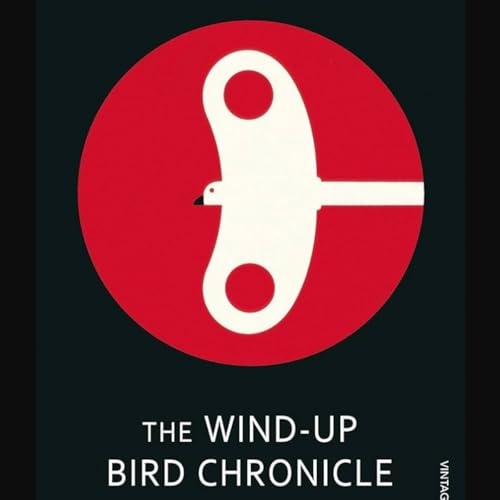
    The Wind-Up Bird Chronicle by Haruki Murakami is a mesmerizing, multi-layered novel that masterfully blends the ordinary with the surreal. At its heart is Toru Okada, a quiet, somewhat passive young man living an unremarkable life in suburban Tokyo. Recently unemployed, Toru spends his days keeping house while his wife, Kumiko, works to support them both. Their calm routine is shattered when their cat suddenly disappears. What begins as a straightforward search for the missing pet leads Toru into the shadowy alley behind their home and, eventually, far deeper—into a mysterious netherworld lurking beneath the surface of everyday Tokyo. As events unfold, Toru’s wife also vanishes without explanation. His quest to find her draws him into an increasingly strange and dreamlike labyrinth involving an eclectic cast of characters: a pair of eccentric psychic sisters, a cheerfully morbid teenage girl named May Kasahara, a powerful and sinister politician, and an aging war veteran whose haunting stories reveal the brutal legacy of Japan’s wartime past in Manchuria. Through dry wells, cryptic phone calls, alternate realities, and profound encounters with violence, memory, and desire, Toru is forced to confront the hidden forces shaping his life—and to search not only for his wife, but for his own fractured identity. Rich with Murakami’s signature style—mixing magical realism, dark humor, psychological depth, and historical reflection—The Wind-Up Bird Chronicle is both a gripping mystery and a haunting meditation on loss, healing, and the invisible threads that connect us all.
    Show More Show Less
    5 hrs and 9 mins