

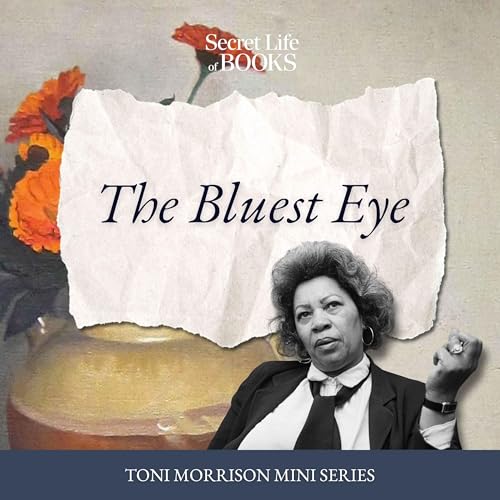
Toni Morrison 1: The Bluest Eye
Failed to add items
Add to basket failed.
Add to Wish List failed.
Remove from Wish List failed.
Follow podcast failed
Unfollow podcast failed

Toni Morrison 1: The Bluest Eye
-
Narrated by:
-
By:
About this listen
Published in 1970, written by an unknown new writer, The Bluest Eye is the great African American novelist Toni Morrison’s debut. It remains in many ways her most radical. It’s one of the most banned books in America since its publication – for its unflinching, explicit depictions of domestic abuse, racial and sexual violence in small town America.
Morrison wrote openly about Black sex and Black violence, challenging the increasingly celebratory tone of American literature in the late 1960s. Reviewing her in the New York Times, the legendary critic John Leonard recognized just how important Morrison’s voice would be. ““The Bluest Eye” is an inquiry into the reasons why beauty gets wasted in this country. The beauty in this case is black; the wasting is done by a cultural engine that seems to have been ‘designed specifically to murder possibilities,” he wrote. “She does it with a prose so precise, so faithful to speech and so charged with pain and wonder that the novel becomes poetry.”
Morrison would go on to write many Modernist-inflected literary tours de force, including Song of Solomon and Beloved, and is the first and only Black woman to win the Nobel Prize for Literature. We’ll be taking deep dives into Morrison’s work across four special episodes of SLOB, for Black History Month.
Become a subscriber by signing up at Apple: http://apple.co/slob
Or join our Patreon community here: https://www.patreon.com/c/secretlifeofbookspodcast
Hosted on Acast. See acast.com/privacy for more information.
Hosted on Acast. See acast.com/privacy for more information.