

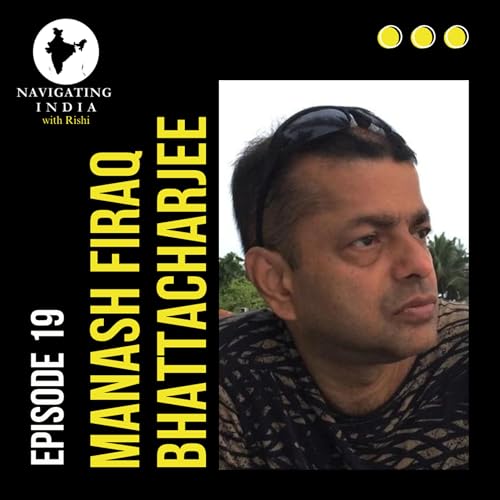
The Unexpected Force of Non-Violence
Failed to add items
Add to basket failed.
Add to Wish List failed.
Remove from Wish List failed.
Follow podcast failed
Unfollow podcast failed

The Unexpected Force of Non-Violence
-
Narrated by:
-
By:
About this listen
Gandhi’s method of non-violence faced significant challenges after Jinnah’s declaration of Direct Action Day, continuing until the partition and beyond. The miracle of non-violence seemed to fade, leaving peace as a fleeting hope. To counter the violence, Gandhi walked through areas devastated by violence- Noakhali, Bihar, Calcutta, and Delhi in the last fifteen months of his life, before his tragic assassination. During these travels, he advocated for peace and offered courage to those in need. In his recent book, 'Gandhi: The End of Non-Violence', Manash Firaq Bhattacharjee delves deeper into the questions that remain: Why did a nation that had fought through non-violence descend into violence? What is the psychology behind communal violence? What is non-violence, and how can it transform the human condition? What does it mean ‘to die a beautiful death’? And how can one write the history of a period so tragic? Tune into this episode to find answers to these questions and many others.
References:
- Gandhi: The End of Non-Violence by Manash Firaq Bhattacharjee
- Other Works by Manash Firaq Bhattacharjee: Nehru and the Spirit of India, Looking for the Nation: Towards Another India of India, The Town Slowly Empties: On Life and Culture During Lockdown
- Manash Firaq Bhattacharjee: X
- Hind Swaraj or Indian Home Rule by M.K. Gandhi
- Nationalism by Rabindranath Tagore
- The Discovery of India by Jawaharlal Nehru
- The Intimate Enemy: Loss and Recovery of Self under Colonialism by Ashis Nandy
- The Power Game by Paavo Havikko, translated from Finnish by David Barrett
- Otherwise Than Being, or Beyond Essence by Emmanuel Levinas, translated from French by Alphonso Lingis
- Civil Disobedience by Henry David Thoreau
- On Violence by Hannah Arendt
- Pakistan or the Partition of India by B.R. Ambedkar