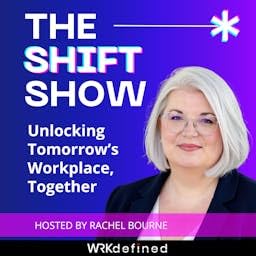
The Shift Show with Rachel Bourne cover art

The Shift Show with Rachel Bourne

The Shift Show with Rachel Bourne

By: WRKdefined Podcast Network
Listen for free

About this listen

Work is changing fast—don’t get left behind. The Shift Show gives you insider strategies, AI hacks, and career playbooks to thrive in the future of work. Hosted by Rachel Bourne, it’s your shortcut to staying relevant, resilient, and ready for what’s next.All rights reserved by WRKdefined Career Success Economics Personal Development Personal Success
Episodes
  • Relationship-First Executive Search: How Recruiters Choose
    Dec 16 2025
    Most people approach executive search like a transaction: apply, wait, hope. In reality, the senior job market is relationship-first… and trust is the real currency. In this episode, Rachel Bourne sits down with executive search leader Finley Konrade to unpack how recruiter relationships actually work, what helps candidates stay top-of-mind, and why the “best” opportunities often move through curated networks rather than job boards. You’ll learn how to communicate your value clearly, how to follow up without feeling pushy, and how to build credibility in a way that compounds over time. If you’re targeting director, VP, or C-suite roles, this conversation is a practical playbook for turning networking into real momentum… with more clarity, less anxiety, and way better outcomes. 6 Key Takeaways Executive search is a long game… the strongest outcomes come from trust built over time, not one perfect application. The goal isn’t “get picked.” It’s become known: clear positioning + consistent, professional touchpoints. “Follow-up” should feel like rapport, not chasing… value-led updates, timing, and respect for the relationship matter. Your resume and outreach aren’t just marketing… they’re signals of how you communicate and partner. Many senior roles move through warm networks and curated conversations, not public postings. Culture alignment is deeply relational… leaders get selected for how they’ll work with people, not only what they’ve done. Chapters (question-led) 00:00 — What does relationship-first search mean? 01:16 — How do recruiter relationships actually form? 02:19 — Why does culture fit matter so much at the top? 10:29 — What do recruiters notice in seconds? 11:41 — What should the top of your resume communicate? 15:05 — How do you follow up without being pushy? 20:25 — Why aren’t many exec roles posted? 23:19 — Retained vs contingency: how do relationships differ? 29:17 — What “homework” builds credibility fastest? 35:57 — How do assessments show working style and fit? 39:16 — What’s a strong 30-second relationship-building intro?
    Show More Show Less
    43 mins
  • How to Lead and Manage Change in the AI Era
    Dec 3 2025
    How do you lead and manage change in the AI era? Leading change used to be hard. Leading change in the AI era is something else entirely. In this episode of The Shift Show, Rachel Bourne brings together three incredibly seasoned transformation leaders to break down what it really takes to help teams adapt, perform, and stay grounded when work is shifting faster than ever. Our Guests: • Hibba Ullah — A transformation and strategy leader with 15+ years guiding enterprise-wide change across healthcare, life sciences, and technology. Hibba brings deep expertise in governance, operating rhythms, and cross-functional alignment—turning complex portfolios into clear, actionable execution. • Alicia Miller — A strategy, analytics, and AI readiness expert who has led high-impact modernization, data, and behavioral science initiatives inside one of the largest and most complex federal organizations in the world. Alicia specializes in helping leaders use analytics and human behavior insights to drive real adoption and measurable results. • Rachel Quisenberry — A global change enablement and talent transformation executive with 20+ years bridging business operations and HR. Rachel is a trusted C-suite advisor who builds workforce systems that improve performance, compliance, forecasting accuracy, and operational outcomes across global enterprises. Together, we explore why most AI and digital transformations fail after launch, how to communicate change without creating fear, and what leaders must do differently as work becomes more dynamic and AI-driven. We also dive into the skills employees need to stay future-ready, what managers can do to reduce burnout during constant change, and the practical frameworks that actually help teams move forward with clarity and confidence. Whether you're leading AI implementation, managing transformation fatigue, or simply trying to build a team that can adapt quickly, this conversation gives you the tools and language to lead more effectively. Chapter Markers 00:00 — What does it really take to lead change today? 02:10 — Why are people burning out from constant change? 06:45 — How can managers help teams build “change muscle”? 10:30 — What makes AI-driven change harder to manage? 16:05 — Why do so many AI pilots fail after launch? 21:40 — How should leaders talk about AI without triggering fear? 24:50 — Are AI layoffs real or mostly strategy shifts? 30:20 — Which change frameworks actually help managers lead better? 35:00 — What do real-world change failures teach us? 40:00 — What skill matters most for leading through constant change? 44:00 — What do leaders misunderstand about how people adapt? 47:00 — What advice would our experts give every manager right now?
    Show More Show Less
    49 mins
  • How Executive Search Really Works
    Nov 19 2025
    What really happens behind closed doors during an executive search? In this episode of The Shift Show, Rachel sits down with Mike Bergen, Global HR Practice Leader at Kingsley Gate, to break down the real hiring process, the unwritten rules candidates never hear, and how leaders are evaluated in a world defined by AI, disruption, and rapid change. Mike reveals how search firms assess candidates, why chemistry and decision-making style matter more than résumés, how companies define “great leadership” in 2026, and the biggest misconceptions senior candidates bring into the process. He also explains the surprising role of technology, behavioral data, and fit mapping - and why the human element still determines who gets the offer. If you're an ambitious professional, director, talent leader, or future executive, this episode gives you an insider view of how top roles are filled, how to stay on a recruiter’s radar, and how to position yourself for promotion or a major career shift. To learn more about Kingsley Gate: https://www.kingsleygate.com/ Connect with Mike: https://www.linkedin.com/in/mike-bergen-a1a239/ About Mike: Mike Bergen is Senior Partner and Head of Global Markets at Kingsley Gate, a premier retained executive search firm. He leads global growth, cross-border collaboration, and the firm’s Global Human Resources Practice. With 25+ years of experience placing senior executives—especially Chief HR Officers and senior HR leaders—Mike has worked across industries, geographies, and every major HR discipline. Before joining Kingsley Gate, Mike led the U.S. business and Global HR Practice at Allegis Partners and served as a Senior Client Partner in Korn Ferry’s Human Resources Practice and contributed to the Global Sports Practice. A recognized expert in the HR talent market, Mike is known for his consultative approach and deep insight into evolving C-suite expectations. Mike holds a Bachelor of Arts from the University of Pennsylvania and is a former Captain and helicopter pilot in the U.S. Army Reserves. Key Takeaways: 1. The real criteria companies use to select executives 2. “Fit” isn’t personal — it’s about team chemistry and decision dynamics 3. Executive search is consultative, not transactional 4. HR roles are being redefined by AI and business transformation 5. The biggest candidate mistake: unclear outreach and poor preparation 6. Chemistry and “leadership presence” often decide between finalists 7. Staying on a recruiter’s radar is an intentional, long-term gameChapter Markers Chapters: 00:00 — What is this new Unwritten Rules mini-series?00:41 — Who is Mike Bergen and what does Kingsley Gate do?03:36 — How is the definition of “great leadership” changing?07:24 — How are expectations for HR leaders evolving?10:21 — What skills will matter most for HR in 2026?12:20 — How does executive search actually work?16:12 — How do firms assess decision-making style?19:13 — What do candidates misunderstand about “fit”?22:28 — What really happens behind the scenes of a search?25:02 — What signs tell recruiters a candidate isn’t ready?27:19 — How much does chemistry really matter?32:12 — Myths about search firms (and what’s true)35:59 — How should candidates reach out to executive search?39:01 — How often should you follow up with recruiters?41:50 — How to build long-term relationships with search partners46:59 — What makes Kingsley Gate’s approach different? YOUR Most DMed Questions Answered: How does executive search actually work? What do executive recruiters look for in candidates? How should I reach out to a search firm? What are the biggest unwritten rules in leadership hiring? How important is “fit” and chemistry? How do search firms evaluate decision-making style? What HR skills will matter most in 2026? Why do strong candidates still lose roles? How often should I check in with recruiters?
    Show More Show Less
    50 mins
No reviews yet
In the spirit of reconciliation, Audible acknowledges the Traditional Custodians of country throughout Australia and their connections to land, sea and community. We pay our respect to their elders past and present and extend that respect to all Aboriginal and Torres Strait Islander peoples today.