Episodes

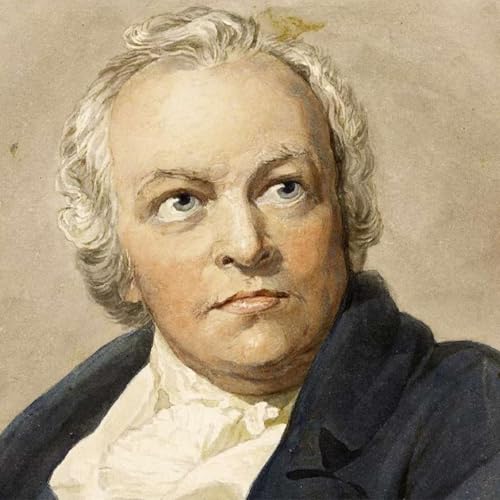
  • Episode 6: "The Tyger" by William Blake
    Jun 9 2026

    James finally reviews The Tyger by William Blake! The Tyger (or, The Tiger) is a beautifully haunting poem that he hopes you think of if every you come across the "fearful symmetry" of a tyger.

    Here is the poem:

    Tyger Tyger, burning bright,

    In the forests of the night;

    What immortal hand or eye,

    Could frame thy fearful symmetry?


    In what distant deeps or skies.

    Burnt the fire of thine eyes?

    On what wings dare he aspire?

    What the hand, dare seize the fire?


    And what shoulder, & what art,

    Could twist the sinews of thy heart?

    And when thy heart began to beat.

    What dread hand? & what dread feet?


    What the hammer? what the chain,

    In what furnace was thy brain?

    What the anvil? what dread grasp.

    Dare its deadly terrors clasp?


    When the stars threw down their spears

    And water'd heaven with their tears:

    Did he smile his work to see?

    Did he who made the Lamb make thee?


    Tyger Tyger burning bright,

    In the forests of the night:

    What immortal hand or eye,

    Dare frame thy fearful symmetry?


    And here is a link to the original engraving of the poem by William Blake, courtesy of the William Blake Archive:

    https://www.blakearchive.org/images/songsie.n.p8-42.100.jpg

    Show More Show Less
    11 mins
  • Episode 5: "Spring, the Sweet Spring" by Thomas Nashe
    May 20 2026

    James celebrates the passing of one season to the next with a poem, "Spring, the sweet spring". As he notes in the introduction of the episode, the audio was recorded live and unscripted, so there are imperfections. Live recording, however, ensures that all of the thoughts you hear are created on-the-spot, which is a fun way of peering into the soul based off of what it chooses to focus on.

    Here is the poem:

    Spring, the sweet spring, is the year’s pleasant king,

    Then blooms each thing, then maids dance in a ring,

    Cold doth not sting, the pretty birds do sing:

    Cuckoo, jug-jug, pu-we, to-witta-woo!


    The palm and may make country houses gay,

    Lambs frisk and play, the shepherds pipe all day,

    And we hear aye birds tune this merry lay:

    Cuckoo, jug-jug, pu-we, to-witta-woo!


    The fields breathe sweet, the daisies kiss our feet,

    Young lovers meet, old wives a-sunning sit,

    In every street these tunes our ears do greet:

    Cuckoo, jug-jug, pu-we, to witta-woo!

    Spring, the sweet spring!

    Show More Show Less
    7 mins
  • Episode 4: "The Lamb" by William Blake
    Apr 17 2026

    James analyzes one of William Blake's poems, The Lamb. He thinks about the complex topics in the poem and how they are represented as simple questions with accompanying answers. It's odd that he should review a lesser-known poem written by William Blake, considering that The Tyger is much more famous.

    Here is the poem:

    Little Lamb who made thee

    Dost thou know who made thee

    Gave thee life & bid thee feed.

    By the stream & o'er the mead;

    Gave thee clothing of delight,

    Softest clothing wooly bright;

    Gave thee such a tender voice,

    Making all the vales rejoice!

    Little Lamb who made thee

    Dost thou know who made thee


    Little Lamb I'll tell thee,

    Little Lamb I'll tell thee!

    He is called by thy name,

    For he calls himself a Lamb:

    He is meek & he is mild,

    He became a little child:

    I a child & thou a lamb,

    We are called by his name.

    Little Lamb God bless thee.

    Little Lamb God bless thee.


    And here is a link to the William Blake Archive to view his engraving of The Lamb:
    https://www.blakearchive.org/copy/s-inn.b?descId=s-inn.b.illbk.29

    Show More Show Less
    9 mins
  • Episode 3.5: Various Poems
    Apr 3 2026

    In this episode, James reviews four very short, fun poems (because poetry is meant to express and entertain, not bore) which benefit from being seen in words on top of being heard:

    Untitled
    By Muhammad Ali

    Me.
    We.


    On Going to Meet a Zen Master in the Kyushu Mountains and Not Finding Him

    to A.G.

    By Don Patterson


    Poem Recognizing Someone In The Street
    By Aram Saroyan


    ey?h

    e?he

    Hey!


    Lines on the Antiquity of Microbes, or Fleas
    By Strickland Gillilan)


    Adam

    Had ’em

    Show More Show Less
    2 mins
  • Episode 3: "Sometimes I Risk" with Guest Derek Sheffield
    Mar 24 2026

    James interviews the current Washington State Poet Laureate Derek Sheffield and analyzes one of his poems! Like most poems, Sometimes I Risk benefits from reading along, so a copy is included in the description, or you could navigate onto Derek's website. Sometimes I Risk combines humor with contemplation, highlights the feeling of cherishing memories, and reminds readers of the many times they found their parent peering at them through the rear-view mirror while driving.

    Show More Show Less
    29 mins
  • Episode 2: "Sonnet 30" by William Shakespeare
    Mar 3 2026

    In this podcast episode, James analyzes Shakespeare's Sonnet 30. He conquers three different interpretations of the poem in a slightly confusing, but resolving way (kind of like how the poem navigates the narrator's emotion). Please excuse the fact that his voice was corrupted by sickness at the time of recording!

    Here is the poem if you would like to read along:

    When to the sessions of sweet silent thought

    I summon up remembrance of things past,

    I sigh the lack of many a thing I sought,

    And with old woes new wail my dear time's waste:

    Then can I drown an eye, unus'd to flow,

    For precious friends hid in death's dateless night,

    And weep afresh love's long since cancell'd woe,

    And moan th' expense of many a vanish'd sight;

    Then can I grieve at grievances foregone,

    And heavily from woe to woe tell o'er

    The sad account of fore-bemoaned moan,

    Which I new pay as if not paid before.

    But if the while I think on thee, dear friend,

    All losses are restor'd, and sorrows end.

    Show More Show Less
    12 mins
  • Episode 1: "The Road Not Taken" by Robert Frost
    Feb 3 2026

    For the first episode of the Literature Observer, James analyzes The Road Not Taken by Robert Frost. James touches on Robert Frost's biography, and reflects about the typical reader response to the poem.

    Here is the poem if you would like to read along:

    Two roads diverged in a yellow wood,

    And sorry I could not travel both

    And be one traveler, long I stood

    And looked down one as far as I could

    To where it bent in the undergrowth;


    Then took the other, as just as fair,

    And having perhaps the better claim,

    Because it was grassy and wanted wear;

    Though as for that the passing there

    Had worn them really about the same,


    And both that morning equally lay

    In leaves no step had trodden black.

    Oh, I kept the first for another day!

    Yet knowing how way leads on to way,

    I doubted if I should ever come back.


    I shall be telling this with a sigh

    Somewhere ages and ages hence:

    Two roads diverged in a wood, and I—

    I took the one less traveled by,

    And that has made all the difference.

    Show More Show Less
    7 mins