Episodes

  • Sport Pilot 2.0 & How to Get Into Aviation Industry Sales
    Mar 31 2026
    🎧 Episode Summary What happens when a single rule change unlocks an entirely new generation of aircraft—and new opportunities for people who dream of flying? In this episode, host Shawn Staerker explores one of the most important developments in modern general aviation: MOSAIC, often called Sport Pilot 2.0. You’ll learn how this long-awaited FAA modernization could allow aircraft to fly faster, carry more passengers, and cost less to operate—while opening the door for more people to enter aviation without a traditional medical certificate. But the conversation doesn’t stop on the flight line. Shawn also introduces listeners to aviation entrepreneur Tom Lelyo, who took an unexpected path from youth ministry to selling private jets—and built a thriving career in aviation sales along the way. His story reveals a powerful truth: you don’t have to be a pilot or mechanic to succeed in aviation. And in our monthly history segment, we travel through the remarkable milestones of March—from the first successful parachute jump from an airplane to the invention of liquid-fueled rockets, the birth of Top Gun, and the daring solo flight around the world by Steve Fossett. This episode is about innovation, opportunity, and the many different doors into aviation—some technical, some entrepreneurial, and some still waiting to be discovered. Thank you to our long-time show supporters—TL Sport Aircraft, builders of modern, efficient aircraft designed to expand access to flight training and recreational aviation. Explore their lineup and see the future of light aviation up close at the upcoming SUN 'n FUN Aerospace Expo 2026. ✨ Key Points Understanding MOSAIC (Sport Pilot 2.0) Introduced to modernize the Light Sport Aircraft category first created in 2004.Removes the long-standing 1,320-pound weight limit for many aircraft.Shifts focus from weight limits to stall speed as the key safety metric.Allows up to four seats in qualifying aircraft.Opens the door to turbine engines, retractable gear, and more advanced avionics.Designed to make aircraft more capable while maintaining strong safety standards. How MOSAIC Could Change Flight Training Modern aircraft can carry more payload, including students and examiners.Lower fuel burn and maintenance costs may reduce the cost of flight training.New aircraft technology increases student interest and engagement.Flight schools may gain access to more efficient and capable training aircraft.Expands pathways into aviation for younger and cost-conscious students. Spotlight: Modern Light Aircraft Innovation Composite construction and glass cockpits are becoming standard in training aircraft.New engines offer higher performance with improved fuel efficiency.Aircraft design is shifting toward capability, safety, and operational flexibility.Manufacturers are preparing new aircraft models ahead of finalized regulations. Aviation Careers Beyond the Cockpit Aviation sales is a growing career path within the industry.Private jets can be accessible to business owners and professionals—not just billionaires.Success in aviation sales depends on persistence, communication, and relationship-building.Creating educational content can help build trust and professional credibility.Mentorship and community play a critical role in career growth. This Month in Aviation History (March) 1912: First successful parachute jump from a powered aircraft in the United States.1926: Robert Goddard launches the world’s first liquid-fueled rocket.1949: First nonstop flight around the world by the B-50 Lucky Lady II.1969: First flight of the Concorde supersonic passenger jet.1969: Establishment of the U.S. Navy Fighter Weapons School—Top Gun.2001: The Russian space station Mir completes its final descent.2005: Steve Fossett becomes the first person to fly solo nonstop around the world. 🕒 Chapter Timestamps 0:00 – 1:54 | Introduction: The future of aviation and the promise of MOSAIC 1:55 – 3:43 | The origins of Light Sport Aircraft and early limitations 3:44 – 5:35 | What changes under Sport Pilot 2.0 5:36 – 8:59 | How MOSAIC could reshape flight training and aircraft design 9:00 – 10:44 | Why this rule change matters for the future of aviation 10:45 – 12:07 | Career Spotlight: From youth pastor to jet sales professional 12:08 – 15:54 | Building a career in aviation sales and entrepreneurship 15:55 – 18:59 | This Month in Aviation History: Rockets, Concorde, and Top Gun 19:00 – 22:25 | Space stations, unique airlines, and record-setting flights 22:26 – End | Closing reflections: The sky still has room for dreamers Links TL Sport Aircraft: https://tlsportaircraft.com/ AVSales Talent: https://avsalestalent.com/ AviNation USA: https://www.avinationusa.com/ Creative Relay Media: https://creativerelaymedia.com/ SUN ’n FUN Aerospace Expo: https://flysnf.org/
    Show More Show Less
    25 mins
  • Sport Pilot 2.0 Explained: How MOSAIC Could Transform Light Sport Aviation
    Mar 24 2026
    🎧 Episode Summary Sport Pilot 2.0 explained: What if one rule change could reshape the future of light sport aviation? In this episode of The Future in Flight Podcast, host Shawn Staerker sits down with Trey Murdaugh of TL Sport Aircraft to break down one of the most talked-about developments in general aviation today: MOSAIC, widely referred to as Sport Pilot 2.0. This conversation offers a clear, practical look at Sport Pilot 2.0 explained—what it means, why it matters, and how it could dramatically expand aircraft capability while making flying more accessible. From increased aircraft performance and turbine options to expanded flight training opportunities and lower operating costs, this episode highlights why manufacturers, flight schools, and pilots alike are watching these regulatory changes closely. You’ll also get an inside look at TL Sport Aircraft’s evolving lineup—from efficient trainers to high-performance sport aircraft—and what attendees can expect to see at the upcoming SUN 'n FUN Aerospace Expo 2026. This episode is about innovation, accessibility, and the exciting future of grassroots aviation—and provides a timely look at Sport Pilot 2.0 explained for pilots, students, and aviation enthusiasts alike. ✨ Key Points Sport Pilot 2.0 Explained: What is MOSAIC? An evolution of the Light Sport Aircraft (LSA) category introduced in the mid-2000s.Designed to expand aircraft capability while maintaining strong safety standards.Removes many previous limitations, allowing for more advanced aircraft design.Focus shifts from strict weight limits to stall speed as the primary performance metric. Major Changes Under Sport Pilot 2.0 Up to four seats instead of two.No fixed maximum aircraft weight.Higher stall speed limits (up to ~61 knots).Retractable landing gear and constant-speed propellers allowed.Potential for turbine and multi-engine aircraft in the category.Greater flexibility for manufacturers to build stronger, more capable aircraft. Impact on Flight Training and Accessibility Aircraft can carry more payload, including instructors, examiners, and full fuel.Lower acquisition and operating costs compared to traditional training aircraft.Reduced maintenance downtime with modern engines and systems.Increased student interest due to newer technology and performance.Potential to make flight training more affordable and scalable. Why Sport Pilot 2.0 Matters for Affordable Aviation Expands opportunities for recreational pilots and aging aviators.Encourages innovation among manufacturers.Improves aircraft safety through stronger designs.Creates new pathways for entry into aviation careers.Supports the growth of grassroots aviation communities. Spotlight: TL Sport Aircraft Lineup Sirius — A stable, high-wing aircraft ideal for training environments.Stream — A tandem, retractable-gear aircraft designed for performance and efficiency.Sparker — A side-by-side sport aircraft capable of high speeds and advanced handling.Sirius Backcountry — A rugged taildragger built for STOL and off-airport operations.New engine options, including turbocharged and turbine configurations, expand mission capability. What to Watch at SUN ’n FUN 2026 Expanded TL Sport Aircraft product lineup on display.Demonstrations of the new Sirius Backcountry aircraft.Sponsorship of the STOL Invitational event.Opportunities to see next-generation light aircraft technology up close. 🕒 Chapter Timestamps 0:00 – 0:31 | Introduction: Affordable aviation and the promise of Sport Pilot 2.0 0:32 – 2:35 | Sport Pilot 2.0 explained: Understanding MOSAIC 2:36 – 5:51 | The history of Sport Pilot and why change was needed 5:52 – 9:28 | Safety, performance, and the future of aircraft design 9:29 – 11:33 | Regulatory uncertainty and industry preparation 11:34 – 13:56 | Key Sport Pilot 2.0 changes explained 13:57 – 17:51 | Training benefits and cost advantages for flight schools 17:52 – 18:18 | Why the aviation community is excited 18:19 – 22:11 | Inside TL Sport Aircraft: Models, performance, and innovation 22:12 – 22:55 | Where to learn more about the aircraft lineup 22:56 – End | Preview: SUN ’n FUN 2026 and the future of light sport aviation 🔗 Links TL Sport Aircraft: https://tlsportaircraft.com/ SUN ’n FUN Aerospace Expo: https://flysnf.org/ AviNation USA: https://www.avinationusa.com/ Creative Relay Media: https://creativerelaymedia.com/
    Show More Show Less
    26 mins
  • Full Throttle U: Inside California Aeronautical University's Flight Team
    Mar 19 2026
    🎧 Episode Summary

    This episode takes you on an incredible journey through aviation excellence and history.

    We kick things off rolling down the runway with California Aeronautical University's competitive flight team—a squad that’s climbed from 20th place at nationals in 2022 to seriously eyeing a top-10 finish. Along the way, they take to the skies cross-country in “Little Red,” a 1965 Cessna 150, competing in NIFA events while building a culture rooted in safety, discipline, and sportsmanship. That commitment has earned them four consecutive Red Baron Team Sportsmanship Awards.

    Then, host Shawn Staerker is joined by his daughter Ellie for a powerful Women’s History Month segment celebrating the trailblazers who helped build aviation from the ground up. From Raymonde de Laroche—the first woman to earn a pilot’s license in 1910—to the legendary Night Witches of World War II, and modern pioneers like Lucy Young, still flying at 71, this conversation makes one thing clear: aviation has always belonged to those bold enough to pursue it.

    We wrap things up with a destination spotlight on Everglades Air Park, where presidential history meets short-field flying and Cuban sandwiches—and where every landing adds another story to the logbook.

    ✨ Key Takeaways
    • ✈️ From Underdogs to Contenders CAU’s flight team has transformed from a 20th-place program into a top-10 contender through grit and teamwork.
    • 🏆 Character Counts Four straight Red Baron Team Sportsmanship Awards highlight that how you fly matters just as much as how well you fly.
    • 👩‍✈️ Women in Aviation—From Day One Since 1910, women have played a central role in aviation’s growth—not as footnotes, but as pioneers.
    • 🌙 The Night Witches Soviet pilots flew daring nighttime bombing missions in WWII—cutting engines mid-flight to silently glide over enemy targets.
    • 🐊 Destination: Everglades Air Park A 2,400-foot runway, rich history, and unforgettable food make this a must-visit for adventurous pilots.
    🕒 Chapter Timestamps
    • 0:00 — 1:27 | Introduction to CAU Flight Team’s Journey
    • 1:27 — 2:44 | Understanding NIFA Competition Structure
    • 2:44 — 4:30 | Student Commitment & “Little Red” the Cessna 150
    • 4:30 — 7:13 | Cross-Country Adventures & Lightspeed Aviation Partnership
    • 7:13 — 9:35 | Awards, Safety Culture & Future Goals
    • 9:35 — 11:11 | Transition to Women’s History Month Segment
    • 11:11 — 19:28 | Women Who Built Aviation (featuring Ellie Staerker)
    • 19:28 — End | Future in Flight Destinations: Everglades Air Park
    🔗 Links & Resources
    • California Aeronautical University Flight Team
    • Lightspeed Aviation
    • The 99s (Women Pilots Organization)
    • Women in Aviation International
    • Everglades Air Park (X01) — Everglades City, Florida
    • NIFA (National Intercollegiate Flying Association)
    • AviNation USA

    Show More Show Less
    30 mins
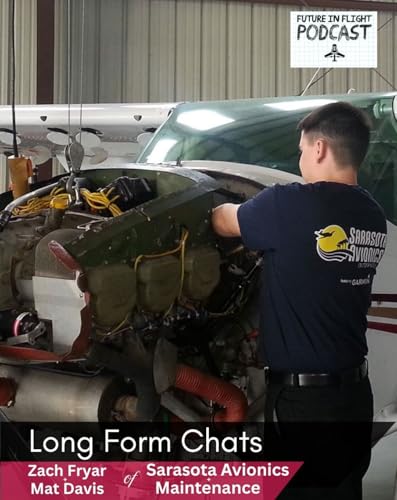
  • Behind the Panel: A Conversation w/Sarasota Avionics & Maintenance
    Mar 17 2026
    🎧 Episode Summary

    From a tiny corner of a Venice hangar to multiple locations across Florida, Sarasota Avionics has built something truly special in the aviation world.

    In this episode, we sit down with Zach Fryar and Mat Davis—two key team members—who share the incredible journey of how three guys fixing radios grew into one of aviation’s most beloved avionics companies. Their secret? Treating customers and employees like family while delivering cutting-edge technology upgrades.

    Zach and Mat take us behind the scenes of modern avionics installations—from full glass panel upgrades to becoming a Cirrus Service Center. They discuss the ongoing challenge of finding skilled technicians, share their thoughts on the future of aviation technology (spoiler: they’re not ready for pilotless planes), and explain why treating your iPad like backup equipment is always a smart move.

    Plus, we explore career opportunities in avionics and get the inside scoop on their famous Sun ’n Fun parties that draw crowds from across the aviation community.

    ✨ Key Points
    • 🛠️ Humble beginnings: Started with three guys in one-third of a hangar fixing radios—now operating multiple locations across Florida

    • 👨‍👩‍👧‍👦 Family-first culture: Employees and customers are treated like family, complete with birthday parties and holiday invitations

    • 🎯 Shift to glass panels: Upgrades dominate as pilots move away from six-pack instruments due to parts availability

    • ✈️ Cirrus Service Center: Achieved through a rigorous certification process and specialized training

    • 🔮 Future of aviation: More automation is coming—but human pilots remain essential for dynamic situations

    🕒 Chapter Timestamps
    • 0:00 — 2:18 | From Three Guys to Aviation Empire: The Sarasota Avionics Origin Story

    • 2:18 — 4:25 | Building Family Culture: Keeping the Small Shop Feel

    • 4:25 — 8:29 | Finding Great Techs: The Challenge of Aviation Talent

    • 8:29 — 11:14 | Career Transition: From Automotive to Avionics

    • 11:14 — 15:02 | Consultation Process: Understanding Customer Needs

    • 15:02 — 18:13 | Cirrus Service Center: The Path to Certification

    • 18:13 — 20:13 | Future of Aviation: Will Pilots Become Obsolete?

    • 20:13 — 24:59 | Avionics Upgrade Process: From Consultation to Delivery

    • 24:59 — 28:00 | Industry Trends: Glass Panels & iPad Integration

    • 28:00 — 32:12 | Sun ’n Fun & Customer Connections

    • 32:12 — 35:19 | Career Advice for Future Avionics Techs

    • 35:19 — 38:54 | Rapid Fire Fun: Snacks, Dream Aircraft & Flying with Legends

    🔗 Links & Resources
    • Sarasota Avionics Website – https://sarasotaavionics.com/

    • SUN 'n FUN Aerospace Expo – https://flysnf.org/

    • AviNation – https://www.avinationusa.com/

    Show More Show Less
    28 mins
  • The Automation Revolution: Why Avionics Techs Run the Future
    Mar 10 2026
    🎧 Episode Summary

    Ever wonder what makes those glass screens in airplane cockpits actually work? This episode takes you inside the world of avionics with Zach Fryar from Sarasota Avionics and lead technician Mat Davis. From a humble corner of a Venice, Florida hangar with three guys and broken radios, Sarasota Avionics has grown into one of the Southeast's most respected shops. But this isn't just a business success story—it's about the people who make modern aviation possible and why avionics might be the perfect career path for tech-savvy young people.

    We also go behind the scenes with Jacob Peed, Editor-in-Chief of AviNation USA Magazine, as they gear up for Sun and Fun 2026. Plus, in our Vintage Aircraft Spotlight, we explore the massive Convair B-36 Peacemaker—a 10-engine beast that could fly around the world without stopping and helped define the Cold War era. Whether you're curious about cutting-edge cockpit technology or aviation history, this episode shows how the past, present, and future of flight all connect.

    ✨ Key Points
    • 🔧 Modern avionics is more than just screens—it's integrated systems that require skilled techs who are part engineer, part detective
    • 💼 Avionics careers are future-proof with aging workforce and increasing technology complexity creating huge opportunities
    • 📱 If you can use an iPhone, you can probably master modern glass cockpit systems like Garmin's GTN and G1000
    • 📰 Aviation USA Magazine connects aviation stories from contributors aged 8 to 78, proving everyone has a story worth telling
    • ✈️ The B-36 Peacemaker had a 230-foot wingspan, 10 engines, and could carry nuclear weapons—but never dropped a bomb in combat

    🕒 Chapter Timestamps

    0:00 — 1:21 | Introduction: From Corner Hangar to Aviation Empire

    1:21 — 2:25 | The Culture That Builds Craftspeople

    2:25 — 4:52 | What Avionics Actually Is: Systems Thinking

    4:52 — 7:07 | The Glass Revolution and Garmin's Dominance

    7:07 — 9:29 | Career Paths: Why Avionics Needs You

    9:29 — 11:56 | The Future of Automation vs. Human Pilots

    12:00 — 19:21 | Aviation USA Magazine and Sun and Fun Preview

    19:21 — 25:42 | Vintage Spotlight: The Convair B-36 Peacemaker

    🔗 Links & Resources
    • Sarasota Avionics: sarasotaavionics.com
    • AviNation USA Magazine: avinationusa.com
    • Sun and Fun Fly-In: flysnf.org
    • National Museum of the US Air Force (B-36 location): nationalmuseum.af.mil
    Show More Show Less
    29 mins
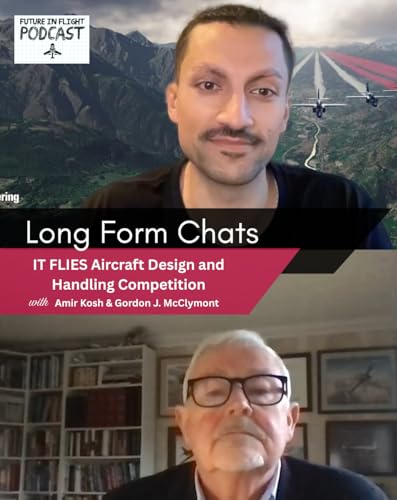
  • Design. Simulate. Fly. How IT FLIES Is Rewriting Aerospace Education
    Mar 3 2026
    🎧 Episode Summary

    What if aerospace students could take their classroom equations and turn them into real, flyable aircraft designs—without ever cutting balsa wood or stepping into a wind tunnel?

    In this episode of The Future in Flight Podcast, host Shawn Staerker sits down with Amir Kosh and Gordon McClymont to explore ST Engineering Antycip’s IT FLIES—a groundbreaking design-build-fly competition powered by high-fidelity, physics-based simulators.

    Unlike traditional competitions, students don’t just design aircraft on paper—they fly them in professional-grade simulators and receive real-time feedback from experienced test pilots. From sixth-generation fighters to humanitarian aid drones, teams bring bold concepts to life and experience the full aerospace engineering cycle: briefing, flight testing, debriefing, iteration, and refinement.

    With competitions hosted in the U.S. at University of Dayton and in the UK at Swansea University, IT FLIES is shaping the next generation of aerospace engineers by bridging theory and real-world application.

    This episode dives into simulation fidelity, the power of iteration, the importance of engineer–pilot collaboration, and why feeling lift and drag—even virtually—changes everything.

    If you’ve ever wondered how today’s students become tomorrow’s aircraft designers, this is the inside look you’ve been waiting for.

    ✨ Key Points

    What Makes IT FLIES Different

    • Students design aircraft and fly them in real-time, physics-based simulators.
    • Professional test pilots evaluate each design.
    • The competition mirrors real aerospace development cycles.
    • Brief → Fly → Debrief → Revise.

    Why Simulation Matters

    • Turns equations into physical motion.
    • Allows rapid iteration before major investment.
    • Prevents “negative training” from entertainment-based simulators.
    • Helps students feel aerodynamics instead of just calculating it.

    Lessons Students Learn

    • Iteration is essential to engineering success.
    • Communication between engineers and pilots is critical.
    • Not every bold design works—but every flight teaches something.
    • Real-world aerospace is collaborative, not siloed.

    Competition Highlights

    • Hosted twice yearly (U.S. and UK).
    • Open to international university teams.
    • Awards for Best Flight Performance, Best Presentation, and Most Innovative Design.
    • Winning university holds the traveling trophy until the next competition.

    Careers & Real-World Impact

    • Students have earned internships following the competition.
    • IT FLIES strengthens resumes with practical, applied experience.
    • Participants gain exposure to real aerospace industry processes.
    🕒 Chapter Timestamps

    0:00 – 1:17 | Introduction: What is IT FLIES? 1:18 – 5:00 | Origins of the Competition & Why Simulation Matters 5:01 – 10:57 | The Test Pilot Perspective: Real-World Design Cycles 10:58 – 16:26 | Aerodynamics Comes to Life: Feeling Lift & Drag 16:27 – 20:17 | Design Surprises & Iteration in Action 20:18 – 23:56 | Skills That Translate to Aerospace Careers 23:57 – 28:30 | International Competitions: U.S. & UK 28:31 – 32:09 | Awards, Innovation & Student Experience 32:10 – 39:52 | Fun Questions: Dream Aircraft, Destinations & Flight Legends 39:53 – End | Final Reflections: Iteration, Courage & the Future of Aerospace

    🔗 Links & Resources

    IT FLIES Competition (ST Engineering Antycip): https://steantycip.com/events/

    AviNation USA: https://www.avinationusa.com/

    Creative Relay Media: https://creativerelaymedia.com/

    Blue skies, smart designs, and remember—great aircraft aren’t built in a single pass. They’re built through iteration, collaboration, and the courage to test your ideas.

    Show More Show Less
    41 mins
  • Inside the IT FLIES Aircraft Design Competition, Backseat Pilot and V-Speeds
    Feb 24 2026
    🎧 Episode Summary What if aerospace engineering students didn’t just design aircraft on paper—but actually watched real test pilots fly their creations? In this episode of The Future in Flight Podcast, host Shawn Staerker takes you inside IT FLIES, an innovative international design-build-fly competition where students bring their aircraft concepts to life in high-fidelity simulators used in real-world aircraft development. We hear from competition leaders and test pilots about how simulation transforms abstract aerodynamics into hands-on experience—and why iteration, feedback, and collaboration between engineers and pilots mirrors the real aerospace industry. Then, Shawn sits down with Nate Ehlers—C-17 instructor pilot, airline captain, and founder of the Backseat Pilot training system. Nate shares his unconventional path through civilian training, regional airlines, and the Air Force Reserve, proving that persistence beats rejection every time. From landing with light gun signals after a radio failure to building a tool that’s helped thousands of CFIs save time and money, his story is one of innovation born from challenge. Finally, we break down one of aviation’s universal languages: V-speeds. From V1 and rotation to maneuvering speed and landing reference speeds, this segment demystifies the “cheat codes” that keep pilots safe and aircraft performing at their best. This episode is about bridging theory and reality, turning obstacles into opportunity, and understanding the language of flight. Thank you to our partners: ✈️ AviNation USA – https://www.avinationusa.com/ 🎙️ Creative Relay Media – https://creativerelaymedia.com ✨ Key Points IT FLIES: From Theory to Test Flight International aerospace design-build-fly competition.Students code aircraft concepts into high-fidelity, physics-based simulators.Real test pilots brief, fly, and debrief student designs.Emphasizes iteration, feedback, and real-world engineering practices.Hosted in the UK (Swansea University) and the U.S. (University of Dayton).Awards include best performance, presentation, and innovation. Nate Ehlers’ Aviation Journey Childhood dream inspired by his grandfather, a WWII B-29 flight engineer.Earned a business degree before pursuing flight training.Flew regionals, joined the Air Force Reserve (C-17 Globemaster III).Served 12 years as a C-17 pilot and instructor.Landed via light gun signals after a radio failure—sparked idea for reference tools.Founded Backseat Pilot to provide editable CFI lesson plans and training resources.Mission: Double student confidence and halve the time to CFI readiness.Key lesson: Highly motivated students outperform naturally talented but unmotivated ones. C-17 Flying Highlights Tactical departures and steep climb profiles.Assault landings into short fields.Night air refueling and low-level mountain flying.Instructor role focused on risk management and real-world decision-making. V-Speeds: The Language of Flight “V” may derive from vitesse (French for speed).Standardized speeds used worldwide.White Arc: Flap operating range (VSO to VFE).Green Arc: Normal operating range (VS1 to VNO).Yellow Arc: Caution range (smooth air only).Red Line: VNE (Never Exceed).Critical takeoff speeds: V1 (decision), VR (rotation), V2 (safety climb).Climb speeds: VX (best angle), VY (best rate).VA (maneuvering speed) decreases as aircraft weight decreases.Landing speeds: VREF, VAP, VLE, VLO. 🕒 Chapter Timestamps 0:00 – Introduction: Engineering meets real-world flight 2:00 – Inside IT FLIES: Simulation, iteration, and test pilots 9:30 – Why iteration matters in aerospace design 11:30 – AviNation USA spotlight 12:30 – Meet Nate Ehlers: From business grad to C-17 pilot 15:30 – Tactical flying the C-17 16:30 – The radio failure that sparked Backseat Pilot 18:00 – Rethinking CFI training 19:00 – Motivation vs. talent in aviation 21:00 – V-Speeds explained: The cheat codes of flight 27:00 – Landing speeds and final safety insights 29:00 – Closing reflections and call to action 🔗 Links & Resources AviNation USA: https://www.avinationusa.com/ Creative Relay Media: https://creativerelaymedia.com/ Backseat Pilot: https://backseatpilot.com/ (Use code FIFPOD for 20% off) IT FLIES Competition: https://steantycip.com/events/it-flies-usa-2026/
    Show More Show Less
    31 mins
  • Riverside Flight Center - Shaping the Future of Flight Training
    Feb 19 2026
    🎧 Summary

    In this episode of the Future in Flight podcast, host Shawn Staerker welcomes Robbie Sturdivant and Yuri Milner from Riverside Flight Center in Tulsa, Oklahoma, to discuss their unique approach to flight training and the success stories that have emerged over their 25 years in business. They delve into the advantages of training in Oklahoma's diverse weather conditions and bustling airspace, which prepares pilots for real-world challenges. Riverside Flight Center's student-first philosophy, commitment to high standards, and focus on creating well-rounded, safe, and competent pilots are highlighted throughout the conversation.

    The discussion explores Riverside Flight Center's structured part 141 training program, their emphasis on visual flight training before introducing advanced technology, and the value of their in-house maintenance program. Robbie and Yuri share insights into how they address the pilot shortage by attracting both domestic and international students, fostering a positive learning environment, and offering a $25 discovery flight to break down barriers to entry. This episode provides valuable information for aspiring pilots and anyone interested in the future of flight training.

    ✨ Key Points
    • Strategic Location: Oklahoma offers diverse weather and busy airspace, ideal for comprehensive training.
    • Student-First Approach: Riverside Flight Center prioritizes student success with structured training and personalized attention.
    • In-House Maintenance: On-site maintenance ensures high safety standards and well-maintained aircraft.
    • Comprehensive Training: A blend of traditional methods and modern technology prepares pilots for various aviation careers.
    • Addressing Pilot Shortage: Focus on domestic students and accessible discovery flights help grow the pilot community.
    🕒 Chapter Timestamps

    0:00 — 0:25 | Introduction to Riverside Flight Center and the Flight Training Landscape

    0:26 — 1:16 | Location and Environment: Flying in Tulsa, Oklahoma

    1:17 — 3:00 | Advantages of Training in Oklahoma's Weather and Airspace

    3:01 — 4:08 | 25 Years of Success: Yuri's Vision for Riverside Flight Center

    4:09 — 5:56 | Riverside Flight Center's Training Philosophy and Part 141 Structure

    5:57 — 7:44 | Student-First Approach: Yuri's Philosophy on Flight Training

    7:45 — 9:15 | Addressing the Pilot Shortage: Domestic vs. International Students

    9:16 — 12:10 | A Typical Day at Riverside Flight Center: Concurrent Flight and Ground Training

    12:11 — 13:53 | Aircraft and Technology: Foundational Visual Flight Training

    13:54 — 16:16 | Simulation and Advanced Training: Integrating Technology

    16:17 — 17:01 | Success Stories: Pilots Flying Worldwide

    17:02 — 19:15 | Measuring Success: The Impact of Riverside Flight Center Graduates

    19:16 — 21:43 | Maintenance Program: On-Site Maintenance and Safety Standards

    21:44 — 23:47 | Examining Authority: Benefits for Students

    23:48 — 26:41 | Motivation and Positivity: Maintaining High Success Rates

    26:42 — 28:46 | Student Focus: Skills for Success in Flight Training

    28:47 — 31:58 | Fun in Aviation: Discovery Flights and Introductory Experiences

    31:59 — 34:20 | Overcoming Challenges: Focusing on Education and Excellent Pilots

    34:21 — 35:30 | Riverside Flight Center's Commitment to the Aviation Community

    35:31 — 37:10 | Connecting with Riverside Flight Center: Contact Information

    37:11 — 39:19 | The Future of Flight Training: Adapting to Technology and Regulations

    39:20 — 41:38 | Favorite In-Flight Snacks and Dream Aircraft

    41:39 — 42:28 | Dream Co-Pilot/Passenger and Destination

    42:29 — 43:31 | Closing Remarks and Contact Information

    43:32 — 47:25 | Financing Challenges in Vocational Flight Training

    47:26 — 50:00 | Shift in Mentality: Vocational vs. Collegiate Training

    50:01 — 53:33 | Career Landscape: Opportunities Beyond Airlines and Final Thoughts

    🔗 Links & Resources

    Riverside Flight Center: riversideflightcenter.com

    Riverside Flight Center Facebook: https://www.facebook.com/RiversideFlightCenter/

    AviNation USA: https://www.avinationusa.com/

    Creative Relay Media: https://creativerelaymedia.com/

    Show More Show Less
    52 mins