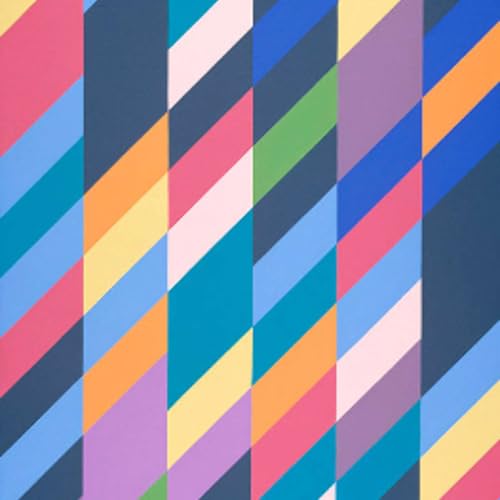
The Collectors' Edge cover art

The Collectors' Edge

The Collectors' Edge

By: Nordic Art Partners
Listen for free

About this listen

Welcome to The Collectors' Edge from Nordic Art Partners – our guide to the specific work we do in the modern and contemporary art world.

We are researchers, dealers and collectors and our episodes explore the art and markets of under appreciated artists from history that intrigue and inspire us and that form the core of our professional activities. Our episodes strive to offer anecdotal journeys in learning, thoughtful insights and the wisdom of our professional experience, designed to help with well-informed collecting strategies.

Whether you're intrigued by the intricacies of the art industry, seeking expert advice on putting some of your money into art, or simply looking for inspiration about interesting and beautiful things to acquire that have been rigorously vetted by us, this podcast is for you.

Join us as we explore the art of collecting with a keen eye for aesthetic excellence and practical value.

© 2025 Nordic Art Partners
Art
Episodes
  • Bridget Riley: Activating the Picture Plane
    Nov 17 2025

    Your eyes think her canvases are moving. That’s the spell Bridget Riley's works cast. Join Nordic Art Partners to understand her unique methodology—brick by brick, line by line; from black-and-white checks to colour-saturated diagonals that make the picture plane come to life with extraordinary movement. We share the formative moments that shaped her practice, from early training at Goldsmiths and the Royal College of Art to a revelatory encounter with Seurat’s Pointillism, convincing her that in the most dynamic works, perception of color is mixed in the eye and not on the artist's palette.

    We chart the leap from stark monochrome veils, grids, and waves to the chromatic sophistication of the late 1960s and 1970s—Cataract, Chart, and the Egyptian palette works—before stepping into the 1980s diagonals and the 1990s curves that expanded her visual grammar. Along the way, we explore why The Responsive Eye at MoMA made her a global name, how Venice amplified her reputational apogee, and why major museums keep returning to her with deep, rigorous surveys. This isn’t just a timeline; it’s a look at how a methodical studio process and acute optical thinking reshaped what a painting can do to a viewer.

    Then we turn the lens to the market. With representation by David Zwirner and Max Hetzler, Riley’s primary prices reflect blue-chip confidence, while secondary results show decades of steady growth, robust sell-through, and repeat-sale gains. We compare early monochromes, colour waves, and the 1980s–90s diagonals, outlining where scarcity, art-historical significance, and visual power converge. The takeaway is clear: as institutions keep spotlighting her achievements and supply stays tight, the case for long-term value strengthens.

    If you enjoyed this deep dive into the art and economics of optical painting, follow the show, share it with a friend who loves modern and contemporary art, and leave a quick review so others can find us.

    Get in Touch

    Show More Show Less
    52 mins
  • Sheila Hicks: The Universal Language of Textiles
    Sep 24 2025

    The boundaries between fine art and craft have blurred dramatically over recent decades, and few artists embody this shift more powerfully than Sheila Hicks. At 90 years old, this Nebraska-born, Paris-based artist has spent over six decades transforming how we understand textile as an artistic medium.

    Stepping into Hicks' world means discovering an artist whose work combines modernist color theory (learned directly from Josef Albers at Yale in the 1950s) with techniques gleaned from indigenous weaving traditions across the globe. Generally speaking, her pieces hang on walls like paintings or sculptural reliefs, with color blocks that shimmer and transform as light plays across their textured surfaces. Some bulge with sculptural dimensionality; others form monumental columns that completely transform architectural spaces. What unites them all is an extraordinary sensitivity to color, material, and form that makes them immediately recognizable as her work.

    What's particularly fascinating about Hicks' career is how she's consistently existed in multiple worlds simultaneously. From her earliest exhibitions in the 1960s, she moved fluidly between fine art museums and design contexts, never limiting herself to one category, seeking and finding opportunity in both. This boundary-crossing approach feels remarkably contemporary, yet she pioneered it decades before it became fashionable. Her works now reside in virtually every major museum collection worldwide—from MoMA and the Whitney to the Tate and Centre Pompidou—evidence of her profound influence.

    For collectors, Hicks offers a rare opportunity: work by a historically significant artist whose prices (typically €100,000-300,000) remain reasonable compared to many contemporaries with far less impressive credentials. Whether you're drawn to her intimate "minime" pieces or larger tapestry works, collecting Hicks means acquiring something that transcends categories and speaks a truly universal visual language. Discover why museums, critics, and collectors worldwide are celebrating this extraordinary artist whose vision has permanently changed how we see textile in contemporary art.

    Get in Touch

    Show More Show Less
    38 mins
  • David Shrigley: A Big Thumb's Up to Humour, Poignancy and Accessibility
    Sep 8 2025

    Could it be possible to acquire unique works by one of the world's most recognisable and renowned artists for less than $10,000? David Shrigley might be the art world's best-kept open secret. Find out why with Nordic Art Partners.

    This episode takes you deep into the whimsical world and highly developed market of one of Britain's most beloved contemporary artists, whose childlike drawings paired with deadpan humor have earned him global acclaim while remaining refreshingly affordable. Host Jeppe Curth and art expert Nicholas Robinson explore how Shrigley's deceptively simple aesthetic—colorful, seemingly casual drawings with witty text observations—has captivated audiences from both gallery walls and public monuments.

    What makes Shrigley truly remarkable is the striking disconnect between his impressive credentials and his artwork's accessibility. Despite being nominated for the Turner Prize, receiving an OBE, creating London's famous Fourth Plinth commission, and having work in collections at MoMA, Tate, and Centre Pompidou, large unique Shrigley works can be acquired for under €15,000. This paradox of prestigious recognition and affordable pricing creates a rare opportunity for new collectors to own pieces by a globally significant artist without the intimidating expenditure typically required for such.

    Beyond his artistic practice, we discover Shrigley's advocacy for integrating art into education—championing the evolution from STEM to STEAM—mirroring his democratic approach to making meaningful art available to broader audiences. Whether you're drawn to his humorous animal characters with profound observations or his simple yet universal messages, Shrigley's work offers something increasingly rare: museum-caliber art that brings daily joy without requiring extraordinary wealth.

    Ready to start collecting or simply curious about this unique artistic voice? Join us for an enlightening conversation about an artist who proves that significant art doesn't always come with a significant price tag.

    Get in Touch

    Show More Show Less
    33 mins
No reviews yet
In the spirit of reconciliation, Audible acknowledges the Traditional Custodians of country throughout Australia and their connections to land, sea and community. We pay our respect to their elders past and present and extend that respect to all Aboriginal and Torres Strait Islander peoples today.