• Do Americans agree that Trump has made the US ‘better, richer’? | The Bottom Line
    Mar 3 2026
    US President Donald Trump is falling into the same trap as his predecessor, Joe Biden, when he tries to convince Americans that they’re better off financially, argues YouTuber Brian Tyler Cohen. Cohen and Matt Duss, executive vice president at the Center for International Policy, join host Steve Clemons to dissect Trump’s State of the Union address and vision for the United States. One of Trump’s strengths is the weakness of his main opposition, the Democratic Party, argues Cohen, as the party acts “in a way that's completely untethered to how the vast majority of Democrats actually feel”.
    Show More Show Less
    25 mins
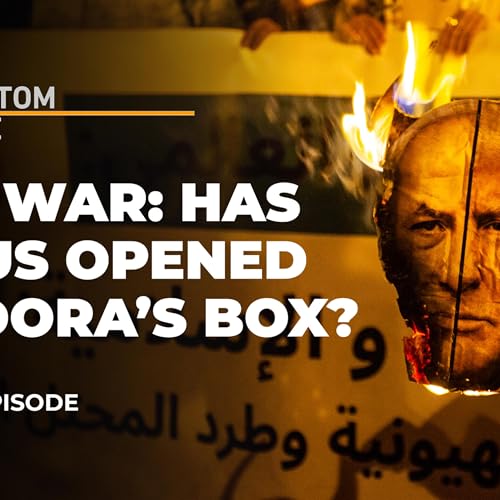
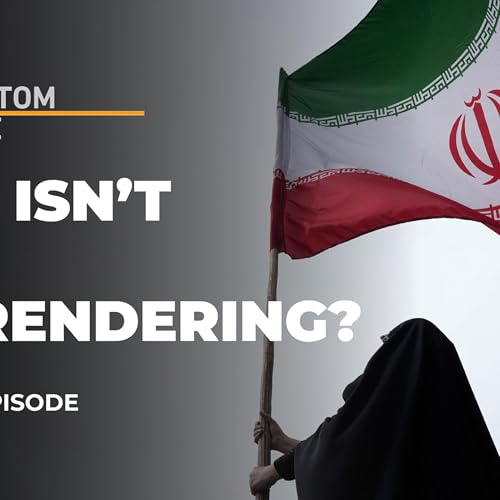
  • Iran war: Redrawing the map of the Middle East, Israeli style? | The Bottom Line
    Mar 4 2026
    Even though the joint United States-Israeli war on Iran is in its early days, “we already are in a scenario where the US has lost control of this war,” argues Vali Nasr, professor of international affairs and Middle East studies at Johns Hopkins University. Nasr tells host Steve Clemons that Iran is the weaker party, but it “has the capability to create a much longer mayhem” than envisioned by the US and Israel. US goals for this war may be unclear, but “Israel’s goal is to arrive at a point where it’s the supreme power in the Mideast”, says Nasr.
    Show More Show Less
    25 mins
  • Has BRICS given up on challenging Western economic dominance? | The Bottom Line
    Feb 22 2026
    At its peak, the BRICS coalition of economies – Brazil, Russia, India, China and South Africa – was seen as a serious attempt to move away from the United States dollar and the domination of Western economic institutions like the World Bank, Group of Seven (G7), and International Monetary Fund (IMF). But BRICS members have different political agendas, and new forces are at play, argues economist Jim O’Neill, a member of Britain's House of Lords. O’Neill, who coined the term "BRIC" 25 years ago, tells host Steve Clemons that the US's economic policies may be the driver of its own decline, coupled with the economic rise of China and India. Subscribe to our channel: http://bit.ly/AJSubscribe Follow us on X : https://twitter.com/AJEnglish Find us on Facebook: https://www.facebook.com/aljazeera Check our website: http://www.aljazeera.com/ Check out our Instagram page: https://www.instagram.com/aljazeeraenglish/ Download AJE Mobile App: https://aje.news/AJEMobile
    Show More Show Less
    25 mins
  • Is Trumpism losing steam?
    Feb 15 2026
    The Republican Party currently controls the White House and both houses of Congress in the United States. But will that change in November? Among Republican voters, US President Donald Trump is still wildly popular, despite criticism over uneven economic conditions and brutal anti-immigration tactics. And within the Democratic Party establishment, there is no sign of a desire to shift towards a more progressive, less centrist platform – even as left-leaning Democratic Socialists make gains. Host Steve Clemons asks Republican strategist John Feehery and Amy Dacey, former chair of the Democratic National Committee, about Trumpism and the election prospects of both parties.
    Show More Show Less
    25 mins
  • Will Trump adopt Israel’s ‘red lines’ on Iran? | The Bottom Line
    Feb 9 2026
    If the Trump administration adopts Israel’s “red lines” in the negotiations with Iran, the talks are doomed, argues Trita Parsi, executive vice president of the Quincy Institute for Responsible Statecraft. Parsi tells host Steve Clemons that Iran is willing to reach a deal on its nuclear programme, as it did in 2015 with then-President Barack Obama. But a lot depends on “whether the US is willing to push back against Israel or not”. Israeli officials were “very upset” that the United States has so far chosen diplomacy over war, and demand that the US add new issues – especially Iran’s ballistic missiles – to the agenda. Subscribe to our channel: http://bit.ly/AJSubscribe Follow us on X : https://twitter.com/AJEnglish Find us on Facebook: https://www.facebook.com/aljazeera Check our website: http://www.aljazeera.com/ Check out our Instagram page: https://www.instagram.com/aljazeeraenglish/ Download AJE Mobile App: https://aje.news/AJEMobile
    Show More Show Less
    25 mins
  • Gaza’s daily nightmare vs US talk of AI-driven smart cities | The Bottom Line
    Feb 1 2026
    United States plans for Gaza amount to a “theme park of dispossession” for Palestinians, argues Drop Site News Middle East Editor Sharif Abdel Kouddous. Abdel Kouddous tells host Steve Clemons the draconian measures planned for the two million shell-shocked Palestinians in Gaza are an Orwellian labyrinth of biometrics, bureaucracy and “a lab for government surveillance” – all meant to drive them out. Noting that Israel hasn’t “gone past phase one” of any ceasefire agreement with an Arab country, Abdel Kouddous warns that Israel is establishing facts on the ground in Gaza – including 50 military bases – “which eventually become permanent”.
    Show More Show Less
    25 mins
  • Why is Trump upending 80 years of US foreign policy? | The Bottom Line
    Jan 25 2026
    United States President Donald Trump realises “the rules-based international order” never existed, and he’s “willing to turn his back on that”, former Trump administration official Christian Whiton argues. Whiton tells Steve Clemons that US foreign policy remained fairly consistent over the past 80 years while Trump is happy to upset “the globalists and the establishment unity party in Washington - Republican and Democrat - and all the generals”. In Europe, the US would like to see more populist, anti-immigration governments, Whiton said, adding that Western societies should “cast aside” the idea that they are “inherently racist, a patriarchy [with] … a racist, imperialist history”.
    Show More Show Less
    25 mins
  • How much of Trump’s foreign policy is driven by minerals and oil? | The Bottom Line
    Jan 18 2026
    China’s domination of minerals - especially the copper needed for electrification, data centres, robots, cellphones and defence technology - is pushing the United States to ramp up its control of oil and minerals worldwide, argues Daniel Yergin, one of the world’s top experts in the economics of oil. In this episode, Yergin explains how Venezuela, Greenland, Iran, Russia and other issues are connected to the business of oil and the competition to control Earth's minerals. And while US President Donald Trump’s motives in Venezuela and Greenland are unclear, Yergin says one thing is certain: The US is desperate to achieve supply chain independence from China.
    Show More Show Less
    25 mins