Stumbling Blocks: How Great Leaders Are Made cover art

Stumbling Blocks: How Great Leaders Are Made

Stumbling Blocks: How Great Leaders Are Made

By: Jonathan Block
Listen for free

About this listen

Here, leaders share their stumbling blocks, what they learned through the stumble, and how it changed them.

You'll hear leaders as they really are: challenged, battered, and deeply flawed. And you'll see them picking back up, dusting themselves off, and leading again. Because our stumbling blocks make us better, if we let them.

Welcome to Stumbling Blocks: How Great Leaders are Made.

I’m Jonathan Block. I ask leaders to take us back to the moments that don't make it to highlight reel:

• The day they got laid off.

• The crisis that almost broke them.

• The loss that re-shaped how they see the world.

Join me to uncover the fires that forge great leaders.

This leadership podcast is what gritty, authentic leadership looks like. No AI slop.

Episodes drop every Thursday. Subscribe today.

Welcome to The Stumble.

Questions? Comments?
Linkedin: www.linkedin.com/in/jonathanfblock
Insta: @JonathanFBlock
Twitter: @JonathanFBlock
Email: Jonathan@BlockLeadershipGroup.com

2025 Jonathan Block
Economics Management Management & Leadership
Episodes
  • Steve Scherer, Bureau Chief, Reuters Canada: From Interviewing the Prime Minister to Driving an Uber
    Feb 12 2026

    A conversation with former Reuters Canada Bureau Chief Steve Scherer on job displacement, the gig economy, and America’s identity crisis.

    Steve was once a high-level journalist, a Reuters Bureau Chief for Canada, who interviewed world leaders like Justin Trudeau and covered global financial markets. Then, a budget cut cost him his job, his work visa, and forced him to move his family out of Canada.

    Now, he’s driving for Uber to make ends meet.

    He chronicled his experience a viral Substack essay, "My Journey from Foreign Correspondent to Uber Driver in Trump's America."

    In this raw and honest conversation, Steven shares the story of his displacement and offers a powerful and humbling perspective on the economic anxieties, political divisions, and human needs that connect us all.

    Steve talks about what it is like to turn over the keys to a role that filled him with pride, gave him leverage, and provided a powerful platform... and slide into the driver's seat of an Uber.

    Timestamps

    • [00:00] From Reuters Bureau Chief to Uber Driver: The viral essay and the shock of displacement.
    • [02:54] How a high salary and a lost work permit forced Steven and his family to leave Canada.
    • [09:41] The unexpected family move to Italy and why Steven's wife fears returning to "Trump's America."
    • [12:30] The decision to drive for Uber: flexibility, low pay, and the surprising feeling of being "invisible."
    • [16:25] Why returning to the U.S. after 28 years felt like coming home to a more divided country.
    • [23:56] The roots of "politics as entertainment": covering Silvio Berlusconi
    • [31:02] Steven's most moving story: Covering the deadliest migration route in the world from Libya to Italy and rescuing 530 people in a single day.
    • [35:28] Connecting personal unemployment and loss of "leverage" to the desperation of migrants.

      See Steve's substack here:
      https://stevescherer.substack.com/p/my-journey-from-foreign-correspondent?utm_campaign=post-expanded-share&utm_medium=web&triedRedirect=true

      Steve's Twitter Feed:
      https://x.com/SchererSteve
    Show More Show Less
    46 mins
  • Brent Beshore, CEO, Permanent Equity: How Winning Made me Lose
    Feb 5 2026

    Brent Beshore made his first million at 28. Visited the White House. Got ranked 28th on the Inc. 500. Got everything he wanted.

    And realized he had summited the wrong mountain.

    In this raw conversation, Brent—CEO of Permanent Equity, a private equity firm that owns 16 companies generating $400M in revenue with zero debt—goes places most CEOs do not.

    He talks about weighing 252 pounds while everything he ate tasted grey. About earning a million dollars but telling his wife he didn't love her. About being an ardent atheist who made fun of Christians before everything changed.

    This isn't your typical CEO interview. Brent breaks down why traditional private equity is broken, how his firm operates without debt or forced exits, and why treating people well isn't just nice—it actually delivers better returns.

    But the real lesson?

    "The lie is that money will make you someone else. The truth is that money only makes you more of what you already are."

    If you've ever felt like you're winning the wrong game, this conversation will hit hard.

    TIMESTAMPS:

    [01:27] What is Permanent Equity?

    [06:43] The two stakeholders traditional PE serves—and everyone it doesn't

    [08:04] The portfolio: 16 companies, $400M revenue, $50M free cash flow, zero debt

    [10:48] "We want to be a kind, generous, long-term owner"

    [20:24] 28 years old: First million, Inc. 500, White House advisor, and completely hollowed out

    [22:47] Climbing the wrong mountain

    [27:36] "I don't even know what love meant when we got married"

    [28:05] Why he never wanted kids (and why he wishes he had five more now)

    [29:32] "He who has the gold makes the rules" vs. "The meek shall inherit the earth"

    [32:23] "Do I own the things I create? No, of course not."

    [37:36] Living generously: Why they give away 25% before taxes

    [45:25] Good reasons to sell vs. bad reasons to sell

    [48:37] How long-term thinking changes everything—with investors, employees, and communities

    [50:55] The Main Street Summit: "You belong here. You're important. You matter."

    [53:38] Being known vs. being loved: The safeguard against blowing up your life

    [54:08] Addiction, affairs, and cutting corners: What happens when you're unknown

    [56:50] The "Brené Brown bullsh*t" review (his favorite)

    [58:06] The day everything changed: Dropping the performance and being authentic

    [1:03:49] We're all going to anonymity—so what really matters?

    [1:07:04] Advice for someone climbing the wrong mountain: You're not alone

    [1:09:09] "Study the greats—all the greats study Jesus"

    GUEST: Brent Beshore CEO, Permanent Equity Columbia, Missouri

    HOST: Jonathan Block Founder, Stumbling Blocks Podcast

    LINKS:
    https://www.permanentequity.com/
    linkedin.com/in/brentbeshore
    https://www.mainstreetsummit.com/

    If this conversation resonated, please pass it along.

    Show More Show Less
    1 hr and 9 mins
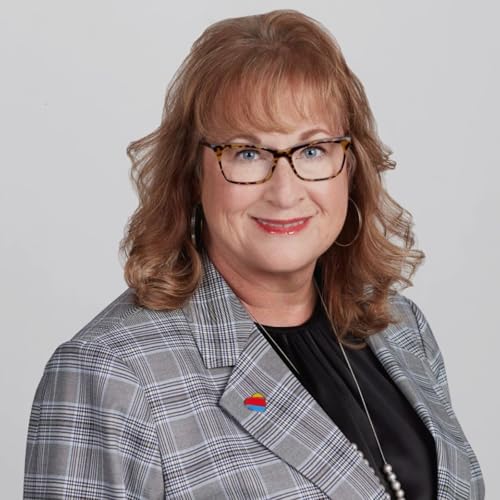
  • Linda Rutherford, CAO, Southwest Airlines: How a Proxy Fight Led to Assigned Seating (Pt 2)
    Jan 29 2026

    In this episode, I sit down with Linda Rutherford, former Chief Administration Officer of Southwest Airlines for the second half of our conversation.

    Linda, described as the "keeper of Southwest's corporate soul," provides a rare, behind-the-scenes look at how one of the world’s most iconic brands survived two of the most disruptive forces in its 50-year history: Winter Storm Elliott and the hostile takeover by Elliott Investment Management.

    The conversation explores the "Twin Elliotts"—the 2022 operational meltdown that stranded millions and cost the airline $1.2 billion; and the 2024 activist investor surge that forced a radical reinvention of the airline.

    From paying for a customer’s Craigslist car to the end of open seating, Linda discusses the high-stakes leadership required to maintain a company's heart while satisfying Wall Street's demands.

    Show Highlights & Timestamps
    • [00:00] The First Storm: Winter Storm Elliott (2022) Linda recounts the unprecedented operational "brownout" during the 2022 holiday season. She explains how mismatched aircraft and crews led to 17,000 cancellations and a $1.2 billion recovery effort.
    • [02:00] The Strategy Behind the Change Jonathan and Linda discuss the historic shift from open seating to assigned seating and the introduction of premium cabin options.
    • [03:30] Keeping the Corporate Soul How do you maintain a "culture of love" (and the LUV ticker) through four CEO transitions? Linda explains her role in bridging the gap between founding legends Herb Kelleher and Colleen Barrett and the modern era.
    • [13:26] The Vulnerability Playbook A deep dive into the "war room" during the meltdown. Linda discusses why Southwest chose radical transparency, including a public-facing checklist of operational fixes to earn back passenger trust.
    • [17:38] The $1.2 Billion "Make-Good" The extraordinary measures taken to compensate 2 million displaced passengers, including refunding cruises and even a car purchased on Craigslist.
    • [18:50] The Second Storm: Elliott Investment Management (2024) The arrival of activist investors. Linda details the "all-hands" internal response, the restructuring of the Board of Directors, and the pressure of a languishing stock price.
    • [24:00] Going to School on Activism Linda describes the steep learning curve for the executive team as they engaged with activist demands for the first time in company history.
    • [28:54] Leadership Advice: The Nitty-Gritty of Change Linda’s parting wisdom for leaders facing "disruptive reinvention": why a memo isn't enough and why psychological safety is the key to successful transformation.
    Key Takeaways for Leaders
    • Trust is a Bank Account: Southwest’s Net Promoter Score (NPS) plummeted to single digits during the meltdown but stayed positive because of decades of "goodwill deposits."
    • Reinvention vs. Transformation: Linda argues that Southwest isn't changing; it’s reinventing its business model to meet modern traveler expectations while protecting labor contracts.
    • Change Management Matters: In a period of constant crisis, communication must move beyond "checking the box" to address the psychological needs and upskilling of the workforce.

      Questions? Guest Pitches? Shoot me an email at
      Jonathan@Blockleadershipgroup.com
    Show More Show Less
    32 mins
No reviews yet
In the spirit of reconciliation, Audible acknowledges the Traditional Custodians of country throughout Australia and their connections to land, sea and community. We pay our respect to their elders past and present and extend that respect to all Aboriginal and Torres Strait Islander peoples today.