School Gardens with Ease cover art

School Gardens with Ease

School Gardens with Ease

By: Leila
Listen for free

About this listen

Discover how to effortlessly integrate school gardens into your elementary or middle school curriculum with the School Gardens with Ease Podcast. This podcast is your go-to resource for creating flourishing and productive food gardens that provide long-term educational benefits. Learn tips, strategies, and insights to help you grow and maintain a sustainable school garden that enhances your teaching and inspires students for years to come.

© 2026 School Gardens with Ease
Episodes
  • 73: What Can Parents Do to Help Build a School Garden?
    Feb 22 2026

    Send a text

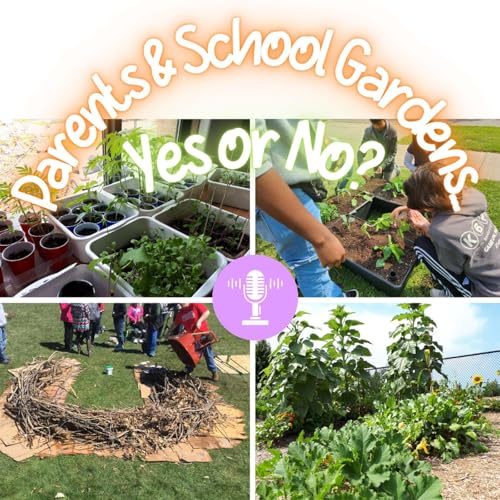
    Many school gardens are started with the best of intentions by dedicated, caring parents. Yet again and again, these gardens struggle or fail within a short time. Why does this happen, and what should parents actually do if they want to support a thriving school garden?

    In this episode, Leila Mireskandari draws on over a decade of experience working with schools to explain a hard but essential truth: school gardens are educational programs, not parent run projects. Because of this, they must be led by teachers and integrated into classroom learning, not created or managed by well meaning volunteers.

    Leila shares why even highly skilled gardeners or enthusiastic parent groups cannot substitute for teacher leadership in a school garden. Growing food at school is fundamentally different from home or community gardening. It requires alignment with curriculum, classroom schedules, and the realities of teaching time, expertise that teachers have and outside volunteers typically do not.

    You will also learn why building a garden for teachers rarely leads to success, and why the most effective school gardens actually begin indoors, in classrooms, with students growing seedlings and learning hands on before any outdoor beds are created.

    So what can parents do? The answer may surprise you. Instead of leading or building gardens themselves, parents play a powerful supporting role, helping teachers access training, resources, and ongoing support so they can confidently lead garden based learning with their students.

    If you are a parent, or a teacher working with parent volunteers, this episode clarifies roles, avoids common pitfalls, and lays out the proven pathway to a sustainable, curriculum connected school garden that lasts for years.

    In this episode, you will learn:

    • Why most parent led school gardens fail
    • The critical difference between school gardens and other school facilities
    • Why teacher leadership is essential for long term success
    • How school gardens should actually begin, hint, not outdoors
    • The most helpful role parents can play in supporting school gardens

    Resources mentioned:

    • Explore the Oasis school garden lesson plan series, link in show notes
    • Hear detailed program explanations in Episode 72

    The Oasis programs provide teachers with step by step lesson plans, classroom ready growing guides, and ongoing support to successfully integrate food growing into curriculum connected learning.

    If you are a parent who wants a school garden at your child’s school, or a teacher navigating parent enthusiasm, this episode will help you focus energy where it truly makes a difference.

    Listen now to discover how parents and teachers can work together, without crossing roles, to grow school gardens that actually thrive.

    Show More Show Less
    13 mins
  • 72: Which Oasis Program Is Right for You? A Complete Guide for Teachers
    Feb 17 2026

    Send a text

    If you’re interested in teaching through food gardens but feel unsure which Oasis program fits your classroom, this episode walks you through the full Oasis suite so you can choose with confidence.

    Leila explains the differences between Oasis Classroom, Caja Oasis, and Oasis School, who each program is designed for, and how they support teachers at different stages, from indoor seed growing to full regenerative outdoor gardens.

    All Oasis programs are created for grades 3–8 and are designed to run during class time, with curriculum-connected garden learning that integrates science, language, and math outcomes.

    The Three Oasis Programs

    Oasis Classroom
    An indoor growing program where students raise up to 20 varieties of food seedlings using a simple sunny window setup. No outdoor space or grow lights required.
    Best for teachers new to school gardening or classrooms without outdoor access.

    Caja Oasis
    An outdoor garden program using self-watering planters from The Growing Connection. Students grow indoors first, then transplant into planters while learning garden setup, site selection, and seasonal care.
    Best for schools ready for an easy, low-maintenance outdoor garden.

    Oasis School
    A full regenerative garden design and build program using Permaculture principles and techniques. Students design, construct, and plant a long-term outdoor food garden grown from their indoor seedlings.
    Best for committed upper-grade programs ready for a comprehensive garden project.

    What All Oasis Programs Include

    Every Oasis program provides:

    • Step-by-step lesson plans
    • Student booklets and classroom posters
    • Materials and supplies lists
    • Weekly planting schedule
    • Direct coaching with Leila

    Programs run about 1–2 hours per week for 11-12 weeks and are intended to finish about two weeks before the end of the school year.

    Recommended Starting Point:

    If you’re new to school gardens, Leila recommends beginning with Oasis Classroom. Indoor growing builds skills, confidence, and student success before expanding to outdoor gardens in later years through Caja Oasis or Oasis School.

    Enrollment Timeline:

    Registration for all three Oasis programs closes at the end of February. A K–2 program and an Earth Day mini-program will be available later in the spring.

    If you’re ready to bring meaningful, curriculum-aligned food growing into your teaching, this episode will help you decide which Oasis path fits your classroom best.

    Show More Show Less
    17 mins
  • 71: Let’s Grow an Oasis in Your Classroom This Spring
    Feb 7 2026

    Send us a text

    What if you didn’t need raised beds, irrigation systems, or expensive equipment to start a school garden?

    In the first episode of Season 3, Leila Mireskandari—founder of Kids Growing City and longtime school-garden educator—shares why successful school gardens don’t begin outdoors. They begin in the classroom.

    After growing school gardens full-time for more than a decade, Leila explains a simple but powerful truth: school gardens are taught into existence. Instead of pouring energy and money into building outdoor infrastructure first, educators can start by teaching students how to grow food from seed—using minimal supplies and curriculum-aligned lessons.

    Who This Episode Is For

    This episode is for anyone who cares about school gardens—teachers, principals, parents, community partners, and school leaders. But most of all, it speaks directly to educators who want to lead a garden program that lasts and truly supports learning.

    Why Most School Gardens Start in the Wrong Place

    Leila challenges the assumption that schools must build a garden before teachers can use it.

    Unlike a gym or science lab, a garden is not a finished facility that appears overnight. Designing, planting, maintaining, and harvesting food are themselves the lessons. When schools invest heavily in outdoor beds first, they often face burnout, budget strain, and long-term maintenance problems.

    Instead, Leila argues that growing food should begin with seeds, observation, and hands-on classroom learning—long before shovels hit the soil.

    What You Actually Need to Start

    Forget grow towers and hydroponics systems.

    To begin a classroom garden, Leila says you only need:

    • Seeds
    • Potting soil
    • A sunny window
    • Buckets or seed-starting cups
    • Simple craft supplies
    • A planting schedule for your growing zone
    • Lesson plans that connect gardening to curriculum

    With these basics, students can grow an impressive amount of food indoors while developing scientific thinking, responsibility, and confidence.

    Teachers Are the Key to Successful School Gardens

    A central message of the episode is that school gardens thrive when they are:

    • Led by teachers
    • Embedded in curriculum
    • Built and grown by students
    • Supported—rather than driven—by administrators, parents, and community partners

    Community gardens on school grounds can be wonderful, Leila explains, but instructional school gardens depend on educators taking the lead.

    The Two-Phase Approach: Classroom First, Outdoors Later

    Leila introduces her two-phase framework for sustainable school gardens.

    Phase 1 focuses on the classroom. Students learn to germinate seeds, care for seedlings, and grow fast-maturing crops that can be harvested before summer. Longer-season plants can be sent home, donated, or used for fundraising when school ends.

    Phase 2 comes later. Often in a second year, schools expand outdoors to tackle garden design, bed building, transplanting, and summer maintenance systems. Trying to do everything at once, Leila notes, is what overwhelms many programs.

    The Oasis Program Series Is Now Open

    Leila shares that enrollment is open for 2026 in her

    👉 Oasis Program Suite

    including Oasis Classroom and outdoor garden lesson packages, along with the School Gardens with Ease Logistics class.

    These programs provide done-for-you lesson plans and step-by-step systems so teachers can grow thriving gardens with confidence.

    In this episode, you’ll learn how to start a school garden with minimal supplies, build skills before investing in infrastructure, and grow a classroom

    Show More Show Less
    13 mins
No reviews yet
In the spirit of reconciliation, Audible acknowledges the Traditional Custodians of country throughout Australia and their connections to land, sea and community. We pay our respect to their elders past and present and extend that respect to all Aboriginal and Torres Strait Islander peoples today.