Episodes

  • Okay, but do birds have culture?
    Apr 2 2026

    From sparrow songs that go viral across a continent to cockatoos that watch each other to learn how to open bins, Dr. Lucy Aplin, Australian National University / University of Zurich, studies how birds learn from each other and why it matters. Doing it for the culture? Yep. Birds are that impressive!

    In this episode you'll hear about:

    • How a new white-throated sparrow song spread over 3,000 kilometers in just two decades, replacing a tune that had been stable since the 1950s
    • The experiment that proved wild great tits can establish lasting cultural traditions through their social networks
    • Why losing a population of birds might also mean losing knowledge that took generations to build

    All audio, video, and images in this episode are either original to Okay, But... Birds (© Okay Media, LLC) or used under license/permission from the respective rights holders. Bird media from the Macaulay Library is used courtesy of the Cornell Lab of Ornithology as follows:

    • White-throated Sparrow audio contributed by Bob McGuire, ML219799
    • White-throated Sparrow audio contributed by Jocelyn Lauzon, ML121581051
    • Great Tit audio contributed by Arnoud B. van den Berg, ML36198
    • Eurasian Sparrowhawk audio contributed by Ben F. King, ML335224
    • Regent Honeyeater audio contributed by Vicki Powys, ML223277
    • Pink-footed Goose audio contributed by Bob McGuire, ML235508

    Show More Show Less
    35 mins
  • Okay, but why put eggs in another bird’s basket?
    Mar 26 2026

    What if the secret to raising more babies was to never raise a single one yourself? Dr. Chris Balakrishnan, Associate Adjunct Professor of Biology at East Carolina University and co-founder of Nerd Nite, has spent his career studying the strangest birds on the planet: the ones that outsource parenthood entirely.

    In this episode you'll hear about:

    1. The evolutionary arms race between brood parasites and their hosts, from mimetic eggs to alien-looking chick mouth patterns
    2. How the "password hypothesis" explains how brown-headed cowbirds avoid imprinting on the wrong species
    3. Why host-switching in African parasitic finches can drive the rapid formation of new species

    All audio, video, and images in this episode are either original to Okay, But... Birds (© Okay Media, LLC) or used under license/permission from the respective rights holders. Bird media from the Macaulay Library is used courtesy of the Cornell Lab of Ornithology as follows:

    1. Brown-headed Cowbird audio contributed by Wil Hershberger, ML94262
    2. Brown-headed Cowbird audio contributed by Wil Hershberger, ML516718
    3. Redhead audio contributed by Jessie Berry, ML139672
    4. Canvasback audio contributed by Arthur A. Allen, ML3537
    5. Greater Honeyguide audio contributed by Mike Andersen, ML140981
    6. Pin-tailed Whydah audio contributed by Myles E. W. North, ML14489
    7. Village Indigobird audio contributed by Myles E. W. North, ML14484
    8. Zebra Finch (Australian) audio contributed by Vicki Powys, ML226233
    9. Prothonotary Warbler audio contributed by Wil Hershberger, ML85158
    10. Kirtland's Warbler audio contributed by Rudolph Little, ML13982

    Show More Show Less
    31 mins
  • Okay, but what makes a yard a bird paradise?
    Mar 19 2026

    Most people picture a bird-friendly yard and imagine feeder, birdbath, maybe a decorative birdhouse with mortgage vibes. And feeders are great. But a feeder can give you the illusion of helping birds without creating the thing birds need most: habitat.

    In this episode, Dr. Doug Tallamy, Professor in the Department of Entomology and Wildlife Ecology at the University of Delaware, joins Scott to explain why your yard is conservation infrastructure in disguise, and what it actually takes to turn it into a place birds can live, breed, and thrive.

    In this episode you'll hear about:

    1. Why "plant natives" is just the beginning, and which keystone plants actually move the needle for birds
    2. The surprising reason a beautiful all-native garden can still function like a food desert
    3. What Homegrown National Park is, and how your yard fits into a continent-wide conservation strategy

    Ready to do more than feed birds? Join the Homegrown National Park pledge at homegrownnationalpark.org and start shifting your patch of earth.

    All audio, video, and images in this episode are either original to Okay, But... Birds (© Okay Media, LLC) or used under license/permission from the respective rights holders. Bird media from the Macaulay Library is used courtesy of the Cornell Lab of Ornithology as follows:

    1. Chestnut-sided warbler audio contributed by Jay McGowan, ML191085
    2. Northern parula audio contributed by Wil Hershberger, ML79471
    3. Carolina chickadee audio contributed by Wil Hershberger, ML100756
    4. Oriental pied-hornbill audio contributed by Warren Y. Brockelman, ML170843
    5. Northern cardinal audio contributed by Wil Hershberger, ML249823
    6. Black-capped chickadee audio contributed by Jay McGowan, ML202239

    Show More Show Less
    24 mins
  • Okay, but what makes a bird… a bird? Hint: Dinosaurs!
    Mar 12 2026

    What do feathers, toothless beaks, and a 66-million-year-old asteroid have in common? Paleontologist Dr. Daniel Field, University of Cambridge, joins Scott to unpack how birds evolved from dinosaurs, and why defining "bird" is trickier than you think.

    In this episode you'll hear about:

    1. Why Archaeopteryx had half the features of a modern bird and lacked the other half, and what that tells us about 150 million years of evolution
    2. The "Wonderchicken," a tiny fossil from the border of Belgium and the Netherlands that rewrote what we know about birds surviving the asteroid impact
    3. How micro CT scanning lets scientists digitally peer inside rocks to study fossils at micron scale without ever touching them

    Listen wherever you get your podcasts, and don't forget to subscribe so you never miss an episode.

    All audio, video, and images in this episode are either original to Okay, But... Birds (© Okay Media, LLC) or used under license/permission from the respective rights holders. Bird media from the Macaulay Library is used courtesy of the Cornell Lab of Ornithology as follows:

    1. Great Spotted Kiwi, William V. Ward, ML810
    2. Southern Cassowary, Linda Macaulay, ML57219
    3. Elegant Trogon, David L. Ross, Jr., ML199536
    4. Green Heron,, Bob McGuire, ML229117

    Asteriornis imagery and video courtesy of Dr. Daniel Field, University of Cambridge.

    Show More Show Less
    33 mins
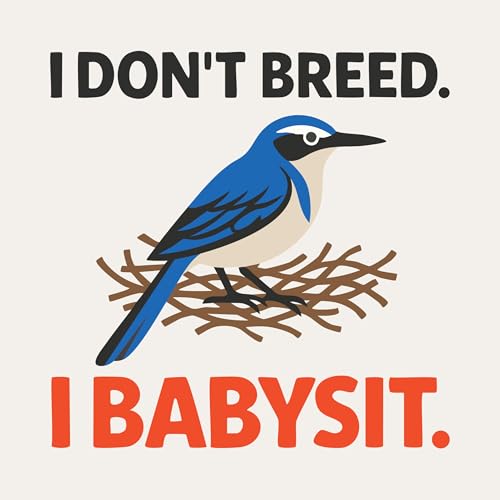
  • Okay, but why do some birds babysit?
    Mar 5 2026

    Some birds skip having their own families and spend years helping raise their siblings instead. It sounds like altruism, but it's probably more complicated than that. In this episode, host Dr. Scott Taylor is joined by Dr. Nancy Chen, UCLA, to unpack the notion that it takes a village to raise a child chick.

    In this episode, you'll hear about:

    1. Why some birds spend years as unpaid helpers before starting families of their own
    2. What the Florida Scrub-Jay's 50-year study at Archbold Biological Station revealed about cooperative breeding
    3. Whether helping your siblings is really altruism or just evolution doing it’s thing

    If you enjoy this one, follow Okay, But... Birds and share it with a friend who thinks family is complicated.

    All audio, video, and images in this episode are either original to Okay, But... Birds (© Okay Media, LLC) or used under license/permission from the respective rights holders. Bird media from the Macaulay Library is used courtesy of the Cornell Lab of Ornithology as follows:

    1. Florida Scrub-Jay audio contributed by Bob McGuire, ML229211
    2. American Crow video contributed by Jay McGowan, ML472843
    3. Superb Fairywren audio contributed by Vicki Powys, ML233810
    4. Superb Starling audio contributed by Myles E. W. North, ML14855
    5. Red-necked Phalarope audio contributed by Bob McGuire, ML235440
    6. Northern Jacana audio contributed by Gerrit Vyn, ML140224

    Show More Show Less
    32 mins
  • Okay, but how do birds stay warm?
    Feb 26 2026

    Winter isn’t just “cold” for a bird, it’s a nightly survival math problem: generate enough heat, lose as little as possible, and don’t get eaten while you’re fueling up. In this episode, host Dr. Scott Taylor is joined by Dr. Maria Stager, UMass Amherst, to break down the clever physiology and weird little behaviors that let birds ride out freezing temps, from icy duck feet to “feather puffball” mode to energy-saving torpor.

    In this episode, you’ll hear about:

    1. How birds keep their feet from freezing
    2. How feathers and shivering muscles act like a built-in winter jacket
    3. How birds manage energy overnight, including fat, roosting, and torpor

    All audio, video, and images in this episode are either original to Okay, But... Birds (© Okay Media, LLC) or used under license/permission from the respective rights holders. Bird media from the Macaulay Library is used courtesy of the Cornell Lab of Ornithology as follows:

    1. Dark-eyed Junco audio contributed by Wil Hershberger, ML94361
    2. Purple Martin audio contributed by Arthur A. Allen, ML8086
    3. Willow Ptarmigan audio contributed by Leonard J. Peyton, ML50031
    4. Common Poorwill audio contributed by Wil Hershberger, ML191125
    5. Snowy Owl audio contributed by Gerrit Vyn, ML138288
    6. Ruffed Grouse audio contributed by Bob McGuire, ML216783
    7. Mallard audio contributed by Mike Andersen, ML136504
    8. Tree Swallow audio contributed by Bob McGuire, ML233306
    9. Black-capped Chickadee audio contributed by Jay McGowan, ML202239
    10. Redpoll (Common) audio contributed by William V. Ward, ML12745

    Show More Show Less
    31 mins
  • Okay, but why is a bird’s world more colorful?
    Feb 19 2026

    E11: Okay, but why is a bird’s world more colorful?

    Bird vision isn’t just “better than ours,” It’s operating in a different color space, including ultraviolet. In Host Dr. Scott Taylor is joined by Dr. Allison Shultz, Associate Curator at the Natural History Museum of Los Angeles County, to break down what birds can actually see, how scientists measure color in the real world, and why feather color is one of evolution’s most powerful (and misunderstood) tools.

    In this episode, you’ll hear about:

    1. How birds see a whole extra dimension of color (including UV) and why we can’t truly experience “bird vision” without the biology to match
    2. How feathers make color through pigments and nano-structures
    3. How studying bird color is changing fast, from spectrophotometers to UV-capable cameras, plus why female coloration and “dirty birds” are reshaping what we think we know

    All audio, video, and images in this episode are either original to Okay, But... Birds (© Okay Media, LLC) or used under license/permission from the respective rights holders. Bird media from the Macaulay Library is used courtesy of the Cornell Lab of Ornithology as follows:

    1. Northern Cardinal audio contributed by Wil Hershberger, ML249823
    2. House Finch audio contributed by William R. Fish, ML12932
    3. Guinea Turaco audio contributed by Mike Andersen, ML140992
    4. Northern Jacana audio contributed by Gerrit Vyn, ML140224
    5. Common Eider audio contributed by Bob McGuire, ML235534
    6. Mountain Bluebird audio contributed by Dave Herr, ML47592
    7. Palm Tanager audio contributed by Curtis Marantz, ML88937
    8. Greater Bird-of-Paradise video contributed by Tim Laman, ML465370
    9. King Bird-of-Paradise video contributed by Tim Laman, ML455252
    10. Paradise Tanager audio contributed by Curtis Marantz, ML127399

    Additional media used with permission under Creative Commons:

    1. Plum-throated Cotinga (Cotinga maynana) in Peru image contributed by Harsha Jayaramaiah, CC BY 4.0, via Wikimedia Commons
    2. Lovely Cotinga (Cotinga amabilis) image contributed by desertnaturalist, CC BY 4.0, via Wikimedia Commons

    Show More Show Less
    33 mins
  • Okay, but can birds keep up with climate change?
    Feb 12 2026

    Seasons used to feel predictable. Winter showed up, spring arrived on cue, and birds could run their annual schedules like clockwork. But now the timing is weird: early heat, late snow, shifting green-up, and food peaks that don’t always line up. In this episode, host Dr. Scott Taylor is joined by Dr. Morgan Tingley, Professor of Ecology and Evolutionary Biology at UCLA, to unpack what “keeping up” with climate change actually means for birds, how scientists measure it, and what gives birds a fighting chance on a rapidly warming planet.

    In this episode, you’ll hear about:

    1. How birds “keep up” by shifting their ranges to cooler places, and the clearest real-world examples of birds already moving north
    2. Why the story is more complicated than “north and uphill,” including microclimates, precipitation shifts, and the messy reality of predicting habitat changes
    3. The full bird toolkit for coping with climate change: movement, timing (phenology), and even shrinking body size over generations, plus what we can do right now that actually helps birds

    All audio, video, and images in this episode are either original to Okay, But... Birds (© Okay Media, LLC) or used under license/permission from the respective rights holders. Bird media from the Macaulay Library is used courtesy of the Cornell Lab of Ornithology as follows:

    1. Northern Cardinal audio contributed by Wil Hershberger, ML249823
    2. Carolina Wren audio contributed by Wil Hershberger, ML191224
    3. Red-bellied Woodpecker audio contributed by Wil Hershberger, ML306064
    4. Orange-crowned Warbler audio contributed by Bob McGuire, ML206459
    5. Orange-crowned Warbler video contributed by Timothy Barksdale, ML402530
    6. House Finch audio contributed by William R. Fish, ML12932

    Show More Show Less
    33 mins