• BORGES IN LOVE An imaginary epistolary exchange between Jorge Luis Borges and the five most important women in his life:
    Jan 30 2026

    BORGES IN LOVE An imaginary epistolary exchange between Jorge Luis Borges and the five most important women in his life: Leonor Acevedo de Borges, Estela Canto, María Esther Vázquez, Elsa Astete Millán, and María Kodama.Jorge Luis Borges was a distinguished Argentine writer, regarded as a key figure both in Spanish-language literature and in world literature.His work is interconnected by recurring themes such as dreams, labyrinths, libraries, mirrors, fictitious authors, and Greek and Norse mythologies, with plots that explore philosophical ideas related to memory, eternity, fame, and the meaning of life. Like the tango, Borges was first recognized in France and Europe before becoming a popular figure in his own country. Was Borges’ extraordinary success due to his literary work, or was it the result of the triumph of his persona—a blind poet heroically battling the shadows of his blindness?Borges was a great admirer of women, perpetually in love with several at once, yet unable to establish a lasting relationship. Women were a profound source of inspiration for Borges’ writing, and at the same time, the origin of many of his sorrows and frustrations—emotions that deeply nourished his literary explorations.This work of historical fiction portrays Borges’ sentimental relationships through his connection with the most important women in his life: Leonor Acevedo de Borges, Estela Canto, María Esther Vázquez, Elsa Astete Millán, and María Kodama.The chosen format is an imaginary and apocryphal epistolary exchange that reflects the extraordinary adventures and emotional journeys of the great writer who, far from fading into oblivion as he once predicted, is being read more than ever. In today’s era of globalized Internet culture, Borges has become the most frequently cited Argentine figure in the world.Download this book to discover the emotional and romantic life of the greatest Argentine writer of all time—and one of the giants of world literature! BUY ON AMAZONhttps://www.amazon.com/dp/B0FTV1THXMORE TITLES FROM THE AUTHORwww.lazarodroznes.com

    Show More Show Less
    18 mins
  • CABARET IN THE WARSAW GHETTO. Theatre, songs and humor to survive in hell
    Jan 30 2026

    CABARET IN THE WARSAW GHETTOTheatre, songs and humor to survive in hellDuring World War II, the Jewish people developed an intense cultural activity in concentration camps, extermination camps, and ghettos. Theater, music, cabaret, and opera were the pillars of the spiritual resistance that enabled their survival. This book is dedicated to Jewish humor and cabaret, the theatrical form that combines texts, singing, and dancing in a single performanceJewish humor is a way of processing pain and suffering. In that magical moment when a flash of a joke appears, hunger, soup kitchens, forced labor, typhus, dead bodies in the streets, the black market, food cards, deportations to the East, and the endless suffering experienced for one reason alone - being Jewish - all disappear.Through humor, the Jewish people were able to maintain their dignity and feel that they were still human beings despite all of the Nazi attempts to destroy any vestige of humanity in them.Humor was able to transform pessimism into optimism, resignation into hope, and the present into the future.Through humor, the Jewish people have accomplished their supreme act of sabotage: survival. They have prevented their weaknesses from being stronger than their strengths.Humor is the secret weapon of the Jewish people. The Nazis did not understand it because they had no sense of humor. Because German is the same as Yiddish, but without a sense of humor.Humor before, during, and after World War II has been a space of freedom in hell where it was possible to be optimistic and leave pessimism for better times.The people who do not laugh are dead before dying. The Jewish people have known how to laugh to survive.Every day there was only one thought: just one more day. In those dark days when the future was no longer what it had been and when everyone hoped that tomorrow the future would be better, humor was key to enable survival.In this book, you will find a series of songs, phrases, jokes, and monologues that vividly and indelibly portray those sinister days of the Holocaust where one people tried to exterminate another through industrial procedures.A show that, through a smile, allows us to exercise memory, avoid forgetting, and ensure that history does not repeat itself. Not with the Jewish people or with any other. Download this book and experience the bittersweet mixture of laughing and suffering at the same time! BUY ON AMAZONhttps://www.amazon.com/dp/B0C1Y1MNNQMORE TITLES FROM THE AUTHORwww.lazarodroznes.com

    Show More Show Less
    14 mins
  • CABARET IN THE WARSAW GHETTO. Theatre, songs and humor to survive in hell
    Jan 30 2026

    CABARET IN THE WARSAW GHETTOTheatre, songs and humor to survive in hellDuring World War II, the Jewish people developed an intense cultural activity in concentration camps, extermination camps, and ghettos. Theater, music, cabaret, and opera were the pillars of the spiritual resistance that enabled their survival. This book is dedicated to Jewish humor and cabaret, the theatrical form that combines texts, singing, and dancing in a single performanceJewish humor is a way of processing pain and suffering. In that magical moment when a flash of a joke appears, hunger, soup kitchens, forced labor, typhus, dead bodies in the streets, the black market, food cards, deportations to the East, and the endless suffering experienced for one reason alone - being Jewish - all disappear.Through humor, the Jewish people were able to maintain their dignity and feel that they were still human beings despite all of the Nazi attempts to destroy any vestige of humanity in them.Humor was able to transform pessimism into optimism, resignation into hope, and the present into the future.Through humor, the Jewish people have accomplished their supreme act of sabotage: survival. They have prevented their weaknesses from being stronger than their strengths.Humor is the secret weapon of the Jewish people. The Nazis did not understand it because they had no sense of humor. Because German is the same as Yiddish, but without a sense of humor.Humor before, during, and after World War II has been a space of freedom in hell where it was possible to be optimistic and leave pessimism for better times.The people who do not laugh are dead before dying. The Jewish people have known how to laugh to survive.Every day there was only one thought: just one more day. In those dark days when the future was no longer what it had been and when everyone hoped that tomorrow the future would be better, humor was key to enable survival.In this book, you will find a series of songs, phrases, jokes, and monologues that vividly and indelibly portray those sinister days of the Holocaust where one people tried to exterminate another through industrial procedures.A show that, through a smile, allows us to exercise memory, avoid forgetting, and ensure that history does not repeat itself. Not with the Jewish people or with any other. Download this book and experience the bittersweet mixture of laughing and suffering at the same time! BUY ON AMAZONhttps://www.amazon.com/dp/B0C1Y1MNNQMORE TITLES FROM THE AUTHORwww.lazarodroznes.com

    Show More Show Less
    7 mins
  • BORGES IN LOVE An imaginary epistolary exchange between Jorge Luis Borges and five women in his life: Leonor Acevedo de Borges, Estela Canto, María Esther Vázquez, Elsa Astete Millán, and María Kodama
    Jan 30 2026

    BORGES IN LOVE An imaginary epistolary exchange between Jorge Luis Borges and the five most important women in his life: Leonor Acevedo de Borges, Estela Canto, María Esther Vázquez, Elsa Astete Millán, and María Kodama.Jorge Luis Borges was a distinguished Argentine writer, regarded as a key figure both in Spanish-language literature and in world literature.His work is interconnected by recurring themes such as dreams, labyrinths, libraries, mirrors, fictitious authors, and Greek and Norse mythologies, with plots that explore philosophical ideas related to memory, eternity, fame, and the meaning of life. Like the tango, Borges was first recognized in France and Europe before becoming a popular figure in his own country. Was Borges’ extraordinary success due to his literary work, or was it the result of the triumph of his persona—a blind poet heroically battling the shadows of his blindness?Borges was a great admirer of women, perpetually in love with several at once, yet unable to establish a lasting relationship. Women were a profound source of inspiration for Borges’ writing, and at the same time, the origin of many of his sorrows and frustrations—emotions that deeply nourished his literary explorations.This work of historical fiction portrays Borges’ sentimental relationships through his connection with the most important women in his life: Leonor Acevedo de Borges, Estela Canto, María Esther Vázquez, Elsa Astete Millán, and María Kodama.The chosen format is an imaginary and apocryphal epistolary exchange that reflects the extraordinary adventures and emotional journeys of the great writer who, far from fading into oblivion as he once predicted, is being read more than ever. In today’s era of globalized Internet culture, Borges has become the most frequently cited Argentine figure in the world.Download this book to discover the emotional and romantic life of the greatest Argentine writer of all time—and one of the giants of world literature! BUY ON AMAZONhttps://www.amazon.com/dp/B0FTV1THXMORE TITLES FROM THE AUTHORwww.lazarodroznes.com

    Show More Show Less
    6 mins
  • ASTOR AND NADIA. The meeting that changed the tango music forever.
    Jan 30 2026

    ASTOR AND NADIA. The meeting that changed the tango music forever.Fiction drama about the meeting between Nadia Boulanger and Astor Piazzola that changed both the history of tango and the life of the musician. The famous author of "Adios Nonino", "Libertango" and "Oblivion" abandoned when young the tango and the bandoneon to learn and compose classical music. The meeting with the famous French music teacher Nadia Boulanger helped Piazzolla retrieve his musical roots and revolutionize the Argentine tango with new techniques. Without Boulanger, Piazzolla would have never existed as such. BUY ON AMAZONhttps://www.amazon.com/dp/B0095LNUJ8MORE TITLES FROM THE AUTHORwww.lazarodroznes.com

    Show More Show Less
    15 mins
  • ASTOR AND NADIA. The meeting that changed the tango music forever.
    Jan 30 2026

    ASTOR AND NADIA. The meeting that changed the tango music forever.Fiction drama about the meeting between Nadia Boulanger and Astor Piazzola that changed both the history of tango and the life of the musician. The famous author of "Adios Nonino", "Libertango" and "Oblivion" abandoned when young the tango and the bandoneon to learn and compose classical music. The meeting with the famous French music teacher Nadia Boulanger helped Piazzolla retrieve his musical roots and revolutionize the Argentine tango with new techniques. Without Boulanger, Piazzolla would have never existed as such. BUY ON AMAZONhttps://www.amazon.com/dp/B0095LNUJ8MORE TITLES FROM THE AUTHORwww.lazarodroznes.com

    Show More Show Less
    6 mins
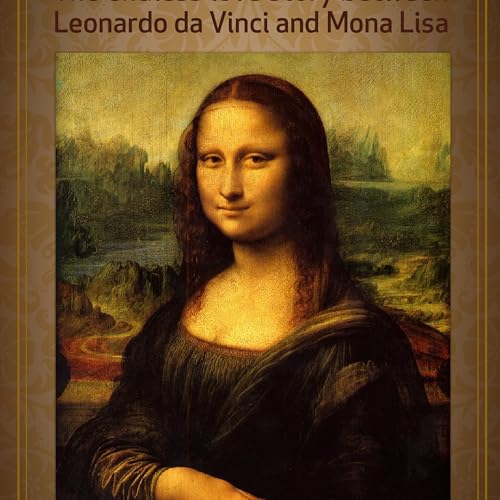
  • DA VINCI IN LOVE. The relationship of Leonardo da Vinci and Mona Lisa
    Jan 30 2026

    VINCI IN LOVE. The relationship of Leonardo da Vinci and Mona Lisa

    Leonardo welcomes Mona Lisa Ghirardini in his studio in the city of Florence to paint a portrait that was never delivered to the owner.

    Da Vinci kept the painting and started a long romance with her ideal woman that went on for 20 years through permanent retouching.

    The portrait accompanied Leonard during all his traveling and through different homes. This dramatic fiction recreates the relationship of Leonardo with the Gioconda, with his assistants Salia and with the world and his relentless searching of truth and beauty.

    The painting keeps captivating Humanity after many centuries and keeps posing the same questions Da Vinci posed to himself: Why is the Gioconda laughing? What mystery is hiding Mona Lisa? Why the smile is the portal to the soul?

    What is the nature of the divine feminine? The mysteries of La Gioconda syntethizes the mysteries of life and womanhood.

    BUY ON AMAZON

    www.amazon.com/dp/B00Q9AK41U

    MORE TITLES FROM THE AUTHOR

    www.lazarodroznes.com

    Show More Show Less
    15 mins
  • DA VINCI IN LOVE. The relationship of Leonardo da Vinci and Mona Lisa
    Jan 30 2026

    DA VINCI IN LOVE. The relationship of Leonardo da Vinci and Mona LisaLeonardo welcomes Mona Lisa Ghirardini in his studio in the city of Florence to paint a portrait that was never delivered to the owner. Da Vinci kept the painting and started a long romance with her ideal woman that went on for 20 years through permanent retouching. The portrait accompanied Leonard during all his traveling and through different homes. This dramatic fiction recreates the relationship of Leonardo with the Gioconda, with his assistants Salia and with the world and his relentless searching of truth and beauty. The painting keeps captivating Humanity after many centuries and keeps posing the same questions Da Vinci posed to himself: Why is the Gioconda laughing? What mystery is hiding Mona Lisa? Why the smile is the portal to the soul? What is the nature of the divine feminine? The mysteries of La Gioconda syntethizes the mysteries of life and womanhood. BUY ON AMAZONwww.amazon.com/dp/B00Q9AK41UMORE TITLES FROM THE AUTHORwww.lazarodroznes.comAsk

    Show More Show Less
    5 mins