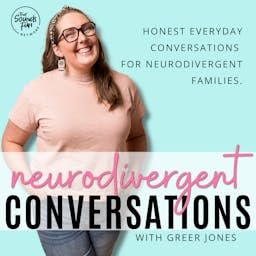
Neurodivergent Conversations | Autism Spectrum, ADHD, AuDHD, PDA, Emotional Regulation, Neurodivergent parent cover art

Neurodivergent Conversations | Autism Spectrum, ADHD, AuDHD, PDA, Emotional Regulation, Neurodivergent parent

Neurodivergent Conversations | Autism Spectrum, ADHD, AuDHD, PDA, Emotional Regulation, Neurodivergent parent

By: That Sounds Fun Network
Listen for free

About this listen

What’s it really like parenting a child with ADHD and autism? How can parents, teachers, and communities better support neurodivergent children? How do autistic and ADHD individuals experience the world? Each week, we explore these questions with practical strategies, emotional insight, and real stories. I’m Greer — a mum of two boys (and two dogs!) raising a child with special educational needs (SEN) alongside my husband. Our daily life looks different from the norm, but it’s full of love, advocacy, and growth. I started this podcast to create a space for parents of neurodivergent kids, educators, and allies to learn, connect, and build understanding together. You’ll hear parenting tips, advocacy guidance, sensory strategies, and personal reflections that shine a light on both the joys and challenges of neurodivergent parenting. Through heartfelt solo episodes and guest interviews, we’ll talk about EHCP or IEP processes, school support, emotional regulation, and the big feelings that come with raising ND kids. Whether you’re here as a parent of an autistic or ADHD child, a late-diagnosed adult, a teacher seeking insight, or someone wanting to understand the neurodivergent world, this podcast is your space to grow, connect, and know you’re not alone. Welcome to The Unfinished Idea — a podcast all about parenting, autism, ADHD, and life in a neurodivergent family. Here, we open up honest conversations about neurodiversity, raising neurodivergent children, and navigating the everyday realities of SEN parenting.That Sounds Fun Network 2024 Parenting & Families Relationships Social Sciences
Episodes
  • Stop Assuming Silence Means “No”. AAC Support: How to Help Non-Speaking Kids Communicate
    Mar 5 2026
    If you have ever heard “they can’t communicate” and felt your stomach drop, this episode is for you. Because communication is not a performance. It’s a connection. It’s a regulation. It’s being understood. And when we only count spoken words, we miss the ways autistic kids communicate all day long. In this conversation, we reframe what communication actually is, talk about AAC in plain language, and share how to support non-speaking, minimally speaking, and situationally speaking people with more respect, more curiosity, and way less assumption. Today on Neurodivergent Conversations, I’m joined by Becky, a Speech and Language Therapist and Clinical AAC Specialist with Smartbox Assistive Technology, and we are going there in the best way. This episode is packed with the exact kind of clarity parents and educators need, including: The difference between speech, language, and communication, and why those labels matter in assessments, school meetings, and everyday life What AAC really means, plus what counts as AAC beyond a high-tech device Why “non-speaking” does not mean “no thoughts,” “no understanding,” or “no personality” How to spot communication in regulation, behaviour, body language, eye gaze, and connection Why “presume competence” is not just a phrase, it’s a starting point that changes how adults respond a simple way to begin at home, even if you feel stuck: noticing patterns and building a “communication dictionary” so your child feels understood If you are searching for support with autistic communication, AAC strategies, minimally speaking autism, or neurodiversity-affirming speech therapy approaches, this episode will give you language, hope, and next steps you can actually use. GUEST LINKS: Smartbox Assistive Technology GET THE LINKS The Unfinished Idea Website Follow me on socials: ⁠⁠⁠INSTAGRAM⁠⁠⁠⁠⁠⁠⁠⁠⁠ ⁠FACEBOOK⁠⁠⁠ Learn more about your ad choices. Visit megaphone.fm/adchoices
    Show More Show Less
    29 mins
  • Late-Diagnosed ADHD in Women Over 60: Grace, Systems, and the Mother Daughter Shift with Lisa Randall
    Feb 27 2026
    What if you are not “too much,” “too chatty,” “too sensitive,” or “just rude” What if your brain has been working overtime for decades, and a diagnosis is not a label, but permission to finally offer yourself grace? In this episode, we talk about what it feels like to be diagnosed with ADHD later in life, the quiet shame so many women carry, and the surprisingly practical supports that can change your day-to-day. Today on Neurodivergent Conversations, I’m sitting down with Lisa, who was encouraged toward her own late ADHD diagnosis through her daughter Michelle’s journey, and who now leads Lexie’s Voice, a nonprofit supporting families touched by autism and developmental disabilities. We chat about: what “loving yourself” can look like in the form of pursuing diagnosis and support the moment medication made her handwriting slow down and finally match her thoughts how masking can look like people pleasing, and why it can actually be about soothing your own nervous system the social “whiplash” of being deeply present, then forgetting details later, and the systems that help the mother daughter shift when your adult child starts protecting their limits (and what it can teach you about asking for what you need) why “you’ve met one autistic person, you’ve met one,” and what that means for how we show up with compassion You will leave with language for what you have been experiencing, and a few gentle ideas you can try this week if your brain is always five steps ahead of your body. GET THE LINKS ⁠⁠⁠Check out the refreshed website⁠⁠⁠⁠⁠⁠ ⁠Learn about the ⁠⁠⁠Exhausted to Empowered Collective⁠⁠⁠ Follow me on socials: ⁠⁠⁠INSTAGRAM⁠⁠⁠⁠⁠⁠⁠⁠⁠ ⁠FACEBOOK⁠⁠⁠ SPONSOR LINKS: Check out ADHD Central! Learn more about your ad choices. Visit megaphone.fm/adchoices
    Show More Show Less
    36 mins
  • We Almost Didn’t Make It: Neurodivergent Marriage, Honest + Hopeful
    Feb 19 2026
    Marriage can feel hard for so many reasons… and when you’re in a neurodivergent household, it can feel like there are extra layers you can’t always name. In this solo episode, Greer shares a very honest snapshot of her marriage: she has ADHD, her husband is autistic, and they’re raising an autistic/ADHD child (with another little one whose “brain type” they’re still learning). She talks about the real stress points, the growth they’ve fought for, and the small “language tools” that have made communication feel safer and more doable. Greer also opens up about a turning point from about five years ago—when she was close to leaving—and what helped them start repairing: individual counselling, marriage counselling, and learning how their brains work. Why marriage can feel especially heavy in an ADHD/autism relationship How miscommunication often comes from what wasn’t said (or how something landed) The difference between being near each other… and actually feeling connected Practical phrases that reduce conflict (like “10 minutes to dream” and “10-minute tap out”) Why scheduling hard conversations can help neurodivergent nervous systems feel safer How “survival seasons” can look like couch time—and why that can be okay (for a while) A gentle reminder: you’re on the same team, and you’re not alone If you’re in a season where it feels like you’re roommates, not partners—there’s no shame in that. You’re carrying a lot. This episode is your reminder that help is allowed, connection can be rebuilt, and sometimes the first step is simply finding words that work for your brains. If this episode lands for you, share it with a friend who’s trying to love well in a neurodivergent home—and needs to feel a little less alone.GET THE LINKS⁠⁠⁠Check out the refreshed website⁠⁠⁠⁠⁠⁠⁠ Learn about the ⁠⁠⁠Exhausted to Empowered Collective⁠⁠⁠Follow me on socials: ⁠⁠⁠INSTAGRAM⁠⁠⁠⁠⁠⁠⁠⁠⁠⁠ FACEBOOK⁠⁠⁠ Learn more about your ad choices. Visit megaphone.fm/adchoices
    Show More Show Less
    30 mins
No reviews yet
In the spirit of reconciliation, Audible acknowledges the Traditional Custodians of country throughout Australia and their connections to land, sea and community. We pay our respect to their elders past and present and extend that respect to all Aboriginal and Torres Strait Islander peoples today.